Foucault News

News and resources on French thinker Michel Foucault (1926-1984)

LIVE! From City Lights
STAFF PICK – Foucault in California (2020)

Podcast

(From April 2019) Heather Dundas in conversation with David Wade celebrating the release of Foucault in California : A True Story—Wherein the Great French Philosopher Drops Acid in the Valley of Death by Simeon Wade, Foreword by Heather Dundas, and published by Heyday Books.

In The Lives of Michel Foucault, David Macey quotes the iconic French philosopher as speaking “nostalgically…of ‘an unforgettable evening on LSD, in carefully prepared doses, in the desert night, with delicious music, [and] nice people.'” This came to pass in 1975, when Foucault spent Memorial Day weekend in Southern California at the invitation of Simeon Wade—ostensibly to guest-lecture at the Claremont Graduate School where Wade was an assistant professor, but in truth to explore what he called the Valley of Death. Led by Wade and Wade’s partner Michael Stoneman, Foucault experimented with psychedelic drugs for the first time; by morning he was crying and proclaiming that he knew Truth.

Foucault in California is Wade’s firsthand account of that long weekend. Felicitous and often humorous prose vaults readers headlong into the erudite and subversive circles of the Claremont intelligentsia: parties in Wade’s bungalow, intensive dialogues between Foucault and his disciples at a Taoist utopia in the Angeles Forest (whose denizens call Foucault “Country Joe”); and, of course, the fabled synesthetic acid trip in Death Valley, set to the strains of Bach and Stockhausen. Part search for higher consciousness, part bacchanal, this book chronicles a young man’s burgeoning friendship with one of the twentieth century’s greatest thinkers.

Justin Ross Muchnick, Wrestling with the Heterotopia: Jordan Burroughs and His Post-Match Interview at the 2016 Olympics (2020) Sport, Ethics and Philosophy, 14 (1), pp. 35-46.
https://doi.org/10.1080/17511321.2018.1531056

Abstract
This essay applies Michel Foucault’s conception of the heterotopia to the context of the sport of wrestling. In particular, it examines the social and spatial structures of the sport, exploring homophobia and masculinity in a wrestling context as well as analyzing the physical and theoretical space of the wrestling mat. This groundwork is used to inform a reading of an interview given by American wrestler Jordan Burroughs after being eliminated from the 2016 Olympics. After examining this interview as occurring somewhere on the fringes of the heterotopia, between the space of the athlete and that of the spectator, this essay attempts to link a Foucauldian understanding of the athletic arena to a framework of athletic defeat as a self-transformative endeavor.

Author Keywords
defeat; Foucault; Heterotopia; masculinity; wrestling

Janosik Herder, The Power of Platforms. How biopolitical companies threaten democracy, Public Seminar, January 25, 2019

The 2010s will likely be remembered as the decade of the rise of platforms. Google, Amazon, Facebook, Airbnb, Uber — all of these companies have become more than just billion-dollar businesses. Over the last ten years they have started to play an essential role in the everyday life of most people. We increasingly rely on platforms and their services for our social, professional, and political needs. This, of course, is what separates them from “normal companies.” Platforms tend to monopolize aspects of life — such as socializing, dating, room-letting, searching — and make a profit by utilizing their monopoly. But what distinguishes Google, Facebook, Airbnb, and Uber from other companies is not just their economics. How these platforms work, how they regulate their services, and how they manage their users is a fundamentally political matter.

[…]

Following Michel Foucault, they may be understood to employ a specific form of biopower, and should therefore be understood as biopolitical companies.

[…]

An independent project of The New School Publishing Initiative, Public Seminar is produced by New School faculty, students and staff, and supported by colleagues and collaborators around the globe.

Hanne Svarstad, Tor A. Benjaminsen, Ragnhild Overå, Power theories in political ecology, Journal of Political Ecology, Vol 25, No 1 (2018)
DOI: 10.2458/v25i1.23044
See also article on Researchgate if link above is timing out

Open access

Abstract
Power plays a key role in definitions of political ecology. Likewise, empirical studies within this field tend to provide detailed presentations of various uses of power, involving corporate and conservation interventions influencing access to land and natural resources. The results include struggle and conflict. Yet, there is a lack of theoretical elaboration showing how power may be understood in political ecology. In this article, we start to fill this gap by reviewing the different theoretical perspectives on power that have dominated this field. There are combinations of influences, two of them being actor-oriented and neo-Marxist approaches used from the 1980s. Typically, case studies are presented of environmental interventions by a broad range of actors at various scales from the local to the global. The focus has been on processes involving actors behind these interventions, as well as the outcomes for different social groups. Over the last two decades, in political ecology we have increasingly seen a move in power perspectives towards poststructuralist thinking about “discursive power”, inspired by Foucault. Today, the three approaches (actor-oriented, neo-Marxist and Foucauldian) and their combinations form a synergy of power perspectives that provide a set of rich and nuanced insights into how power is manifested in environmental conflicts and governance. We argue that combining power perspectives is one of political ecology’s strengths, which should be nurtured through a continuous examination of a broad spectrum of social science theories on power.

Patricio Lepe-Carrión, Crisis de gubernamentalidad en Chile: contra la expropiación financiera y el Orden Público Económico
[Crisis of governmentality in Chile: against financial expropriation and the Public Economic Order]
Kalagatos, V.16, N.3. Setembro – Dezembro 2019

DOI: 10.23845/kgt.v16i3.861

Open access

Resumen
El presente ensayo tiene como propósito pensar la sublevación, y la consecuente represión que se vive en Chile desde el 18 de Octubre de 2019, como “acontecimiento” (événement); y en cuanto tal, situarlo en una matriz histórico-política que implica una transformación de los principios, objetivos y diseños programáticos en torno a la “conducción de las conductas” de la población chilena instalados en dictadura, y que adquieren su forma a partir de un “poder informante” a nivel constitucional. Es decir, que la “crisis de gubernamentalidad” se refiere a una negación radical y generalizada sobre el Orden Público Económico (OPE) y sus dinámicas de explotación contemporánea (expropiación financiera), en tanto dispositivo estratégico de “financiarización de la subjetividad” o producción de sujetos “inversionistas de sí mismos” en nuestro presente.

Palabras clave:
Chile. Neoliberalismo. Gubernamentalidad. Financiarización. Subjetividad.

Abstract
The purpose of this essay is to think of the uprising, and the consequent repression that has been experienced in Chile since October 18, 2019, as an “event” (événement); and as such, place them in a historical-political matrix that implies a transformation of the principles, objectives and programmatic designs around the “government of conducts” of the Chilean population installed in dictatorship, and that acquire their form through an “formative power” at the constitutional level. That is to say that the “crisis of governmentality” refers to a radical and generalized denial of the Public Economic Order (OPE) and its dynamics of contemporary exploitation (financial expropriation), as a strategic device of “financialization of subjectivity” or production of subjects “investors of themselves” in our present.

Keywords
Chile. Neoliberalism. Governmentality. Financialization. Subjectivity.

Stephanie Rutherford (2017). Environmentality and Green Governmentality. In International Encyclopedia of Geography: People, the Earth, Environment and Technology (eds D. Richardson, N. Castree, M.F. Goodchild, A. Kobayashi, W. Liu and R.A. Marston). Wiley
https://doi.org/10.1002/9781118786352.wbieg0111

Abstract
Environmentality, or green governmentality, offers a way of thinking about how power works through the construction of the environment, its problems, and the solution to those problems. The concept emerged in the 1990s and has been applied to a wide array of environmental questions. Environmentality is most keenly focused on how regimes of truth are made, how strategies of regulation are formed, and how human subjectivities are enacted with reference to the environment.

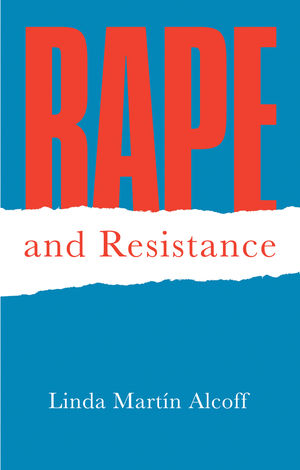
Special section Philosophical Studies, Alcoff’s Rape and Resistance (2020)

Philsophical Studies, Volume 177, Issue 2, February 2020

Ann J. Cahill, Alcoff’s Rape and Resistance: A Précis

Abstract
This article summarizes Linda Martin Alcoff’s Rape and Resistance (Polity, Cambridge, 2018). Alcoff’s analysis centers on a political and philosophical defense of the need to recognize the complexity of both the phenomenon of sexual assault and the various political attempts to counter it. Such complexity extends to the process of describing an experience of sexual assault (whether public or private), which Alcoff argues is always shaped by a multitude of political and social discourses. Alcoff’s Foucauldian analysis results in an innovative description of the harms of sexual assault, one that focuses on the ways in which experiences of sexual assault prohibit the active involvement of the subject in the development of their sexual subjectivity. Recognizing that gender-based violence is a global phenomenon, Alcoff nevertheless argues that place-specific instances of such violence are contextualized by the larger phenomenon, which is heterogeneous to its core. The article concludes by posing several questions to Alcoff, centered on the themes of the ethics of sexual experimentation, assailants’ ascription of hyperagency to targets of sexual assault, and how sexual assault may influence the sexual subjectivity of maleidentified victims, particularly those who were assaulted as children.

Keywords
Sexual violence Rape Foucault Subjectivity Global gender-based violence

Additional articles
Megan Burke, Survivor experience and the norm of self-making: comments on Rape and Resistance

Susan J. Brison. Can we end the feminist ‘sex wars’ now? Comments on Linda Martín Alcoff, Rape and resistance: Understanding the complexities of sexual violation

Response
Linda Martín Alcoff

Abstract
In this response to the comments on my book, Rape and Resistance: Understanding the Complexities of Sexual Violation, I offer a further elaboration of the crucial concept of sexual subjectivity put forward as a way to approach the normative evaluation of sexual practices. This concept makes possible a healthy pluralism without retreating to a facile libertarian view that would render consent sufficient to determine morally unproblematic sex. The concept of sexual subjectivity sanctions experimentation in our sexual lives (individual and also collective) and the question arises as to whether this opens the door to anything. Yet the concept of experimentation also presupposes that some experiments fail and that all require assessment. I argue that assessment is best done in intra-group discussions where people share broad experiences and aims, but it is also possible to communicate concerns and ideas across groups. I then discuss my use of Foucault to elaborate the specific challenges that are encountered when one tries to speak about rape and sexual violations, and also the ways we can use his work to develop more effectively resistant speaking practices.

Keywords
Rape Resistance Sexuality

Linda Martín Alcoff, Rape and Resistance, Polity, 2018

DESCRIPTION
Sexual violence has become a topic of intense media scrutiny, thanks to the bravery of survivors coming forward to tell their stories. But, unfortunately, mainstream public spheres too often echo reports in a way that inhibits proper understanding of its causes, placing too much emphasis on individual responsibility or blaming minority cultures.

In this powerful and original book, Linda Martín Alcoff aims to correct the misleading language of public debate about rape and sexual violence by showing how complex our experiences of sexual violation can be. Although it is survivors who have galvanized movements like #MeToo, when their words enter the public arena they can be manipulated or interpreted in a way that damages their effectiveness. Rather than assuming that all experiences of sexual violence are universal, we need to be more sensitive to the local and personal contexts – who is speaking and in what circumstances – that affect how activists’ and survivors’ protests will be received and understood.

TABLE OF CONTENTS
Contents
Acknowledgments
Introduction: Rape after Foucault
1. Global Resistance: A New Agenda for Theory
2. The Thorny Question of Experience
3. Norming Sexual Practices
4. Sexual Subjectivity
5. “Consent”, “Victim”, “Honor”
6. Speaking As (with Laura Gray-Rosendale)
7. The Problem of Speaking for Myself
Conclusion: Standing in the Intersection

Emma Foster, Foucault and Ecology, in Lisa Downing (ed.) After Foucault: Culture, Theory, and Criticism in the 21st Century, Cambridge University Press, 2018
https://doi.org/10.1017/9781316492864.010

Summary
A Foucauldian perspective offers a number of interesting and significant insights into the relationship between the cultural representations of ‘Nature’ and the processes of subjectification that underpin environmentalism and ecologism. Generally speaking, environmentalism refers to a perspective where one seeks to protect and conserve the natural environment in an effort to keep the planet a habitable (and pleasant) place for humans. Often, environmentalism is a perspective that can be attached to fairly mainstream political ideologies such as liberalism. On the other hand, ecologism, while also advocating the conservation and preservation of the natural world, can be defined as an ideology that places the ecosystem central to its critique of our current socio-political and economic condition and to its future objectives. Ecologists, then, recognize the ecosystem, and its constituent parts, as inherently valuable and seek to preserve and conserve the natural world based on this ethic. From these brief descriptions, it is clear to see that environmentalism and ecologism tend to rely on a clear definition of nature as their focal point. Stemming from this conceptualization of nature, a number of other assumptions flow, such as a valorization of that which is considered natural. The work of Michel Foucault allows us to interrogate environmentalism and ecologism in important and exciting ways by highlighting, and potentially offering a corrective to, the discourses that perpetuate problematic power dynamics, such as (hetero)sexism, racism and speciesism, integral to established environmental/ecological theory and practice. This is because hierarchies determined by gender, sexuality, ethnicity, and species have long been justified through a valorization of that which is considered natural, thereby simultaneously naturalizing inequalities.

That being said, it is perhaps surprising that many scholars interested in the environment have found Foucault’s work useful, given that, by all accounts, Foucault appeared to find little inspiration in that which is culturally accepted as ‘Nature’. Indeed, Eric Darier offers an interesting story that suggests that Michel Foucault is an unlikely candidate for generating a robust ecological ethic. Darier recounts how, while on a trip to the Alps, Foucault’s colleague Jacqueline Verdeaux compelled him to appreciate a particular vista. Foucault reacted by walking away and exclaiming: ‘My back is turned to it’.

mghamner's avataraffecognitive

Sean Scully, “Landline Yellow Line”

I return, finally, to Foucault’s early interest in limit. But as the past 12 weeks (!!) have seeped away, I have realized that to return to this question in the context of his relation to the Tel Quel group, on the one hand, and Merleau-Ponty’s phenomenology, on the other, is too large and complex a task for a blog post. Here is a briefer engagement, which I hope can stand as a promise toward further thinking.

In January 1966, on the cusp of the April publication of Les Mots et les Choses (The Order of Things), Foucault writes to a friend: “Non, ce ne’st pas cela, le problème n’est pas la langue, mais les limites de l’énonciabilité”: “No, not that; the problem is not language but the limits of enunciability” (Dits et Écrits I, 36; the addressee is not named).  The problem–what 

View original post 394 more words