Foucault News

News and resources on French thinker Michel Foucault (1926-1984)

Philipp Sarasin, Understanding the Coronavirus Pandemic with Foucault?, G+C Blog, March 31, 2020
https://blog.genealogy-critique.net/essays/254/understanding-corona-with-foucault

Open access

It looks like a biopolitical dream: governments, advised by physicians, impose pandemic dictatorship on entire populations. Getting rid of all democratic obstacles under the pretext of “health,” even “survival,” they are finally able to govern the population as they have, more or less openly, always done in modernity: as pure “biomass,” as “bare life” to be exploited. It is no coincidence that such notions are increasingly invoked by high theoreticians like Giorgio Agamben (who introduced the concept of “bare life” in contemporary political theory), but also here and there on the web in the works of those critical critics who purport to explain what is happening with “Foucault” in their toolbox. The notions of “biopower” and “biopolitics” are too seductive, they appear as catchwords of the hour in whose bright light the truth of governing in pandemic times is revealed.

But the problem is that to assert this is particularly implausible given, for instance, the U.S. government’s spectacular failure in times of Covid-19—and it has very little, if at all, to do with Foucault and his thought. While Michel Foucault coined the concept of “biopolitics,” he not only dropped it fairly quickly but also developed three models of thought with regard to three infectious diseases, which help us better understand government in the face of a “pandemic” than the semantic cudgel that is “biopolitics.”

[…]

Joe Christopher, Sarath Ukwatte, Prem Yapa,
How do government policies influence the governance paradigm of Australian public universities?: An historical analysis
(2020) Journal of Management History, 26 (2), pp. 231-248.

DOI: 10.1108/JMH-04-2019-0029

Abstract
Purpose: This study aims to examine how government policies have influenced the governance paradigm of Australian public universities from a historical perspective. In doing so, it addresses current uncertainty on government-governance connectivity.

Design/methodology/approach: The study draws on Foucault’s concept of governmentality and governance and uses a developed framework of three constituents of governance to explore government–governance connectivity through a critical discourse analysis.

Findings: The findings reveal that government policies have influenced the three constituents of governance differently since 1823, resulting in three distinct governance discourses. In the third governance discourse, the findings reveal a deviation from policy directions towards corporate managerialism, resulting in a hybrid governance control environment. This scenario has arisen due to internal stakeholders continuing to be oriented towards the previous management cultures. Other factors include structural and legalistic obstacles to the implementation of corporate managerialism, validity of the underlying theory informing the policy directions towards corporate managerialism and doubts on the achievability of the market based reforms associated with corporate managerialism. The totality of these factors suggests a theory practice gap to be confirmed through further empirical research. There are also policy implications for policymakers to recognize the hybrid control environment and ascertain the risk the hybrid control environment poses towards the expected outcomes of corporate managerialism.

Research limitations/implications: The findings are limited to a critical discourse analysis of data from specific policies and journal publications on higher education and a developed framework of constituents of governance. Originality/value: The study is the first to examine government–governance connectivity in Australian public universities and also the first to introduce a three-constituent governance framework as a conduit to explore such studies. The findings contribute to the literature in identifying a theory-practice gap and offer opportunities for further research to confirm them.

Murphy, B. Regulating Undercover Policing: Subjects, Rights and Governmentality. Critical Criminology (2020). Published: 28 April 2020

10.1007/s10612-020-09504-6

Abstract
One of Foucault’s many unfinished projects was an analysis of the links between law, power and subjectivity. This article aims to make a contribution to Foucauldian jurisprudence by asking the question: in what ways does law construct identity? Using the regulation of undercover police investigation as an example, this article considers the intersection between three core rationalities within legal systems—rights, derogation and authorization—as critical moments in the governance of human beings, mobilized through legal architectures. Here, we find identities constructed, tested and applied in a multilateral relationship as intended and unintended consequences of the technologies of law. In this space, we not only see the mechanisms of law operating for the purpose of mobilizing power relations, but we also observe the myriad ways in which the architecture of law promoting rights operates as a system of governance that reveals rights claims as hollow, impeachable and ephemeral. The article concludes by considering rights, derogation and authorization as key components of Foucauldian jurisprudence—a distinct governmentality, where law articulates what rights are available and their associated mechanics, the mechanisms of adjudication and exception, and the formal modes of counter-conduct.

Sibylle Erle & Helen Hendry, Monsters: interdisciplinary explorations in monstrosity(2020) Palgrave Communications, 6 (1), art. no. 53
https://doi.org/10.1057/s41599-020-0428-1

Open access
Abstract
There is a continued fascination with all things monster. This is partly due to the popular reception of Mary Shelley’s Monster, termed a ‘new species’ by its overreaching but admiringly determined maker Victor Frankenstein in the eponymous novel first published in 1818. The enduring impact of Shelley’s novel, which spans a plethora of subjects and genres in imagery and themes, raises questions of origin and identity, death, birth and family relationships, as well as the contradictory qualities of the monster. Monsters serve as metaphors for anxieties of aberration and innovation (Punter and Byron, 2004). Stephen Asma (2009) notes that monsters represent evil or moral transgression and each epoch, to speak with Michel Foucault (Abnormal: lectures at the Collège de France, 1975–75, 2003, p. 66), evidences a ‘particular type of monster’. Academic debates tend to explore how social and cultural threats come to be embodied in the figure of a monster and their actions literalise our deepest fears (Gilmore, 2009; Scott, 2007).

Monsters in contemporary culture, however, have become more humane than ever before. Monsters are strong, resilient, creative and sly creatures. Through their playful and invigorating energy they can be seen to disrupt and unsettle. They still cater to the appetite for horror, but they also encourage us to feel empathy. The encounter with a monster can enable us to stop, wonder and change our attitudes towards technology, our body and each other. This commentary article considers the use of the concepts of ‘monsters’ or ‘monstrosity’ in literature, contemporary research, culture and teaching contexts at the intersection of the Humanities and the Social Sciences. © 2020, The Author(s).

Editor: An ongoing series of articles and blog posts by scholars working at Australian, British and Norwegian universities is being posted on The Disorder of Things blog. The first article was posted 24 March 2020

Guest Authors's avatarThe Disorder Of Things

An eighth entry in our coronacrisis series, from Umut Ozguc. Umut is postdoctoral research fellow in International Ethics at the School of Humanities and Social Sciences, University of New South Wales, Australia. She is a critical IR scholar working on critical security and border studies, settler colonialism, spatial theory, resistance and posthumanism. Currently, she is working on a research project on the ecological impacts of border walls. Her current research aims to challenge the overly anthropocentric focus of the contemporary debates over borders and mobility.


Those applying for temporary or permanent residency in Australia know well that you can only be granted a visa if you meet the health requirements set by the Australian Government. That is to mean, you should not pose a threat to the public health of the nation. The Department of Home Affairs website states that  it says, if you have any health condition…

View original post 3,597 more words

Švantner, M.
Two basic analyses of the historiography of semiotics: M. Foucault’s comparative semiology and J.N. Deely’s semiotic realism
(2020) Semiotica, 2020 (233), pp. 159-177.

DOI: 10.1515/sem-2017-0108

Abstract
In this study I compare the work of two scholars who are important for contemporary research into the history of semiotics. The main goal of the study is to describe specific rhetorical/figurative forms and structures of persuasion between two epistemological positions that determine various possibilities in the historiography of semiotics. The main question is this: how do we understand two important metatheoretical forms of descriptions in the historiography of semiotics or the history of sign relations?

The first perspective is semiology and its corollary, “structuralism,” as presented in Michel Foucault’s The Order of Things. This perspective prefers to consider history as a set of ruptures (i). The second position explores the possibility of the historical development of semiotic consciousness as presented in the works of John N. Deely (ii). The main aim of this study lies in the exploration of these two different epistemological bases – divergent bases for developing specific understandings of interconnections that hold between between semiotics, semiosis and historical processes. A goal of this paper is to demonstrate the limits and advantages of these two paradigmatic positions. The positions in question are “meta-theoretical” in the following senses such that: (i) the historical episteme is taken to be an a priori determinant of all sign-operations in a given era and is also the semiologic grid through which Foucault approaches every mode of scientific knowledge (from “science” to “economy” and beyond); (ii) the quasi-Hegelian development of semiotic consciousness based on a conception of the sign considered as a triadic ontological relation. The latter is Deely’s guiding meta-principle, through which the history of semiotics can be articulated, examined and evaluated. © 2020 Walter de Gruyter GmbH, Berlin/Boston 2020.

Author Keywords
Deely; Foucault; historical a priori; historiography of semiotics; Peirce; semiology

stuartelden's avatarProgressive Geographies

Elden-9Historicizing Foucault: Stuart Elden on Tracing Foucault’s Ideas from Discipline and Punish to the History of Sexuality – part 1 of a longer interview at the Journal of History of Ideas blog, conducted earlier this month. My thanks to Anne Schult and Jonas Knatz for the invitation to do this and some interesting questions.

Stuart Elden is Professor of Political Theory and Geography at University of Warwick. His publication series on Foucault includesFoucault’s Last Decade (Polity, 2016),Foucault: The Birth of Power (Polity, 2017), The Early Foucault (Polity, forthcoming), and The Archaeology of Foucault (Polity, forthcoming). Beyond Foucault, he most recently authoredShakespearean Territories (University of Chicago Press, 2018) andCanguilhem (Polity, 2019). He runs a blog at www.progressivegeographies.com.

Jonas Knatz is a PhD Student in New York University’s History Department. He works on 20th century European intellectual history.

Anne Schult a PhD Candidate in New York University’s…

View original post 26 more words

Jocelyn Lachance, Parental surveillance of teens in the digital era: the “ritual of confession” to the “ritual of repentance” (2020) International Journal of Adolescence and Youth, 25 (1), pp. 355-363.
https://doi.org/10.1080/02673843.2019.1651351

Open access

Abstract
The use of ICTs by teens are sometimes a source of fear for parents. Yet the same ICTs can be a tool and comfort to parents who need to know where their children are, with whom and what they are doing when they are far away from their gaze. This following article explores this tension, and especially how teenagers see the surveillance of their parents in the digital era. It is based on 35 interviews conducted amongst French teenagers aged 14 to 18 from October 2017 to April 2018. It reveals how the use of ICTs to monitor teens participates in the emergence of a new form of control, drawing questions not only in the realm of the family yet also in wider society.

Author Keywords
Foucault; ICT; parents; surveillance; Teen

Index Keywords
adolescent, adult, article, child, comfort, drawing, fear, female, gaze, human, human experiment, interview, male, ritual, tension

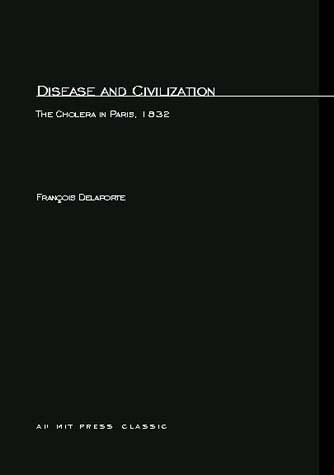
François Delaporte, Disease and Civilization. The Cholera in Paris, 1832, Translated by Arthur Goldhammer. Foreword by Paul Rabinow, 1986, MIT Press

Summary
Disease and Civilization explores the scientific and political ramifications of the great cholera epidemic of 1832, showing how its course and its conceptualization were affected by the social power relations of the time. The epidemic which claimed the lives of 18,000 people in Paris alone, was a watershed in the history of medicine: In France, it shook the complacency of a medical establishment that thought it had the means to prevent any onslaught and led to a revolution in the concept of public health.