
Foucault News

News and resources on French thinker Michel Foucault (1926-1984)

Louise Owusu-Kwarteng, ‘Whoever holds the scissors wields the power’: An auto/biographical reflection on my ‘Hairstory’ (2020) Women’s Studies International Forum, 82, art. no. 102405
https://doi.org/10.1016/j.wsif.2020.102405

Abstract
This paper provides an auto/biographical account of my hair journey, with specific emphasis on my hairstyle changes, and their ‘inextricable links’ to my identity and self-presentation (Bankhead and Johnson, 2014) at different stages in my life. In doing so, reference is made to the work of Anthony Giddens (1991) Erving Goffman (1950) and Judith Butler (1990). In addition, I discuss how for Black women, ‘hair’ is also a continual source of political debates. These centre on whether particular styles (e.g relaxing (chemical straightening), and/or weave), mean we present ourselves in ways reflecting European (often hegemonic) beauty standards, rooted in longstanding negative representations of ‘tightly curled’ African hair. Conversely, are growing numbers of Black women (including me) who opt for ‘natural’ hair, choosing to present ourselves in ways which consciously reject hegemonic standards of beauty? Or are these hairstyles simply a matter of choice and/or convenience? Drawing on the work of Black Feminist researchers Teihasha Bankhead, Tabora Johnson (2014), and Cheryl Johnson (2009), I describe ‘brushes’ with these issues in Black hair salons, which impacted on my experiences in this context. Other issues, such as extraordinary lengths of time spent waiting to be seen are discussed, alongside power relationships existing between the hairstylist/salon owners and the clients, arising from these situations. In doing so Foucault’s notions of power (1984) and Freund et al’s discussion of time and power (2003) are referred to. © 2020 Elsevier Ltd

Index Keywords
biography, feminism, hair, political power, power relations, womens status; Europe
Thomas Ahrens, Laurence Ferry, Rihab Khalifa, Governmentality and counter-conduct: A field study of accounting amidst concurrent and competing rationales and programmes
(2020) Management Accounting Research, 48, art. no. 100686.

https://doi.org/10.1016/j.mar.2020.100686

Abstract
This paper contributes to the diverse and growing stream of accounting research on Foucault’s notion of counter-conduct, which is broadly concerned with the uses of accounting in the development of alternative ways of governing. Its key problematic lies in the roles that accounting can play in the intertwining of particular practices of governing, for instance, by underpinning practices that facilitate political campaigning, making specific policy choices, and creating new administrative arrangements. We illustrate our argument with some of the ways in which Newcastle City Council (NCC) used accounting to manoeuvre between the programmes of localism, centralism, devolution, austerity, and marketisation to develop novel forms of counter-conduct in response to austerity funding cuts. We show how accounting was used to underpin a multi-facetted counter-conduct that sought to profile itself locally and nationally against austerity as a highly visible and controversial programme of government. However, accounting also served to undermine NCC’s own counter-conduct, for example, through its engagement with longer established programmes, such as marketisation, and by rationalising the council’s administrative responses of austerity cuts. © 2020 Elsevier Ltd

Author Keywords
Accounting; Austerity; Counter-conduct; Devolution; Governmentality; Local government; Localism; Public sector budgeting

Beattie, L., Educational leadership: Producing docile bodies? A Foucauldian perspective on Higher Education. Higher Education Quarterly. 2020; 74: 98– 110.

https://doi.org/10.1111/hequ.12218

Open access

Abstract
The aim of this paper is to contribute to a long‐standing critical tradition in the educational leadership literature through an analytical examination of the idiosyncrasies of leadership in Higher Education institutions (based on the UK example). It applies a postmodern way of thinking to the educational leadership phenomenon to problematise and challenge the traditional views on the trajectories of power in Higher Education institutions, utilising Foucault’s key theoretical units of discipline, governmentality and biopolitics as a toolbox for dissecting the implications of neoliberal ideology on the leadership praxes. Significantly, the paper demonstrates how the engagement with Foucault’s three modes of objectification—dividing practices, scientific classification and self‐subjection—can expose the ways, in which the roles of educational leaders become re‐configured into economic‐rational individuals or subjects, who are compliant with the imposed requisites of the government’s neoliberal agendas. The paper concludes that Foucault’s theoretical perspectives could be used as a methodological template for a deeper critical analysis of leadership practices, equipping academics with additional tools for critiquing the existing boundaries of neoliberalism and intervening in the transformation of the social order by undertaking an investigation into the practices of governmentality, as suggested by Foucault.

Moreno Pestaña, J.L.
Oedipus Rex as a philosophical and political strategy
(2020) Sociological Review, 68 (5), pp. 1092-1107.

DOI: 10.1177/0038026119900117

Abstract
This article studies Michel Foucault’s interpretation of the tragedy Oedipus Rex. The analysis seeks to uncover the various intellectual strategies around his study. First, Foucault takes a position in the political debate about prisons in France in the early 1970s. Second, his analysis of the tragedy contributes to position his work in the field of the philosophical history of truth, by singularising his project and separating it from the dominant models of the history of philosophy. Third, Foucault aims to differentiate himself from the results of the historical work of the Paris School. This article analyses how Foucault depends on these interpretations and how it helps him to acquire philosophical relevance. Through the sociology of intellectual history’s perspective, the article elaborates the contributions and limits of Foucault’s perspective. © The Author(s) 2020.

Author Keywords
Michel Foucault; political philosophy; sociology of intellectuals; sociology of knowledge; sociology of philosophy

Amy Allen, The Politics of ourselves, from Foucault Across the disciplines, Online on Soundcloud, 13 July 2019

See also Amy Allen’s book The Politics of ourselves, 2007, 2013

Recently Published Book Spotlight: How Propaganda Became Public Relations Interview with Cory Wimberly by Nathan Eckstrand, Blog of the APA, July 6, 2020

This edition of the Recently Published Book Spotlight is about Cory Wimberly‘s How Propaganda Became Public Relations: Foucault and the Corporate Government of the Public. Cory Wimberly is Associate Professor of Philosophy at the University of Texas Rio Grande Valley. His research primarily focuses on corporate governmentality—analyzing the corporate apparatuses responsible for the guiding and transforming public conduct. Wimberly’s past work has focused on propaganda and public relations and his current work is exploring other areas of corporate governmentality including marketing, advertising, and industrial design.

What is your work about?

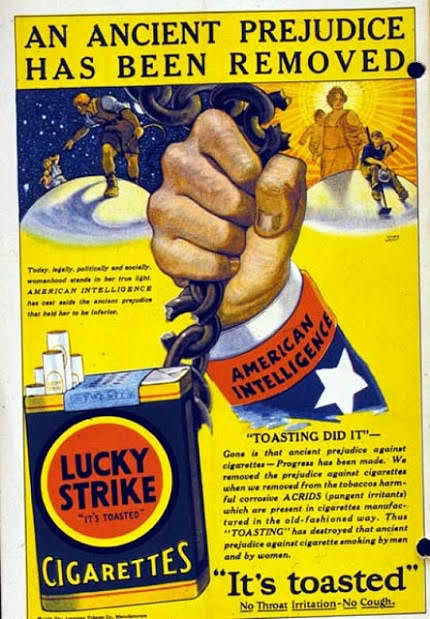
How Propaganda Became Public Relations: Foucault and the Corporate Government of the Public is a philosophical investigation into the transformative effect propaganda has on us as individuals, on us as publics, and on society more broadly. I argue that propaganda does far worse than just lie to us: modern propaganda aims to transform us into the kind of subjects who carry out a particular line of conduct freely and as a key part of our identity. In other words, propaganda aims to transform who we are as individuals and as publics so that we become the kind of subjects who behave as the propagandists’ want as a matter of course and disposition. For example, why does someone spend an exorbitant amount on yoga pants only to wear them around the house? Or hoard assault rifles? Often, it is because they are convinced that a key aspect of their identity lies in that ownership; those goods have become a necessary extension of their very being. In Foucault’s language, propaganda is an apparatus that governs through subjectification—it directs our conduct through transforming our subjectivity—and it is not just a technique of mass deception as so many assume.

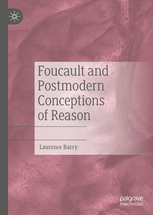
Laurence Barry, Foucault and Postmodern Conceptions of Reason, Palgrave Macmillan, 2020

For decades Foucault was mostly known for his diagnosis of modernity as a form of entrapment, both in our modes of thought and our behaviors. This book argues that Foucault’s reappraisal of modernity occurs with the 1978 and 1979 lectures, in which he sketches modern power as governmentality and neoliberalism. From this perspective, Foucault’s once surprising studies on the Greeks’ constitution of the ‘self’ can be seen as a continuation of his diagnosis of late modernity, and as an attempt to retrieve a form of autonomy for our modern selves. One finds in the late Foucault a postmodern conception of reason and not a destruction of reason; but this is possible only if postmodernity is seen as a critical exercise of reason in the analysis of norms.

Laurence Barry is an associate lecturer at the Hebrew University and a trained actuary. She currently researches the implications of big data for insurance as a practice of neoliberal governmentality at Chaire PARI (ENSAE/Sciences Po), France.

Matthew McManus interviews Judith Butler about power, performance, and feminism in the 21st century. What is post-Marxism for in the era of Covid-19 and Trump? Streamed live 21 July 2020 on the Zero Books Channel on YouTube

[Editor: Update 10 March 2026. The link above is to the video archived on the Wayback Machine.]

Special Issue: Pandemic and the Crisis of Capitalism. A Rethinking Marxism Dossier | Summer 2020

Foucault related articles in this large issue include

The Multitude Divided: Biopolitical Production during the Coronavirus Pandemic
Stijn De Cauwer & Tim Christiaens

The Biopolitics of the Coronavirus Pandemic: Herd Immunity, Thanatopolitics, Acts of Heroism
Ali Rıza Taşkale & Christina Banalopoulou

Special Issue “Philosophical Genealogy from Nietzsche to Williams”
Genealogy

Genealogy is a broadly encompassing historiographical technique that investigates the emergences and subversions of trends over time. Philosophical genealogy is a species of genealogy that generally turns this technique upon trends in philosophical ideas, especially upon values, norms, and societal structures. Although there were important precursors, the progenitor of this technique is largely acknowledged to be Friedrich Nietzsche, whose Genealogie der Moral (1887) supplied a genealogical analysis of contemporary European values as they emerged out of the confluence and disruptions of a long history of competing power interests. Famously, Michel Foucault both interpreted Nietzsche’s essay and used it to progress beyond what he labeled the “archeological” character of his earlier histories of madness and the clinic. Foucault’s genealogical method highlights the inextricably contingent and accidental character of power transfigurations, in that it is set against more conventional historiography’s attempt to either explain historical change according to their material conditions or else find a rational plan within the progressive maturation of ideas, events, or values. Foucault’s Surveiller et punir (1975) and L’Histoire de la sexualité (1976) proceed to analyze the power and domination dynamics inherent in the emerging social instantiations of punishment and sexuality, respectively. From a different perspective, Bernard Williams’ Truth and Truthfulness (2004) employs a genealogical technique to uncover the development humanity’s value for accuracy and sincerity out of a suspicion of being deceived and a reluctance to be considered naive. Williams’ project contributed significantly to contemporary social and virtue epistemology. 

This Special Issue of Genealogy seeks to examine and to put into critical cross-interrogation several philosophical accounts of genealogy. Including but not limited to the cluster of ideas introduced by Nietzsche, Foucault, and Williams, we invite papers that investigate the prospects and problems genealogy has as a philosophical technique within and beyond these thinkers. In addition, we welcome intersections with critical race theory, feminist theory, virtue epistemology, value theory, the philosophy of history, anthropology, and political philosophy—all broadly construed. Our hope is to offer a space for the exploration and critical engagement with philosophical genealogy through these various lenses, and to advance genealogy as a historiographical enterprise.

Prof. Dr. Anthony Jensen
Guest Editor

Manuscript Submission Information

Manuscripts should be submitted online at www.mdpi.com by registering and logging in to this website. Once you are registered, click here to go to the submission form. Manuscripts can be submitted until the deadline. All papers will be peer-reviewed. Accepted papers will be published continuously in the journal (as soon as accepted) and will be listed together on the special issue website. Research articles, review articles as well as short communications are invited. For planned papers, a title and short abstract (about 100 words) can be sent to the Editorial Office for announcement on this website.

Submitted manuscripts should not have been published previously, nor be under consideration for publication elsewhere (except conference proceedings papers). All manuscripts are thoroughly refereed through a double-blind peer-review process. A guide for authors and other relevant information for submission of manuscripts is available on the Instructions for Authors page. Genealogy is an international peer-reviewed open access quarterly journal published by MDPI.