Foucault News

News and resources on French thinker Michel Foucault (1926-1984)

Druedahl, L.C., Kälvemark Sporrong, S.
More than meets the eye: A Foucauldian perspective on treating ADHD with medicine (2020) Research in Social and Administrative Pharmacy, 16 (9), pp. 1201-1207.

DOI: 10.1016/j.sapharm.2019.12.008

Abstract
Background: Decision-making for using medicine treatment of attention-deficit hyperactivity disorder (ADHD) is complex. Objective: The aim of this study is to investigate decision-making about ADHD medicine and its use among young adults with ADHD by exploring and analysing their beliefs, experiences and behaviours from a Foucauldian perspective.

Methods: Participants were recruited using convenience sampling. In-depth individual interviews were conducted with 7 participants, and 4 participated in a focus group; 1 took part in both. The interviewees were aged 22–29. Data were collected in Denmark from March to August 2016.

Results: Deductive analysis identified the sociological, bio-psychosocial and biomedical discourses as falsified, present and dominant, respectively. In a Foucauldian perspective, ADHD medicine use seems to be a disciplinary act intended to make the individual change his/her ‘undesirable’ ADHD behaviour. Interviewees’ descriptions show power as operating internally in the form of self-monitoring in an attempt at normalisation, as well as externally through society’s subjectification of them as young adults with ADHD. Although resistance towards using medicine as ADHD treatment existed, it was sparse.

Conclusions: The findings show that what may appear to be the choice of an individual on the surface can also be seen as a complex interaction of networks of power. Further, that medicine adherence also can appear to be disciplinary. Pharmacists can use these findings to improve how advice-giving about ADHD medicine may be perceived by young adults with ADHD. © 2019 Elsevier Inc.

Author Keywords
ADHD; Adherence; Decision-making; Foucault; Medicine; Qualitative
Daniel Verginelli Galantin, A dimensão literária do diagnóstico do presente em Foucault, Trans/Form/Ação: Revista de Filosofia, v43, n.3 (2020)

DOI: 10.1590/0101-3173.2020.v43n3.05.p71

Open access
Resumo
Neste artigo propomos uma investigação sobre a definição foucaultiana do papel da filosofia enquanto a construção de um diagnóstico do presente. Sustentamos que o pensamento de Foucault em torno à figura do diagnóstico incorpora algumas de suas considerações sobre a linguagem e literatura modernas. Destacamos essa apropriação notadamente os partir dos temas do apagamento do rosto, a relação entre linguagem e morte, e seu artigo sobre Georges Bataille. Para sustentar essa hipótese de leitura, elencamos uma série de encadeamentos e deslocamentos de ideias em textos de diferentes momentos de Foucault, o que sugere a existência de uma dimensão literária do diagnóstico. Terminamos apresentando algumas repercussões ético-políticas de todas essas considerações em alguns de seus textos derradeiros, de modo a sugerir que sua relação com o pensamento literário é profunda, podendo ser encontrada em suas considerações sobre história e sobre o funcionamento de seus próprio livros enquanto livros-experiência.

Palavras-chave: Foucault, Diagnóstico, Literatura, Experiência, Bataille

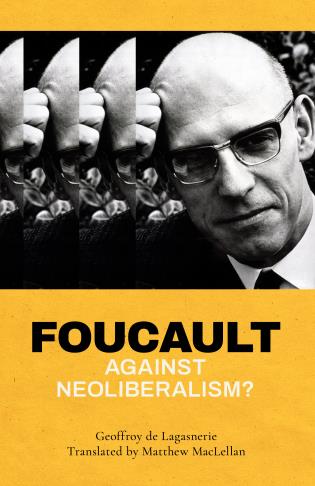
Geoffroy de Lagasnerie, Foucault against Neoliberalism?, Translated by Matthew Maclellan, Rowman & Littlefield, 2020

Use the discount code RLINEW20 to receive a 30% discount

In the late 1970s, Michel Foucault dedicated a number of controversial lectures on the subject of neoliberalism. Had Foucault been seduced by neoliberalism? Did France’s premier leftist intellectual, near the end of his career, turn to the right? In this book, Geoffroy de Lagasnerie argues that far from abandoning the left, Foucault’s analysis of neoliberalism was a means of probing the limits and lacunae of traditional political philosophy, social contract theory, Marxism, and psychoanalysis. For Lagasnerie, Foucault’s analysis was an attempt to discover neoliberalism’s singularity, understand its appeal, and unearth its emancipatory potential in order to construct a new art of rebelliousness. By reading Foucault’s lectures on neoliberalism as a means of developing new practices of emancipation, Lagasnerie offers an original and compelling account of Michel Foucault’s most controversial work.

Geoffroy de Lagasnerie is Professor of Sociology and Philosophy at the Ecole Nationale Supérieure d’Arts de Paris-Cergy in Paris, France.

Matthew MacLellan is an Adjunct Professor of Political Studies, Cultural Studies, and Philosophy at Mount Saint Vincent University, Halifax, Nova Scotia, Canada

Johnson, P.
Critique as ideology critique in a neoliberal age
(2020) Philosophy and Social Criticism, 46 (7), pp. 810-828.

DOI: 10.1177/0191453719860229

Abstract
Neo-liberalism is not working but carries on regardless. A society and all of its institutions modelled on market logics and imperatives has produced system crisis and has lost widespread popular support. To account for neo-liberalism’s continuing grip, we must submit this project to ideology critique. Max Horkheimer offers some relevant insights into what this requires. Ideology critique needs to come up with a competing measure of progress, it has to demonstrate why this ought to be the standard and it needs to expose the means by which this alternative is blocked. This article suggests that the normativity that underpins a social democratic project is best placed to prosecute these key tasks in a neo-liberal and historicizing age. It draws upon two major accounts of the ideological battlefield that has been staked out between neo-liberal and social democratic projects, looking to Wolfgang Streeck and Michel Foucault to identify the cultural resources that are available to, and the blocking strategies that have to be negotiated by, ideology critique in neo-liberal times. Finally it, turns to György Markus’s fine-grained and critical reading of the tasks of ideology critique outlined by Karl Marx. This section puts ideology critique into dialogue with a social democratic normativity in order to better consider the traction of ideology critique in a neo-liberal age. © The Author(s) 2019.

Author Keywords
Foucault; ideology critique; Markus; neo-liberalism; Streeck

Louise Owusu-Kwarteng, ‘Whoever holds the scissors wields the power’: An auto/biographical reflection on my ‘Hairstory’ (2020) Women’s Studies International Forum, 82, art. no. 102405
https://doi.org/10.1016/j.wsif.2020.102405

Abstract
This paper provides an auto/biographical account of my hair journey, with specific emphasis on my hairstyle changes, and their ‘inextricable links’ to my identity and self-presentation (Bankhead and Johnson, 2014) at different stages in my life. In doing so, reference is made to the work of Anthony Giddens (1991) Erving Goffman (1950) and Judith Butler (1990). In addition, I discuss how for Black women, ‘hair’ is also a continual source of political debates. These centre on whether particular styles (e.g relaxing (chemical straightening), and/or weave), mean we present ourselves in ways reflecting European (often hegemonic) beauty standards, rooted in longstanding negative representations of ‘tightly curled’ African hair. Conversely, are growing numbers of Black women (including me) who opt for ‘natural’ hair, choosing to present ourselves in ways which consciously reject hegemonic standards of beauty? Or are these hairstyles simply a matter of choice and/or convenience? Drawing on the work of Black Feminist researchers Teihasha Bankhead, Tabora Johnson (2014), and Cheryl Johnson (2009), I describe ‘brushes’ with these issues in Black hair salons, which impacted on my experiences in this context. Other issues, such as extraordinary lengths of time spent waiting to be seen are discussed, alongside power relationships existing between the hairstylist/salon owners and the clients, arising from these situations. In doing so Foucault’s notions of power (1984) and Freund et al’s discussion of time and power (2003) are referred to. © 2020 Elsevier Ltd

Index Keywords
biography, feminism, hair, political power, power relations, womens status; Europe

Thomas Ahrens, Laurence Ferry, Rihab Khalifa, Governmentality and counter-conduct: A field study of accounting amidst concurrent and competing rationales and programmes
(2020) Management Accounting Research, 48, art. no. 100686.

https://doi.org/10.1016/j.mar.2020.100686

Abstract
This paper contributes to the diverse and growing stream of accounting research on Foucault’s notion of counter-conduct, which is broadly concerned with the uses of accounting in the development of alternative ways of governing. Its key problematic lies in the roles that accounting can play in the intertwining of particular practices of governing, for instance, by underpinning practices that facilitate political campaigning, making specific policy choices, and creating new administrative arrangements. We illustrate our argument with some of the ways in which Newcastle City Council (NCC) used accounting to manoeuvre between the programmes of localism, centralism, devolution, austerity, and marketisation to develop novel forms of counter-conduct in response to austerity funding cuts. We show how accounting was used to underpin a multi-facetted counter-conduct that sought to profile itself locally and nationally against austerity as a highly visible and controversial programme of government. However, accounting also served to undermine NCC’s own counter-conduct, for example, through its engagement with longer established programmes, such as marketisation, and by rationalising the council’s administrative responses of austerity cuts. © 2020 Elsevier Ltd

Author Keywords
Accounting; Austerity; Counter-conduct; Devolution; Governmentality; Local government; Localism; Public sector budgeting

Beattie, L., Educational leadership: Producing docile bodies? A Foucauldian perspective on Higher Education. Higher Education Quarterly. 2020; 74: 98– 110.

https://doi.org/10.1111/hequ.12218

Open access

Abstract
The aim of this paper is to contribute to a long‐standing critical tradition in the educational leadership literature through an analytical examination of the idiosyncrasies of leadership in Higher Education institutions (based on the UK example). It applies a postmodern way of thinking to the educational leadership phenomenon to problematise and challenge the traditional views on the trajectories of power in Higher Education institutions, utilising Foucault’s key theoretical units of discipline, governmentality and biopolitics as a toolbox for dissecting the implications of neoliberal ideology on the leadership praxes. Significantly, the paper demonstrates how the engagement with Foucault’s three modes of objectification—dividing practices, scientific classification and self‐subjection—can expose the ways, in which the roles of educational leaders become re‐configured into economic‐rational individuals or subjects, who are compliant with the imposed requisites of the government’s neoliberal agendas. The paper concludes that Foucault’s theoretical perspectives could be used as a methodological template for a deeper critical analysis of leadership practices, equipping academics with additional tools for critiquing the existing boundaries of neoliberalism and intervening in the transformation of the social order by undertaking an investigation into the practices of governmentality, as suggested by Foucault.

Moreno Pestaña, J.L.
Oedipus Rex as a philosophical and political strategy
(2020) Sociological Review, 68 (5), pp. 1092-1107.

DOI: 10.1177/0038026119900117

Abstract
This article studies Michel Foucault’s interpretation of the tragedy Oedipus Rex. The analysis seeks to uncover the various intellectual strategies around his study. First, Foucault takes a position in the political debate about prisons in France in the early 1970s. Second, his analysis of the tragedy contributes to position his work in the field of the philosophical history of truth, by singularising his project and separating it from the dominant models of the history of philosophy. Third, Foucault aims to differentiate himself from the results of the historical work of the Paris School. This article analyses how Foucault depends on these interpretations and how it helps him to acquire philosophical relevance. Through the sociology of intellectual history’s perspective, the article elaborates the contributions and limits of Foucault’s perspective. © The Author(s) 2020.

Author Keywords
Michel Foucault; political philosophy; sociology of intellectuals; sociology of knowledge; sociology of philosophy

Amy Allen, The Politics of ourselves, from Foucault Across the disciplines, Online on Soundcloud, 13 July 2019

See also Amy Allen’s book The Politics of ourselves, 2007, 2013

Recently Published Book Spotlight: How Propaganda Became Public Relations Interview with Cory Wimberly by Nathan Eckstrand, Blog of the APA, July 6, 2020

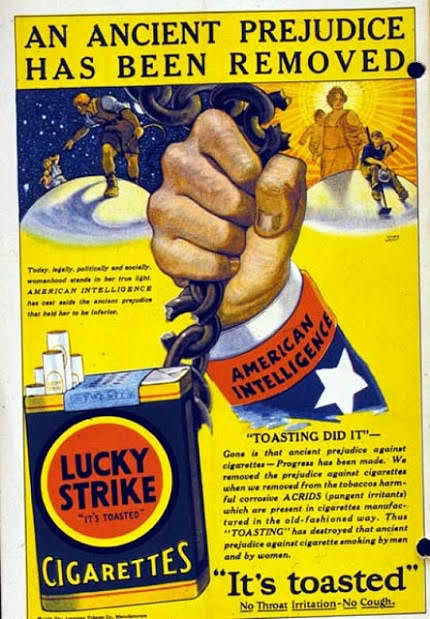
This edition of the Recently Published Book Spotlight is about Cory Wimberly‘s How Propaganda Became Public Relations: Foucault and the Corporate Government of the Public. Cory Wimberly is Associate Professor of Philosophy at the University of Texas Rio Grande Valley. His research primarily focuses on corporate governmentality—analyzing the corporate apparatuses responsible for the guiding and transforming public conduct. Wimberly’s past work has focused on propaganda and public relations and his current work is exploring other areas of corporate governmentality including marketing, advertising, and industrial design.

What is your work about?

How Propaganda Became Public Relations: Foucault and the Corporate Government of the Public is a philosophical investigation into the transformative effect propaganda has on us as individuals, on us as publics, and on society more broadly. I argue that propaganda does far worse than just lie to us: modern propaganda aims to transform us into the kind of subjects who carry out a particular line of conduct freely and as a key part of our identity. In other words, propaganda aims to transform who we are as individuals and as publics so that we become the kind of subjects who behave as the propagandists’ want as a matter of course and disposition. For example, why does someone spend an exorbitant amount on yoga pants only to wear them around the house? Or hoard assault rifles? Often, it is because they are convinced that a key aspect of their identity lies in that ownership; those goods have become a necessary extension of their very being. In Foucault’s language, propaganda is an apparatus that governs through subjectification—it directs our conduct through transforming our subjectivity—and it is not just a technique of mass deception as so many assume.