Foucault News

News and resources on French thinker Michel Foucault (1926-1984)

Richard Smith, The faults and dangers of an iatrocracy, The BMJ Opinion, August 11, 2020

The first thing that struck Bernard-Henri Lévy, arguably France’s leading public intellectual, about the covid-19 pandemic was the rise of “medical power.” In his short, enjoyable, and provocative book The Virus in the Age of Madness he explains why such power is both undeserved and dangerous.

Now aged 71, Lévy is one of the Nouveaux Philosophes inspired by among others Michel Foucault, and he reminds us that Foucault observed that governments have learnt as much from the hospital as the prison. In The Birth of the Clinic Foucault described the management of outbreaks of plague in the 18th century: in Lévy’s words, “exile to an island or a ghetto on the outskirts of the city, as was the practice with lepers and the insane, gave way to confinement of entire cities, where all citizens were under house arrest and neighborhood watch patrols wrote up holdouts. Once night fell, everyone was out on their balcony, not to applaud the caregivers but to enable the sanitary authorities to tally up the dead, the dying, and the living.”

“But,” observes Lévy, “until now, never had things gone quite this far.” He emphasises the uniqueness of how we have responded to this latest in a long line of pandemics, including to the “Hong Kong Flu” of 1968 that killed a million people. “Never had we seen, as we did in Europe, heads of state surrounding themselves with scientific councils before daring to speak.”
[…]

With thanks to Federico Soldani for this link
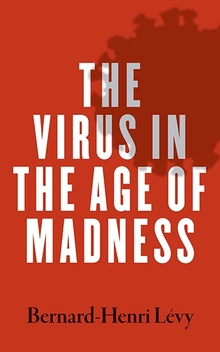
Bernard-Henri Levy, The Virus in the Age of Madness, Yale University Press, 2020

Chapter 1: Come Back, Michel Foucault—We Need You!

A trenchant look at how the coronavirus reveals the dangerous fault lines of contemporary society?

As seen on CNN’s Fareed Zakaria GPS: “A stirring alarm addressed to an unsettled world.” (Kirkus Reviews)

Forget the world that came before. The author of American Vertigo serves up an incisive look at how COVID-19 reveals the dangerous fault lines of contemporary society.

With medical mysteries, rising death tolls, and conspiracy theories beamed minute by minute through the vast web universe, the coronavirus pandemic has irrevocably altered societies around the world. In this sharp essay, world-renowned philosopher Bernard-Henri Lévy interrogates the many meanings and metaphors we have assigned to the pandemic—and what they tell us about ourselves.

Drawing on the philosophical tradition from Plato and Aristotle to Lacan and Foucault, Lévy asks uncomfortable questions about reality and mythology: he rejects the idea that the virus is a warning from nature, the inevitable result of global capitalism; he questions the heroic status of doctors, asking us to think critically about the loci of authority and power; he challenges the panicked polarization that dominates online discourse. Lucid, incisive, and always original, Lévy takes a bird’s-eye view of the most consequential historical event of our time and proposes a way to defend human society from threats to our collective future.

A portion of the author’s proceeds will be donated to Binc (The Book Industry Charitable Foundation).

Bernard-Henri Lévy is a philosopher, activist, filmmaker, and the author of over thirty books. He is widely regarded as one of the West’s most important public intellectuals.

With thanks to Federico Soldani for this link

A Joint Session with The Centre for Research in Post-Kantian European Philosophy at the University of Warwick:
Miguel Beistegui, Claire Blencowe, Henrique Carvalho, Stuart Elden, Daniele Lorenzini, Goldie Osuri, Irene Dal Poz, Federico Testa, and Bernard E. Harcourt
read and discuss The Punitive Society by Michel Foucault & A conversation with playwright Cori Thomas and Adnan Khan on the play LOCKDOWN

Thursday, January 7, 2021
12:15 – 2:45 pm EST / 5:15-7:45 pm UK time

Please RSVP here.

Cristóbal Durán Rojas, Iván Torres Apablaza, El impasse de la resistencia. La intersección entre Foucault y Deleuze a propósito de la salida del poder, Hybris, Vol. 11, Núm. 2 (2020)

The impasse of resistance. The intersection between Foucault and Deleuze regarding the exit from power

Open access

RESUMEN
En este trabajo intentamos proponer una lectura centrada mayoritariamente en algunos de los trabajos tardíos de Michel Foucault, desarrollados desde el primer tomo de su Histoire de la sexualité, de 1976. En dicha lectura buscamos advertir que la distancia entre Foucault y Deleuze, y que se marca incluso en una ruptura explícita con posterioridad a la publicación de dicho libro, no obedece tanto a la “fascinación” de Foucault por el poder, a su recusación perentoria del deseo y de su potencia de fuga, o a su supuesto abandono del análisis detallado de los dispositivos. Según nuestra lectura, la distancia tomada por Deleuze advertirá en ese impasse la posibilidad de una resistencia que no se ejerce sobre los dispositivos y las formaciones de poder, y que proyecta el problema del poder hacia modos de vida, según la lógica de una modulación de la vida, muy semejante a aquella esbozada por Foucault en sus últimos años, creando una singular consonancia entre ambos proyectos de pensamiento.

PALABRAS CLAVE
Poder; placer; deseo; resistencia; subjetivación

stuartelden's avatarProgressive Geographies

In a fascinating interview about Foucault, ‘The Materiality of a Working Life‘ (open access; original French), Daniel Defert talks about his daily routines, and how these were similar year round:

No no, weekends didn’t exist! We would go to see art exhibitions on the Saturday afternoon, certainly, but the very notion of the weekend didn’t exist… Especially a public holiday, a Christmas day without writing, that was impossible! Foucault rarely put dates on his writings, but he would have been quitecapable of putting “December25th” on something, that being a daywhen, as he said,“nothing hashappened for several thousand years.”

I pick up on this story in The Early Foucault, but it’s not a model I try to follow. Although the winter sun and cycling won’t happen this year, I will be taking a few days off. Happy Christmas and I’ll be back before the New Year with…

View original post 8 more words

Patricia Ticineto Clough, Deleuze’s Foucault, Coils of the Serpent, issue 6 (2020): Control societies II: Philosophy, politics, economy, pp. 26-32

Open access

Extract
When in 2013, I taught a graduate seminar on Foucault at the Graduate Center, CUNY, my introductory lecture for the course was titled “Au Revoir to Deleuze’s Foucault.” Perhaps the lecture title was only a note to myself, a reminder that when earlier in 2006, I taught a graduate seminar on Foucault, I had ended the course with Deleuze’s Foucault, where Deleuze traced the movement in Foucault’s thought from focusing on the archive to focusing on the diagram (cf. Deleuze 1988). Arriving at my last lecture to discuss the book, I announced to the class with much enthusiasm that Deleuze’s Foucault touched exactly on all we had discussed that semester. The blank faces of the students suggested that they had not had the experience I had had reading Foucault. “Whatever could Deleuze be talking about?” students instead responded. If, in 2006, students found Deleuze’s Foucault a mystifying reading of Foucault’s works, the students of the 2013 seminar simply felt no urgency to read it at all. Perhaps I felt the same: Au Revoir to Deleuze’s Foucault.

With very best wishes for the festive season and for Christmas from Foucault News in this very different kind of year. Keep safe.

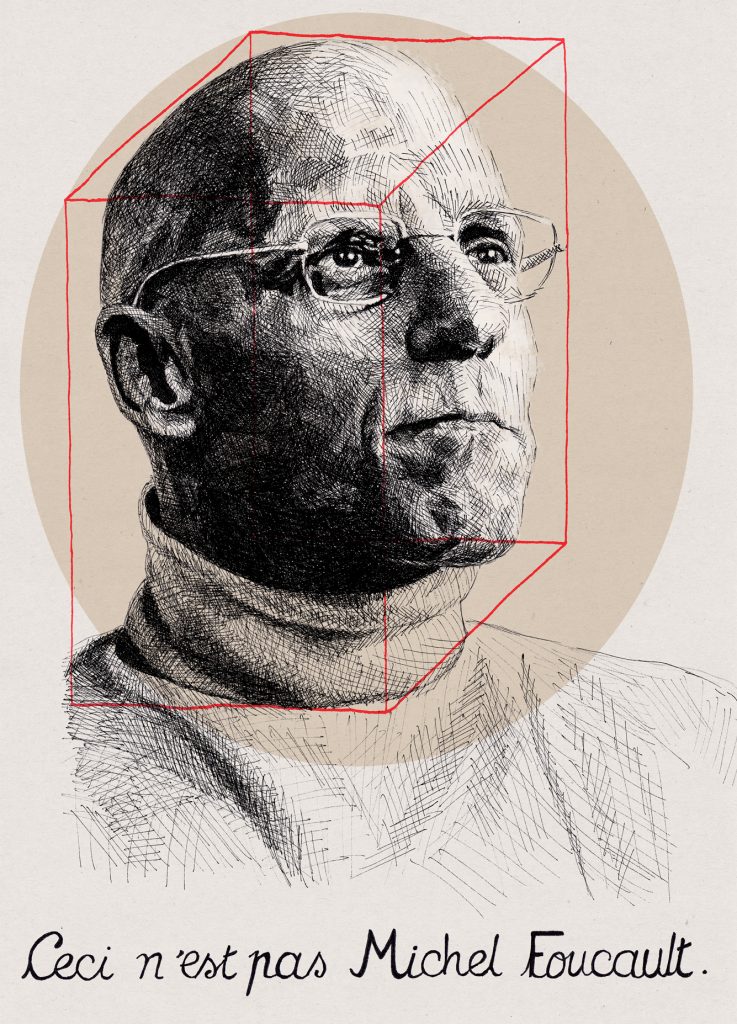
From Ceci n’est pas Michel Foucault, Popper’s Mag, 14 MARS 2017

Heather Brunskell-Evans. Interview with Julian Vigo, Savage Minds, October 25 2020. Podcast

Heather Brunskell-Evans discusses John Stuart Mill, Michel Foucault, identity politics, the current philosophical and legal discourses on sexual violence, and the politics of “kindness” with Julian Vigo. Focusing upon many of the misrepresentations of Foucault’s work in recent years, Brunskell-Evans offers ways in which we might better understand liberalism and how Foucault asks us to consider both the body and our presumed freedoms.

If you’ve been thinking about supporting Savage Minds, but have not yet done so, please consider taking out a subscription, by supporting our work on Patreon or through a one-off donation. We really can’t do this without you and we depend on financial support which means that we can cover the news unfettered by corporate pressure.

Editor: UK Politician Liz Truss’s comments unexpectedly led to Foucault trending on twitter in the UK.

Charlotte Lydia Riley, Liz Truss doesn’t know about Foucault, but she also doesn’t care, The Guardian, 19 December 2020

Ironically, rightwing politicians have invented a zombie ‘postmodernism’ that cannot be killed by facts

Academics in the UK have been known, in moments of weakness, to look wistfully across the Channel at European politicians, who seem so cultured, and so intellectual, compared to some of our Westminster grey suits. Wouldn’t it be wonderful, they think, to have politicians who really kept up to date with academic scholarship? Who enjoyed talking publicly about philosophy or history or art? Imagine if our political class read Foucault!

Be careful what you wish for. On Thursday, academics across the country were bemused to discover that Liz Truss was talking about their work, although not in the way they might have hoped. In a speech called The Fight for Fairness, the equalities minister talked about her own childhood in Leeds in the 1980s, where, apparently, schoolchildren in were taught about racism and sexism, but – inexplicably – not how to read and write. “These ideas,” Truss continued, “have their roots in postmodernist philosophy – pioneered by Foucault – that put societal power structures and labels ahead of individuals and their endeavours.” According to Truss, “in this school of thought” – postmodernist philosophy? – there is “no space for evidence”, because “truth and morality are all relative”.

It is surprising to hear that Leeds City council was such a hotbed of Foucauldianism, even in the 1980s. But then again, Truss speaks without any evidence: this is not a remotely accurate description of the French philosopher’s work. When Foucault writes about the relationship between “power” and “knowledge”, he is describing the ways that, historically, power has reinforced itself by shaping and controlling knowledge – which, he would say, is always produced within the context of power structures.

[…]

You can find a few Foucault iphone covers on Redbubble
Foucault – stylized iPhone Case & Cover

Designed by jaxxmc, Redbubble site, December 2020

Another case designed by nodeeperblue