Foucault News

News and resources on French thinker Michel Foucault (1926-1984)

Sechser: Heterotopic Nightclub in Vienna, Austria by Söhne & Partner Architects, Amazing Architecture, 2020

Architect’s Statement:

The design concept of the new bar and nightclub is Mannerist. Mannerism has always stood for a time of change in the historical context and is represented by keywords such as adornment, uncommonness, opulence, artificiality, and abstruseness. To keep up with the current trend of Mannerism, the location was developed with clashing styles as well as opulence, by using fine fabrics and wallpapers from House of Hackney London.

image © Severin Wurnig


[…]

Heterotopia (from gr. hetero (different) and topos (place) is a term defined by Michel Foucault in the early years (1967) of his Philosophy, which he used for places and their intrinsic systematic meaning, which the current norms have not at all or not completely been implementing or which function according to their own rules. Foucault assumes that there are spaces that are reflecting the social relations in a special way, by representing, negating and inverting them.

“In the Stubborn, Bright Sun of Polish Liberty”: Foucault in Warsaw with Remigiusz Ryziński and Sean Bye, Outsider Theory, August 2021

Podcast discussion

About this Episode
“Foucault in Warsaw,” just out in English translation from Open Letter Books, is a fascinating investigation of the time Michel Foucault spent as a cultural attaché in Warsaw in the late 1950s. The book is at once an intellectual biography of the philosopher during the pivotal year when he wrote much of his first major work, “History of Madness,” an archival detective story set amidst the records of the Polish secret police, and an oral history of the underground gay community of Communist Poland. Author Remigiusz Ryziński and translator Sean Bye join me for a discussion of the book, its various contexts, and the significance of Foucault’s Polish sojourn for the development of his thought.

Buy “Foucault in Warsaw”: https://www.openletterbooks.org/products/foucault-in-warsaw

Read an excerpt: https://www.wordswithoutborders.org/article/june-2018-queer-issue-ix-foucault-in-warsaw-remigiusz-ryziski-sean-bye

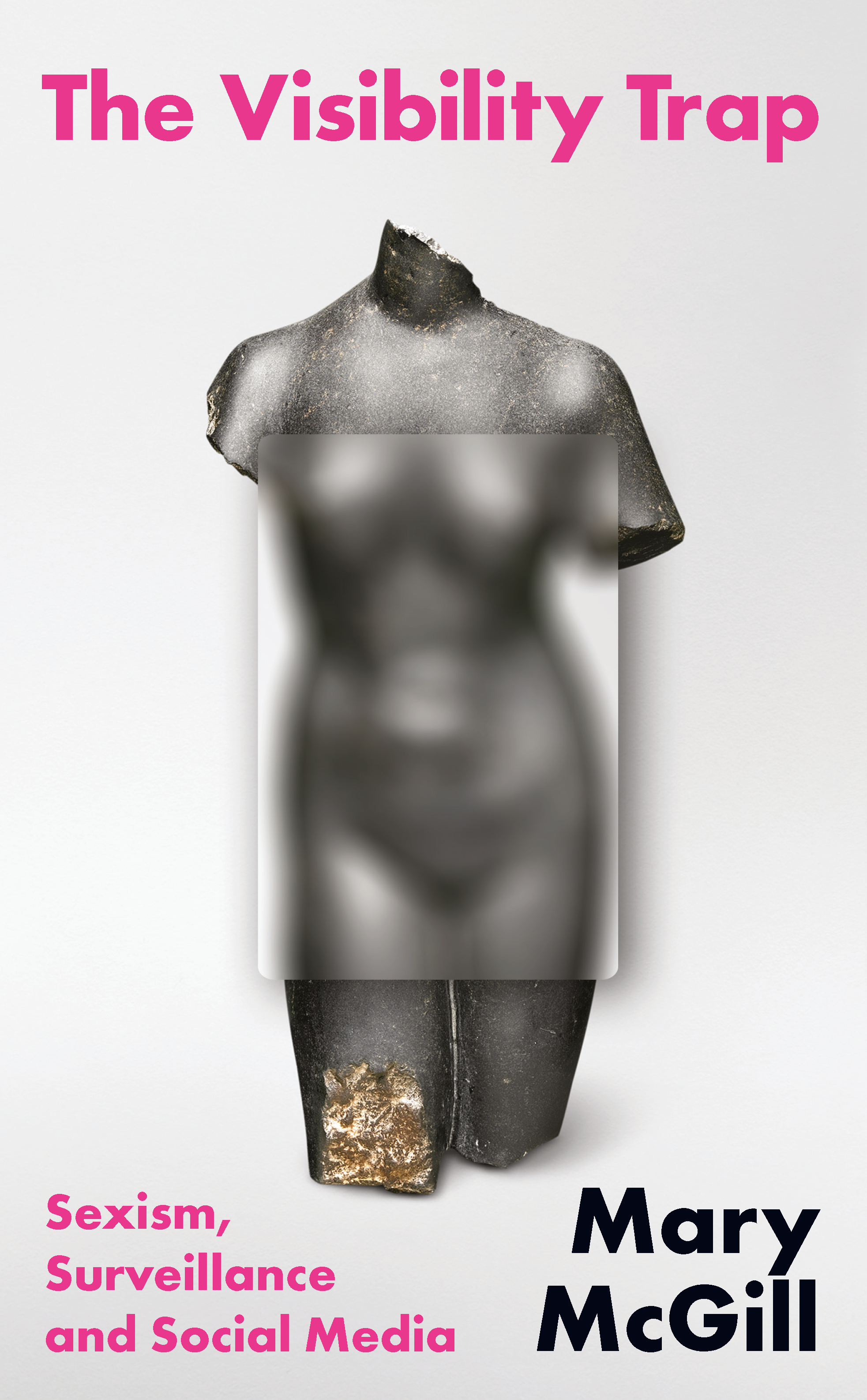
Mary McGill, The Visibility Trap, Sexism, Surveillance & Social Media, New Island. 2021

A feminist guide to navigating self-representation on social media

Social media is a new type of public space that has revolutionised the way women express themselves, placing the power of representation in female hands like no technology before. But this increased visibility looks both ways, with the gazed upon also gazing back through platforms designed for judgement and surveillance.

A man-made tool, social media is now deeply entwined with women’s lives in an always-on culture where new and intrusive forms of comparison, shaming and watchfulness are completely normalised and women’s bodies, minds and emotions are picked apart. While many are acutely aware of this ‘visibility trap’, taking ownership of it remains a minefield.

In The Visibility Trap, Mary McGill blends feminism, media studies and lived experiences to explore the contradictions and dangers of online visibility for women, asking how we can build better, safer digital spaces for all. From current research to real-life testimonies, via the Kardashian Industrial Complex (KIC) to image-based sexual abuse — ‘revenge porn’ — and its belated criminalisation, she offers urgent and welcome insights into using social media more consciously, powerfully and positively. This is a must-read for anyone who loves or hates social media; for the guardians of future social media users and for anyone else who is still half-on, half-off this most twenty-first century of obsessions.

DR MARY MCGILL is a digital culture researcher and journalist. A former broadcaster, she is a regular media contributor in Ireland and the UK. Her work has appeared in a range of print, digital and broadcast titles in Ireland, the UK and the US including Broadly, BBC, British Vogue, VICE, Refinery29, The Pool, Sunday Business Post, Irish Independent, Irish Times, TV3 and RTÉ. From 2015 to 2020 she was a Hardiman Scholar at the National University of Ireland, Galway, where her doctoral study explored gender, surveillance and selfie-practices. Her 2016 TEDX Talk, ‘Young women, narcissism and the selfie phenomenon’, has been viewed almost 300,000 times.

Mahbub Rashid, Physical Space and Spatiality in Muslim Societies: Notes on the Social Production of Cities, University of Michigan Press, 2021

Mahbub Rashid embarks on a fascinating journey through urban space in all of its physical and social aspects, using the theories of Foucault, Bourdieu, Lefebvre, and others to explore how consumer capitalism, colonialism, and power disparity consciously shape cities. Using two Muslim cities as case studies, Algiers (Ottoman/French) and Zanzibar (Ottoman/British), Rashid shows how Western perceptions can only view Muslim cities through the lens of colonization—a lens that distorts both physical and social space. Is it possible, he asks, to find a useable urban past in a timeline broken by colonization? He concludes that political economy may be less relevant in premodern cities, that local variation is central to the understanding of power, that cities engage more actively in social reproduction than in production, that the manipulation of space is the exercise of power, that all urban space is a conscious construct and is therefore not inevitable, and that consumer capitalism is taking over everyday life. Ultimately, we reconstruct a present from a fragmented past through local struggles against the homogenizing power of abstract space.

Pat Norman, Power, Knowledge and Palpatine. In Barnes, Naomi, Bedford, Alison (Eds.), Unlocking Social Theory with Popular Culture, Remixing Theoretical Influencers, Springer, 2021

Abstract

In this chapter, I look at the way Star Wars can help us to understand Michel Foucault’s concepts of power/knowledge and governmentality. Foucault argued that power and knowledge interact and produce each other, and this relationship is instrumental in techniques of governing people (or subjects). The Jedi in the Star Wars galaxy provide a case study in how the strategies and tactics of power are deployed to shape institutions of government and to apply these to the formation of the self. Star Wars is a huge pop cultural phenomenon, spanning decades. The prequel trilogy captures the long decline and fall of the Old Republic—a manipulation by the evil Palpatine who engineered both sides of this conflict from the shadows. In this sense, it is a case study in the exercise of power over knowledge. Foucault’s ideas about power/knowledge and governmentality are useful in a wide range of fields: from education to political science, economics to sociology. Just as the Force and the logic of the Jedi shape and produce identity, the social and governing structures of our world do the same. This essay will explore how Foucault’s idea of power can be observed in the galaxy of Star Wars and how those lessons might be applied to our own, much closer, contemporary world.

Keywords
Foucault Performativity Archaeology of knowledge Genealogy of knowledge Governmentality Discourse

Katherine Firth, 5 Ways Hogwarts Helps Us Understand Foucault’s ‘Docile Bodies’. In Barnes, Naomi, Bedford, Alison (Eds.), Unlocking Social Theory with Popular Culture, Remixing Theoretical Influencers, Springer, 2021

Abstract
Hogwarts, the school in the Harry Potter novel series, controls and shapes the experiences and adventures of the protagonists in ways that are best understood through the work of Michel Foucault. Michel Foucault (1926–1984) is a French post-modern philosopher most notable for his theories of power and social structures. Foucault is one of the most influential thinkers in the humanities, and thousands of academic books and articles use theoretical tools based on his work. The Harry Potter novels (1997–2007) by J.K. Rowling are the best-selling book series in history and have become the centre of a pop culture network including blockbuster films (2001–2011, 2016–ongoing), a digital platform Pottermore, video games, spin-off books, a play, amusement parks and fan works. Foucault’s ‘Docile Bodies’, from perhaps his best known book Discipline and Punish (1975), is often taught at foundation level in sociology, cultural studies, historical studies, literary studies and education.

This essay will explain how Foucault’s understanding of the traditional school is parallel to Rowling’s vision of Hogwarts. Foucault’s theories show how school rules and norms train students to be members of modern society through classroom discipline, school sport, timetables, being watched, and being publicly punished. These are also central aspects of Hogwarts’ organisation, and they are what makes it easy for Hogwarts to be transformed into other sites of disciplinary control and observation across the series: a prison (book 3), a sporting arena (book 4), a totalitarian state (book 5), and a battlefield (book 7). Foucault’s writing is famously challenging for undergraduate students, for example, the ideas about school governmentality in ‘Docile Bodies’ are what Foucault would later call ‘contact between technologies of domination of others and those of the self’ (1988). However, Foucault’s ideas become much clearer when explored through concrete examples that are likely to be familiar even to people who have never read the books: in Hogwarts’ official institutional structures like Quidditch and House Points, as well as apparently subversive magical items like the Time Turner, Marauder’s Map and the Invisibility Cloak. These five exemplars will be the structuring principle for the essay-listicle.

Keywords
Foucault Hogwarts Docile bodies Discipline Subversion Resistance Enclosure Surveillance Functional sites Machine

Barnes, Naomi, Bedford, Alison (Eds.), Unlocking Social Theory with Popular Culture, Remixing Theoretical Influencers, Springer, 2021

This book demonstrates how pop culture examples can be used to demystify complex social theory. It provides tangible, metaphorical examples that shows how it is possible to “do philosophy” rather than subscribe to a theorist by showing that each theorist intersects and overlaps with others.

The book is embedded in the literary theory that tapping into background knowledge is a key step in helping people engage with new and difficult texts. It also acknowledges the important role of popular culture in developing comprehension.

Using a choose your own adventure structure, this book not only shows students of social theory how various theories can be applied but also reveals the multitude of possible pathways theory provides for comprehending society.

Naomi Barnes is a Lecturer in Literacy at Queensland University of technology. Her research is in digital rhetoric the relationships humans have with each other on online, particularly in social media. She uses the socio-cultural theories and philosophical traditions which help us better understand how technology has changed the way we communicate. Naomi has published academic papers that use cyborgs, chthonic monsters and Frankenstein for theory building.

With a background in secondary English and History education, Alison Bedford was awarded her doctorate in English Literature in 2019 and now works both in the secondary and tertiary sectors. Alison’s thesis applied Foucault’s theory of ‘founders of discursivity’ to Mary Shelley’s Frankenstein to argue that Shelley established the moral space that the genre of science fiction now occupies. Her research interests include science fiction as a genre and its social function; secondary History curriculum and pedagogy, and popular culture.

Table of contents (16 chapters)

Remixing Influencers: Academics Reading and Writing About Philosophy and Pop Culture
Barnes, Naomi (et al.)

Westworld
Thomas, Matthew Krehl Edward (et al.)

The Circle of Hegemony
Prosser, Howard

Where the Truth Lies: Peirce Through the Lens of
Ferguson, Joseph (et al.)

Playing Language Games with BB8
Grant, Rhiannon

The Years and Years of Late Modernity: Ulrich Beck and Risk Society
Barnes, Naomi

Orange is the New Other
Bedford, Alison (et al.)

‘Down Here, It’s Our Time’: Bronfenbrenner’s Ecological Systems and
Quickfall, Aimee

Choose Your Driver: How
Johnson, Karl

5 Ways Hogwarts Helps Us Understand Foucault’s ‘Docile Bodies’
Firth, Katherine

Power, Knowledge and Palpatine
Norman, Pat

A Thousand Gateaux: Rethinking Deleuze and Guattari Through
Sidebottom, Kay

“You Pass Butter”: The Messages of Media and Technology in
Holland, Travis

Ordinary Care in Extraordinary Worlds: Murakami and Decentered Care in
Valentine, Riley Clare

Distribution of the Sensible in Besźel and Ul Qoma: Reading Rancière Alongside Miéville’s
Záhora, Jakub

Coming of Age: Towards a Theory of Critical Editorship
Barnes, Naomi

Gøtzsche-Astrup, Johan. “The Political Signification of Riots: A Dispositive Perspective on the 2011 England Riots.” Journal of Sociology, (August 2021). https://doi.org/10.1177/14407833211037399.

Abstract
This article suggests a new perspective on the political signification of riots, using the 2011 England riots as a case. The sociological literature tends to look for the political signification of riots in the riots themselves. Drawing on Michel Foucault’s notion of the dispositive, the article develops a new approach that analyses the optical grids in which riots are made visible as objects for thought and action that can be either political or apolitical. By analysing the case of the 2011 England riots, the article shows how the dispositives that made the riots visible make it possible to ascribe a both obscure and radical political signification to the riots. The article opens up a new line of inquiry about the relation between riots and politics, and allows us to reconsider the political signification of riots.

Keywords
disorder, dispositives, Foucault, protest, riots

Soussloff, Catherine M. “Painting for Fools.” Theory, Culture & Society, (August 2021).
https://doi.org/10.1177/02632764211013379.

Abstract
Manuscripts and notes by Michel Foucault on the visual arts recently deposited at the Bibliothèque Nationale reveal a reliance on canonical oil paintings by the ‘old masters’; a respect for the primary sources in the history of European art; an understanding of the necessity of research in both literary and visual sources, particularly self-portraits; and a sense of the value that a certain philosophical milieu – beginning with Sade and Nietzsche and expanding to his near contemporaries, Bataille, Blanchot, and Klossowski – could offer to an understanding of paintings. The essay argues that Pierre Klossowski’s monumental drawing La Nef des fous (1990) provides an essential key for understanding the place of Hieronymus Bosch’s painting of the same title in History of Madness and the centrality of theories of similitude to Foucault’s thinking about visuality ca. 1960–74. The later significance of the figure of the artist for Foucault can be traced to these earlier writings on painting and madness.

Keywords
aesthetics, art, Foucault, History of Madness, Klossowski, painting, visuality

stuartelden's avatarProgressive Geographies

Acid Horizon podcast: ‘Foucault (With Hair)’ – discussion of The Early Foucault

On this episode, Adam and Will are joined by Stuart Elden to discuss his latest book, The Early Foucault. We discuss the academic experiences and personal relationships that were formative in the Foucault’s development as an intellectual. The conversation ranges from Foucault’s early interest in Hegelianism to the influence of Canguilhem, Hyppolite, Barraqué, Althusser, and others!

Available in different forms –

Google podcastApple Podcast

PatreonYoutube

View original post