Foucault News

News and resources on French thinker Michel Foucault (1926-1984)

Häberlen, J.C.
Heterochronias: reflections on the temporal exceptionality of revolts
(2021) European Review of History, 28 (4), pp. 531-548.

DOI: 10.1080/13507486.2021.1897530

Abstract
Drawing on Michel Foucault’s concept of Heterotopias, the article explores how we can understand revolts and revolutions as ‘heterochronian’ moments. Revolts turn spaces of ordinary everyday life, streets and squares, factories and universities, into ‘absolutely different’ spaces, at least for a moment. But these are also times that radically differ from normal times. Revolts, the article suggests, fall outside the normalcy of time. As an empirical example, this article explores the urban revolts of 1980–81 in cities such as Zurich, Amsterdam, and, most famously, West Berlin, discussing how activists themselves interpreted their revolts as temporary disruptions for which the moment mattered, no matter the long-term outcomes.

Author Keywords
radical left; squatting; temporality; urban revolts; West Berlin

Gavin Rae, Poststructuralist Agency. The Subject in Twentieth-Century Theory, Edinburgh University Press, 2020
Does the poststructuralist decentring of the foundational subject permit a coherent account of agency?

  • Analyses poststructuralist thinking on ‘the subject’ in detail, tying it to the often-ignored question of agency
  • Expands the scope of ‘poststructuralism’ beyond Deleuze, Derrida, and Foucault by also engaging with psychoanalytically orientated poststructuralists including Butler, Castoriadis, Kristeva and Lacan
  • Draws out the complicated link between poststructuralism and Lacanian psychoanalysis

Gavin Rae shows that the problematic status of agency caused by the poststructuralist decentring of the subject is a prime concern for poststructuralist thinkers. First, Rae shows how this plays out in the thinking of Deleuze, Derrida and Foucault. He then demonstrates that it is with those poststructuralists associated with and influenced by Lacanian psychoanalysis that this issue most clearly comes to the fore. He goes on to reveal that the conceptual schema of Cornelius Castoriadis best explains how the founded subject is capable of agency.

Gavin Rae is Senior Visiting Research Professor at the Universidad Complutense de Madrid, Spain. He is the author of Critiquing Sovereign Violence (Edinburgh University Press, 2019), Evil in the Western Philosophical Tradition (Edinburgh University Press, 2019), The Problem of Political Foundations in Carl Schmitt and Emanuel Levinas (Palgrave, 2016), Ontology in Heidegger and Deleuze: A Comparative Analysis (Palgrave, 2014) and Realizing Freedom: Hegel, Sartre and the Alienation of Human Being (Palgrave, 2011). He is co-editor of Subjectivity and the Political: Contemporary Perspectives (Routledge, 2018) and The Meanings of Violence: From Critical Theory to Biopolitics (Routledge, 2019).

stuartelden's avatarProgressive Geographies

Michel Foucault, “Literature and Madness: Madness in the Baroque Theatre and the Theatre of Artaud”, Theory, Culture and Society (requires subscription)

A translation of a piece by Foucault, online first in Theory, Culture and Society – part of the special issue on ‘Foucault before the Collège de France’ I am co-editing with Orazio Irrera and Daniele Lorenzini. The translation is by Nancy Luxon, and the text appeared in French in Critique and then Folie, Langage, Littérature, edited by Henri-Paul Fruchaud, Daniele Lorenzini and Judith Revel, Paris: Vrin, 2019.

Literature and madness dominate Michel Foucault’s early writings in the 1960s, and indeed much of his career. In this text, Foucault considers the relation between madness, language, and silence; the difficult frontier between language and literary convention; and the experience of madness within language. He moves from a meditation on madness, to a rare commentary on theatre…

View original post 104 more words

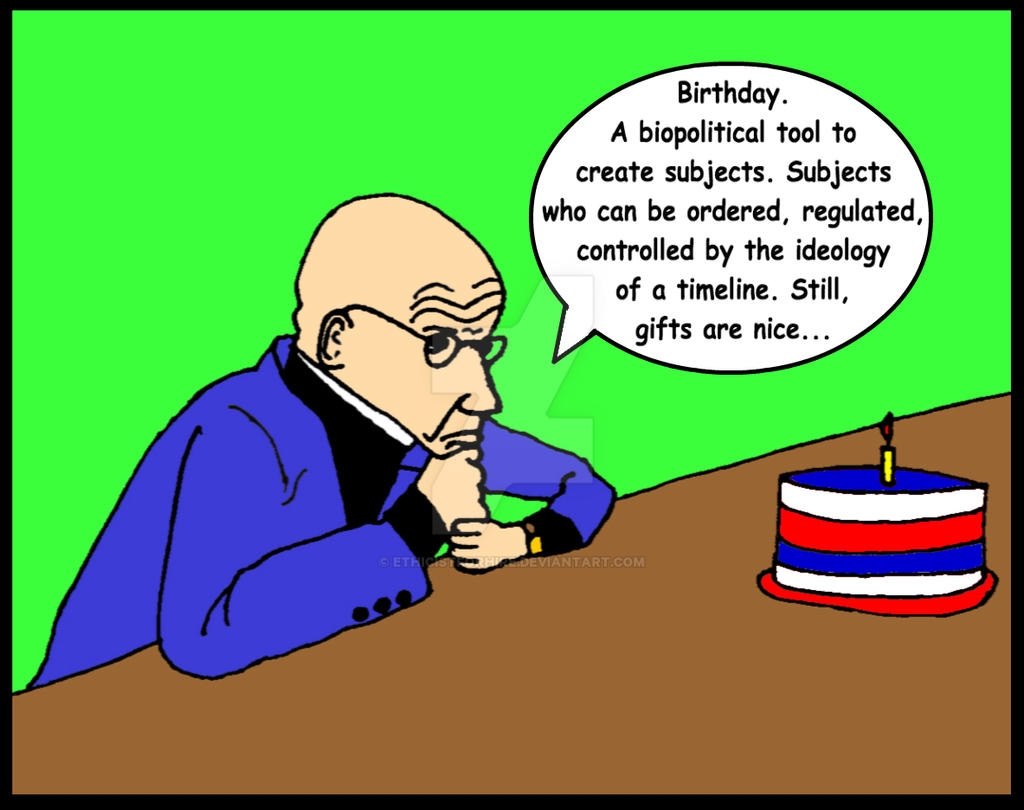
Michel Foucault, born 15 October 1926.
Image for sale by Ethicist for hire on the Deviant art site

Brady, D.
The circulatory panopticon: Real names, rail infrastructure and Foucault’s realist turn
(2021) Political Geography, 90, art. no. 102463

DOI: 10.1016/j.polgeo.2021.102463

Abstract
This article examines the contemporary Chinese rail system as a circulatory panopticon: an apparatus that uses the “natural” movements of the population to render them legible and safe. The panoptic effect of rail space has emerged only recently. The Chinese state’s introduction of the “real-name system” has made a state-legible identity an inextricable part of everyday life, and recent transformations in ticketing and station entry have placed it at the center of mobility practices as well. Synthesizing Foucault’s apparatus of security with Karen Barad’s realist conception of the apparatus, this article examines how the more-than-human elements of the rail system realize a panoptic assemblage out of the movements of passengers. Based on participant observation and interview data, this article examines three key elements of the rail system: the national identity card, the ticket, and the station entrance. Drawing on Barad’s account of diffraction, I analyze how the particular material characteristics of these things both function to realize the circulatory panopticon and also to introduce novel discontinuities and fractures. This paper makes two contributions. First, it argues for a greater attention to the question of reality in Foucault’s thinking: just as the art of government increasingly recognizes and calibrates itself against ‘reality,’ Foucault’s analysis of governmentality becomes increasingly realist. Second, it shows how infrastructure is simultaneously a font of state power and a source of problems for the state—a contradiction deeply relevant in China today. © 2021 Elsevier Ltd

Author Keywords
China; Citizenship; Infrastructure; Mobility; Panopticon

Meloni, M.
The politics of environments before the environment: Biopolitics in the longue durée
(2021) Studies in History and Philosophy of Science, 88, pp. 334-344.

DOI: 10.1016/j.shpsa.2021.06.011

Abstract
Our understanding of body–world relations is caught in a curious contradiction. On one side, it is well established that many concepts that describe interaction with the outer world – ‘plasticity’ or ‘metabolism’- or external influences on the body – ‘environment’ or ‘milieu’ – appeared with rise of modern science. On the other side, although premodern science lacked a unifying term for it, an anxious attentiveness to the power of ‘environmental factors’ in shaping physical and moral traits held sway in nearly all medical systems before and alongside modern Europe. In this article, I build on a new historiography on the policing of bodies and environments in medieval times and at the urban scale to problematize Foucault’s claim about biopolitics as a modern phenomenon born in the European eighteenth-century. I look in particular at the collective usage of ancient medicine and manipulation of the milieu based on humoralist notions of corporeal permeability (Hippocrates, Galen, Ibn Sīnā) in the Islamicate and Latin Christendom between the 12th and the 15th century. This longer history has implications also for a richer genealogy of contemporary tropes of plasticity, permeability and environmental determinism beyond usual genealogies that take as a starting point the making of the modern body and EuroAmerican biomedicine. © 2021 Elsevier Ltd

Author Keywords
Biopolitics; Environment; Foucault; Global history; Humoralism; Public health

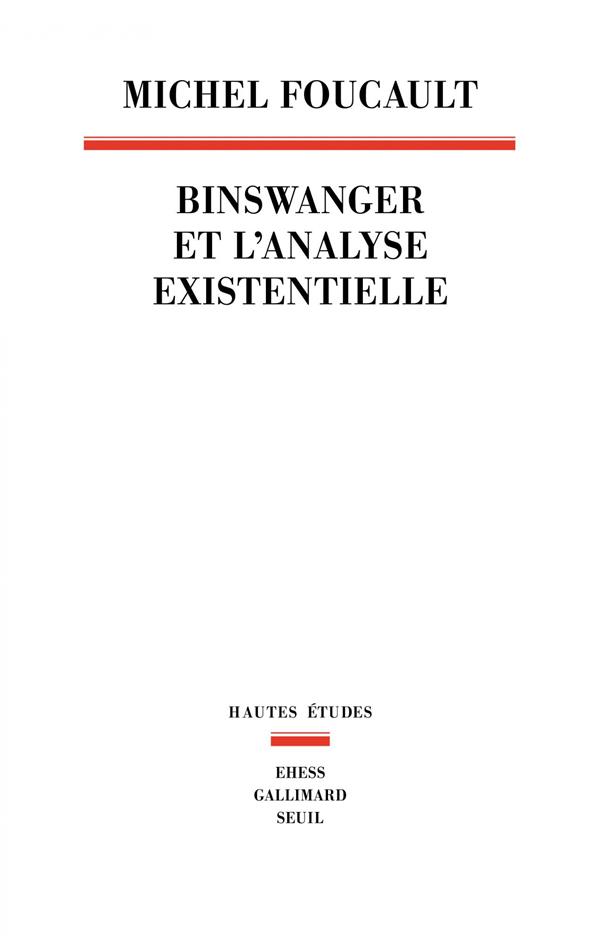
Michel Foucault, Binswanger et l’analyse existentielle : Manuscrit inédit, Gallimard/ Seuil Hautes Etudes 20 Mai 2021. Edition établie, sous la responsabilité de François Ewald, par Elisabetta Basso

En 1954 paraît en traduction française Le Rêve et l’Existence du psychiatre suisse Ludwig Binswanger, accompagné d’une introduction de Michel Foucault. Le philosophe y annonce un « ouvrage ultérieur » qui « s’efforcera de situer l’analyse existentielle dans le développement de la réflexion contemporaine sur l’homme ». Foucault ne publiera jamais ce livre, mais il en a conservé le manuscrit ici présenté. Il y procède à un examen systématique de la « Daseinsanalyse», la compare aux approches de la psychiatrie, de la psychanalyse et de la phénoménologie, et salue son ambition de comprendre la maladie mentale. Cette démarche l’accompagne dans sa quête de « quelque chose de différent des grilles traditionnelles du regard psychiatrique », d’un « contrepoids » ; pourtant il en souligne déjà les ambiguïtés et les faiblesses, en particulier une dérive vers une spéculation métaphysique qui éloigne de l’« homme concret ».

C’est en réalité à une double déprise que nous assistons : d’abord à l’égard de la psychiatrie, puis, à l’égard de l’analyse existentielle elle-même, qui le conduit bientôt à la perspective radicalement nouvelle de l’Histoire de la folie à l’âge classique. La marque de ce travail ne disparaîtra pas pour autant. En 1984, Michel Foucault présente de cette manière son Histoire de la sexualité : « Étudier ainsi, dans leur histoire, des formes d’expérience est un thème qui m’est venu d’un projet plus ancien : celui de faire usage des méthodes de l’analyse existentielle dans le champ de la psychiatrie et dans le domaine de la maladie mentale. »

Michel Foucault (1926-1984) est l’un des plus grand philosophes du XXe siècle. Son œuvre est traduite dans le monde entier.

Elisabetta Basso est spécialiste de la philosophie et de l’histoire de la psychiatrie du XXe siècle, elle est notamment l’auteure de Michel Foucault e la Daseinsanalyse (Milan, Mimesis, 2007). Elle a codirigé le volume collectif Foucault à Münsterlingen (Éd. de l’EHESS) et contribué à l’édition du cours de Michel Foucault Théories et institutions pénales (” Hautes Études “, Seuil/Gallimard/Éd. de l’EHESS, 2015).

Fajardo, C.
Mystified alienation: A discussion between Marx, Foucault and Federici (2021) TripleC, 19 (2), pp. 287-300.

DOI: 10.31269/triplec.v19i2.1277
Open access

Abstract
This article explores Karl Marx’s critique of alienation. Specifically, I will argue that the concept of alienation is essential to understand not only how capitalism reproduces itself, but also to find alternatives to a regime of capital valorisation that has become mystified. In order to develop the analytical scope of this critique, I propose to discuss it together with the Foucauldian concept of disciplinary power and with the concept of patriarchal violence that appears in Silvia Federici’s Caliban and the Witch. These two approaches provide a basis for the statement that the Marxist critique of alienation can be complemented and radicalised with the post-structuralist position, and with the feminist critique of capitalism. © 2021, Unified Theory of Information Research Group. All rights reserved.

Author Keywords
Alienation; Capitalism; Disciplinary power; Karl Marx; Michel Foucault; Patriarchal violence; Silvia Federici

“Michel Foucault psychologue ?” par Philippe Sabot et Elisabetta Basso Maison Européenne des Sciences de l’Homme et de la Société, 25 novembre 2021, Lille, France

“Michel Foucault psychologue ?” par Philippe Sabot et Elisabetta Basso Maison Européenne des Sciences de l’Homme et de la Société, 25 novembre 2021, Lille.
“Michel Foucault psychologue ?” par Philippe Sabot et Elisabetta Basso
Maison Européenne des Sciences de l’Homme et de la Société, le jeudi 25 novembre à 18:00

De 1952 à 1955, Michel Foucault est assistant de psychologie à la Faculté des Lettres de Lille. C’est là qu’il rédige un ouvrage sur Ludwig Binswanger (1881-1966) fondateur de l’analyse existentielle. Resté à l’état de manuscrit, il est publié par les soins d’Elisabetta Basso. On prend la mesure de l’intérêt porté par Foucault à la psychiatrie et à la psychologie et de leur importance dans sa formation. Si sa recherche bifurque à partir de 1961 (Histoire de la folie à l’âge classique), on ne saurait négliger la portée de ses travaux antérieurs, parmi lesquels une longue introduction à Le rêve et l’existence de Binswanger (1954). Croisant Freud et Heidegger, Binswanger étudiait l’homme « en situation dans la psychiatrie ». Son projet n’était pas tant d’inventer une nouvelle pratique que de rompre avec « toutes les formes de positivisme psychologique ». Tel était aussi le projet de Michel Foucault à cette époque. Ne pourrait-il pas être réactualisé à l’heure où la psychiatrie est en danger de disparaître ?.

Gratuit. Entrée libre sans réservation
Michel Foucault fut assistant de psychologie à la Faculté de Lille. Il a écrit un livre sur Binswanger, fondateur de l’analyse existentielle et voulait rompre avec «le positivisme psychologique ».

Maison Européenne des Sciences de l’Homme et de la Société
2 rue des Canonniers
59800 Lille
Lille-Centre Nord

Mendes M, Bordignon JS, Menegat RP, Schneider DG, Vargas MAO, Santos EKAD, Cunha PRD. Neither angels nor heroes: nurse speeches during the COVID-19 pandemic from a Foucauldian perspective. Rev Bras Enferm. 2021 Sep 29;75(suppl 1):e20201329. English, Portuguese. doi: 10.1590/0034-7167-2020-1329. PMID: 34614072.
Open access Link to PDF in English

Abstract
Objective: to analyze the processes of meaning production, based on the speeches of nursing professionals, about how they feel about the titles of “angels and heroes” given by society during the pandemic of COVID-19.

Methods: a qualitative, documentary research. Data was collected in October and November 2020 and analyzed from the perspective of the Discourse Analysis proposed by Michel Foucault.

Results: they were organized into two thematic categories: “Angels and heroes? The (not) heroic reality of nursing during the pandemic” and “The search for recognition of the professional work of nursing: between what is said and what is not said”.

Final considerations: the nurses’ speeches enunciate the search for decent conditions for the execution of care, fair wages, and recognition of the professional work by society.

MeSH terms
COVID-19* Humans Pandemics* Qualitative Research SARS-CoV-2