Foucault News

News and resources on French thinker Michel Foucault (1926-1984)

Povinelli, Elizabeth A., Mathew Coleman, and Kathryn Yusoff. “An Interview with Elizabeth Povinelli: Geontopower, Biopolitics and the Anthropocene.” Theory, Culture & Society 34, no. 2–3 (May 2017): 169–85. https://doi.org/10.1177/0263276417689900.
Open access

Abstract
This article is an interview with Elizabeth Povinelli, by Mathew Coleman and Kathryn Yusoff. It addresses Povinelli’s approaches to ‘geontologies’ and ‘geontopower’, and the discussion encompasses an exploration of her ideas on biopolitics, her retheorization of power in the current conditions of late liberalism, and the situation of the inhuman within philosophical and anthropological economies. Povinelli describes a mode of power that she calls geontopower, which operates through the governance of Life and Nonlife. The interview is accompanied by a brief contextualizing introduction.

Keywords
Anthropocene, biopolitics, geontology, inhuman, liberalism

Technologies of Control and Infrastructures of Redistribution
Martina Tazzioli and Oana Pârvan, e-flux journal, Issue #123, December 2021

Open access

Martina Tazzioli

A well-known slogan that emerged from the disability movement during the 1990s goes: “Nothing about us without us.” It stresses that no policy should be adopted without fully involving those who are affected by that policy. Nowadays, it is a catchphrase used across different fields and institutional settings, signaling that “participation” has become a placeholder for inclusion, democracy, and horizontal decision-making processes. Yet, what does “participation” in a given system mean when the epistemic-political codes, the ability to maneuver, and the stakes of the participation are set in advance by the party in control? So-called “participatory programs,” like surveys and other forms of data acquisition, have been used extensively by humanitarian agencies since the 1990s, and more recently have shifted into systems for practicing what I instead call “participatory confinement.”
[…]
Modes of participatory confinement in refugee humanitarianism are inflected by clear-cut asymmetric relations between asylum seekers on one side, and humanitarian actors on the other. This initial condition and its trend towards reform by way of inviting participation is reminiscent of the diagnosis of prison reform by Michel Foucault in a lecture he gave in 1976. Furnishing an anticipatory example of participatory confinement, he writes: “There is an attempt to make prisoners themselves participate in devising the very programmes for their punishment, through the prisoners’ councils and so on. This is the idea that the individual, singly or collectively, is meant to accept the punitive procedure.” Nowadays, participatory approaches are center stage on the agendas of international agencies and NGOs in the context of the so-called “refugee crisis” in Europe.
[…]

To Read bell hooks Was to Love Her
By Tao Leigh Goffe, Vulture. DEC. 17, 2021

bell hooks taught the world two things: how to critique and how to love. Perhaps the two lessons were both sides of the same coin. To read bell hooks is to become initiated into the power and inclusiveness of Black feminism whether you are a Black woman or not. With her wide array of essays of cultural criticism from the 1980s and 1990s, hooks dared to love Blackness and criticize the patriarchy out loud; she was generous and attentive in her analysis of pop culture as a self-proclaimed “bad girl.” Sadly, the announcement of her death this week, at 69, adds to a too-long list of Black thinkers, artists, and public figures gone too soon.
[…]

Ain’t I a Woman: Black Women and Feminism (1981)
Publishing over 30 books over the course of her career, perhaps the most well-known is her first, Ain’t I a Woman. Referencing Sojourner Truth’s famous words, hooks drew a direct line between herself and the radical tradition of outspoken Black women demanding freedom. Before Kimberlé Crenshaw coined “intersectionality” in 1991, hooks exemplified the importance of the interlocking nature of Black feminism within freedom movements, weaving together the histories of abolitionism in the United States, women’s suffrage, and the Civil Rights era. She refused to let white feminism or abolitionist men alone define this chapter of America’s past. Finding power and freedom in the margins, she lived a feminist life without apology by centering Black women as historical figures.
[…]

Black Looks: Race and Representation (1992)
I love teaching the timeless essay “Eating the Other: Desire and Resistance” from this collection above all because it is the first one of hers I read as a college sophomore. In it, she reflects on what she overhears as a professor at Yale about so-called ethnic food and interracial dating. In some ways, the through-line of hooks’s writing can be summed up here, in the way she examines what it means to consume and be consumed, especially for women of color. In another essay from the collection, “The Oppositional Gaze,” hooks taught her readers the subversive power of looking, especially looking done by colonized peoples; drawing on the writings of Frantz Fanon, Michel Foucault, and Stuart Hall, she grappled with the power of visual culture and its stakes for domination in the lives of Black women, in particular. (She mentions that she got her start in film criticism after being grossed out by Spike Lee’s She’s Gotta Have It.) Her criticism shaped feminist film theory and continues to be celebrated as a crucial way to understand the politics of looking back.

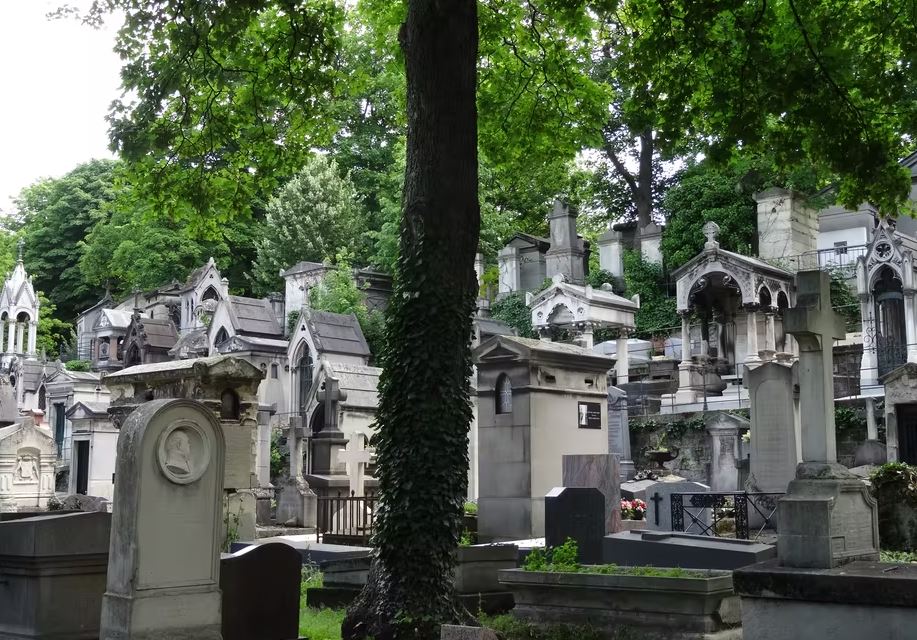
Le cimetière de Montmartre à Paris : une pittoresque ville des morts, juin 2019. Eric Sergent

Eric Sergent, Les cimetières sont aussi des lieux de vie, The Conversation, October 22, 2021

S’il est évidemment le lieu où l’on inhume les morts, le cimetière est aussi un espace fort ambigu, que chacun investit de significations diverses, sans parvenir toujours à les formuler clairement. En témoignent les mots d’Edmond Texier qui, dans son Tableau de Paris, décrit l’impression qui étreint le visiteur pénétrant dans un grand cimetière urbain, le cimetière du Père-Lachaise en l’occurrence :

« Quand on a franchi ses portes funèbres, où sont inscrites des paroles d’espérance, la disposition de tristesse, de dévotion et de recueillement sévère que l’on apportait cède à une impression première plutôt agréable qu’attristante. »
[…]
Michel Foucault voit en ce lieu une illustration parfaite de son concept d’hétérotopie, c’est-à-dire un « lieu autre […] en liaison avec l’ensemble de tous les emplacements de la cité, ou de la société […] ». Le cimetière concerne chacun, il assure et matérialise le lien entre morts et vivants, lien entretenu par la visite au cimetière.
[…]

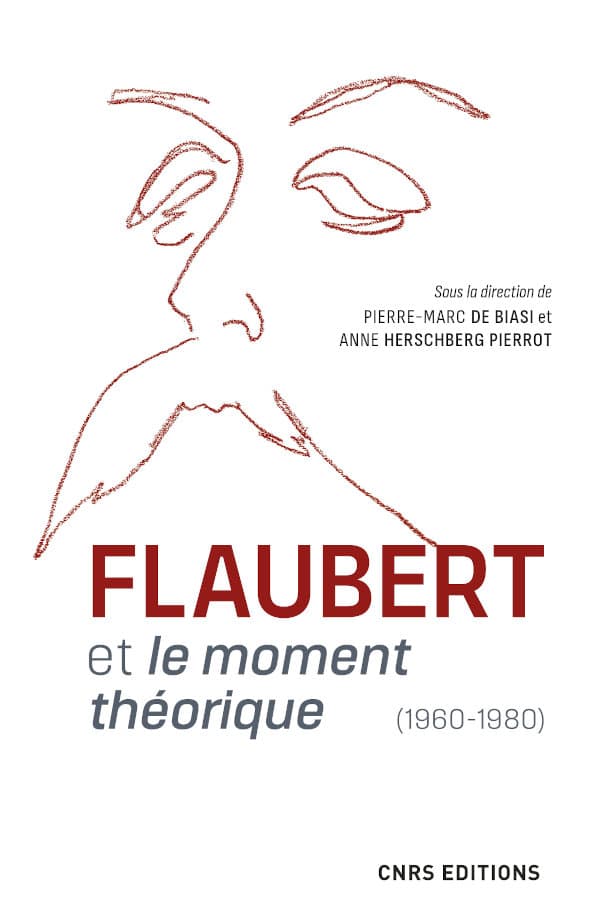
Frédéric Gros, Foucault, Flaubert, la tentation d’écrire. In Flaubert et le moment théorique (1960-1980), Sous la direction de Pierre-Marc de Biasi, Anne Herschberg Pierrot, CNRS éditions, 2021.

Et si Flaubert, dont on fête en 2021 le bicentenaire, n’était né, en réalité, qu’il y a une cinquantaine d’années ?

Entre 1960 et 1980, la France traverse une période d’intense effervescence intellectuelle : ce que l’on appellera le moment théorique. Les sciences de l’homme sont mises à contribution pour repenser la littérature selon les normes d’une axiologie formelle – le structuralisme – où prévalent les exigences de systématicité et de radicalité.

C’est dans ce contexte que Flaubert acquiert une notoriété de premier plan. En moins d’une décennie, il s’impose comme une référence dominante pour la nouvelle critique, l’Université et les jeunes romanciers qui découvrent sa flamboyante Correspondance à travers une anthologie, centrée sur sa poétique : Préface à la vie de l’écrivain de Geneviève Bollème, où il apparaît comme un véritable précurseur du roman contemporain et de l’esthétique conceptuelle.

De Roland Barthes à Michel Foucault, de Jean-Paul Sartre à Pierre Bourdieu ou à Jacques Rancière, de Michel Butor, Nathalie Sarraute et Alain Robbe-Grillet à Pierre Bergounioux ou Pierre Michon, de Jean-Pierre Richard à Gérard Genette, c’est toute une génération qui reconnaît en Flaubert la figure souveraine de l’écrivain, au sens absolu du terme, à la fois prophète du minimalisme, théoricien du style et du travail sur la prose, penseur du processus créatif et inventeur du roman moderne.

Sans chercher à être exhaustif, cet ouvrage suit l’ordre alphabétique pour explorer, à travers quelques grands acteurs du moment théorique, ce fascinant processus de réception créatrice dont nous continuons tous aujourd’hui à être les héritiers.

Feuilleter l’ouvrage et parcourir la table des matières…

Terry Eagleton, Everything, All the Time, Everywhere by Stuart Jeffries review – how we became postmodern, The Guardian, 10 November 2021

Stuart Jeffries, Everything, All the Time, Everywhere: How We Became Postmodern, Verso, 2021

For the past half-century, postmodernist thinkers have been trying to discredit truth, identity and reality. Identity is a straitjacket, and truth is just some middle-aged academic’s opinion. As for reality, it has become as obsolete as dressing for dinner. Objectivity is a myth in the service of the ruling powers. If only we could shed these illusions, we could revel in a world of infinite possibility. Instead of waking up to the same tedious old self each morning, we could flit from one identity to another as easily as David Bowie. The final liberation is that anything can mean anything else. Once you kick away fixed meanings and firm foundations, you are free to enjoy yourself. Postmodernism is meant to be fun, even if a current of nihilism runs steadily beneath it. As Stuart Jeffries suggests in this splendidly readable survey, there is something vacuous at the heart of its exuberance.
[…]

Some studies of postmodernism are cultural, some are historical and a few of them are philosophical. The achievement of this book is to roll all three approaches into one. This is rare, because those who know about Sid Vicious may not be avid readers of Michel Foucault, while those who are deep in Jacques Derrida are not always fans of Chris Kraus’s I Love Dick. Jeffries packs a remarkable knowledge of postmodern culture into these pages, from punk, hip-hop, film and photography to anti-psychiatry, the Rushdie fatwa and queer theory. All this is set in the context of the neoliberalism of the 1970s, showing how a revamped capitalism gave birth to a culture of the flexible and provisional – of short-termism, endless consumption and multiple identities.
[…]

Irmgard Emmelhainz, Authoritarianism and the Cybernetic Episteme, or the Progressive Disappearance of Everything on Earth, e-flux journal, Issue #122, November 2021
Open access

Life and society worldwide have been transformed by digital technology, including the fabrics of emotional relationships. Many believed the internet would be the largest ungoverned space in the world with unlimited emancipatory potential, and trusted Big Tech to make the world a better place. Yet power and capitalism filled that space with surveillance systems, the production of private capital, the monetization of data, and the control of human lives. Social media now shape daily life and many have lost faith in the possibility of a shared consensus reality. We are living in a scenario similar to one imagined by Black Mirror: our belief in digital communication and social media creates narcissistic personalities, selves dissociated and dislocated from their reflections online. Digital communication offers an opaque mirror that delivers egos without bodies, eliding alterity.
[…]

According to its Greek etymology, an “episteme” is a system of understanding. In The Order of Things, Michel Foucault uses the term “épistemè” to mean the nontemporal or a priori knowledge that grounds what is taken as truth in a given moment. Several epistemes coexist at a given time, as they constitute parts of various systems of power and knowledge. The cybernetic episteme, as defined by the collective Tiqqun some twenty years ago, describes our relationship to technology and machines (which are inseparable from the workings of capitalism). The cybernetic episteme is based on the modern tenet of progress and human-led transcendence achieved through science and technology.

Philipp Felsch, The Summer of Theory: History of a Rebellion, 1960-1990, (Translated by Tony Crawford), Polity, 2021

‘Theory’ – a magical glow has emanated from this word since the sixties. Theory was more than just a succession of ideas: it was an article of faith, a claim to truth, a lifestyle. It spread among its adherents in cheap paperbacks and triggered heated debates in seminar rooms and cafés. The Frankfurt School, Structuralism, Post-Structuralism, Adorno, Derrida, Foucault: these and others were the exotic schools and thinkers whose ideas were being devoured by young minds. But where did the fascination for dangerous thoughts come from?

In his magnificently written book, Philipp Felsch follows the hopes and dreams of a generation that entered the jungle of difficult texts. His setting is West Germany in the decades from the 1960s to the 1990s: in a world frozen in the Cold War, movement only came from big ideas. It was the time of apocalyptic master thinkers, upsetting reading experiences and glamorous incomprehensibility. As the German publisher Suhrkamp published Adorno’s Minima Moralia and other High Theory works of the Frankfurt School, a small publisher in West Berlin, Merve Verlag, provided readers with a steady stream of the subversive new theory coming out of France.

By following the adventures of the publishers who provided the books and the reading communities that consumed and debated them, Philipp Felsch tells the remarkable story of an intellectual revolt when the German Left fell in love with Theory.

Foucault in the Panopticon
How Michel Foucault’s encounters in Poland’s heavily policed gay community informed his ideas
GEOFF SHULLENBERGER | Reason, FROM THE DECEMBER 2021 ISSUE

In 1958, the 32-year-old philosopher Michel Foucault arrived in Poland to assume the directorship of the Centre Français in Warsaw. Less than a year later, he abruptly left the country. According to a rumor that circulated for years, this rapid exit was precipitated by a sexual liaison with a young man who turned out to be on the payroll of the communist state’s secret police. Amid the minor scandal that ensued, the French embassy requested Foucault’s resignation and departure from Poland. His biographers have treated this Polish sojourn and the incident that brought it to an end as a footnote to his early career, covering it in a few pages.

In Foucault in Warsaw, first published in Polish in 2017 and now available in an English translation by Sean Gasper Bye, the philosopher Remigiusz Ryziński reconstructs this brief phase of Foucault’s life on the basis of interviews, research in the copious files of the communist-era secret police, and speculation.
[…]

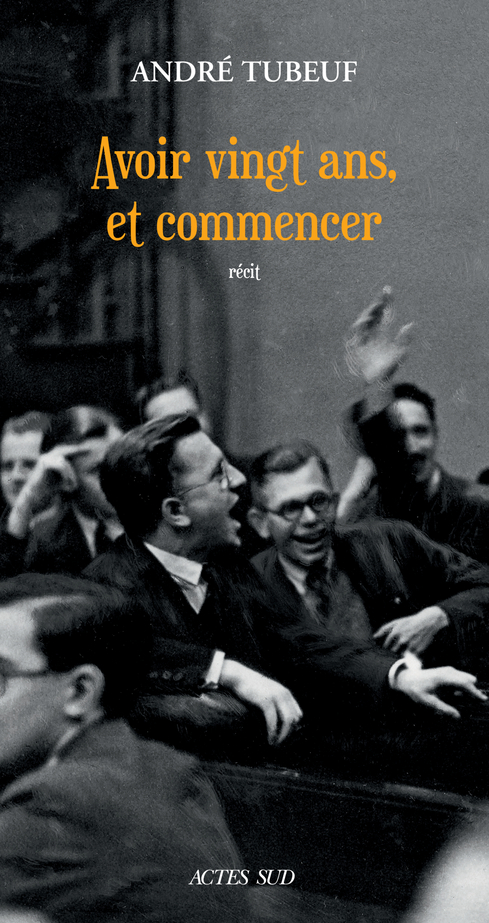
Jean-Luc Caron, André Tubeuf, un récit brillant sur son Paris culturel des années 1950, Res Musica, 8 décembre 2021

Avoir vingt ans et commencer (récit). André Tubeuf. Actes Sud. Novembre 2021

Connu de tous les mélomanes pour l’élégance de son écriture, l’étendue de son érudition et son enthousiasme communicatif, André Tubeuf nous propose un récit centré sur ses études à l’École normale supérieure et sa découverte du Paris culturel et intellectuel de l’après-guerre mondiale.

Musicologue et critique musical de renom, né à Izmir (Turquie) en 1930, André Tubeuf décède le 26 juillet dernier à Paris, à l’âge de 90 ans. Après sa khâgne au Lycée Louis-le-Grand (1946), il poursuit des études littéraires et obtient son diplôme de l’École normale supérieure de Paris, rue d’Ulm, en 1950.
[…]
Son récit se découpe en trois parties distinctes bien qu’habilement imbriquées.
La première concerne ses amitiés auxquelles il attache la plus haute importance, sujet où fourmillent mille anecdotes et jugements très personnels à propos de camarades, surtout masculins, presque tous demeurés totalement anonymes.

La deuxième s’intéresse aux fortes personnalités, déjà affirmées ou en devenir, qu’il fréquente assidûment et dont il affectionne les analyses percutantes et bien sûr, subjectives.… Parmi elles, citons succinctement Dominique Fernandez, Michel Foucault, Jacques Derrida, Louis Althusser, Maurice Merleau-Ponty, Maurice Clavier, Jean Ganguilhem, Michel Serres, Pierre Bourdieu, etc.
[…]