Foucault News

News and resources on French thinker Michel Foucault (1926-1984)

Kaveh Dastooreh, The Aesthetics of Life: More than Ethics and Morality. Studies in Philosophy and Education (2021).
https://doi.org/10.1007/s11217-021-09812-6

Abstract
This paper explores the general characteristics of the aesthetics of life. Our approach will be in thinking about the aesthetics of life as a domain independent from the realms of ethics and morality. This thesis discusses some of the theoretical debates around those concepts. The notion of ‘pleasure’ in those practices will be discussed as the one that gives shape to ‘the art of life’. Pleasure also makes it possible for a person to perform these practices for a long period of time; what we call the ‘life-long character of the aestheticization of life’.

However, this effort endeavors to demonstrate another central theme of this style of life; the individual/social character of those practices is the one that exemplifies ‘the art of life’. Thinking simultaneously about ‘oneself’ and the ‘other’ is the main concept that helps us the most to appreciate these practices. These debates are elaborated further in some case studies that have been researched between 2016 and 2019. These are real examples of peoples’ lived experiences who, in different ways, try to give meaning to their lives by turning their existence into a work of art.
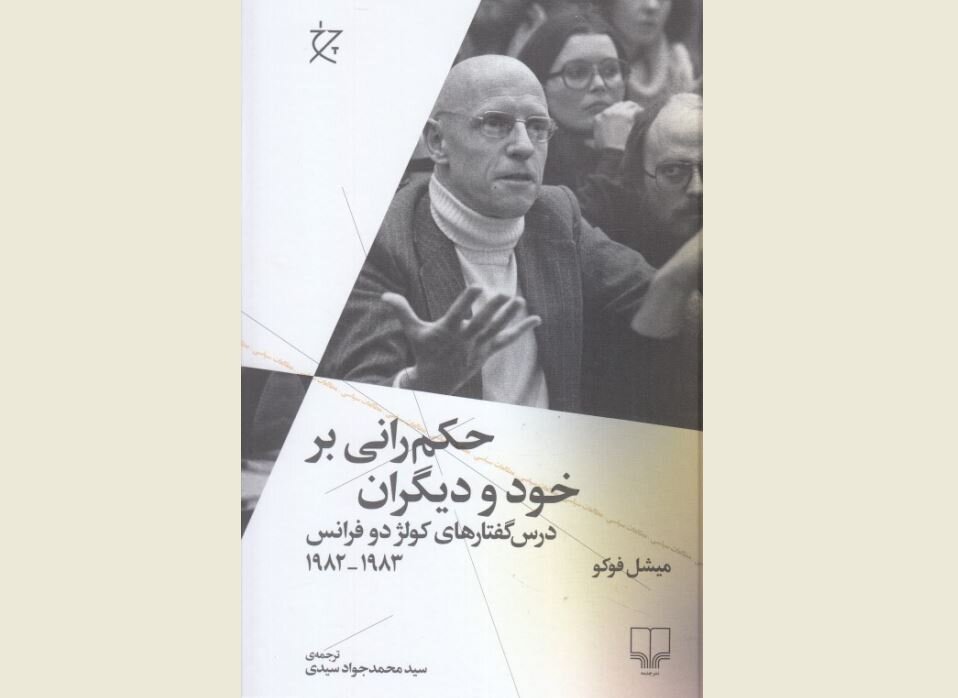
Michel Foucault’s speech on notion of parresia published for Persian readers, Tehran Times, December 28, 2021 –

Cheshmeh is the publisher of the book rendered into Persian by Seyyed Mohammad-Javad Seyyedi.

The book launches an inquiry into the notion of parresia and continues his rereading of ancient philosophy.

Through the study of this notion of truth-telling, of speaking out freely, Foucault re-examines Greek citizenship, showing how the courage of the truth forms the forgotten ethical basis of Athenian democracy.

The figure of the philosopher king, the condemnation of writing, and Socrates’ rejection of political involvement are some of the many topics of ancient philosophy revisited here.
[…]

Oleg Barabanov, Pandemic and Climate, History and Values: Results of the Valdai Club Expert Programme, 28 December 2021

In 2021, the coronavirus pandemic continued to be one of the most important events. Naturally, its influence on world politics and society remained the main focus of the Valdai Discussion Club experts.

[…]

The pandemic and its socio-political consequences, even after the release of this book, remained the centre of attention of the Club’s experts in 2021. One of the topics was the global Covid-19 vaccination policy. Roman Reinhardt analysed vaccine diplomacy and its contradictions . Djoomart Otorbaev warned against being overly optimistic that the vaccine would solve all problems. The complex issue of the impact of vaccination on human rights was also raised in our publications. In July 2021, a special Valdai Club conference was dedicated to this problem, with the participation of experts from the Council of Europe and the European Court of Human Rights.

Another important topic was the social impact of the pandemic. Apostolos Veizis in his article “From Sprint to Marathon” raised the issue of the long-term impact of the pandemic on socially vulnerable groups: the poor, refugees and other marginalised people. Ekaterina Savorskaya considered the paradoxes of the pandemic’s influence on green transformation; as these two seemingly unrelated things share many indirect connectionsRichard Sakwa turned to the analysis of value categories and studied the impact of the pandemic on the perception of the concept of the common good, and on the dynamics of interaction between civil society and the state. Also in the focus of our attention was the attitude of citizens to medical assessments and forecasts regarding the pandemic, the problem of doctors’ participation in political strategies to calm society used by the authorities, and its possible ethical ambivalence. This issue was closely related to the problem of citizens’ trust in the authorities, the psychological and behavioural alienation of society from the state and the formation of the concept of what we called “medical totalitarianism”. We analysed this concept in the context of Michel Foucault’s well-known theory of “biopower”. This set of problems was reflected in the relevant sections of the large annual report of the Valdai Discussion Club, titled “The Age of Pandemic: Year Two. The Future Is Back”, published in October 2021.


materiali foucaultiani
volume VIII, numero 15-16 (gennaio-dicembre 2019)
Vie, violence, pouvoir. Figures et frontières de la biopolitique

(sous la direction de Philippe Sabot)
Open access

Valentina Antoniol, Cesar Candiotto, Amaury Delvaux, André de Macedo Duarte & Maria Rita de Assis Cesar, Marion Farge, Marcelo Raffin, Philippe Sabot, David Simard, Carolina Verlengia, Stéphane Zygart
Recensioni – Sandrine Alexandre, Antonio Del Vecchio, Marco Ferrari, Giulia Guadagni

Introduction : Vie, violence, pouvoir. Enjeux et problèmes (pp. 5-17)
Philippe Sabot

Une genèse problématique du bio-pouvoir : le discours historico-politique (pp. 19-37)
Amaury Delvaux

Foucault, une pensée de la force. Sur la nécropolitique et la violence, au-delà de l’Un (pp. 39-57)
Valentina Antoniol

Biopolitique : usages et évolutions d’un outil théorique (pp. 59-77)
Carolina Verlengia

Violence, pouvoir et psychiatrie. Du « grand renfermement » à la « psychiatrisation de la vie quotidienne » (pp. 79-94)
Marion Farge

D’un retour au concept de dispositif de sexualité. Foucault, Butler et les luttes contemporaines (pp. 95-111)
André de Macedo Duarte & Maria Rita de Assis Cesar

La santé sexuelle, point aveugle de l’histoire foucaldienne de la sexualité (pp. 113-129)
David Simard

Les nouvelles frontières de la biopolitique après Foucault. La problématique de la migration de survie (pp. 131-143)
Cesar Candiotto

Pouvoir sur la vie et droits humains (pp. 145-162)
Marcelo Raffin

Droit, vie, anti-violence : configurations contemporaines (pp. 163-184)
Stéphane Zygart

Recensioni
Être juste avec quoi ? | C. Hoffman e J. Birman, Lacan et Foucault à l’épreuve du réel, Langage, Paris 2018 (pp. 187-195)
Marco Ferrari

Contro Foucault, per una critical theory lacaniana | N. Bou Ali, R. Goel (a cura di), Lacan contra Foucault. Subjectivity, Sex and Politics, Bloomsbury, London/New York 2019 (pp. 197-205)
Giulia Guadagni

Soggetti nel discorso: per una psicanalisi resistente | C. Cavallari, Foucault con Lacan. La produzione discorsiva del soggetto, Galaad Edizioni, Giulianova 2019 (pp. 207-217)
Antonio Del Vecchio

Un autre matérialisme pour un autre féminisme | A. Benoit, Trouble dans la matière. Pour une épistémologie matérialiste du sexe, Paris, Éditions de la Sorbonne, 2019 (pp. 219-226)
Sandrine Alexandre

stuartelden's avatarProgressive Geographies

At the end of each year I’ve posted a list of academic books I liked (2013,2014,2015,2016,2017,2018, 2019, 2020). The criteria was simply that they were published in that year (or late the previous year), and that I read and appreciated them. Some of these are books I reviewed or endorsed, and some are by friends and colleagues. It’s of course biased by my interests and prejudices. I’m sure I’ve missed loads of other great books, and haven’t yet read all the ones I’ve bought or been sent, butI can at least say that these are all worth reading.

Rowland Atkinson, Alpha City: How London was Captured by the Super-Rich (Verso)

Huw Beynon and Ray Hudson, The Shadow of the Mine: Coal and the End of Industrial Britain (Verso)

Alain Brossat and Daniele Lorenzini (eds.) Foucault et……

View original post 335 more words

Gandy, M. (2021), The zoonotic city: Urban Political Ecology and the Pandemic Imaginary. International Journal of Urban and Regional Research, First published: 07 December 2021
https://doi.org/10.1111/1468-2427.13080
Open access

Abstract
In the context of the Covid-19 pandemic this article takes a longer view of the evolving relationship between urbanization and the range of zoonotic diseases that have spread from animals to humans. I suggest that the existing interpretation of epidemiological transitions remains overly Eurocentric and requires a more nuanced conception of global environmental history. Similarly, the conceptualization of urban space within these teleological schemas has relied on a narrow range of examples and has failed to fully engage with networked dimensions to urbanization. At an analytical level I consider the potential for extending the conceptual framework offered by urban political ecology to take greater account of the epidemiological dimensions to contemporary urbanization and its associated pandemic imaginary. I examine how contemporary health threats intersect with complex patterns of environmental change, including the destruction of biodiversity (and trade in live animals), the co-evolutionary dynamics of viruses and other pathogens, and wider dimensions to the global technosphere, including food production, infrastructure networks, and the shifting topographies of peri- or ex-urban contact zones.

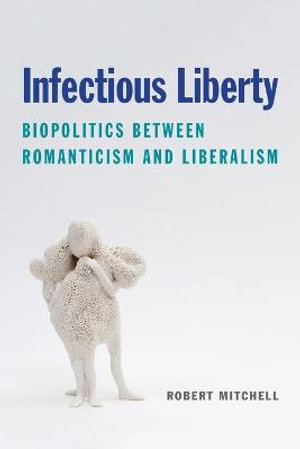
Robert Mitchell, Infectious Liberty: Biopolitics between Romanticism and Liberalism, Fordham University Press, 2021

Open access
Review in Foucault Studies

Abstract
Infectious Liberty traces the origins of our contemporary concerns about public health, world population, climate change, global trade, and government regulation to a series of Romantic-era debates and their literary consequences. Through a series of careful readings, Robert Mitchell shows how a range of elements of modern literature, from character-systems to free indirect discourse, are closely intertwined with Romantic-era liberalism and biopolitics.

Eighteenth- and early-nineteenth century theorists of liberalism such as Adam Smith and Thomas Malthus drew upon the new sciences of population to develop a liberal biopolitics that aimed to coordinate differences among individuals by means of the culling powers of the market. Infectious Liberty focuses on such authors as Mary Shelley and William Wordsworth, who drew upon the sciences of population to develop a biopolitics beyond liberalism. These authors attempted what Roberto Esposito describes as an “affirmative” biopolitics, which rejects the principle of establishing security by distinguishing between valued and unvalued lives, seeks to support even the most abject members of a population, and proposes new ways of living in common.

Infectious Liberty expands our understandings of liberalism and biopolitics—and the relationship between them—while also helping us to understand better the ways creative literature facilitates the project of reimagining what the politics of life might consist of.

Infectious Liberty is available from the publisher on an open-access basis.

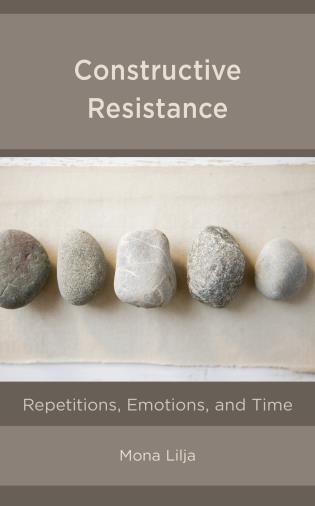
Mona Lilja, Constructive Resistance. Repetitions, Emotions, and Time, Rowman & Littlefield.

See review in Foucault Studies

This book examines constructive resistance practices that range from street protests to the use of photographic images, and displays their role in local and global political processes. By building on a rich selection of interview material and other empirical research, the book elaborates on different cases of constructive resistance, where close attention is paid to the productive qualities that are involved. It offers new perspectives on the undertakings of different epistemic battles that occur around current issues such as gender, nationalism, climate change, migration and the right to land, and explores personal narratives, artistic expressions and public statements that are utilized as means of resistance, and performed in order to negotiate different established truths.

More specifically, the book discusses the discursive struggles regarding migrant bodies, where artifacts that pertain to the hardship are presented in Swedish museums; the Preah Vihear temple conflict between Cambodia and Thailand; the border conflict in West Sahara; the self-making of (self-defined) women politicians in Cambodia; and climate activism communication. Through discussions on the importance of figurations, posters, narratives, photographs, artifacts and buildings in the establishing of contemporary discussions and world views, the book inquires how and why these representations are (re)imparted with meaning and the effect that this has.

The book does not only illustrate different forms of resistance, but also contributes theoretically to our understanding of repetitions, emotions and time, which are properties that must be embarked upon in order to capture the various dimension of resistance. Given that the type of constructive resistance that is expanded upon is about processes of significations, the time aspect—how alternative truths are repeated and thereby established over time—becomes crucial. And, resistance has a temporality of its own; for example, close authorities are instantly resisted here and now, while meaning-making resistance suffers from the inescapable time-lag of processes of signification. In all forms of resistance, emotions prevail as an important engine of political struggles and, as is displayed in this book, emotions are an important means of constructive resistance.

Posselt, G. (2021). Self-Care and Truth-Telling: Rethinking Care with Foucault. Le Foucaldien, 7(1), 10.
DOI: http://doi.org/10.16995/lefou.107

Abstract
Although the care of the self looms large in Michel Foucault’s later works, his analyses are largely neglected in current debates on care. This may be due to the fact that Foucault’s work has so far been read primarily as an ethics and aesthetics of the self, concerned less with common care activities than with individualistic practices of self-cultivation. Against this background, I argue that in Foucault the care of the self is pervaded by the presence of the Other. This becomes clear as soon as one links the care of the self with the concept of parrhesia, which signifies a form of truth-telling in which the individual confronting the Other with the truth constitutes herself as the subject of a discourse of truth. It is precisely by associating the care of the self with parrhesia that the genuinely critical and emancipatory potential of each becomes effective in the first place. This makes it possible not only to detach the concept of care from its close entanglement with the private sphere and to reframe it in political terms but also to envisage a critical attitude that is based both on the care of the self and others and on the concern for truth.

Keywords: alterity, care, critique, ethics, parrhesia, politics, Michel Foucault

Udi Greenberg, Review: The Lost Worlds of Edward Said, The New Republic, April 13, 2021

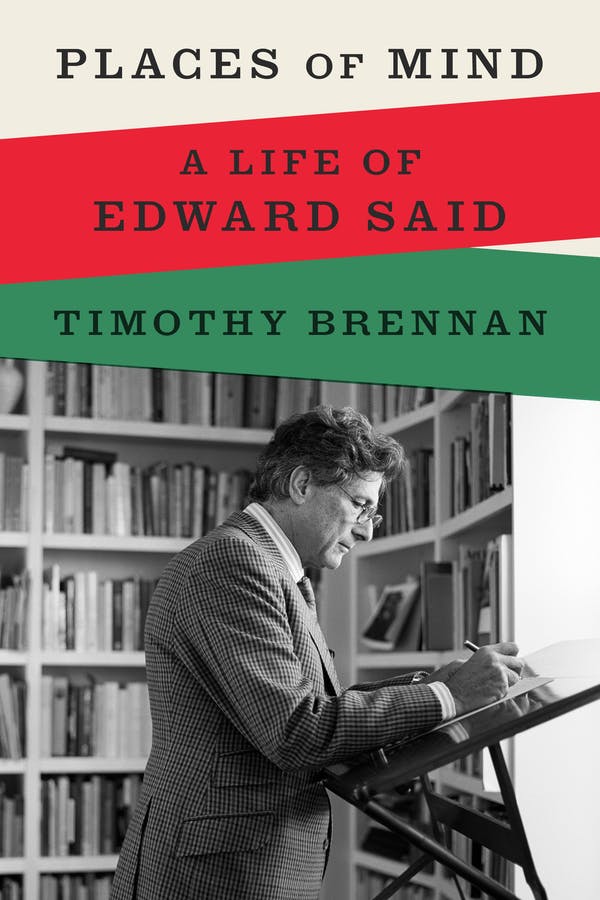
Timothy Brennan, Places of Mind: A Life of Edward Said, Farrar, Straus and Giroux, 2021.

Exiles often have conflicting feelings about their adoptive society, and Edward Said was no exception. As a Palestinian in the United States, he recognized the country’s pervasive racism and violence, but he also knew its educational system made his career as a renowned and prosperous thinker possible. His life was indeed filled with paradoxes and contradictions. He was one of the twentieth century’s most influential anti-colonial writers, who mostly studied his colonizers’ literature; a proponent of Palestinian liberation who wrote in English and mostly for English-speaking audiences.
[…]

In its most impressive chapters, Places of Mind reconstructs Said’s participation in these two revolutions. The first was post-structuralism. Under the influence of philosopher Jacques Derrida, a group of French scholars launched blistering attacks on Europe’s intellectual traditions. Even after the Enlightenment, they claimed, Europe remained obsessed with enshrining hierarchies and binaries (between men and women, “primitive” and “civilized”); the most urgent task was to dismantle those. While Said is not always associated with this school today, he was among the first to embrace it in the English-speaking world. He took part in the early conferences on post-structuralism in the U.S. and was one of the first to utilize its concepts in his writings. He borrowed especially from Michel Foucault and his provocative depiction of the link between knowledge and power. Artists and thinkers, Foucault claimed, were rarely individuals who challenged authority. Most of the time, they reproduced and reinforced their society’s structures of authority, making them seem natural and even benevolent.
[…]