Foucault News

News and resources on French thinker Michel Foucault (1926-1984)

Bonnie Evans, Beyond neurodiversity: The dangers of ‘reducing diversity to brain-based distinctions’ Genetic Literacy Project, March 30, 2022

The concept of ‘neurodiversity’ has gained enormous cultural influence in recent years. Computer scientists and ‘techies’ wear the ‘neurodiverse’ label with pride; businesses are building ‘neurodiverse’ workforces; scriptwriters strive to represent and cast ‘neurodivergent’ people. Those framed as ‘different’ have been given a remarkable new lens through which to reimagine that variance.
[…]

Anti-psychiatrists knew that the ‘psy’ sciences served an important role in empowering people, even if they’d been employed poorly in the past. In many ways, the anti-psychiatry movement integrated key psychoanalytic principles by employing historical knowledge to empower and galvanise populations to criticise the practices of psychologists. This was a psychoanalytically and historically informed kind of activism. Instead of discrediting psychological sciences, the philosopher Michel Foucault and others played psychologists at their own game: ‘If you’re going to analyse where my identity “problems” came from,’ they might have said, ‘then I will analyse where your identity, legitimacy and power also came from.’ This was shrewd because it not only unchained the shackles that ‘psy’ professionals had placed on their own individuality: it also revealed how the psychological sciences wielded power through psychological experts, institutions and policies.

What Foucault called ‘historical ontology’ – the study of what makes being or becoming possible – asserted the importance of history, and of collective thought, to understanding contemporary minds. In some ways, this was just a highly refined form of self-reflective psychology. What it showed was that the mind is always a historically situated object, regardless of its ‘neuro’ states. Psydiversity accepts that minds are entangled with the societies around them, and can’t be moored to neuroscientific verities – which are, in any event, a byproduct of the time as well. Psydiversity would move us beyond an unhealthy reliance on the knowledge monopoly of the neurosciences, and address the difficulties of stretching neurodiversity to cover all human differences.
[…]

Fathzadeh, F.
Swapping the veil for casual clothing: A study of Iranian immigrant women living in Norway
(2022) Women’s Studies International Forum, 92, art. no. 102577, .

DOI: 10.1016/j.wsif.2022.102577

Abstract
With reference to Michel Foucault’s theory of power and freedom, this article draws on narrative interviews with Iranian immigrant women living in Norway to explore how the sartorial technology in the two seemingly contrasting national contexts of Iran—a conservative Islamic society—and Norway—a liberal secular society—(re)shape the participants’ negotiations of subjectivity and freedom. The study shows that while the potential choice to not to wear the veil after migration allowed the participants to experience some freedom in relation to their clothing practices, this freedom was countered with racial experiences that pushed them to self-policing their appearance and clothes in accordance with established norms of clothing in Norway. As such, the study stresses the need to move beyond the reductive dichotomy between Islam and secularism and highlights how specific normative and semiotic definitions differently operate to regulate and discipline women’s bodies and clothing practices. © 2022 The Author

Author Keywords
Ethical self-formation; Freedom; Iran; Norway; Sartorial technology; Sexuality; Veiling

Lorek-Jezińska, E., Strehlau, N., Więckowska, K.
Altering Authorships: Absences and Presences of Authors in Contemporary Culture
(2021) Avant, 12 (3)

DOI: 10.26913/avant.2021.03.07

Abstract
This article serves as an introduction to the anthology devoted to the study of altering author-ships in contemporary literature and culture. Drawing attention to the influence of Roland Barthes’s and Michel Foucault’s works on the author and authorship, the essay emphasises the importance of the context of both production and reception in determining the authority over and responsibility for the literary/cultural text. By altering authorships we mean various pro-cesses of diffusing authorial authority, on the one hand, and reassessing authorship for alter-native authors, on the other. Conceptualised as authorial absences and authorial presences, the acts of questioning and transforming the practices of authorship and the process of (re)intro-ducing alternative or marginalised authors discussed in the article testify to the continuing significance of the authorship debate. In this context, authorship can be approached as “a living absence” (Berensmeyer et al.), opening space for disruptions, dispersals, redefinitions, nego-tiations and reconciliations of authorial presences. © 2021, Avant. All rights reserved.

Author Keywords
Authorial practices; Authors; Authorship; Gender studies; Per-formativity; Transhumanism

stuartelden's avatarProgressive Geographies

Elisabetta Basso,Young Foucault:The Lille Manuscripts on Psychopathology, Phenomenology, and Anthropology, 1952–1955- Columbia University Press, September 2022, translated by Marie Satya McDonough, foreword by Bernard E. Harcourt

In the 1950s, long before his ascent to international renown, Michel Foucault published a scant few works. His early writings on psychology, psychopathology, and anthropology have been dismissed as immature. However, recently discovered manuscripts from the mid-1950s, when Foucault was a lecturer at the University of Lille, testify to the significance of the work that the philosopher produced in the years leading up to the “archaeological” project he launched withHistory of Madness.

Elisabetta Basso offers a groundbreaking and in-depth analysis of Foucault’s Lille manuscripts that sheds new light on the origins of his philosophical project. She considers the epistemological style and methodology of these writings as well as their philosophical context and the scholarly networks in which Foucault was active…

View original post 96 more words

Flavin, M.
Wikipedia = Heterotopia
(2022) New Review of Hypermedia and Multimedia

DOI: 10.1080/13614568.2022.2047800

Abstract
This paper analyses the online encyclopaedia Wikipedia using Michel Foucault’s (1926–1984) concept of heterotopia. In Foucault’s writings, heterotopias are both similar to and distinct from the conditions that give rise to them. The paper undertakes a case study of one entry on Wikipedia (the entry for the “Episteme”) focusing primarily on the main entry and the talk page. The methodology is content analysis with a directed approach: data were gathered in November–December 2020. The paper argues Wikipedia can usefully be analysed as a heterotopia because it exposes the contentious conditions of knowledge production, which is not standard practice for an encyclopaedia. The article adds to our understanding by applying the Foucauldian concept of heterotopia to a specific Wikipedia entry, highlighting how knowledge is produced out of dispute and subjective discourses. © 2022 Informa UK Limited, trading as Taylor & Francis Group.

Author Keywords
content analysis; episteme; Foucault; heterotopia; Wikipedia

Index Keywords
Case-studies, Condition, Content analysis, Episteme, Foucault, Heterotopia, Michel Foucault, Online encyclopedia, Paper analysis, Wikipedia

Foucault Lives. A Day Seminar on the Work and Legacy of Michel Foucault
Event:  Foucault Lives 2022
Date:    25 June 2022
Venue: Valletta Campus


As he often said, Foucault never wanted his work to become dead theory or inspire a cult following. From metaphors that compare his ideas to ‘a box of tools’ to characterisations of his work as a challenge or an invitation, his books and ethos continue to illuminate contemporary critical thought. His books continue to invite interpretations and re-interpretations. His ideas are taken up and made to work in the present. His lectures give us a glimpse of Foucault’s thought in action. His interviews show us how he positioned himself as a public intellectual. His life continues to offer us models of militancy, passion, experimentation and critique.

This seminar intends to engage as many facets of Foucault as possible. It is inviting engagements with any aspect of Foucault’s work – his books or lecture courses, particularly the more recently published ones. But we do not want to stop there. We want to also see how Foucault’s ideas are being used, and how scholars, practitioners and activists are extending his ideas and ethos into new and exciting domains.

Foucault’s works remain among the most drawn upon in critical work, within the humanities and beyond. So while exegetical approaches to his work remain crucial, particularly in light of how posthumous publications can re-orient our grasp of his work, it is also important to go beyond the interpretative task in order to open up new spaces for thinking, critical work and action.

In this spirit, we would like to gather Foucault scholars and users of his work to a one day seminar in Malta on the 38th anniversary since Foucault’s death.

This is a one day seminar organised by UM’s Department of Education Studies within the Faculty of Education.For more information, please send an email to Mr Kurt Borg.

Registration Details
  • Early Bird Registration fee: 20 euro per person until 2 May 2022 (12:00 CET)
  • Late registration fee: 30 euro per person until 20 June 2022 (12:00 CET)
Cancellation policy
  • 75% refund until 18 April 2022
  • 50% refund until 31 May 2022- no refund after this date.
Kindly fill in the below Registration Form, deadline for registration: 20 June 2022. Should you wish to cancel your registration form you’re requested to send us an email.

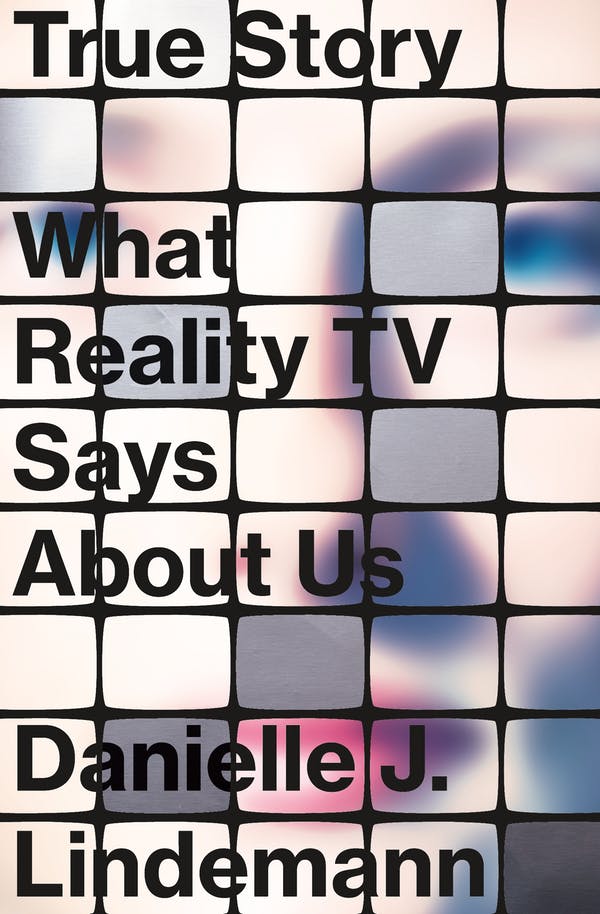
Danielle J. Lindemann, True Story. What Reality TV Says About Us, Farrar, Straus and Giroux (Macmillan) 2022

A sociological study of reality TV that explores its rise as a culture-dominating medium—and what the genre reveals about our attitudes toward race, gender, class, and sexuality

What do we see when we watch reality television?

In True Story: What Reality TV Says About Us, the sociologist and TV-lover Danielle J. Lindemann takes a long, hard look in the “funhouse mirror” of this genre. From the first episodes of The Real World to countless rose ceremonies to the White House, reality TV has not just remade our entertainment and cultural landscape (which it undeniably has). Reality TV, Lindemann argues, uniquely reflects our everyday experiences and social topography back to us. Applying scholarly research—including studies of inequality, culture, and deviance—to specific shows, Lindemann layers sharp insights with social theory, humor, pop cultural references, and anecdotes from her own life to show us who we really are.

By taking reality TV seriously, True Story argues, we can better understand key institutions (like families, schools, and prisons) and broad social constructs (such as gender, race, class, and sexuality). From The Bachelor to Real Housewives to COPS and more (so much more!), reality programming unveils the major circuits of power that organize our lives—and the extent to which our own realities are, in fact, socially constructed.

Whether we’re watching conniving Survivor contestants or three-year-old beauty queens, these “guilty pleasures” underscore how conservative our society remains, and how steadfastly we cling to our notions about who or what counts as legitimate or “real.” At once an entertaining chronicle of reality TV obsession and a pioneering work of sociology, True Story holds up a mirror to our society: the reflection may not always be pretty—but we can’t look away.

Podcast discussion with author. Los Angeles Review of Books.

Danielle Lindemann joins Eric Newman and Medaya Ocher to talk about her latest book, True Story: What Reality TV Says About Us. Drawing on the ideas of major thinkers in modern sociology, including Emile Durkheim, Michel Foucault, and others, the book explores how reality TV both reflects and reproduces real-world social tensions, inequities, and slippages around class, race, gender, sexuality, and other categories of being. Rather than merely trash TV — or perhaps in addition to being trash TV — Lindemann argues that our favorite shows are lenses through which we can better understand our world, our social lives, and the powerful forces that shape them and us.

Brara, Rita. “Introduction: What Might We Mean by the Anthropocene?” Contributions to Indian Sociology 55, no. 3 (October 2021): 307–23.
https://doi.org/10.1177/00699667211073723.

Abstract
‘[T]here is no power relation without the correlative constitution of a field of knowledge, nor any knowledge that does not presuppose and constitute at the same time power relations.’
(Michel Foucault 1977: 27)

Introduction
How do we interpret the Anthropocene,1 the current umbrella term for the ravaging displacements human beings have wrought on Earth, having cracked it out of shape, if not out of orbit, and driven other species away from hearth and home and increasingly out of existence? Is the Anthropocene what we notice and apprehend when the Earth malfunctions, as emanations from its brokenness in a manner that Heidegger’s (1971) thinking might suggest? Or as Bill Brown puts it, do we, ‘begin to confront the thingness of objects when they stop working for us…how the thing really names less an object than a particular subject-object relation’ (Brown 2001: 4)? Does the Anthropocene, then, signpost a seismic shift in the relationship of human beings both to the Earth and indeed to non-human and non-living nature—a change marked by indicators from the earth system sciences on the planet’s tipping points and reflected in our contemporary, lived experience?

van Wijk, Berend. “Beyond the Entrepreneur Society: Foucault, Neoliberalism and the Critical Attitude.” Philosophy & Social Criticism, June 2021,
doi:10.1177/01914537211017589.

Abstract
Michel Foucault’s The Birth of Biopolitics is generally acknowledged as a pioneering study of neoliberalism, presenting it not merely as an economic theory but also as a mode of government. There is much debate, however, on Foucault’s intentions in analysing neoliberalism and the place of the genealogy in his broader critical project. The Birth of Biopolitics itself lacks both an explicit judgement of neoliberalism and an explicit ethical program. In this article, I maintain that Foucault’s genealogical work on neoliberalism is complementary to his notions of agency. From this perspective, Foucault’s genealogy is not a judgement of neoliberalism in terms of right or wrong but rather serves as a breeding ground for ethical conduct. The notion of the critical attitude in particular shows that Foucault’s genealogical work stands in the service of the subject’s autonomy. However, Foucault is reluctant to fill in his ethical program too much because it should gain substance only in local struggles and through the subject’s own considerations.

Keywords
counter-conduct, critique, governmentality, Michel Foucault, neoliberalism, pastoral power

Editor: Machiel Karskens has updated his major Chronological Bibliography of the written and spoken texts of Michel Foucault. This bibliography is held on the Foucault info site and also linked to on the Bibliographies page of this site, Foucault News.

Chronological Bibliography of the written and spoken texts of MICHEL FOUCAULT

Bibliography established by Machiel Karskens
Radboud University Nijmegen, Department of Philosophy
phone:+31243551687 / email: machiel.karskens@ru.nl
Please, send me corrections and/or additions?

This bibliography lists all published written or spoken texts of Michel Foucault in a CHRONOLOGICAL order, which is as strict as possible. All items are listed according to their first known date of coming into being or first known date of publication.

In addition, also chronologically listed, the box files (boîtes) with Foucault’s notes, cards, fiches, reading notes, notebooks (Cahiers), drafts, lecture papers (manuscrits acroamatiques), typoscripts and manuscripts, stored at the Bibliothèque nationale de France (NAF28730. Fonds Michel Foucault (http://archivesetmanuscrits.bnf.fr/ark:/12148/cc98634s)