Foucault News

News and resources on French thinker Michel Foucault (1926-1984)

stuartelden's avatarProgressive Geographies

Michel Foucault and the Body. Questioning the Paradoxes of Juridical and Political Inscriptions

Please register your interest to attend either in person or virtually theIAS Lecture SeriesMichel Foucault and the Body. Questioning the Paradoxes of Juridical and Political Inscriptionsto be held at the Institute of Advanced Studies, University of Warwick, Coventry, UK on16 – 17 September 2022.

Please visit our event’s website for more information: 

Registration link

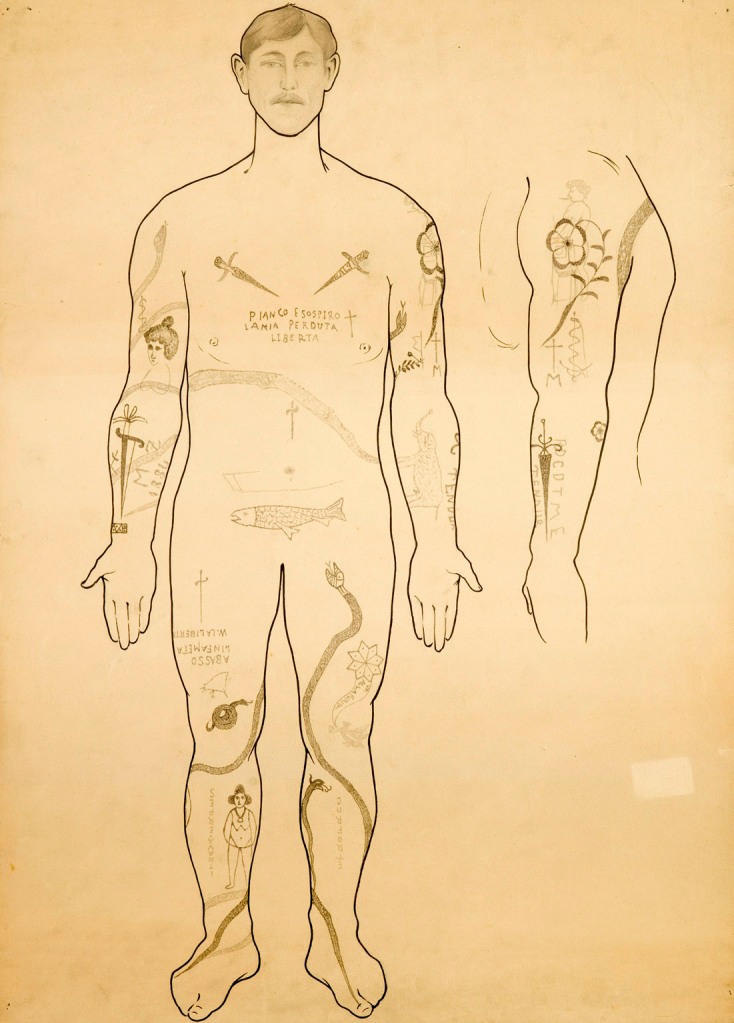
This event brings together an international panel of researchers from the UK, France and Italy to discuss the phenomenon of judicial tattooing. The aim is to create a rich and intellectually stimulating debate on various bodily inscriptions, and especially to question the body as a site for visual punishment as well as the marks and signs of political coercion. If the French philosopher historian Michel Foucault (1926-1984) suggested that the human body could be understood as a…

View original post 254 more words

Ural, A.G., Sariman Ozen, E.
An analysis of heterotopic space: Hasanpaşa Gazhane, enlightening once again
(2022) A/Z ITU Journal of the Faculty of Architecture, 19 (2), pp. 445-457.

DOI: 10.5505/itujfa.2022.97355
Open access

Abstract
While architectural structures can be physically damaged over the years, they may also become functionally inadequate as a result of the change and de-velopment. At this point, re-functioning works transform these structures, which are valuable in terms of both social memory and cultural heritage, into structures that also respond to spatial needs. Factors that require re-functioning such as technological variables and societal changes that occur due to population growth are based on the differentiation in user needs. These changes do not always arise out of necessity, but sometimes they are necessary to create regional radical changes due to management strategies. Foucault talks about the concept of heterotopia in his work titled “Of other spaces”. The scope of these structures, in which the conflict of old and new is felt and unplanned energy is released, has been the subject of various studies and equivalence of various examples to the concept of heterotopia has been researched. This study was born from the idea that some re-functionalized buildings make users feel the old and new function at the same time, and in Foucault’s words, the user gets exposed to other space experience. As a sample, Hasanpaşa Gazhanesi, located in Kadıköy, was chosen to be examined. In the research, the findings were examined with hermeneutic method by using general resource search model and documentary resource search model, which are among the qualitative research methods. It is aimed to make ‘heterotopic’ evaluation of the chosen space and to examine the concept with concrete example. © 2022, Istanbul Teknik Universitesi, Faculty of Architecture. All rights reserved.

Author Keywords
Hasanpaşa Gazhane; Heterotopia; Michel Foucault; Museum Gazhane; Re-functioning

Mark Jennings, The Anglican split: why has sexuality become so important to conservative Christians?
The Conversation, August 29, 2022

The newly formed “Diocese of the Southern Cross” has broken away from the Anglican Church of Australia to form a denomination committed to a highly conservative position on sexuality and marriage equality.

Global Anglican Futures Conference (GAFCON), the association supporting the breakaway denomination, claim Anglican bishops “were unable to uphold the Bible’s ancient teaching on marriage and sexual ethics”, making their defection necessary.

[…]
So why is sexuality so important to conservative Christians now?
This leaves us with our initial question unanswered – why is sexuality so important for this group of Christians now?

One answer is to be found in the work of the 20th century French academic Michel Foucault.
[…]
In The History of Sexuality, Foucault argued sexuality was the discourse of sex, or the set of conditions that create the acceptable “truth” concerning sex. He observed two such discourses, both emerging in the mid-19th century.

The first was concerned with classifying sexual practices in order to declare some healthy and normal, and others wrong or requiring “treatment”.

The second was a “reverse discourse”, opposed to the criminalisation of homosexuality and promoting sexual freedom.

Conservative Christians tend to align with the first discourse, firmly holding that same-sex sexuality is opposed to God’s “truth” of sex.
[…]

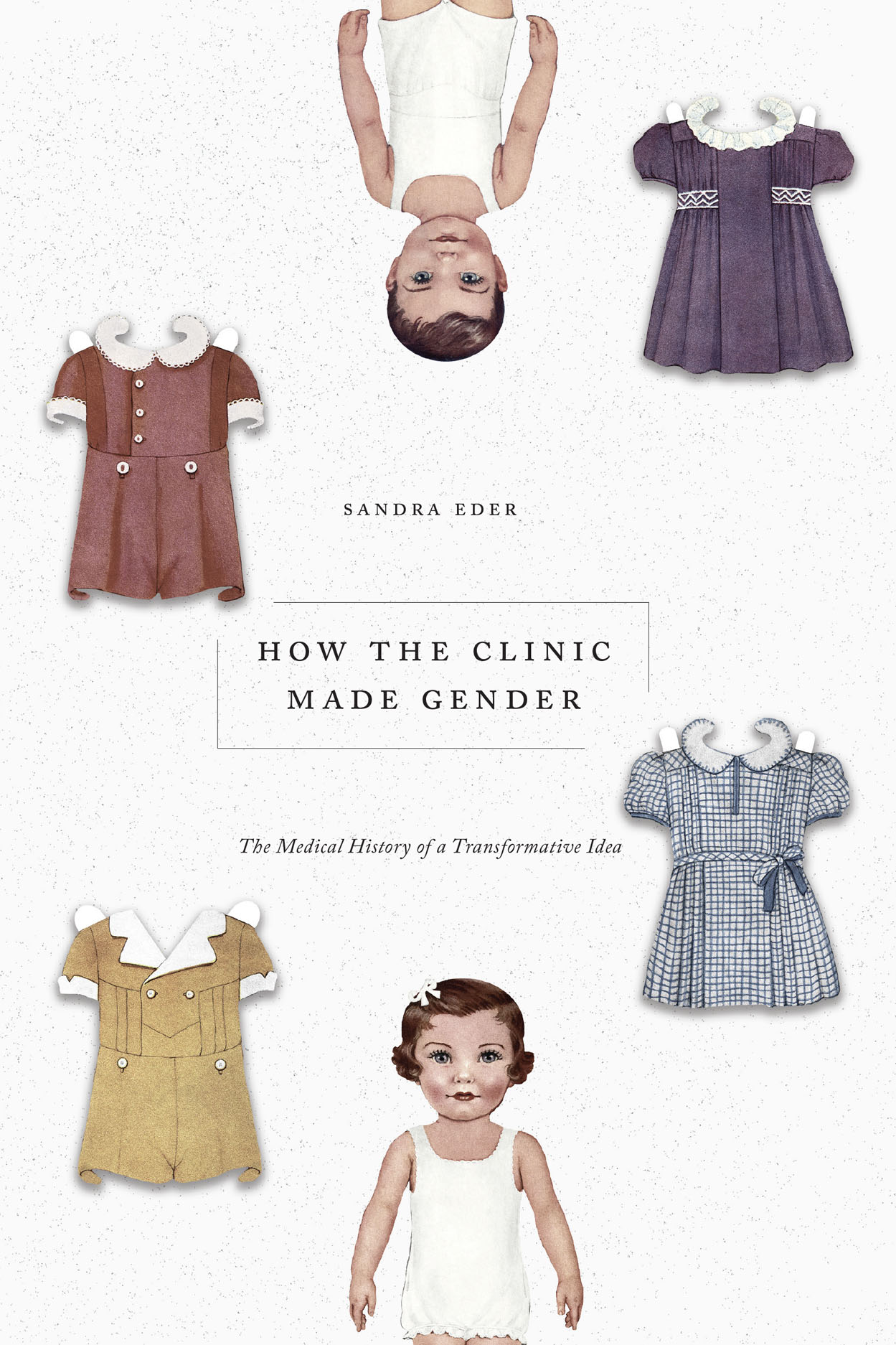
Sandra Eder, How the Clinic Made Gender. The Medical History of a Transformative Idea, Chicago University Press, 2022

Interview (podcast) with the author on the New Books network

An eye-opening exploration of the medical origins of gender in modern US history.

Today, a world without “gender” is hard to imagine. Gender is at the center of contentious political and social debates, shapes policy decisions, and informs our everyday lives. Its formulation, however, is lesser known: Gender was first used in clinical practice. This book tells the story of the invention of gender in American medicine, detailing how it was shaped by mid-twentieth-century American notions of culture, personality, and social engineering.

Sandra Eder shows how the concept of gender transformed from a pragmatic tool in the sex assignment of children with intersex traits in the 1950s to an essential category in clinics for transgender individuals in the 1960s. Following gender outside the clinic, she reconstructs the variable ways feminists integrated gender into their theories and practices in the 1970s. The process by which ideas about gender became medicalized, enforced, and popularized was messy, and the route by which gender came to be understood and applied through the treatment of patients with intersex traits was fraught and contested. In historicizing the emergence of the sex/gender binary, Eder reveals the role of medical practice in developing a transformative idea and the interdependence between practice and wider social norms that inform the attitudes of physicians and researchers. She shows that ideas like gender can take on a life of their own and may be used to question the normative perceptions they were based on. Illuminating and deeply researched, the book closes a notable gap in the history of gender and will inspire current debates on the relationship between social norms and medical practice.

TABLE OF CONTENTS
Introduction
Chapter 1: Sex before Gender: From Determining True Sex to Finding the Better Sex
Robert: Hope
Chapter 2: Happy and Well Adjusted: The Psychologization of Sex in the 1930s and 1940s
Karen: Coming of Age
Chapter 3: Culture, Gender, and Personality
Chapter 4: Making Boys and Girls: Gender at Johns Hopkins
Chapter 5: Gender in the Clinic: The Process of Normalization
Chapter 6: The Circulations of Gender, Cortisone, and Intersex Case Management
Janet: Despair
Chapter 7: The Life of Gender: Reformulations and Adaptations
Epilogue

Verovšek, P.J.
The Reluctant Postmodernism of JÜrgen Habermas: Reevaluating Habermas’s Debates with Foucault and Derrida
(2022) Review of Politics, 84 (3), pp. 397-421.

DOI: 10.1017/S0034670522000316

Abstract
Politicians and scholars alike have blamed postmodernism – and the identity politics that have emerged in its wake – for the pathologies of the early twenty-first century. Despite his limited defense of the Enlightenment and his disputes with his French contemporaries, I argue that Habermas’s philosophy displays many postmodern characteristics that are often overlooked. These include its decentering of the autonomous subject, its skepticism towards metaphysics, and its rejection of stadial philosophies of history. In light of the fact that Habermas adopts weaker versions of many postmodern commitments, I reconsider his disputes with Foucault and Derrida regarding the legacy of the Enlightenment. I conclude that rather than interpreting Habermas as a conservative critic of his more radical counterparts in France, we should instead see these three thinkers as part of a shared attempt to come to terms with the problems of postwar Europe in a public, discursive manner.

May, L.
Virtual Heterotopias and the Contested Histories of Kowloon Walled City
(2022) Games and Culture

DOI: 10.1177/15554120221115398

Abstract
Hong Kong’s Kowloon Walled City has found new life in videogames during the three decades since its demolition, taking on unstable and sometimes contradictory forms when reimagined through virtual architecture. At stake in these acts of memory are the historical discourses surrounding everyday life in Kowloon Walled City, its uncertain political and cultural status, and ongoing postcolonial debates concerning Hong Kong identity. I analyze Kowloon’s Gate, Shenmue II, and Mr Pumpkin 2: Walls of Kowloon to uncover the contestation of the city’s histories through the types of spaces Michel Foucault described as heterotopic: at once real and unreal, and existent and non-existent. This analysis reveals the fluid nature of cultural memory and historical discourse in videogame spaces, as well as how virtual spatiality and the past can be used together to understand and define the present. © The Author(s) 2022.

Author Keywords
cultural memory; heterotopia; Kowloon Walled City; Kowloon’s Gate; Mr Pumpkin 2; Shenmue II; space

Jones, L., Avner, Z., Denison, J.
“After the Dust Settles”: Foucauldian Narratives of Retired Athletes’ “Re-orientation” to Exercise
(2022) Frontiers in Sports and Active Living, 4, art. no. 901308

DOI: 10.3389/fspor.2022.901308

Abstract
One aspect of sports retirement that has been overlooked until recently is the manner in which retired athletes relate to, and seek to redefine, the meaning of exercise in their post-sport lives. In this article, three Foucauldian scholars present and analyze a series of vignettes concerning their own sense-making and meaning-making about exercise following their long-term involvement in high-performance soccer (authors one and two) and distance running (author three). In doing so, this paper aims to underline the problematic legacy of high-performance sport for retiring athletes’ relationship to movement and exercise, and to highlight how social theory, and Foucauldian theorization in particular, can serve to open new spaces and possibilities for thinking about sports retirement. Copyright © 2022 Jones, Avner and Denison.

Author Keywords
ethical movement practices; exercise; Foucault; movement; sports retirement

Allen, Ansgar, and Sarah Spencer. “Regimes of Motherhood: Social Class, the Word Gap and the Optimisation of Mothers’ Talk.” The Sociological Review, (June 2022). https://doi.org/10.1177/00380261221104378.

Abstract
The role of working class mothers’ talk in explaining their child’s ‘impoverished’ language development and the resulting ‘word gap’ between social classes is hotly debated. Academic research in this area spans decades, crosses continents, and gathers up a wide range of disciplines and positions, ranging from research seeking to intervene in and optimise mothers’ talk, to research that vigorously criticises any attempt to do so. Through an extended analysis of Jacques Donzelot’s seminal study The Policing of Families, and Michel Foucault’s concept of a ‘regime of truth’, we explore how motherhood is constructed by academic debate as something to be endlessly optimised. Academic debate functions by (1) reducing expectations concerning the role and remit of experts so as to place the onus on mothers to implement findings which the former will facilitate, (2) complicating the contributing factors to language delay, thus avoiding apportioning blame too directly whilst giving endless cause to do further research, and (3) committing mothers to a permanent labour in which they are expected to better themselves as measured by the manifest language development of their children. Its strongest critics remain within the constraints of this regime of truth to the extent that they argue for humility of expertise, for recognition of broader sociocultural factors, and for the importance of privileging the expertise and agency of mothers. This article considers how all parties are, in effect, obliged to declare the truth of motherhood and will find themselves implicated in its governance.

Keywords
children, Donzelot, early intervention, education, language, social class, verbal environment

CALL FOR PAPERS
The twenty-first annual meeting of the Foucault Circle

University of Missouri – Kansas City
Kansas City, MO
April 21-23, 2023

We seek submissions for papers on any aspect of Foucault’s work, as well as studies, critiques, and applications of Foucauldian thinking. In light of recent legal and political moves against abortion and reproductive rights, we especially encourage scholarship engaging with the work and tools of Michel Foucault to provide a critical, genealogical understanding of this moment.

Paper submissions require an abstract of no more than 750 words. All submissions should be formatted as a “.doc” or “.docx” attachment, prepared for anonymous review, and sent via email to the attention of program committee chair Sam Binkley (samuel_binkley@emerson.edu) on or before December 9, 2022. Indicate “Foucault Circle submission” in the subject heading. Program decisions will be announced during the week of January 13, 2023.

We expect that the conference will begin Friday afternoon and will conclude around lunch time on Sunday morning. Presenters will have approximately 40 minutes for paper presentation and discussion combined; papers should be a maximum of 3500 words (20-25 minutes reading time).

Logistical information about lodging, transportation, and other arrangements will be available after the program has been announced.

For more information about the Foucault Circle, please see our website:
http://www.foucaultcircle.org
or contact our Coordinator, Edward McGushin:
emcgushin@stonehill.edu

stuartelden's avatarProgressive Geographies

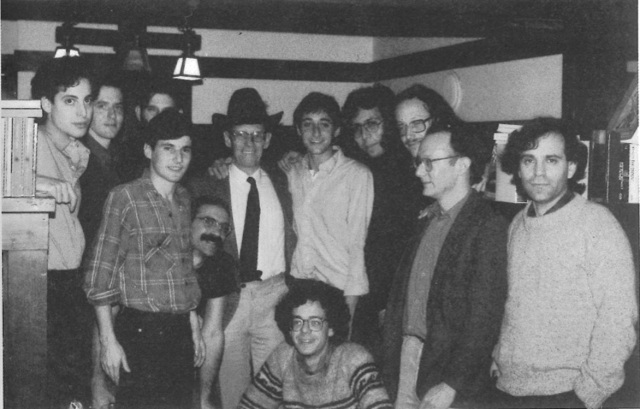
Back in 2015, when I was doing the research for Foucault’s Last Decade, I tried to identify and contact the people who had been part of Foucault’s 1983 seminar at Berkeley.

The famous photograph appeared in Didier Eribon’s biography, with Foucault in a cowboy hat, which was a gift from the students. This group met in parallel with the seminar on parrēsia that produced the unauthorised book Fearless Speech, edited by Joseph Pearson, which is now available in a critical edition as Discours et vérité / Discourse and Truth, edited by Henri-Paul Fruchaud and Daniele Lorenzini, and translated by Nancy Luxon.

Eribon book photos - Berkeley2
left to right – Mark Maslan; Eric Johnson;Thomas Zummer (part-hidden); Stephen Kotkin; Kent Gerard (crouching); Michel Foucault; David Levin (seated);Keith Gandal; Jonathan Simon; Arturo Escobar; Paul Rabinow; Jerome (Jerry) Wakefield

The photograph was taken by David Horn

View original post 433 more words