Foucault News

News and resources on French thinker Michel Foucault (1926-1984)

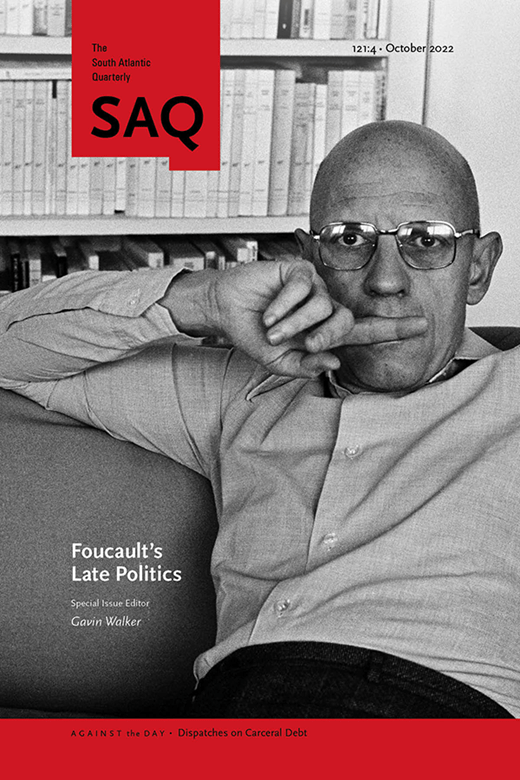
Foucault’s Late Politics. Special Issue. South Atlantic Quarterly, October 2022, Vol 121, Issue 4
Introduction: The Late Foucault and the Allegories of Theory
Gavin Walker

ARTICLES
Beyond Neoliberal Realism: Foucault’s Late Politics
Johanna Oksala

Crisis and Transition: The Late Foucault and the Vocation of Philosophy
Benjamin Noys

The Revolutionary and Anti-Capitalist Politics of the Late Foucault: The Quest for Economic Sovereignty
Ken Kawashima

The Will to Strategy: Foucault’s Interregnum, 1976–1979
Gavin Walker

Constituting New Modes of Thought and Life: On the Late Foucault
Judith Revel

Foucault’s Anti-Oedipus
Yoshihiko Ichida

Tragedy and Juridical Forms
Alberto Toscano

Foucault’s Solitude
Asad Haider

Is a Communist Governmentality Possible?: Parrhēsia, Care of the Self, and the Possibility of Another Life
Panagiotis Sotiris

Appel à contributions Journées doctorales Michel Foucault 2023
Les rencontres doctorales de l’Association pour le Centre Michel Foucault sont de retour à l’Imec !

Découvrez ici l’appel à contribution pour la session 2023. Date d’expiration :31 mars 2023

L’idée ?

Réunir en ateliers de recherche à l’abbaye d’Ardenne les doctorants et doctorantes travaillant sur, avec et autour de la pensée de Michel Foucault.

L’objectif ?

Mettre en relation, le plus agréablement possible et de manière assez informelle, les jeunes chercheurs et chercheuses afin de constituer un réseau de travail national et international, et de leur donner l’occasion de présenter leurs travaux.

Quand?

Cette rencontre aura lieu du 11 au 13 octobre 2023 à l’Abbaye d’Ardenne à Caen (avec un départ de Paris le mercredi 11 en matinée et un retour le vendredi 13 en fin de journée).

Comment ?

Les frais de séjour sur place et les billets de train à partir de Paris (Paris-Caen-Paris) seront offerts aux intervenants par l’Association pour le Centre Michel Foucault.

Pour que les échanges puissent être les plus féconds possibles – et compte tenu des capacités d’accueil de l’Abbaye – nous limitons le nombre de participants, ce qui impliquera nécessairement un choix de notre part. Les doctorants ayant participé les années passées aux rencontres pourront décider d’y assister, mais la priorité sera donnée aux nouveaux intervenants et aux doctorants en deuxième et troisième année de thèse.

Les rencontres doctorales sont ouvertes à tou(te)s les étudiant(e)s sans distinction de nationalité, mais la langue de travail sera le français (avec possibilité éventuelle d’intervenir en anglais).

Quelles sont les modalités pour proposer une intervention?
Les propositions d’intervention (2.500 signes max.), portant soit sur une question particulière du travail de thèse, soit sur un problème méthodologique précis, devront nous être envoyées, avec un CV (indiquant l’année et le titre de la thèse, le nom du directeur, de l’université et de l’école doctorale de rattachement) avant le 31 mars 2023, à l’adresse suivante :

journeescmf@gmail.com

En fonction des demandes, nous établirons et diffuserons un programme en mai 2023.

Ce dispositif de recherche est soutenu par l’Imec, le Centre Michel Foucault et la Fondation de France.

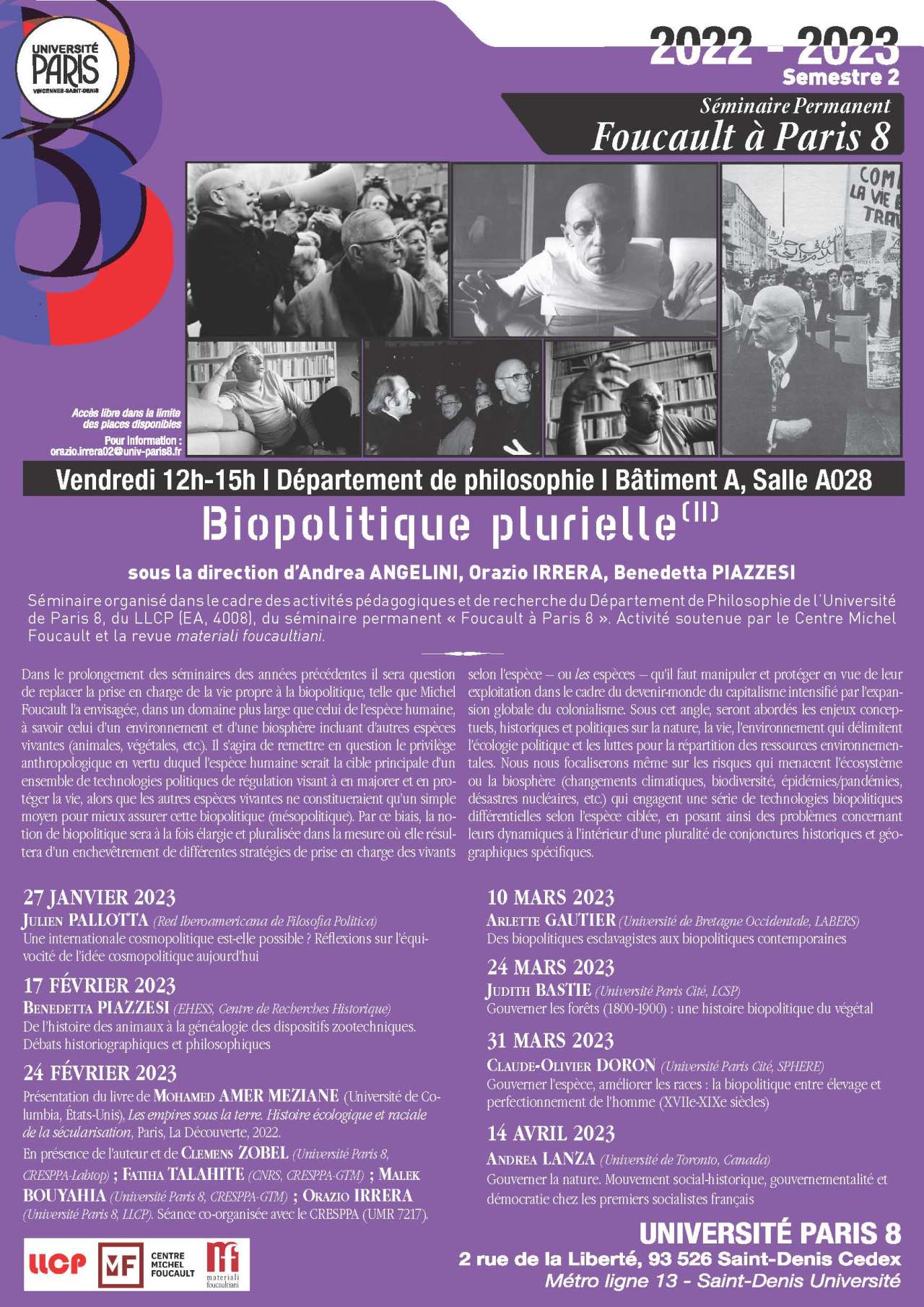
Biopolitique plurielle (II)
sous la direction d’Andrea ANGELINI, Orazio IRRERA, Benedetta PIAZZESI
Vendredi 12h-15h | Bâtiment A, Salle A028

Séminaire organisé dans le cadre des activités pédagogiques et de recherche du Département de Philosophie de l’Université de Paris 8, du LLCP (EA, 4008), du séminaire permanent « Foucault à Paris 8 ». Activité soutenue par le Centre Michel Foucault et la revue materiali foucaultiani.

Dans le prolongement des séminaires des années précédentes il sera question de replacer la prise en charge de la vie propre à la biopolitique, telle que Michel Foucault l’a envisagée, dans un domaine plus large que celui de l’espèce humaine, à savoir celui d’un environnement et d’une biosphère incluant d’autres espèces vivantes (animales, végétales, etc.). Il s’agira de remettre en question le privilège anthropologique en vertu duquel l’espèce humaine serait la cible principale d’un ensemble de technologies politiques de régulation visant à en majorer et en protéger la vie, alors que les autres espèces vivantes ne constitueraient qu’un simple moyen pour mieux assurer cette biopolitique (mésopolitique). Par ce biais, la notion de biopolitique sera à la fois élargie et pluralisée dans la mesure où elle résultera d’un enchevêtrement de différentes stratégies de prise en charge des vivants selon l’espèce – ou les espèces – qu’il faut manipuler et protéger en vue de leur exploitation dans le cadre du devenir-monde du capitalisme intensifié par l’expansion globale du colonialisme. Sous cet angle, seront abordés les enjeux conceptuels, historiques et politiques sur la nature, la vie, l’environnement qui délimitent l’écologie politique et les luttes pour la répartition des ressources environnementales. Nous nous focaliserons même sur les risques qui menacent l’écosystème ou la biosphère (changements climatiques, biodiversité, épidémies/pandémies, désastres nucléaires, etc.) qui engagent une série de technologies biopolitiques différentielles selon l’espèce ciblée, en posant ainsi des problèmes concernant leurs dynamiques à l’intérieur d’une pluralité de conjonctures historiques et géographiques spécifiques.

Programme

27 janvier 2023
Julien PALLOTTA
(Red Iberoamericana de Filosofia Politica)
Une internationale cosmopolitique est-elle possible ?
Réflexions sur l’équivocité de l’idée cosmopolitique aujourd’hui

17 février 2023
Benedetta PIAZZESI
(EHESS, Centre de Recherches Historique)
De l’histoire des animaux à la généalogie des dispositifs zootechniques.
Débats historiographiques et philosophiques

24 février 2023
Présentation du livre de Mohamed AMER MEZIANE (Université de Columbia, États-Unis), Les empires sous la terre. Histoire écologique et raciale de la sécularisation, Paris, La Découverte, 2022. En présence de l’auteur et de Clemens ZOBEL (Université Paris 8, CRESPPA-Labtop) ; Fatiha TALAHITE (CNRS, CRESPPA-GTM) ; Malek BOUYAHIA (Université Paris 8, CRESPPA-GTM) ; Orazio IRRERA (Université Paris 8, LLCP). Séance organisée avec le CRESPPA (UMR 7217).

10 mars 2023
Arlette GAUTIER
(Université de Bretagne Occidentale, LABERS)
Des biopolitiques esclavagistes aux biopolitiques contemporaines

24 mars 2023
Judith BASTIE
(Université Paris Cité, LCSP)
Gouverner les forêts (1800-1900) : une histoire biopolitique du végétal

31 mars 2023
Claude-Olivier DORON
(Université Paris Cité, SPHERE)
Gouverner l’espèce, améliorer les races : la biopolitique entre élevage et perfectionnement de l’homme (XVIIe-XIXe siècles)

14 avril 2023
Andrea LANZA
(Université de Toronto, Canada)
Gouverner la nature. Mouvement social-historique, gouvernementalité et démocratie chez les premiers socialistes français

Cheung, M., Chen, Z.T.
Power, Freedom, and Privacy on a Discipline-and-Control Facebook, and the Implications for Internet Governance
(2022) IEEE Transactions on Professional Communication, pp. 1-18.

DOI: 10.1109/TPC.2022.3191103

Abstract
Background: The proliferation and penetration of social media into professional and everyday lives have reshaped the way in which people deal with their personal information and call for refreshed perceptions and conceptualizations of the power relationship between individual users and technology giants. Despite intensified privacy concerns and crises over social media, there is little research on the correlations between users’ privacy perception and protection in non-Western settings. Research question: To what extent are Hong Kong Facebook users willing to sacrifice control over their information in exchange for self-expression, sociality, and intimacy in their social roles and relationships

Literature review: We first identified a gap in the literature on user perceptions and concerns over privacy in Eastern cultures, which is scarce despite the increasing concern over privacy in professional communication. Informed by the recent literature on the privacy paradox and Foucault and Deleuze's work on power, the unbalanced and normalizing power relationship between Facebook and its users in Eastern contexts is identified as a synthesis of discipline and control.

Research methodology: Data from a survey of 797 young users in Hong Kong were used for our analysis of privacy perception and protection. The survey contained three sections: Facebook usage, attitudes and behaviors, and basic demographics. Results: The findings support our hypotheses in revealing that the privacy paradox is evident for Facebook users in Hong Kong. In addition, excessive Facebook use leads to reactive privacy awareness and normalization behaviors.

Conclusion: We believe that technology giants, such as Facebook, should be pioneers in safeguarding users’ privacy while encouraging the establishment of social relationships and freedom of expression. The implications for internet governance are discussed from a multistakeholder perspective.

Author Keywords
Deleuze; discipline-and-control social media; Facebook; Foucault; freedom; Internet; Law; Media; Meta; Pandemics; power; Privacy; privacy; Regulation; social network; Social networking (online)

Index Keywords
Data privacy, Social aspects, Surveys; Deleuze, Discipline-and-control social medium, Facebook, Foucault, Freedom, Law, Medium, Meta, Pandemic, Power, Privacy, Regulation, Social media, Social network, Social networking (online); Social networking (online)

stuartelden's avatarProgressive Geographies

All of Foucault’s lecture courses at the Collège de France have been published and translated into English. Thirteen courses were delivered over a fourteen-year period from 1970-84 – Foucault took 1976-77 as a sabbatical year.

Much less is known about his seminars. Until 1981, Foucault ran a seminar class in parallel to the lectures. It wasusuallyheld on Monday afternoons or early evening. From 1981-82 he opted to increase the number of lecture hours instead, which is why the courses fromThe Hermeneutic of the Subjectonwards have first and second hours for each week. In the course summaries which Foucault wrote for theAnnuaire du Collège de Franceeach year he reported both on the lecture course and, usually, on what had been done in the seminar. These summaries were available as pdfson the Collège de France sitebut they seem to have been removed (several were mislabelled when…

View original post 497 more words

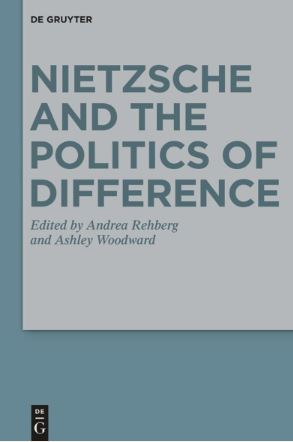
Rehberg, Andrea and Woodward, Ashley. Nietzsche and the Politics of Difference. Berlin, Boston: De Gruyter, 2022. https://doi.org/10.1515/9783110688436

About this book
The question of Nietzsche’s use of political theory has a long and vexed history. The contributors of this book re-situate debates around the notion of difference, in relation to historical and scholarly concerns, but with a view to the current political context. Given that today we are faced with a host of political challenges of domination and resistance, the question raised in this volume is how Nietzsche helps us to think through and to address some of the problems. The authors also discuss how his writings complicate our desire for swift solutions to seemingly intractable problems: how to resist slavishness in thought and action, how to maintain hard-won civil liberties and rights in the face of encroaching hegemonic discourses, practices and forces, or how to counteract global environmental degradation, in short, how to oppose ‘totalitarian’ movements of homogenization, universalization, equalization, and instead to affirm, both politically and ontologically, a culture of difference.

Table of Contents
Introduction

PART 1 POLITICS AND DIFFERENCE
Nietzsche, Rancière and the Disputation of Politics
Alan Watt

Composing Time: Stiegler on Nietzsche, Nihilism and a Possible Future
Tracy Colony

PART 2 POLITICS AND IDENTITY
Nietzsche’s Diagnosis of Socrates in The Birth of Tragedy: Voyeurism and the Denigration of Difference
Glen Baier

Ecce Homo – Notes on Duplicates: The Great Politics of the Self
William A. B. Parkhurst

Voluntary Submission and the ʻPolitics of Truth’: Nietzsche and Foucault on the Danger of the Fully Normalised ‘Last Human’
Niklas Corall

Towards Immanence – A Nietzschean Trajectory
Andrea Rehberg

PART 3 NIETZSCHE AND DELEUZE ON A NEW POLITICS
Echoes of a New Politics: Deleuze’s Nietzsche and the Political
Jonas Oßwald

The Topology of Difference: Deleuze’s Nietzsche in his Politics of Folded Spaces and Subjects
Lilian Kroth

Fake or Just Stupid? – Post-Truth Politics, Nihilism and the Politics of Difference in Light of Deleuze’s Nietzsche and Philosophy
Gabriel Valladão Silva

The Idiot: Deleuze’s Nietzsche for a Politics of Difference
Julie Van der Wielen

PART 4 THE POLITICS OF THE AGON
Disparate Conceptions of the Agon: Nietzsche and Agonistic Democracy
Pia Morar

Agonal Human Rights: A Re-evaluation of Democracy Through Nietzsche’s Physio-Psychology of Will to Power
Sven Gellens

PART 5 PLURALITY, AFFIRMATION, IMMANENCE
Nietzsche and a Politics of Difference: Realising the Forces in the Margins
Marinete Araujo da Silva Fobister

Nietzsche, Foucault and the Politics of the Ascetic Ideal
George W. Shea

The Quandary of Identity and the Prospective Appearance of Free Spirits in our Globalising Age
Michael J. McNeal

stuartelden's avatarProgressive Geographies

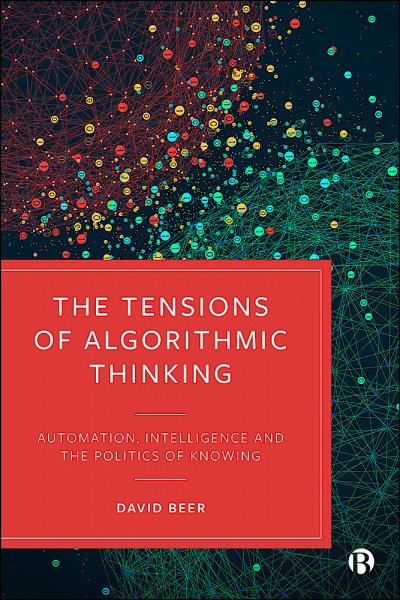
David Beer, The Tensions of Algorithmic Thinking: Automation, Intelligence and the Politics of Knowing – Bristol University Press, November 2022

Hardback and e-book only at the moment, but paperback sometime in the future. Subscribers to David’s substack The Fragment can access a 50% discount code.

We are living in algorithmic times.

From machine learning and artificial intelligence to blockchain or simpler newsfeed filtering, automated systems can transform the social world in ways that are just starting to be imagined.

Redefining these emergent technologies as the new systems of knowing, pioneering scholar David Beer examines the acute tensions they create and how they are changing what is known and what is knowable. Drawing on cases ranging from the art market and the smart home, through to financial tech, AI patents and neural networks, he develops key concepts for understanding the framing, envisioning and implementation of algorithms.

This book will be of…

View original post 18 more words

stuartelden's avatarProgressive Geographies

Melissa Pawelski, “Between ‘Körper’ and ‘Leib’ – Translating Michel Foucault’s concept of the body after Friedrich Nietzsche“, Perspectives: Studies in Translation Theory and Practice, 2022 (open access)

This article analyses the German words ‘Leib’ and ‘Körper’ that can both be translated as ‘the body’ in English and as ‘le corps’ in French. The human body is a central object in the philosophies of Friedrich Nietzsche and Michel Foucault. Whilst ‘Körper’, originating in Latin, commonly refers to the body, ‘Leib’ stems from Middle High German meaning ‘the body’, ‘life’, and ‘person’. Nietzsche’s use of ‘Leib’ must be understood as an idiosyncrasy, an Untranslatable following Cassin. In Nietzsche’s thought, he insists on the aspects of life and the will to live, positing that the body ought not to be abstracted in philosophy. I show that the word ‘Leib’ is functional in Nietzsche’s philosophy on which, in turn, Foucault draws…

View original post 81 more words

Goodley, C., Perryman, J.
Beyond the ‘terrors of performativity’: dichotomies, identities and escaping the panopticon
(2022) London Review of Education, 20 (1), art. no. 29

DOI: 10.14324/LRE.20.1.29

Abstract
This article examines the influence of Stephen Ball’s work through the eyes of two former teachers turned academics who met through a mutual interest in his paper, ‘The teacher’s soul and the terrors of performativity’. We note our personal reactions to this particular paper and how Ball’s body of work has and continues to influence our thinking, careers and research. We note that his highly readable, provocative style of writing and passionate denunciation of league tables, inspections and the associated paraphernalia of control that appear central to neoliberal models of educational governance continue to prove useful in understanding global educational policy. This article also critically engages with the effects of such a seminal paper on the lived experience of the teaching profession. The first author argues that while Ball’s writing is useful to understand the pressures and struggles that teachers face, Ball’s use of Foucauldian notions such as ‘docile bodies’ and ‘subject-position’ can be seen to flatten out teachers, rendering them passive bystanders rather than agentic professionals. The second author revisits and recalls the influence of the paper on her early work, particularly on her concept of ‘panoptic performativity’, and the impact that the paper, and Stephen Ball’s work in general, continues to have on the wider field. © 2022, Claire Goodley and Jane Perryman.

Author Keywords
accountability; figured worlds theory; Michel Foucault; performativity; performativity; Stephen J. Ball; teachers

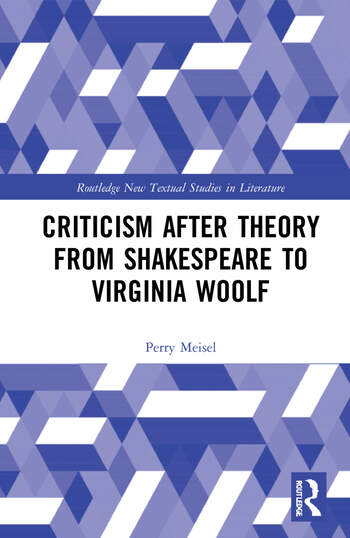
Perry Meisel, Criticism After Theory from Shakespeare to Virginia Woolf,
Routledge, 2022

Book Description
The argument of this book is a simple one: that criticism after theory is a single movement of thought defined by synthesis and continuity rather than by conflict and change. The most influential figures in criticism since Saussure—Bakhtin, Derrida, and Foucault—are wholly consistent with Saussure’s foundational Course in General Linguistics (1916) no matter the traditions of complaint that have followed in Saussure’s wake from Bakhtin forward. These complaints vitiate—despite themselves and often hilariously so—the misconceptions that have made cottage industries out of quarrels with Saussurean semiology that are based on notions of Saussure that are incorrect. The materialist criticism dominant today is actually dependent upon on the legacy of a presumably formalist structuralism rather than a step beyond it. New Historicism, postcolonialism, gender studies, environmental criticism, archive studies, even shared and surface reading are, like deconstruction, the by-products of Saussure’s structuralism, not its foils. Saussure’s sign is sensory and concrete. Language and materiality are not distinct but one and the same—history, society, the psychological subject, even the environment are systems of signs, material archives read and reread by futures that produce the past after the fact. Without Saussure, contemporary criticism would have no identifiable or effective source. The book begins with chapters on Saussure and Derrida, Bakhtin and Shakespeare, and Freud and Foucault followed by chapters on Victorian and American fiction, D.H. Lawrence and modern poetry, Virginia Woolf and Melanie Klein, and the historicist tropology of psychoanalysis. It concludes with a coda in life writing on the author’s epileptic disability.

Table of Contents
Introduction: The Durability of the Linguistic Metaphor, Chapter 1: “The Word Within”: Egger, Saussure, Derrida, Chapter 2: Bakhtin, Shakespeare, and the Novel, Chapter 3: Deferred Action from Freud to Foucault, Chapter 4: Form and History from Dickens to Woolf, Chapter 5: Henry James and the Body English, Chapter 6: Sinclair Lewis and the American Language, Chapter 7: Black and Tan: DuBois, Faulkner, and The Joy Luck Club, Chapter 8: D.H. Lawrence: The Poem As Environment, Chapter 9: Mrs. Woolf, Mrs. Klein, Chapter 10: The Feudal Unconscious: Capitalism and the Family Romance, Coda: The Challenge of Temporal Lobe Epilepsy

Author
Perry Meisel, Professor of English at New York University for over 40 years until his retirement in 2016, has written on literature, music, theory, psychoanalysis, and culture since the 1970s. His articles have appeared in The New York Times Book Review, The Village Voice, Partisan Review, The Nation, The Atlantic, Raritan, October, and many other publications. He is the author of The Myth of Popular Culture (Blackwell, 2010), The Literary Freud (Routledge, 2007), The Cowboy and the Dandy (Oxford, 1999), The Myth of the Modern (Yale, 1987), The Absent Father (Yale, 1980), and Thomas Hardy (Yale, 1972). He is coeditor, with Haun Saussy, of Saussure’s Course in General Linguistics (Columbia, 2011), and coeditor, with Walter Kendrick, of Bloomsbury/Freud: The Letters of James and Alix Strachey, 1924–25 (Basic Books, 1985). He is also the editor of Freud: A Collection of Critical Essays (Prentice-Hall, 1981). He received his B.A. Summa cum laude from Yale in 1970. He also received his M.Phil. (1973) and Ph.D. (1975) from Yale. He is the recipient of Yale’s Wrexham Prize and Thomas G. Bergin Cup and research grants from the National Endowment for the Humanities and the Spencer Foundation. He is a member of Phi Beta Kappa and PEN and has been a Fellow of the New York Institute for the Humanities and the Institute for the History of Psychiatry at Weill-Cornell Medical College.