Foucault News

News and resources on French thinker Michel Foucault (1926-1984)

Daniel Defert, Interview (in French), on Oxford University mosaic site Around 1968: Activism, networks, trajectories,
Interview conducted in Paris 7 April 2008, audio recording and transcript.
Interviewed by Robert Gildea and transcribed by Koisse Said

English translation and audio

[…]
RG : Et c’est quand vous étiez à Saint-Cloud que vous avez rencontré Foucault ?

DD : Oui, la première semaine où je suis arrive à Paris en 60, il se trouve que j’avais un de mes professeurs de la fac de Lyon qui était un ami de Foucault. Qui était à Normale avec Foucault et qui voulait que je représente encore au concours. Et pour me convaincre m’a invité à rencontrer Foucault. Et alors quand je suis rentré à Saint-Cloud j’avais un de mes camarades qui était entré un an avant moi – qui a fait une grande carrière diplomatique – et quand il m’a revu il a trouvé que j’affichais trop mon homosexualité. Et il m’a conseillé d’avoir une vie politique, comme thérapeutique (rire). Il m’a conseillé de me présenter aux élections des représentants des élèves de l’École Normale. Je vous dis ça parce que ça fait partie de l’histoire politique. Nous étions dans les Écoles Normales ‘élèves-maîtres’. C’est-à-dire que nous étions à la fois représentés dans les syndicats d’enseignants et les syndicats d’étudiants. J’avais jamais été militant, j’avais juste une fois fait le service d’ordre pour Mendès-France à Lyon pendant la guerre d’Algérie. Bon j’étais contre la guerre d’Algérie mais je ne m’étais pas impliqué d’abord j’étais interne à Lyon. Et puis à Saint-Cloud donc, je me suis présenté d’abord comme candidat pour représentant des élèves. J’ai été élu représentant à l’UNEF en 60. J’arrive juste en 60, la première semaine où j’arrive à Saint-Cloud je rencontre Foucault et je suis élu à l’UNEF alors que j’aurais pu être élu au syndicat des profs. Et j’ai la chance par hasard d’être élu à l’UNEF, c’était la guerre d’Algérie et l’UNEF est le principal mouvement social contre la guerre d’Algérie. Je me suis trouvé politisé par cette élection à l’UNEF.
[…]

Johan Wennström, The soul of Swedes,
On the contested state of Swedish cultural identity, The Critic, 8 February, 2023

n the late 1950s, French philosopher Michel Foucault spent three years as a researcher in the Swedish university town of Uppsala. The encounter between Foucault and Sweden seems to have been an unhappy one, perhaps inspiring him to begin work on his first study of institutional control, Madness and Civilization (1961), as he in fact did during this period. A decade later, Foucault reflected in an interview on “the mutism of the Swedes, their silence and their habit of talking with elliptical sobriety”, describing a society in which “a human is but a moving dot obeying laws, patterns and forms”. He went on, “In its calmness, Sweden reveals a brave new world where we discover that the human is no longer necessary.”

Foucault’s critical words about his Swedish hosts crystallise the widespread view, also espoused by British author Roland Huntford in his book The New Totalitarians (1971), that Sweden is a country where the individual and his social relationships are suffocated by an excessively interventionist state, producing loneliness and alienation. A much more nuanced analysis of life in the Swedish welfare state is offered by historian Henrik Berggren and sociologist Lars Trägårdh in a book that instantly became a classic when it was published in Sweden more than fifteen years ago and appeared, in slightly reworked form, in English last year.

Read more

Gilberto Conde, Fluid Modernity. The Politics of Water in the Middle East, Routledge, 2023

Book Description
Fluid Modernity offers an innovative, encompassing, historical grasp of the politics of water in the Middle East in the context of modern capitalism and world politics. Drawing upon conceptions of power by Foucault and Agamben, it examines how water, through its modern capitalist production, is transformed into a water apparatus that binds people to power. In trans-boundary watercourses, states get involved in the formation of international governmentalities.

The book revisits the history of fluid modernity in the Middle East from late Ottoman times to the present. It focuses on water conflict and cooperation between states (Israel and Arab states and Turkey, Syria and Iraq), on state policies towards subaltern subjects (Israel and Turkey in relation to Palestinians and Kurds, respectively) and on the water politics of rebellious movements. After a conceptual chapter discussing fluid modernity, the book traces water politics in the region in a diachronic perspective. It explores how water diplomacy, infrastructure loans, reservoir construction, discourses of sovereignty and conflict have weighed on the development of governance and governmentality in the region.

Fluid Modernity will be of great interest to postgraduates, researchers, academics and intellectuals interested in Middle East Studies, Hydropolitics, Water and Society, Geopolitics, Political Theory, Resistance as well as to NGOs dealing with water.

Gilberto Conde is Professor at the Center for Asia and Africa Studies of El Colegio de México, where he teaches Geography and History of the Middle East and North Africa, and works on Arab, Turkish and Kurdish politics and society with a special interest on authoritarianism, rebellion, geopolitics, capitalism and water. Before joining El Colegio de México in 2011, he taught world history and critical geopolitics in Tijuana at Universidad Autónoma de Baja California, and carried out research on water and society at El Colegio de la Frontera Norte. Having lived in Syria, Tunisia and Turkey for several years and travelled extensively in the Middle East and North Africa, Gilberto is keen to bring a Latin American, non-West, decolonial approach to his work. He edited Estudios de Asia y África, the oldest Latin American journal on the non-Latin American Global South, from 2012 through 2016. He has published several authored or edited volumes on the Middle East as well as numerous journal articles and book chapters.

Ostrowicka, H., Wolniewicz-Slomka, K.
Heterotopias of Nationalist Youth Organisations in Poland: Communitarisation and Entry/Exit System (2022) Qualitative Report, 27 (11), pp. 2528-2545.

DOI: 10.46743/2160-3715/2022.5708

Abstract
The article presents the results of an analysis of the discourse of nationalist youth organisations in Poland. The authors have attempted to reconstruct the common “us”of two youth organisations based on the materials made available by them as well as articles in the press published in 2018 in selected journals and weeklies. This was the year when Poland celebrated its 100th anniversary of regaining independence, which made this an exceptional time in the context of discourse about the community. The article focuses on two youth organisations – the All-Polish Youth (APY) and the National Radical Camp (NRC).

The study answers the question of how the “us”community is construed within the organisation, what are its dimensions, and are they places where the two heterotopic principles are implemented: (1) The principles of openness and closedness of a community or communities, and (2) the rules for compiling several different heterogenous spaces within one organisation. This article was prepared within a research project which is in line with the so-called topographical turn in discursive research and refers particularly to the concept of heterotopia of Michel Foucault. The research showed that the discursive constructions of youth communities reflected these two heterotopic principles. Copyright 2022: Helena Ostrowicka.

Author Keywords
community; discourse analysis; heterotopia; nationalist discourse; nationalist youth organisations

Décès de Daniel Defert : les réactions, Seronet, 10.02.2023

La disparition du sociologue et militant de la lutte contre le sida, Daniel Defert, décédé le 7 février à l’âge de 85 ans, a suscité de nombreuses réactions. Militants-es de AIDES, partenaires, personnalités médicales, associatives et politiques, etc., nombreuses ont été les réactions à l’annonce de la disparition du fondateur et premier président de AIDES.

Les militants-es de AIDES
« C’est avec une profonde tristesse que nous apprenons ce soir la disparition de Daniel Defert, fondateur de AIDES. Il laisse derrière lui le souvenir indélébile d’une vie militante et des principes d’action, que les 2 200 militants-es que nous sommes perpétuons au quotidien », a souligné l’association dans un communiqué. Présidente, Camille Spire a écrit sur Twitter : « Très émue de la disparition de Daniel Defert… Fondateur de AIDES et transformateur social qui s’est battu pour faire entendre la voix des séropositifs-ves et plus généralement des malades. Nous continuerons à la porter haut et fort. Nous ne lâcherons rien Daniel ! » « Daniel Defert a dit qu’il a continué à agir avec Michel Foucault en créant AIDES, nous continuerons à agir avec Daniel Defert », a souligné Marc Dixneuf, directeur général de l’association. « Ce soir, je suis orphelin, Daniel Defert compagnon de Michel Foucault nous a quittés. Il est à l’origine de la création de @assoAIDES et a remis le patient au centre du VIH « Rien pour nous sans nous ». Il a suivi mes premiers pas en 2015 comme président », a rappelé Aurélien Beaucamp, administrateur, ancien président de AIDES (2015-2021) et co-président de LINK.

lire la suite

Some Reasons to be Skeptical of AI Authorship, Part 1: What is an (AI) Author?
By Gordon Hull, New APPS: Art, Politics, Philosophy, Science, 06 February 2023

Large Language Models (LLMs) like Chat-GPT burst into public consciousness sometime in the second half of last year, and Chat-GPT’s impressive results have led to a wave of concern about the future viability of any profession that depends on writing, or on teaching writing in education. A lot of this is hype, but one issue that is emerging is the role of AI authorship in academic and other publications; there’s already a handful of submissions that list AI co-authors. An editorial in Nature published on Feb. 3 outlines the scope of the issues at hand:

“This technology has far-reaching consequences for science and society. Researchers and others have already used ChatGPT and other large language models to write essays and talks, summarize literature, draft and improve papers, as well as identify research gaps and write computer code, including statistical analyses. Soon this technology will evolve to the point that it can design experiments, write and complete manuscripts, conduct peer review and support editorial decisions to accept or reject manuscripts”

[…]
In Foucauldian terms, “author” is a political category, and we have historically used it precisely to negotiate accountability for creation. As Foucault writes in his “What is an Author” essay, authorship is a historically specific function, and “texts, books, and discourses really begin to have authors … to the extent that authors became subject to punishment, that is, to the extent that discourse could be transgressive” (Reader, 108). In other words, it’s about accountability and individuation: “The coming into being of the notion of ‘author’ constitutes the privileged moment of individualization in the history of ideas, knowledge, literature, philosophy, and the sciences” (101). We see this part of the author function at work in intellectual property, where the “author” is also the person who can get paid for the work (there’s litigation brewing in the IP-world about AI authorship and invention). As works-for-hire doctrine indicates, the person who actually produces the work may not ever be the author: if I write code for Microsoft for a living, I am probably not the author of the code I write. Microsoft is.

Michel Foucault on ChatGPT, Artificial Intelligence, and the Disappearance of the Human, Theoretical Puppets, 9 January 2023

This video explores the use (and potential misuse) of ChatGPT. The experimental dialog it features was created by means of this large language model. The result is baffling, seemlessly flowing in appearance but including some completely invented quotations from Foucault writings. Still, the “death of the [human] author” never seemed so close…

This dialog was written with “ChatGPT” ( https://chat.openai.com/ ). The following prompts were entered:

1. “Please write a funny script for an imaginary interview with Michel Foucault, talking about ChatGPT and AI. Write a 2-3 page script and include some puns!”

2. “Make the script a bit longer and please include two quotes from “Discipline and Punish”!”

3. “Now please discuss the consequences of the GPT technology for Foucault’s discourse analysis!”

4. “At the end of the script, could you please include an interviewer’s question as to whether or not this is now the disappearance of the human that Foucault described in the “Order of Things”?”

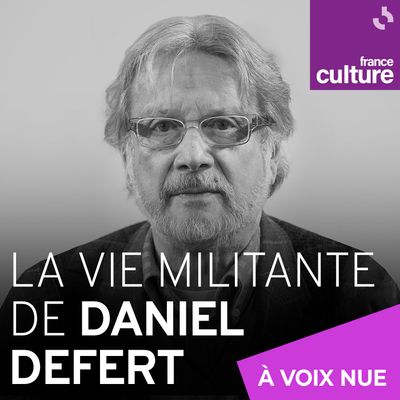
Sida, prisons, décolonisation : la vie militante de Daniel Defert, France Culture (radio), fév 2023.

© Claude Truong-Ngoc / Wikimedia Commons – cc-by-sa-3.0, Aucun(e)

À propos de la série

Une série d’entretiens proposée par Virginie Bloch-Lainé. Réalisation : Laetitia Coia. Prise de son : Yves le Hors. 5 épisodes.

Tout au long de son existence, dont 20 années aux côtés du philosophe Michel Foucault, Daniel Defert a lutté pour et avec les autres. Ouvriers, prisonniers, colonisés, malades du sida… Une vie en cinq entretiens avec le sociologue fondateur de l’association Aides.

En 1984, Daniel Defert crée Aides, la première association française de lutte contre le sida qu’il dirige jusqu’en 1991. Le virus à l’époque tue rapidement ; c’est une hécatombe. Michel Foucault, compagnon de Daniel Defert pendant vingt ans, vient d’en mourir, mais le silence est gardé sur la cause de sa mort : “J’avais à résoudre un problème : ne pas parler pour lui, mais pas ne rien faire”, dira Daniel Defert vingt ans plus tard . Par fidélité aux luttes politiques qu’ils ont initiées et partagées, Daniel Defert s’engage immédiatement contre la maladie, encore méconnue. La politique de santé publique envers le sida n’existe pas en France. C’est Aides qui la met en place. Tout est à faire : dépistage du virus, campagnes de prévention (distribution de capotes, échange de seringues), prise en charge hospitalière digne de ce nom, recherche d’une thérapie et d’un vaccin.

Daniel Defert a pour lui l’expérience d’une vie militante. Après l’engagement en faveur de la décolonisation, mai 68, l’aventure de la gauche prolétarienne, il est à l’origine, avec Michel Foucault, du Groupe d’information sur les prisons, le GIP : en 1971, pour la première fois en France, des prisonniers témoignent de leurs conditions de détention grâce à des questionnaires qui sont transmis puis récupérés avec difficulté. Il faut, là aussi, briser le silence.

Normalien, agrégé de philosophie ayant choisi d’enseigner la sociologie, Daniel Defert reçoit le goût de la liberté individuelle de sa mère, du jansénisme familial, et de ce que, né en 1937, il a vu de la guerre et de la Libération depuis sa Bourgogne natale.

stuartelden's avatarProgressive Geographies

A few years ago I wrote a piece on Foucault, Shakespeare and ceremony, and then, pre-pandemic, considered whether there might be a bigger project on this question. It led to a survey piece for a handbook edited by some Warwick colleagues. The pieces are available here:

Elden, S.“Foucault and Shakespeare: Ceremony, Theatre, Politics“,Southern Journal of Philosophy, Vol 55, Spindel Supplement S1, 2017, pp. 153-172.

Elden, S. “Ceremony, Genealogy, Political Theology”, in Shirin M. Rai, Milija Gluhovic, Silvija Jestrovic and Michael Saward (eds.)The Oxford Handbook of Politics and Performance, Oxford: Oxford University Press, 2021, pp. 377-90.

While the Foucault and Shakespeare project remains in the background – I’ve published one other piece on the relation, and have some draft pieces delivered as lectures – the ceremony idea did not get developed. I didn’t feel I had anything distinctive to say, and I wasn’t…

View original post 20 more words

stuartelden's avatarProgressive Geographies

I have a review of Elisabetta Basso’s excellent Young Foucault: The Lille manuscripts on psychopathology, phenomenology, and anthropology, 1952–1955, translated by Marie Satya McDonough(Columbia University Press,2022) in The Journal of the History of the Behavioral Sciences. The review is unfortunately behind a paywall, so here are some of the key bits:

Box 46 [of the Foucault archive] is especially noteworthy. It contains 400 pages of manuscripts, most of which have recently been published but await translation. There are notes for a course on the question of philosophical anthropology, probably delivered both at the University of Lille and the École normale supérieure (ENS) in Paris in the early 1950s, a manuscript with the titlePhénoménologie et psychologie, probably from around 1953–1954, and another manuscript from a similar time, without a title but published asBinswanger et l’analyse existentielle(Foucault, 2021a, 2021b, 2022). The editor of the last text…

View original post 399 more words