Foucault News

News and resources on French thinker Michel Foucault (1926-1984)

Scholarly Conference: Call for Proposals
Foucault: Art, Histories, and Visuality in the 21st Century

OCAD (Ontario College of Art and Design) University,
Toronto/Tkaronto, Canada
May 29 & 30, 2024
Deadline: January 22, 2024

The French philosopher Michel Foucault’s (1926–84) work has had a major effect on scholars of art and visuality since Les Mots et les choses (1966) appeared in English in 1970 as The Order of Things. His radical ideas galvanized artists and art writers into many different directions: to insert ruptures and incoherence into history; to reimagine the subject, subjectivity, and identity; to politicize the realms of vision, visuality, and visibility; to formulate critical approaches to technology and media; and to scrutinize the inner workings of art institutions, including museums, schools, and archives. The versatility of Foucault’s thought greatly contributed to major shifts across disciplines, including the interventions of the “new art history” in the 1970s, multiculturalism and identity politics in the 1980s, visual and cultural studies in the 1990s, the questions of contemporaneity and globalization in this century. Owing to the posthumous publications of his lectures and the papers deposited at archives internationally, Foucault’s oeuvre continues to shape current discussions on methodological, political, and ethical assumptions regarding visualities and art histories forty years after his death.

Drawing from four decades of research in the arts, humanities, and social sciences, this two-day symposium proposes a critical assessment of the ways that Foucault’s influence intersects with current inquiries into art, visual culture, and their technologies. The organizers invite thirty-minute paper proposals that historicize and challenge the established patterns of Foucault’s reception in art history, archaeology, museology, visual anthropology, philosophy of art, aesthetics, film and media studies, visual culture, art education, and research-creation. We hope to form an eclectic lineup of speakers who have been engaging with the French thinker’s legacies from critical perspectives informed by the urgent issues of today, such as global inequity, decolonization, Indigenous sovereignty, race and ethnicity, post-truth, artificial intelligence, gender identities, environmental crisis, immigration, and diaspora. We will ask: How has Foucault’s thinking—ultimately concerned with human existence in a time of crisis— emerged from and contributed to the visual arts and material culture in the twenty-first century?

The symposium is part of the World Congress “Foucault: 40 Years After,” a global series of events commemorating the fortieth anniversary of the philosopher’s death. In efforts to reduce environmental impact and to prevent duplication with other events, we solicit proposals from researchers and artists based in North America. We welcome proposals that are international in the scope of research as well as those anchored in specific regional contexts, including Canada, for example.

Please send a one-page, single-spaced proposal and a short biography to foucault2024@gmail.com by January 22, 2024. The organizers are working on securing funding, which, if successful, would allow financial support for participants. We thank the peoples of the Mississaugas of the Credit, the Haudenosaunee, the Anishinaabe, and the Huron-Wendat, on whose unceded lands the event will be held.

Organizers:
Anton Lee. Assistant Professor of Art History, Theory, and Philosophy, NSCAD (Nova Scotia College of Art and Design) University

Catherine M. Soussloff. Professor Emerita of Art History, Visual Art, and Theory, University of British Columbia, and History of Art and Visual Culture, University of California, Santa Cruz

Collaborator/Local Host:
Charles Reeve. Professor of Visual and Critical Studies, Associate Dean of Arts and Science, OCAD University

Confirmed Speakers:
Andrew Gayed. Assistant Professor of Art History and Visual Culture, OCAD University

Amelia Jones. Robert A. Day Professor of Art and Design, Vice Dean of Faculty and Research, Roski School of Art and Design, University of Southern California

Louis Kaplan. Professor of History and Theory of Photography and New Media, Graduate Department of Art History, University of Toronto

Tavia Nyong’o. Professor and Chair of Theater and Performance Studies, Professor of American Studies, Professor of African American Studies, Yale University

John Rajchman. Adjunct Professor in Art History and Archaeology, Columbia University T’ai Smith. Associate Professor of Art History, Visual Art, and Theory, University of British Columbia

Kyla Wazana Tompkins. Professor and Chair of Global Gender and Sexuality Studies, State University of New York at Buffalo
Boucher, L.
The proliferation of men’s sheds in Australia: the problematization of masculinity in a neoliberal regime (2023) Cultural Studies

DOI: 10.1080/09502386.2023.2169731

Abstract
Men’s sheds emerged in Australia with a promise to restore men to health and happiness through the provision of a gender-exclusive communal space and access to ‘traditional’ masculine activities. This article traces their emergence in order to examine how anti-feminist claims about the rights and needs of men have been yoked together with ideas about health and wellbeing in late modernity. Deploying Foucault’s concept of governmentality, moreover, reveals how community men’s sheds have both responded and contributed to the problematization of the ‘older man’ in a neoliberal regime. The history of their emergence and widespread support reveals how masculinity can function as a site of neoliberal intervention, responsibilization and privilege, particularly when viewed in contrast to the decline in funding and support for women’s services. © 2023 Informa UK Limited, trading as Taylor & Francis Group.

Author Keywords
governmentality; masculinity; Men’s sheds; neoliberalism

Italian Radical Philosopher Toni Negri Dies In Paris
By AFP – Agence France Presse
December 16, 2023

Radical left-wing Italian philosopher Toni Negri died in Paris Saturday, aged 90, his wife the philosopher Judith Revel told AFP.

A former leader of Italy’s Workers’ Power movement, Negri was arrested in 1979 and convicted by a court there of armed insurrection against the state.

He got an additional four-and-a-half-year term for bearing “moral responsibility” for a series of clashes between militants and police in Milan, northern Italy, between 1973 and 1977.

Elected as a deputy in 1983 for the Radical Party, he made use of his parliamentary immunity to leave Italy and take refuge in France.

There, he enjoyed the support of fellow left-wing intellectuals including Jacques Derrida and Michel Foucault, and worked as a university lecturer.

In 1997, he chose to return to Italy after 14 years in exile to give himself up to the authorities. Two years later, he was granted a limited parole before being finally released in 2003.

Negri remained politically active in support of workers’ movements, Revel told AFP.
“Until the end, he continued to work and to take a stand,” she added.

The Bibliography of Foucault’s shorter works in English translation has been updated. With thanks to Daniele Lorenzini for maintaining this important bibliography originally compiled by Richard Lynch in 1997.

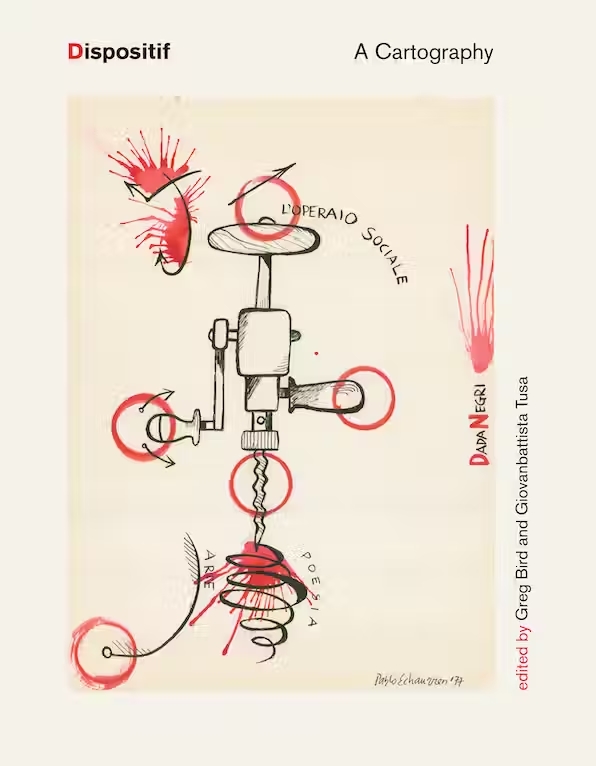
Dispositif: A Cartography
Edited by Greg Bird and Giovanbattista Tusa

Description
A groundbreaking anthology that places dispositifs (“apparatuses”) at the center of contemporary thought.

Dispositif is one of the most prevalent yet elusive terms in contemporary thought. This comprehensive anthology brings together formative, seminal, and contemporary texts and visual applications to illuminate how central dispositifs are to contemporary theory. Greg Bird and Giovanbattista Tusa’s selection and placement of critical texts invite readers to explore common themes and genealogies, different interpretations and readings, and their diverse deployments across multiple disciplines and genres by such figures as Karl Marx, Franz Kafka, Judith Butler, Martin Heidegger, Gilbert Simondon, Michel Foucault, Edward Said, Jasbir Puar, Donna Haraway, Giorgio Agamben, Jacques Derrida, Tiqqun, Claire Fontaine, and many others.

Dispositif: A Cartography is a true toolbox for the development of technological ecology thinking that accounts for situated knowledge. This collection provides coordinates for reorienting oneself in a permanently changing world, offering possible roadmaps for navigating these profoundly uncertain times. More than just a compilation of interventions on the dispositif, this volume acts as a guide for understanding the complex interaction between technology, philosophy, and the languages of the arts and media.

Greg Bird is Associate Professor at Wilfrid Laurier University, Canada. He is a contemporary social and political theorist. His first book, Containing Community, won the 2017 Symposium Book Award (Canadian Society for Continental Philosophy).

Giovanbattista Tusa is a philosopher and video artist based at the Nova University of Lisbon in Portugal, where he coordinates the research program X-CENTRIC FUTURES. He is a coauthor, with Alain Badiou, of The End.

Chen, Q.
Becoming Neoliberal Subjects: “Morning Routine” Vlogging and Everyday Life
(2021) 8th European Conference on Social Media, ECSM 2021, pp. 50-57.

DOI: 10.34190/ESM.21.016

Abstract
Neoliberalism, originally concerned within political field, has obtained a wide range of connotations in social sciences studies. The heavy emphasis on free and private markets has led to a shifted focus on individual responsibilities of one’s life and creations of neoliberal subjects. A video blog, shortened as vlog, is a digital form of blog that utilizes video as the medium. The past few years have witnessed the growing popularity of vlogging, as it has become one of the most commonly used method for recording everyday life. Living in a media era where our everyday experiences are very much based on social networking sites, self-presentations are very often structured by different employment of media.

This paper selects six “Morning Routine” vloggings on YouTube and attempt the answer the research question of how these morning routines vloggers perform and construct their neoliberal selves on a daily basis, employing Michel Foucault’s concepts on governmentality and biopolitics. Discourse analysis is used to investigate how these Youtubers present themselves through languages and non-verbal communications. Transcripts of six vloggings are collected as qualitative data and three themes are found after two rounds of coding. A clean space is strongly desired by these YouTubers because a clean and organized environment stimulates a clean mind which can generate more productivity on personal performance. Self-discipline is practiced through building of a healthy and fit body with physical exercise and nutritional and balanced diet. While simple and natural life philosophy is advocated when it comes to using daily care products, consumption is further strengthened through sponsorship and celebrity influence. The findings suggest that these “morning routine” activities are vivid manifestations on how these YouTubers construct their identities as neoliberal subjects as they present themselves as organized, self-disciplined and motivated subjects who are aware of personal responsibilities in making life better and achieving greater success. © 8th European Conference on Social Media, ECSM 2021.

Author Keywords
biopolitics; governmentality; neoliberal subjects; neoliberalism; technologies of self; vlogging

Index Keywords
Behavioral research, Nutrition; Biopolitic, Digital forms, Governmentality, Neoliberal subject, Neoliberalism, Science studies, Social-networking, Technology of self, Video blog, Vlogging; Social networking (online)

WORLD CONGRESS
Foucault: 40 years after

Second call for proposals
Call for proposals PDF

1. Introduction

Michel Foucault died in Paris on 25 June 1984 at the age of 57. Forty years after his death, his work has continued to attract scholars and the general public. The number of books, as well as the doctoral theses, seminars, and conferences focused on his thought around the world is immense. Due to the posthumous publication of his lectures and unpublished material, Foucault’s international impact has continued increase in the last four decades. In fact, Foucault has now become a fundamental academic reference for any research in the Humanities and Social Sciences. The global impact of his work, as well as the increasing global proliferation of Foucauldian groups and networks justifies giving special significance to the forthcoming commemoration of the fortieth anniversary of his death. This is why we would like to organise a world-wide event dedicated to analysing the last four decades of intense reception of Foucault’s work but also to exploring the current repercussion of his thought. To do so, we would like to invite all researchers working on Michel Foucault’s thought to join the project of holding a World Congress in 2024 that will encompass and examine all aspects of the French philosopher’s intellectual production.

2. Methodology

The global impact of Foucault’s work has reached such an extent that it would be impossible to bring together in one place the different groups working on his philosophy. Therefore, we propose to organise a World Congress that will be held in different venues without losing a sense of unity in terms of format and themes. To make this possible, we propose to constitute an International Scientific Committee (ISC), which will receive the activity proposals from different institutions/groups. These proposals will be considered based on a set of general criteria which will establish the minimum conditions to be met. Once the proposal has been accepted, the organisers of the specific event will receive the World Congress logo, which will include the name of the city where the activity in question takes place. Information about all activities will be gathered on and disseminated through the World Congress website and social networks. This will give an extraordinary visibility to all the events. Each local activity will become part of an unprecedented global initiative which will both highlight the relevance that Michel Foucault’s thought has attained and contribute to widening the audience of readers and researchers on a global scale.

3. Criteria

Proposals will be evaluated according to the following criteria:

– Activities should focus on Foucault’s thought and be inspired by the commemoration of the 40th anniversary of his death;

– The ISC will make sure that the topics of the activities do not overlap;

– Activities should be scheduled to be carried out throughout 2024. However, activities should take place between May and June 2024 if possible;

– Activities may be organised as seminars, workshops, colloquia, or conferences, which could be held in one day or more. One-person activities are excluded;

– Online streaming of each activity is highly recommended. Event videos will be gathered on the World Congress website;

– Each activity accepted by the ISC should use the World Congress logo (at the top of this document) for promotional purposes. The name of the city in which the event in question takes place will be included on the side of the logo as shown in the example to the right;
– Coordination of different activities that take place in the same venue is recommended. Such coordination should not affect the topic or the diversity of the participants.

– Activities at different venues in the same country are allowed.

4. International Scientific Committee Members

Rodrigo Castro (Spain – Coordinator)
Daniele Lorenzini (USA)
Edgardo Castro (Argentina)
Clare O’Farrell (Australia)
Ernani Chaves (Brazil)
Santiago Castro-Gómez (Colombia)
Adán Salinas (Chile)
Sverre Raffnsøe (Denmark)
Bernard Harcourt (USA)
Frédéric Gros (France)
Philippe Sabot (France)
Elisabetta Basso (Italy)
Yasuyuki Shinkai (Japan)
Alberto Constante (Mexico)
Jesús Ayala-Colqui (Peru)
Mateusz Ozimek (Poland)
Eugenia Vilela (Portugal)
Vanessa Lemm (UK)
Achille Mbembe (South Africa)

5. Submission of proposals

Proposals for activities should be sent to: foucault40after@gmail.com to the Coordinator of the International Scientific Committee: Prof. Rodrigo Castro. Information about activities should include:

a) The title of the activity
b) A short description (5 lines)
c) The city and country in which the activity is to be held
d) The dates on which the activity is to be carried out
e) The name of the coordinator or person in charge of the activity and their e-mail address.

The deadline for submission of proposals is 2nd of February 2024. Decisions on proposals will be communicated by the end of February 2024. Information on accepted activities will be available on the World Congress website.

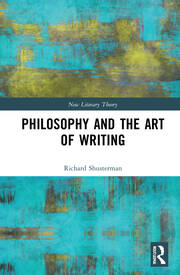
Richard Shusterman, Philosophy and the Art of Writing, Routledge, 2022

Philosophy and literature enjoy a close, complex relationship. Elucidating the connections between these two fields, this book examines the ways philosophy deploys literary means to advance its practice, particularly as a way of life that extends beyond literary forms and words into physical deeds, nonlinguistic expression, and subjective moods and feelings.

Exploring thinkers from Socrates and Confucius to Foucault and Simone de Beauvoir, Richard Shusterman probes the question of what roles literature could play in a vision of philosophy as something essentially lived rather than merely written. To develop this vision of philosophy that incorporates literature but seeks to go beyond the verbal to realize the embodied fullness of life and capture its inexpressible dimensions, Shusterman gives particular attention to authors who straddle the literature/philosophical divide: from Augustine and Montaigne through Wordsworth and Kierkegaard to T.S. Eliot, Georges Bataille, Maurice Blanchot, and Bertrand Russell. The book concludes with a chapter on the Chinese art of writing with its mixture of poetry, calligraphy, and painting.

Philosophy and the Art of Writing should interest students and researchers in literary theory and philosophy. It also opens the practice of philosophy to people who are not professionals in the writing of philosophy or literary theory.

Valentina Antoniol, “Society Must Be Defended. Society Must Be Attacked: Foucault as a Critic of Schmitt” Public lecture, 25 May 2023.

Holt, R., Wiedner, R.
Technology, Maturity, and Craft: Making Vinyl Records in the Digital Age
(2023) Business Ethics Quarterly, 33 (3), pp. 532-564.

DOI: 10.1017/beq.2022.26

Abstract
Drawing from Michel Foucault’s reading of Immanuel Kant’s essay What is Enlightenment?, and specifically his definition of ascesis, we associate maturity with a capacity for, and interest in, forming the self. On the basis of an empirical study of making vinyl records following the successful commercialization of digital media, we identify micro-disciplinary techniques of self-forming that emerge as enthusiasts steadily learn the craft of vinyl record manufacturing. It is, we argue, through technology, rather than against it, that organizational immaturity can be resisted. Craftwork involves testing and transforming, rather than just acquiring, traditional skills. Maturity involves an ongoing struggle of selectively and reflectively engaging with technologies via attempts to be the subject of one’s own subjection. The former contributes to the latter. © The Author(s), 2023. Published by Cambridge University Press on behalf of the Society for Business Ethics.

Author Keywords
analogue; ascesis; craft; digital; Foucault; Heidegger; technology; vinyl