Foucault News

News and resources on French thinker Michel Foucault (1926-1984)

Gaines, Stephen. and Lepadatu, Darina. “Revisiting Michel Foucault and His Contributions to Social Theory”, Paper presented at the annual meeting of the American Sociological Association Annual Meeting, Hilton Atlanta and Atlanta Marriott Marquis, Atlanta, GA, Aug 13, 2010

Update: August 2025. Link no longer available

Abstract

Under the method of genealogical study and philosophical analysis, the Panopticon has become for the past thirty years an iconic idea presented by Michel Foucault to better understand the society in which we live today. The source of the transition from sovereignty to nonviolent coercion, the panoptic model challenges us to think of its relevance for the analysis of socialization and social control, major concepts of Sociology as a discipline. Although Foucault is considered a leading European intellectual, his theory was rarely applied to inform empirical research in American sociology. This paper will emphasize the relevance of Foucauldian concepts such as Panoptic gaze and surveillance or knowledge as power to the analysis of social organizations: prison, schools, corporations, Internet behavior etc. Following this paper, research will be taken in the form of participant observation to further this little known understanding in the present American climate, and even contribute to Foucauldian theory collectively.

Call for Papers – ‘French Theory : reception in the visual arts in the United States between 1965 and 1995′ (Brussels, May, 2011)

Summary
There are many American artists, active in the second half of the twentieth century, whose practice and theory have been infuenced by philosophy, literary studies and social sciences. In this regard, several French scholars have benefited from early sustained interest. Among these are major figures such as Lévi-Strauss, Barthes, Bourdieu, Foucault, Lacan, Althusser, Lyotard, Baudrillard, Derrida or Deleuze. Many thinkers whose writings have come to constitute the corpus of the so-called French Theory. This symposium intends to study the reception of this French thought in the field of the American visual arts from 1965 until 1995.

Call for papers
There are many American artists, active in the second half of the twentieth century, whose practice and theory have been infuenced by philosophy, literary studies and social sciences. In this regard, several French scholars have benefited from early sustained interest. Among these are major figures such as Claude Lévi-Strauss, Roland Barthes, Pierre Bourdieu, Michel Foucault, Jacques Lacan, Louis Althusser, Jean-François Lyotard, Jean Baudrillard, Jacques Derrida or Gilles Deleuze. Many thinkers whose writings have come to constitute the corpus of the so-called French Theory. The influence of this French thought in the American universities, from the mid-1970s on, notably contributing to the emergence of the Cultural studies, has been the subject of several studies, including the important and recent work by Francois Cusset. However, the reception of such a thinking in the specific field of the visual arts has not yet been the subject of systematic research, with the exception of a few and relatively dispersed studies. Among the laters are some essays by Sylvère Lotringer considering artistic practice posterior to the mid-1970s, and by Sande Cohen. Still, it turns out that some artists could gradually have access to various pieces of this corpus as soon as the second half of the 1960s, thanks to first translations, conferences, travels or the presence itself of one or the other author on the territory. Thus, this symposium intends to study the reception of this French thought in the field of the visual arts from 1965 until 1995. A year that marks the eve of a movement of critical evaluation of the influence of these authors on the American intellectual field initiated by the now famous “Sokal affair”, among other events. To understand this episode, three issues or topics can be brought to the fore.

The first one concerns the ways and means by which the dissemination of the ideas of these French authors occurred. How and by the mean of which historical events did the artists happened to get in touch with their writings ? Is it possible to define different and subsequent phases of dissemination of authors in the United-States (such as : Lévi-Strauss, Barthes ; then Foucault, Lacan, Bourdieu and Lyotard ; and finally Baudrillard, Deleuze and Derrida ; phases to be revised during the symposium)? Did some English artists and reviews play a role in the relaying and spreading of these ideas?

A second issue deals with the reception of the French thought among artists. For instance, is it possible to figure out the understanding the first artists could possess of structuralism and post-structuralism in the second half of 1960s ? Is it possible to define the chronological moment of a real reception ? Besides, what is also at stake are the different cultural, intellectual and even political conditions that might have provided a convenient environment or cradle for the rise of this French thought in the United-States. Or, to the contrary, what were the conditions that might have impede its reception and absorption. It will also be of interest to study which texts, which concepts and which theories, the American artists decided to retain and to use, and therefore to study the changes this thought underwent owing to these uses.

Finally, a third issue will focus on the application or use made by the artists of the lessons gained from these French authors. Through a series of case studies, covering the period of the three decades, we expect to uncover the benefits and changes experienced by visual practices thanks to the French Theory. What’s more, from a more historiographic point of view, what needs to be reassessed is the relevance of the critical use critics and art historians themselves might have made of this same thought when studying these very artistic practices.

Keynote speakers already confirmed are:
Victor Burgin (Goldsmiths College, University of London)
François Cusset (Université Paris Ouest Nanterre)
Sylvère Lotringer (University of Columbia, New York)
Laura Mulvey (Birbeck University, London)
Peter Osborne (Middelsex University)
Jean Michel Rabaté (Pennsylvania University)
John Rajchman (University of Columbia, New York)


Organizing committee

Thierry Lenain (ULB, Bruxelles)
Alexander Streitberger (UCLouvain, Louvain-la-Neuve)
Anaël Lejeune (F.R.S.-F.N.R.S. – UCLouvain, Louvain-la-Neuve)
Olivier Mignon (UCLouvain, Louvain-la-Neuve)
Raphaël Pirenne (F.R.S.-F.N.R.S. – UCLouvain, Louvain-la-Neuve)

Scientific committee
François Cusset (Université Paris Ouest Nanterre)
Ralph Dekoninck (UCLouvain, Louvain-la-Neuve)
Thierry Lenain (ULB, Bruxelles)
Valérie Mavridorakis (Haute école d’art et de Design, Genève)
Alexander Streitberger (UCLouvain, Louvain-la-Neuve)
Hilde van Gelder (KULeuven, Leuven)

Partners
Centre de Recherche en Théorie des Arts (CeRTA – UCLouvain)
Institut des Civilisations, Arts et Lettres (INCAL – UCLouvain)
Lieven Gevaert Centre (KULeuven – UCLouvain)

Proposals for papers in French or English, with a short résumé, will be accepted at frenchtheory_at_uclouvain.be . Proposals are limited to 400 words. The deadline for submissions is October 15, 2010.
Papers should not exceed 30 minutes.

Selected participants will be notified by 30th November 2010 at the latest.

A review by Thosaeng Chaochuti which appears on the New Mandala blog draws attention to a chapter on the uptake of Foucault in Thailand.

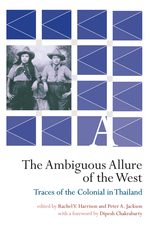
Rachel V. Harrison and Peter A. Jackson, eds., The Ambiguous Allure of the West: Traces of the Colonial in Thailand, with a foreword by Dipesh Chakrabarty. Hong Kong and Ithaca: Hong Kong University Press and Cornell University Southeast Asia Program Publications, 2010. Pp. xxiv, 268; black and white figs., bib., index.

[…] Similarly focusing on the appropriation of Western knowledge in Thai academia, Thanes Wongyannava traces the reception and localization of Michel Foucault’s thought, particularly his notion of “discourse,” translated into Thai as “wathakam.” Thanes not only makes clear the popularity of Foucault among Thai social scientists but also offers a trenchant critique of the way in which that popularity has left the Frenchman’s work disengaged from its theoretical roots. Thailand’s scholarly consumers of Foucault have, that is, simply viewed his work as a store-house of positivistic models for the empirical study of Thai society.[…]

For full article see The Guardian

Promised End, an opera by Alexander Goehr is at the Linbury Studio Theatre at the Royal Opera House, London, on 9, 11, 14 and 16 October (box office: 020-7304 4000), then tours until 26 November.
Details: englishtouringopera.org.uk

At 78, Alexander “Sandy” Goehr is one of the linchpins of the British musical establishment. He was professor of music at Cambridge University for nearly a quarter of a century…

Goehr worked with Frank Kermode who wrote a libretto for the opera.

Working with Kermode gave Goehr the licence to focus on the aspects of Lear that most interested him, especially the journey Gloucester and Lear undertake. “Being politically radical, I have great scorn for who they are in the early part of the play. They are pompous fools, who are vain and mistaken in what they do. Frank and I were influenced by Foucault’s idea of insanity when we were working on the text, the notion that through madness you obtain a kind of wisdom. The whole trajectory of Promised End leads to the scene between Lear and Gloucester, when one is mad and the other has no eyes. Through their misfortunes, they learn something about humanity, about modesty.”

On Hacking’s ‘Style(s) of thinking’
A two day workshop
University of Capetown
26th – 28th March 2011

Keynote Speaker: Professor Ian Hacking

Call for abstracts
Deadline for abstract submission (500-1000 words): 1st December 2010

Focus

This workshop, which coincides with Professor Hacking’s 75th birthday, aims to explore aspects of his extended body of work. Although we welcome submissions on any Hacking-related themes, we hope to concentrate on two areas: the first explores Hacking’s suggestion that there are distinct Styles of Thinking, whilst the second reflects on the philosophical implications of Hacking’s own style of thinking.

Theme 1: Styles of Thinking

A Style of Thinking is in part constituted by specific methods of reasoning, new kinds of sentences and specific objects of study, where methods, sentences and objects are all intimately interrelated. By a method of reasoning, we mean a distinctive way of finding things out that is grounded in cognitive human capacities, has emerged at distinct moments in human history and has evolved in stable and historically traceable ways. By new kinds of sentences, we mean new candidates for being true-or-false which come into being with the new style of thinking. By an object of study, we mean a distinct class of objects of study introduced by that method of reasoning. One example of a style of reasoning in this sense is that of a taxonomic style of thinking: the methods of reasoning involve the ordering of difference and variation in terms of some form of hierarchic structure, the new sentences are those involving claims about such species and genera and their connections and the objects of study include the species and genera of systematic biology.

The suggestion that there are distinct styles of thinking raises a number of issues of potential philosophical interest, which can be grouped into three different categories.

The first category aims at clarifying the terms of the suggestion itself. Questions include: How should we distinguish one style of thinking from another? How does the notion of a style differ (if at all) from similar ideas, such as the Kuhnian disciplinary matrix or Lakatosian research programme? What is the best way of characterising the interrelation between method, new sorts of sentences and objects of study?

The second category focuses on (purportedly) extant styles of reasoning. Questions include: How many extant styles of thinking can be identified? What possible interrelations can there be between these extant styles? Can the notion of styles of thinking be extended beyond styles of scientific thinking? If so, what examples are there?

The third category explores the possible philosophical ramifications of these claims. Questions include: Does the notion of a style of reasoning change or undermine the way we think of traditional ontological disputes in the philosophy of science, concerning species, unobservables, and other objects which appear to be products of these styles? Does talk of historically-contingent styles of thinking inevitably lead to a form of relativism? Are there forms of thinking that do not fall under a style or that are not historically contingent?

Theme 2: Hacking’s Style of Thinking

A common thread running through the many varied areas that Hacking has explored is the explicit focus on the historical conditions surrounding the emergence and development of a target concept. He is clear that this attention to historical detail is not an exercise in history per se, but a way of grappling with philosophical problems by understanding how they became possible, as a ‘historicised conception of British 1930s philosophical analysis’.

Obvious questions abound, including:

In terms of methodology, how does this approach differ from related approaches – such as those falling under the heading of Genealogies? How central is the role played by actual history, as opposed to imaginary narratives for example, in such a methodology? What criteria are there for assessing the success of such narratives, and do these differ from the criteria used to judge good history? How does this differ from so-called ‘Whig-histories’, and what precisely is wrong with the latter?
In terms of philosophical import, how may an understanding of the history of a concept serve to resolve philosophical disputes and can such a resolution ever serve to favour one side? Must attention to historicity reveal the contingency and indeterminateness of conceptual norms? Is philosophical theorising that fails to pay attention to history problematic, or is this just one approach to philosophy amongst many?

Call for Abstracts:

We invite papers for presentation at the workshop that address these themes.

Deadline for abstract submission (500-1000 words): 1st December 2010
Notification of acceptance by: 15th December 2010
Please note: we intend to publish selected papers from the workshop, and have made initial contact with journal editors in this regards. Should you wish to be considered for this, please indicate this in your application.

To submit an abstract, email it (as a word attachment or PDF) to: hacking.workshop.capetown@gmail.com.

Workshop Organizers:
Jack Ritchie & Jeremy Wanderer

History and Contemporary Literature, Synthesis ejournal Vol. 5 (2012)

Special issue: Call for papers
Deadlines:

1 December 2010 submission of abstracts
1 February 2011 notification of acceptance
1 October 2011 submission of articles

History and Contemporary Literature

Christine Harrison and Angeliki Spiropoulou (issue editors)

The ‘turn to history’, witnessed in both literary studies and literature since the 1980s, has ensued in part from new developments in the theory of history itself, which have stressed the relevance of literature for history and the affinity of historiography with fictional narration, long suppressed by historiography’s traditional empirical status and positivist claim to truth (c.f. the groundbreaking work of Hayden White and Paul Ricoeur, as well as that of Michel Foucault, Stephen Greenblatt and Dominick LaCapra, for example). The turn to history has, inversely, also derived from an acknowledgement of the need to take into account the historicity of the historiographical, literary and critical acts. Fredric Jameson, for example, contributed to the elaboration of a sophisticated notion of historicity in the field of literary studies in the early 80s, and at much the same time there also appeared ‘new historicist’ and ‘cultural materialist’ trends, inspired by diverse history-based theoretical paradigms.

Simultaneously, and related to the above developments, there has emerged a trend within literature itself of evoking historical epochs, personages and texts of the past, culminating in what Linda Hutcheon has called with reference to fiction ‘historiographical metafiction’, namely a set of texts which exhibits a concern with the historical past and with issues of historiography while retaining an acute language consciousness and a leaning to formal experimentation. Even more recently, over the past decade, both historicist models of criticism and established theorizations of new historical literature have been challenged for some of their presumptions. However, historical literature, and especially fiction, continues to dominate the literary production of the twenty-first century in forms and for reasons that need exploring as they may point to yet newer directions in both literature and the conceptualization of the relationship between history and literature.

We invite contributions that engage with the modes in which contemporary fiction, poetry and drama address, employ and revise history and historiographical practices, and/or discuss new critical trends and theoretical approaches to literature and history. Possible topics include, but are not restricted to:

• New trends and subjects of historiographical representation in contemporary poetry, fiction, drama (e.g., gender and topographical approaches; interrogations of particular historical periods, methodologies and mythologies; challenges to divides between the literary/popular and private/public; contemporary historical literature and realism, modernism, postmodernism)
• Revisions of literary history, the literary canon and traditional literary genres
(e.g., the historical novel, historical drama, gothic romance)
• New directions in historical literature and critical approaches since 2000
• National/regional contemporary historical literature
• Re-writings of colonial history and the history of the European periphery (Balkan, Mediterranean) through literature
• Memory, auto/biography, visual material and contemporary literature
• Historical fantasies and utopias of the future
• The past-present dialogue in contemporary theory and literature
• New challenges to recent historicist models and critical taxonomies of contemporary historical literature

Detailed proposals (800-1,000 words) for articles of 6,000- 7,000 words, a short bio (up to 300 words) as well as all inquiries regarding this issue, should be sent to both guest editors: Christine Harrison at and Angeliki Spiropoulou. For their details please contact:

Mata Dimakopoulou
Faculty of English Studies
University of Athens, Greece
Email: sdimakop@enl.uoa.gr

Seminar: Samuel Beckett and the Encounter of Philosophy and Literature
Call for Papers Deadline: 2010-09-30

Conference Date: April 7-10, 2011
Conference Venue: Hyatt New Brunswick, New Brunswick, New Jersey, USA

Deadline for Abstract Submission: Sept. 30, 2010
(300-500 words)

Notification of acceptance of papers by 5th of October, 2010.

Deadline for Final Paper Submission: March 15, 2011

Length of Full Papers: 4000-5000 words

The seminar seeks to explore the complex and paradoxical relationship between the discourses of philosophy and literature focusing on the works of Samuel Beckett. Beckett has had a long standing dialogue with philosophy. From comments like ‘I am not a philosopher’ and ‘I do not understand philosophy’ to his love of Democritus, Arnold Geulincx and Arthur Schopenhauer, from a rich texture of philosophical allusions in early works like Murphy to a more resistant non-allusive (or allusive in a very subterranean way) later prose like Worstward Ho, Beckett’s work has always been seen in relation to philosophy, from championing a certain kind of Cartesianism to reviving the latent philosophical discourses of the Atomists, from positing existentialism to parodying it and so on.

In the 20th century, Beckett’s oeuvre has attracted a handsome amount of philosophical attention with almost all major philosophers responding to his work in vastly different ways. From early readings of Georges Bataille and Maurice Blanchot to the responses of the poststructuralists like Derrida, Deleuze, Foucault, reactions from Adorno, Stanley Cavell, Julia Kristeva, Irigaray, Martha Nussbaum and in more recent times perhaps in the most extensive fashion in the writings of Alain Badiou, Simon Critchley and a host of others, Beckett has commanded a rigorous attention of the philosophers. They have sometimes cited Beckett by way of exemplifying their own philosophical conceptualization and problematization while on other occasions they have seen his work as a genuine philosophical repository, generating issues and debates, intrinsic to the discipline of philosophy.

Eminent Beckett Scholars like Ruby Cohn, Stanley Gontarski, Anthony Uhlmann, Garin Dowd and others have been sensitive to what we can call a ‘philosophical turn’ in the field known as Beckett Studies. Apart from dealing with the philosopher’s influence on Beckett from a biographical point of view and Beckett’s influence on 20th century philosophy, the seminar also encourages papers that see Beckett’s work as a topos where different and often contesting ways of conceiving the philosophy-literature interface meet each other. Beckett’s interest in classical philosophy and the supposed representational relation between philosophy and literature is on the one hand while on the other is the poststructuralist and postmodernist appropriation of his canon which tends to locate his body of work at the margin of philosophical thought. Samuel Beckett thus remains the fascinating literary icon that he is with Derrida defining an auto-deconstructive margin of philosophy in literature with Beckett and Badiou drawing on Beckett as an original philosophical thinker, who is instrumental in his discourse of a return to philosophy.

All enquiries and abstracts are to be directly sent to:

Arka Chattopadhyay
M.Phil Scholar
Department of English
Jadavpur University, Kolkata, India

Address:
Krishna, Flat-105
75, J.K. Street
Uttarpara, Hooghly
Pin-712258
Ph: 033-2663-8270
91-9231536815
Mail: arkaless@gmail.com
Blog

Conscripted Subjects: Disciplined Society, Critique, and the Humanities. Graduate Student Conference,
Department of Comparative Literature,
UCLA, USA
February 23-25, 2011

Submission deadline: October 15, 2010.

In light of our current moment marked by economic collapse, heightened political paranoia, racial profiling, and ubiquitous surveillance, this conference wishes to highlight the connection between states of crisis and the wider social question of the prison as a space of social production. “Discipline” as such does not simply imply policies that police subjects, but rather policies that produce them — not just in “correctional facilities”, but also in the discourses and practices appropriated by universities, workplaces, hospitals, and bureaucracies. In this regard, we seek to question the normalization of the prison as a model for social relations between classes, sexes, races, and other subjectivities. The humanities have long been a central site for the critique of such disciplinary modes of social relations. While Foucault’s notion of “disciplinary society” has in many ways enabled this line of social critique, scholars of the humanities have since expanded it beyond its native terrain of eighteenth and nineteenth century Europe, to encompass a wide array of historical moments and geographic terrains. We therefore invite papers from all disciplines that engage with the means through which modern ―subjects‖ have been organized, taxonomized and controlled.

Possible topics include:

– Institutionalized discipline and subject formation – schools, hospitals, government.

– Literary forms and disciplinary textual practices – forms, genres, disciplinary boundaries.

– Critical responses to the disciplinary society – discourses of critique, crisis, and secular criticism.

– Secularism – the relationship between the private/public and the sacred/profane.

– Urban design, architecture, and the disciplined organization of space, place, and mobility.

– Empire, nationalism, “terrorism,” and territorial occupation.

– Visibility and subject recognition in postcolonial societies – the visibility of policed subjects vs. the invisibility of subaltern/abject subjects.

– Crime and mobility – criminality as the transgression of physical, social, and ethical boundaries.

– Police and surveillance (“Identity Cards”, CCTV, legal & illegal migration).

– Prison spaces, punitive practices, and the “Prison-Industrial Complex.”

– Psychoanalysis and discipline – the normal and the pathological.

– Racialized discipline and the generation of “minorities.”

– Anti-disciplinary figures – the stateless (exile, refugee, nomad), the non-human (monsters, vampires, the trans-human), and the otherworldly (aliens, ghosts, the prophetic).

– Disciplinary practices and docile bodies – heteronormativity and gender forms.

– “Biopower”, “Governmentality”, and Continental Philosophy.

– Popular culture and the disciplined body (“boot camps,” extreme body modification).

Abstracts should be between 250-350 words. All examples and quotations must be translated into English. Unaffiliated scholars are welcome.

Submissions in English (in doc. format) should be sent to the following address: uclagradconf@gmail.com

There is no participation fee, and refreshments and a light lunch will be provided. Travel and accommodation is at the participants’ expense. Local hotels in the area will be offering conference rates.

Sina Rahmani
University of California, Los Angeles
Department of Comparative Literature
345 Humanities Building
Email: uclagradconf@gmail.com

Call for Papers:
Cinema and the State-Tortured Body

Call for Abstracts
Due Date: 2010-10-01

Drawing from Foucault’s notion of the ‘political technology of the body’ and ‘the spectacle of the scaffold’, the collection looks to explore the Sovereign’s power and control over the body through the cinema’s arguable co-option of the state’s political-military-corporate aims and goals.

Possible topics include, but not limited to: politicised cinema; body as socially constructed by corporate/military factions; political ramifications of torture; body under stress from state-sanctioned torture; hegemony, grotesque image of the body, state/corporate/military notions of identity and space, political technology of state punishment; Grosz’s notion of ‘re-inscribing the body’ as a means to challenge the Sovereign’s control and construction of gender.

Film examples: L’aveu, Interrogation, The Road to Guantanamo, Le Petit Soldat, The Battle for Haditha, Hunger, Rendition, Punishment Park, JFK, The Manchurian Candidate, Executive Action, Winter Kills, Standing Operating Procedure, Taxi to the Dark Side, Z, I Saw Ben Barka Get Killed, The Official Story, State of Siege, The Hurt Locker, Salo, Death and the Maiden.

Will also consider any topics related to the subject matter.
Please contact
Mark de Valk
Southampton Solent University
East Park Terrace, Southampton, UK
SO14 0YN
Email: mark.de.valk@solent.ac.uk

Foucault Studies is pleased to announce the publication of issue 9 including a “state of the disciplines“ review on Foucault and postcolonial studies.

Included
* 5 original articles about money, heterotopias, alimentary identities, animal ethics and the emotional content of governmentality processes
* a review essay of Ladelle McWorter’s Racisism and Sexual Oppression in Anglo-America
* a discussion of Foucault’s Kantian Lineage

* 10 new book reviews

Foucault Studies is an electronic, open access, peer reviewed, international journal that provides a forum for scholarship engaging the intellectual legacy of Michel Foucault, interpreted in the broadest possible terms. We welcome submissions ranging from theoretical explications of Foucault’s work and texts to interdisciplinary engagements across various fields, to empirical studies of contemporary phenomena using Foucaultian.

All articles are freely available as open access on the website:

Please visit this website to sign up for E-alerts to receive news of CFPs and new issues.

Number 9, September 2010:
Table of Contents:

Editorial
Sverre Raffnsøe, Alan Rosenberg, Alain Beaulieu, Sam Binkley, Jens Erik Kristensen, Sven Opitz, Chloë Taylor; with Ditte Holm
______________________________________________________

Articles

At the Intersection of Sovereignty and Biopolitics: The Di-Polaric Spatializations of Money
Tero Auvinen

The Emotional Life of Governmental Power
Elaine Campbell

Foucault, Borges, Heterotopia: Producing Knowledge in Other Spaces
Robert J. Topinka

Foucault and the Ethics of Eating
Chloë Taylor

Apparatuses of Animality
Stephen Thierman
___________________________________________________

State of the Disciplines

Postcolonial Discourse and Foucault: Survey of a Field of Problematization
Robert Nichols
_________________________________________________________

Exchange

Transcendental Philosophy and Critical Philosophy in Kant and Foucault: Response to Colin Koopman
Colin McQuillan

Appropriation and Permission in the History of Philosophy: Response to McQuillan
Colin Koopman
___________________________________________________________

Review Essay

Ladelle McWhorter, Racism and Sexual Oppression in Anglo-America: A Genealogy (Indiana: Indiana U. Press, 2009)
Chloë Taylor, Robert Nichols

____________________________________________________________

Reviews

Paul Veyne, Foucault: sa pensée, sa personne (Paris: Éditions Albin Michel, 2008)
Alan Milchman

Ed Cohen, A Body Worth Defending: Immunity, Biopolitics and the Apotheosis of the Modern Body (North Carolina : Duke University Press, 2009)
Elliot A. Jarbe

Vanessa Lemm, Nietzsche’s Animal Philosophy: Culture, Politics and the Animality of the Human Being (New York: Fordham University Press, 2009)
Mike McConnell

Joseph Tanke, Foucault’s Philosophy of Art: A Genealogy of Modernity (New York: Continuum, 2009)
Dag Petersson

Carlos G. Prado (ed.), Foucault’s Legacy (New York/London: Continuum, 2009)
Darryl De Marzio

Lynne Huffer, Mad for Foucault: Rethinking the Foundations of Queer Theory (New York: Columbia University Press, 2009)
Christopher Roman

David Gelernter, Judaism: A Way of Being (Connecticut: Yale University Press, 2009)
David Kaden

John Sellars, The Art of Living: the Stoics on the Nature and Function of Philosophy (London: Bristol Classical Press, 2009)
Antonio Donato

Daniel O’Hara, The Art of Reading as a Way of Life: on Nietzsche’s Truth (Evanston, Ill.: Northwestern University Press, 2009)
Charles Villet

Mari Ruti, Reinventing the Soul: Posthumanist Theory and Psychic Life (New York: The Other Press, 2006)
Marcus Schulzke