Foucault News

News and resources on French thinker Michel Foucault (1926-1984)

See this news item
The Centre for Research in Modern European Philosophy (CRMEP) celebrated its relaunch at Kingston University by announcing its new partnership with the Department of Philosophy at the University of Paris 8.

The CRMEP is one of the very few philosophy centres which is focused on European philosophy in English language universities. Most of the staff were previously employed at Middlesex University which controversially closed the Centre down in April 2010.

Also of note here is that Foucault was a founding professor of Philosophy at the University of Paris VIII Vincennes for a year in 1969-70.

For further details in Japanese see here

University of Tokyo Centre for Philosophy Lecture:
MAEDA Koichi “Michel Foucault and Film”
Date: 17:00-18:30, October 15 (Fri), 2010
Place: Seminar Room, 2F, Building 101, Komaba Campus, University of Tokyo
Language: Japanese
Admission Free
No Registration Required

The Government of Self and Other: On Foucault’s Lectures at the Collège de France, 1982/3
Date: 2 December 2010 , 10:00 to 17:00
Location: Bolivar Hall, Kingston University, 54 Grafton Way, London W1

Speakers

Mathieu Potte Boneville (Collège International de Philosophie, Paris)
John Marks (French, Nottingham University)
Johanna Oksala (Philosophy, Dundee University)
Miguel de Beistegui (Philosophy, University of Warwick)

Call for Papers: The Green Apparatus? Political Technologies of the Sustainable City

Association of American Geographers Annual Meeting, 12-16th April 2011, Seattle, USA.

Session organized by Stephanie Wakefield (CUNY Graduate Center) and Bruce Braun (University of Minnesota)

“Nature is the new civic ideal.”
—Alexandros Washburn, Director of Urban Design for the NYC Department of City Planning, from Metropolis magazine

Summary
We are commonly presented today with two diverging yet fundamentally intertwined futures: one of hightech, intelligently designed buildings complete with hanging gardens and smiling families, and another of ubiquitous environmental disaster composed of miasmic wildfires, violent floods, and phantasmic oil spills. It is in this context that diverse projects are being taken up by architects, theorists, designers, planners, and citizens alike, which can in short be called Green Urbanism. Such projects are not confined to the realm of the technical; rather, their scope is at once diverse and wide, taking the lived environment, the habits and gestures of bodies, the circulation of energies and matters, and the population itself, as matters of concern.

This session is designed to explore the conjunction of biopolitics and the diverse apparatuses of Green Urbanism. Following Michel Foucault, we deploy the term apparatus (dispositif) to denote a heterogeneous set consisting of discourses, institutions, architectural forms, regulatory decisions, laws, administrative measures, scientific statements, and philosophical, moral and philanthropic propositions that constitute a response to a specific urgency. We are further informed by two competing readings of Foucault’s term: Giorgio Agamben’s elaboration and grounding of Foucault’s schematic, particularly its ontological engagement and definition as “a machine that produces subjectifications” and Gilles Deleuze’s affirmative and pragmatic reading of dispositif as a “tangle of lines” that “are subject to changes in direction, bifurcating and forked and subject to drifting.”

We seek to bring together those engaged in investigating the material processes of Green Urbanism: the actual technologies by which habits, gestures, behaviors, desires, and practices of daily life are molded and shaped, activated and mobilized, combined and cultivated, or improvised and expanded. Is Green Urbanism the intensification of biopolitical control? A site for new political imaginations and new political orders? Or something else entirely?

Topics may include but are not limited to:
Materialist theories of subjectification
Political technologies of Green Urbanism
Apparatus/dispositif – Agamben v. Deleuze
Bodies, spaces, and habits
Political imaginations and the low-carbon city
Design for behavior change
Green citizenry
Oikonomia
Biopolitics/biopolitical production

Please send questions, ideas, or abstracts to stephaniewakefield@gmail.com by October 15th 2010

Wong, James, The Care of the Self: Possibilities for Associative Politics (2010). APSA 2010 Annual Meeting Paper.

Update August 2025. Link no longer available

Abstract
Foucault’s late work, in particular his research on practices of the ‘care of the self’ has been seen by some authors as a possible resource for democratic theory (Connolly, Simons). Ella Myers in her recent article argues that Foucault’s idea of the ‘care of the self’ can only be a limited resource for “rendering power relations more equitable, open, and responsive” to democratic practices (Myers 127). She argues that practices of the care of the self do not correct the depoliticizing effects of disciplinary power and biopower. The emphasis on individuals to establish a reflexive relation to one’s self would appear to point away from the kind of collaborative practices required for democratic engagement. She underscores the limitation of Foucault’s account by highlighting his remark that in care of the self the “relationship with oneself is ontologically prior” (Foucault 30). In this paper I offer an alternative reading of Foucault’s puzzling remark about ontological priority that would counter individualist worries. I then argue, by using Harry Frankfurt’s analysis of ‘care’, that the social and reciprocal dimension in Foucault’s account of practices of the care of the self is more substantive than Myers permits. I conclude with some observations about the possibility for collaborative political engagements with others.

Gaines, Stephen. and Lepadatu, Darina. “Revisiting Michel Foucault and His Contributions to Social Theory”, Paper presented at the annual meeting of the American Sociological Association Annual Meeting, Hilton Atlanta and Atlanta Marriott Marquis, Atlanta, GA, Aug 13, 2010

Update: August 2025. Link no longer available

Abstract

Under the method of genealogical study and philosophical analysis, the Panopticon has become for the past thirty years an iconic idea presented by Michel Foucault to better understand the society in which we live today. The source of the transition from sovereignty to nonviolent coercion, the panoptic model challenges us to think of its relevance for the analysis of socialization and social control, major concepts of Sociology as a discipline. Although Foucault is considered a leading European intellectual, his theory was rarely applied to inform empirical research in American sociology. This paper will emphasize the relevance of Foucauldian concepts such as Panoptic gaze and surveillance or knowledge as power to the analysis of social organizations: prison, schools, corporations, Internet behavior etc. Following this paper, research will be taken in the form of participant observation to further this little known understanding in the present American climate, and even contribute to Foucauldian theory collectively.

Call for Papers – ‘French Theory : reception in the visual arts in the United States between 1965 and 1995′ (Brussels, May, 2011)

Summary
There are many American artists, active in the second half of the twentieth century, whose practice and theory have been infuenced by philosophy, literary studies and social sciences. In this regard, several French scholars have benefited from early sustained interest. Among these are major figures such as Lévi-Strauss, Barthes, Bourdieu, Foucault, Lacan, Althusser, Lyotard, Baudrillard, Derrida or Deleuze. Many thinkers whose writings have come to constitute the corpus of the so-called French Theory. This symposium intends to study the reception of this French thought in the field of the American visual arts from 1965 until 1995.

Call for papers
There are many American artists, active in the second half of the twentieth century, whose practice and theory have been infuenced by philosophy, literary studies and social sciences. In this regard, several French scholars have benefited from early sustained interest. Among these are major figures such as Claude Lévi-Strauss, Roland Barthes, Pierre Bourdieu, Michel Foucault, Jacques Lacan, Louis Althusser, Jean-François Lyotard, Jean Baudrillard, Jacques Derrida or Gilles Deleuze. Many thinkers whose writings have come to constitute the corpus of the so-called French Theory. The influence of this French thought in the American universities, from the mid-1970s on, notably contributing to the emergence of the Cultural studies, has been the subject of several studies, including the important and recent work by Francois Cusset. However, the reception of such a thinking in the specific field of the visual arts has not yet been the subject of systematic research, with the exception of a few and relatively dispersed studies. Among the laters are some essays by Sylvère Lotringer considering artistic practice posterior to the mid-1970s, and by Sande Cohen. Still, it turns out that some artists could gradually have access to various pieces of this corpus as soon as the second half of the 1960s, thanks to first translations, conferences, travels or the presence itself of one or the other author on the territory. Thus, this symposium intends to study the reception of this French thought in the field of the visual arts from 1965 until 1995. A year that marks the eve of a movement of critical evaluation of the influence of these authors on the American intellectual field initiated by the now famous “Sokal affair”, among other events. To understand this episode, three issues or topics can be brought to the fore.

The first one concerns the ways and means by which the dissemination of the ideas of these French authors occurred. How and by the mean of which historical events did the artists happened to get in touch with their writings ? Is it possible to define different and subsequent phases of dissemination of authors in the United-States (such as : Lévi-Strauss, Barthes ; then Foucault, Lacan, Bourdieu and Lyotard ; and finally Baudrillard, Deleuze and Derrida ; phases to be revised during the symposium)? Did some English artists and reviews play a role in the relaying and spreading of these ideas?

A second issue deals with the reception of the French thought among artists. For instance, is it possible to figure out the understanding the first artists could possess of structuralism and post-structuralism in the second half of 1960s ? Is it possible to define the chronological moment of a real reception ? Besides, what is also at stake are the different cultural, intellectual and even political conditions that might have provided a convenient environment or cradle for the rise of this French thought in the United-States. Or, to the contrary, what were the conditions that might have impede its reception and absorption. It will also be of interest to study which texts, which concepts and which theories, the American artists decided to retain and to use, and therefore to study the changes this thought underwent owing to these uses.

Finally, a third issue will focus on the application or use made by the artists of the lessons gained from these French authors. Through a series of case studies, covering the period of the three decades, we expect to uncover the benefits and changes experienced by visual practices thanks to the French Theory. What’s more, from a more historiographic point of view, what needs to be reassessed is the relevance of the critical use critics and art historians themselves might have made of this same thought when studying these very artistic practices.

Keynote speakers already confirmed are:
Victor Burgin (Goldsmiths College, University of London)
François Cusset (Université Paris Ouest Nanterre)
Sylvère Lotringer (University of Columbia, New York)
Laura Mulvey (Birbeck University, London)
Peter Osborne (Middelsex University)
Jean Michel Rabaté (Pennsylvania University)
John Rajchman (University of Columbia, New York)


Organizing committee

Thierry Lenain (ULB, Bruxelles)
Alexander Streitberger (UCLouvain, Louvain-la-Neuve)
Anaël Lejeune (F.R.S.-F.N.R.S. – UCLouvain, Louvain-la-Neuve)
Olivier Mignon (UCLouvain, Louvain-la-Neuve)
Raphaël Pirenne (F.R.S.-F.N.R.S. – UCLouvain, Louvain-la-Neuve)

Scientific committee
François Cusset (Université Paris Ouest Nanterre)
Ralph Dekoninck (UCLouvain, Louvain-la-Neuve)
Thierry Lenain (ULB, Bruxelles)
Valérie Mavridorakis (Haute école d’art et de Design, Genève)
Alexander Streitberger (UCLouvain, Louvain-la-Neuve)
Hilde van Gelder (KULeuven, Leuven)

Partners
Centre de Recherche en Théorie des Arts (CeRTA – UCLouvain)
Institut des Civilisations, Arts et Lettres (INCAL – UCLouvain)
Lieven Gevaert Centre (KULeuven – UCLouvain)

Proposals for papers in French or English, with a short résumé, will be accepted at frenchtheory_at_uclouvain.be . Proposals are limited to 400 words. The deadline for submissions is October 15, 2010.
Papers should not exceed 30 minutes.

Selected participants will be notified by 30th November 2010 at the latest.

A review by Thosaeng Chaochuti which appears on the New Mandala blog draws attention to a chapter on the uptake of Foucault in Thailand.

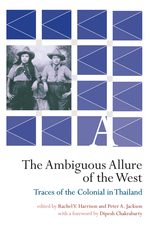
Rachel V. Harrison and Peter A. Jackson, eds., The Ambiguous Allure of the West: Traces of the Colonial in Thailand, with a foreword by Dipesh Chakrabarty. Hong Kong and Ithaca: Hong Kong University Press and Cornell University Southeast Asia Program Publications, 2010. Pp. xxiv, 268; black and white figs., bib., index.

[…] Similarly focusing on the appropriation of Western knowledge in Thai academia, Thanes Wongyannava traces the reception and localization of Michel Foucault’s thought, particularly his notion of “discourse,” translated into Thai as “wathakam.” Thanes not only makes clear the popularity of Foucault among Thai social scientists but also offers a trenchant critique of the way in which that popularity has left the Frenchman’s work disengaged from its theoretical roots. Thailand’s scholarly consumers of Foucault have, that is, simply viewed his work as a store-house of positivistic models for the empirical study of Thai society.[…]

For full article see The Guardian

Promised End, an opera by Alexander Goehr is at the Linbury Studio Theatre at the Royal Opera House, London, on 9, 11, 14 and 16 October (box office: 020-7304 4000), then tours until 26 November.
Details: englishtouringopera.org.uk

At 78, Alexander “Sandy” Goehr is one of the linchpins of the British musical establishment. He was professor of music at Cambridge University for nearly a quarter of a century…

Goehr worked with Frank Kermode who wrote a libretto for the opera.

Working with Kermode gave Goehr the licence to focus on the aspects of Lear that most interested him, especially the journey Gloucester and Lear undertake. “Being politically radical, I have great scorn for who they are in the early part of the play. They are pompous fools, who are vain and mistaken in what they do. Frank and I were influenced by Foucault’s idea of insanity when we were working on the text, the notion that through madness you obtain a kind of wisdom. The whole trajectory of Promised End leads to the scene between Lear and Gloucester, when one is mad and the other has no eyes. Through their misfortunes, they learn something about humanity, about modesty.”

On Hacking’s ‘Style(s) of thinking’
A two day workshop
University of Capetown
26th – 28th March 2011

Keynote Speaker: Professor Ian Hacking

Call for abstracts
Deadline for abstract submission (500-1000 words): 1st December 2010

Focus

This workshop, which coincides with Professor Hacking’s 75th birthday, aims to explore aspects of his extended body of work. Although we welcome submissions on any Hacking-related themes, we hope to concentrate on two areas: the first explores Hacking’s suggestion that there are distinct Styles of Thinking, whilst the second reflects on the philosophical implications of Hacking’s own style of thinking.

Theme 1: Styles of Thinking

A Style of Thinking is in part constituted by specific methods of reasoning, new kinds of sentences and specific objects of study, where methods, sentences and objects are all intimately interrelated. By a method of reasoning, we mean a distinctive way of finding things out that is grounded in cognitive human capacities, has emerged at distinct moments in human history and has evolved in stable and historically traceable ways. By new kinds of sentences, we mean new candidates for being true-or-false which come into being with the new style of thinking. By an object of study, we mean a distinct class of objects of study introduced by that method of reasoning. One example of a style of reasoning in this sense is that of a taxonomic style of thinking: the methods of reasoning involve the ordering of difference and variation in terms of some form of hierarchic structure, the new sentences are those involving claims about such species and genera and their connections and the objects of study include the species and genera of systematic biology.

The suggestion that there are distinct styles of thinking raises a number of issues of potential philosophical interest, which can be grouped into three different categories.

The first category aims at clarifying the terms of the suggestion itself. Questions include: How should we distinguish one style of thinking from another? How does the notion of a style differ (if at all) from similar ideas, such as the Kuhnian disciplinary matrix or Lakatosian research programme? What is the best way of characterising the interrelation between method, new sorts of sentences and objects of study?

The second category focuses on (purportedly) extant styles of reasoning. Questions include: How many extant styles of thinking can be identified? What possible interrelations can there be between these extant styles? Can the notion of styles of thinking be extended beyond styles of scientific thinking? If so, what examples are there?

The third category explores the possible philosophical ramifications of these claims. Questions include: Does the notion of a style of reasoning change or undermine the way we think of traditional ontological disputes in the philosophy of science, concerning species, unobservables, and other objects which appear to be products of these styles? Does talk of historically-contingent styles of thinking inevitably lead to a form of relativism? Are there forms of thinking that do not fall under a style or that are not historically contingent?

Theme 2: Hacking’s Style of Thinking

A common thread running through the many varied areas that Hacking has explored is the explicit focus on the historical conditions surrounding the emergence and development of a target concept. He is clear that this attention to historical detail is not an exercise in history per se, but a way of grappling with philosophical problems by understanding how they became possible, as a ‘historicised conception of British 1930s philosophical analysis’.

Obvious questions abound, including:

In terms of methodology, how does this approach differ from related approaches – such as those falling under the heading of Genealogies? How central is the role played by actual history, as opposed to imaginary narratives for example, in such a methodology? What criteria are there for assessing the success of such narratives, and do these differ from the criteria used to judge good history? How does this differ from so-called ‘Whig-histories’, and what precisely is wrong with the latter?
In terms of philosophical import, how may an understanding of the history of a concept serve to resolve philosophical disputes and can such a resolution ever serve to favour one side? Must attention to historicity reveal the contingency and indeterminateness of conceptual norms? Is philosophical theorising that fails to pay attention to history problematic, or is this just one approach to philosophy amongst many?

Call for Abstracts:

We invite papers for presentation at the workshop that address these themes.

Deadline for abstract submission (500-1000 words): 1st December 2010
Notification of acceptance by: 15th December 2010
Please note: we intend to publish selected papers from the workshop, and have made initial contact with journal editors in this regards. Should you wish to be considered for this, please indicate this in your application.

To submit an abstract, email it (as a word attachment or PDF) to: hacking.workshop.capetown@gmail.com.

Workshop Organizers:
Jack Ritchie & Jeremy Wanderer