Foucault News

News and resources on French thinker Michel Foucault (1926-1984)

Jentoft, E.E., Sandset, T., Haldar, M.
Problematizing loneliness as a public health issue: an analysis of policy in the United Kingdom
(2024) Critical Policy Studies, .

DOI: 10.1080/19460171.2024.2306240

Abstract
This article presents an analysis of discourses in recent UK policy on loneliness reduction. We use Carol Bacchi’s ‘what is the problem represented to be’ approach (WPR) to explore how the problem of loneliness produces specific solutions, subject positions, and forms of responsibility. Our findings suggest loneliness is understood as a public health threat that both emerges from and causes ill health. Using Foucault’s concept of governmentality, we argue that policy discourses construct loneliness as a problem requiring governance to minimize health ‘risks.’ Loneliness is problematized as creating strain on health and social care systems, as well as the economy by reducing productivity. The projected ‘costs’ of loneliness are managed via social prescribing. Social prescribing positions GPs and link workers as guides whose role is to transfer lonely subjects away from costly healthcare settings and toward the civil sector. The policies are produced in a context of continued budget cuts which we propose may threaten the effectiveness of projects like social prescribing. Social determinants of health, closely tied to loneliness, are largely left unaddressed in favor of solutions that individualize and responsibilize lonely citizens. © 2024 The Author(s). Published by Informa UK Limited, trading as Taylor & Francis Group.

Author Keywords
Foucault; governmentality; Loneliness; public health policy; WPR

Resistance in Educational Leadership, Management, and Administration
Edited By Amanda McKay, Pat Thomson, Jill Blackmore, Routledge, 2024

This edited volume brings together a range of perspectives on Educational Leadership, Management and Administration (ELMA) and various theories of resistance or compliance along with how policy and politics play out in school communities.

The book makes a significant contribution to debates around theorising educational leadership and the implications of discourses on schooling and the politics of education. It brings together a broad array of international scholars to examine theories of resistance in ELMA and establish a resistance-oriented agenda for critical ELMA research that promotes change and diverse ideas about leadership. Using both empirical data and conceptual analysis, the chapters provide opportunities for theorising the work and working conditions of educational leaders alongside questions of compliance and resistance that further improve the understanding of these concepts in the field.

Providing cutting-edge research and theorisation into this emerging area, the book will be highly relevant for researchers, academics, and postgraduate students in the fields of educational leadership, management and administration, and educational policy. It will also be of interest to school leaders.

Contents

1. Introduction: Resistance and educational leadership
Pat Thomson, Amanda McKay, and Jill Blackmore

2. Leaders resisting? The very idea
Pat Thomson, Amanda McKay, and Jill Blackmore

3. Theorising principals’ resistance and compliance as part of school autonomy reforms in Australian public education
Richard Niesche, Amanda Keddie, Katrina MacDonald, Scott Eacott, Brad Gobby, Jane Wilkinson, and Jill Blackmore

4. An analysis of resistance in parvenu educational leaders’ biographies: Thinking with Arendt about identities, academies, and public schooling.
Belinda C. Hughes and Steven J. Courtney

5. Educational leadership in trying times: Primary principals’ resistance in New Zealand
Martin Thrupp

6. Resisting English education policy: Making sense or ‘absolute nonsense’
Kay Fuller and Ruth McGinity

7. Resisting evidence-based policy hegemonies in a post-truth climate
Stephanie Wescott

8. Resistance and the permanent instability of educational neo-liberalism: ‘Up, down, turn around, please don’t let me hit the ground’
David Hall

9. Turning power/resistance upside-down to critically affirming digital educational leadership
Danilo Taglietti

10. The paradox of tactics in the teaching of literacy: Resistance and leadership by Aboriginal teachers
Melissa Kirby, Hilary Yerbury, and Katherine Bates

11. We are visible: Student voices amplifying counternarratives to impact policy
Shaun Kelley Walsh

12. Multiple ‘counter-publics’ in public education: Educational and community leadership resisting neoliberal reform
Jill Blackmore

13. Managing tension: Agonism and alliance in an ethos of democratic principal engagement
Chris Dolan and Peter Mader

14. Education trade unions and union renewal: Re-imagining resistance
Howard Stevenson

15. Conclusion Amanda McKay,
Jill Blackmore, and Pat Thomson

Biographies

Amanda McKay (previously Heffernan) is a Senior Lecturer in Education, Manchester Institute of Education, University of Manchester, UK.

Pat Thomson is a Professor of Education, School of Education, University of Nottingham, UK.

Jill Blackmore is an Alfred Deakin Professor in Education, Faculty of Arts and Education, Deakin University, Australia, as well as president of the Australian Association of University Professors.

Foucault, writing and the contemporary university: a grim celebration

Institute of Education, UCL, London

10.00am to 4.00pm Wednesday 19th June 2024
(Coffee, tea and biscuits available from 9.30am)

Room: 106 Roberts Building, UCL Main Campus
Torrington Place, London, WC1E 7JE

Presenters include
Patrick Bailey, Alice Bradbury, Bronwen Jones, Sarah Kerr, Adam Lang, Francesca Peruzzo, and Guy Roberts-Holmes

In conversation
Stephen J Ball and Mark Olssen

Register with EVENTBRITE

For more details, please contact b.m.a.jones@ucl.ac.uk or patrick.bailey@ucl.ac.uk

Karimi, B.
Deconstruction of Power, Resistance and Subjectivity; a comparative analysis of Hannah Arendt and Michel Foucault
(2023) Journal of Philosophical Investigations, 17 (44), pp. 677-694.

DOI: 10.22034/jpiut.2023.56090.3509

Abstract
This article aims to reassess the concepts of power, resistance, and subjectivity by examining the ideas of Hannah Arendt and Michel Foucault. At first glance, it seems that these two thinkers, rooted in different philosophical and theoretical foundations, are in opposition to each other, making a dialogue between their perspectives seemingly impossible. However, this article proposes an alternative approach by highlighting the common grounds and commonalities in their deconstruction of power. Moreover, it argues that their political views can be seen as aligned and complementary, leading to a deepening and development of each other’s ideas and the creation of new political approaches. Thus, the central questions addressed in this article are: what forms of agency emerge for the contemporary subject as result of the deconstruction of power in thought of Arendt and Foucault? How does power act as a source of resistance while opening up new possibilities for the subject? The main finding of this study is that, in contrast to traditional and modern interpretations, power in the works of these thinkers is seen as a positive, creative, and productive concept. Based on this understanding, resistance and alternative forms of empowerment for the subject emerge. It should be noted, however, that Arendt’s and Foucault’s interpretation of resistance agency and power may differ due to the primacy of political and social issues in their respective theories. © The Author(s).

Author Keywords
Arendt; Foucault; gender; human agency; power; resistance; subjectivity

Zaeemdar, S.
Postfeminist technologies of authenticity: Examining the construction of authentic feminine selves in the neoliberal workplace
(2024) Organization, .

DOI: 10.1177/13505084231224363

Abstract
This paper examines how the neoliberal injunction to be authentic as addressed to working women operates at the level of the individual. Drawing on Foucault’s framing of self-construction, the paper conceptualizes the quest for the authentic feminine self as a technology of the self which enables women to work upon transformation of their subjectivity to attain a state of authenticity. The developed conceptual framework is applied in an in-depth structural and content analysis of work-life narratives of authenticity related by women training and development professionals. These narratives are a part of the field material collected during a two-year ethnographic study of the sector. Derived from theoretical and empirical analysis, the paper develops the notion of postfeminist technologies of authenticity which demonstrate the quest for the authentic feminine self as aligned with postfeminism, a neoliberal sensibility under which individualized and retraditionalized notions of femininity are constructed. Authenticity is therefore shown as a gendered form of control which works upon women’s self-construction in regressive ways contributing to the reproduction of gendered work, organizations, and power relations. © The Author(s) 2024.

Author Keywords
Authenticity; narrative; neoliberalism; postfeminism; technologies of power; technologies of the self

Simon Lemoine, Responsabiliser pour dominer. Aliénation et émancipation par l’aménagement des lieux de vie, Hermann, 2024 (France)

Also published by Presses de l’Université Laval (Canada)

Cet ouvrage examine les nombreuses responsabilisations qui s’imposent à nous tout au long de notre vie. Sont-elles toujours légitimes ? L’individu est-il par nature un sujet responsable, ou est-il, au contraire, conduit à le devenir ? Comment se fait-il que les responsabilités heureuses des uns se fassent souvent au prix de responsabilités moins heureuses des autres ? Qui décide de quoi ou de qui nous pouvons être responsables ? L’analyse détaillée et documentée des processus de domination par la responsabilisation va permettre à l’auteur d’ouvrir des possibilités théoriques et pratiques inédites de résistance et d’émancipation, notamment par un réaménagement de nos lieux de vie.

Simon Lemoine (Auteur)

Simon Lemoine est chargé de cours et docteur en philosophie de l’Université de Poitiers. Chercheur indépendant, il est l’auteur de quatre ouvrages : Aux limites de la résistance, aux éditions du Croquant (2022), Découvrir Bourdieu, aux Éditions sociales (2020), Micro-violences, chez CNRS éditions (2017) et Le sujet dans les dispositifs de pouvoir, aux Presses universitaires de Rennes (2013). Ses recherches, inscrites dans la lignée de Foucault et d’Althusser, renouvellent en profondeur les études sur l’émancipation.

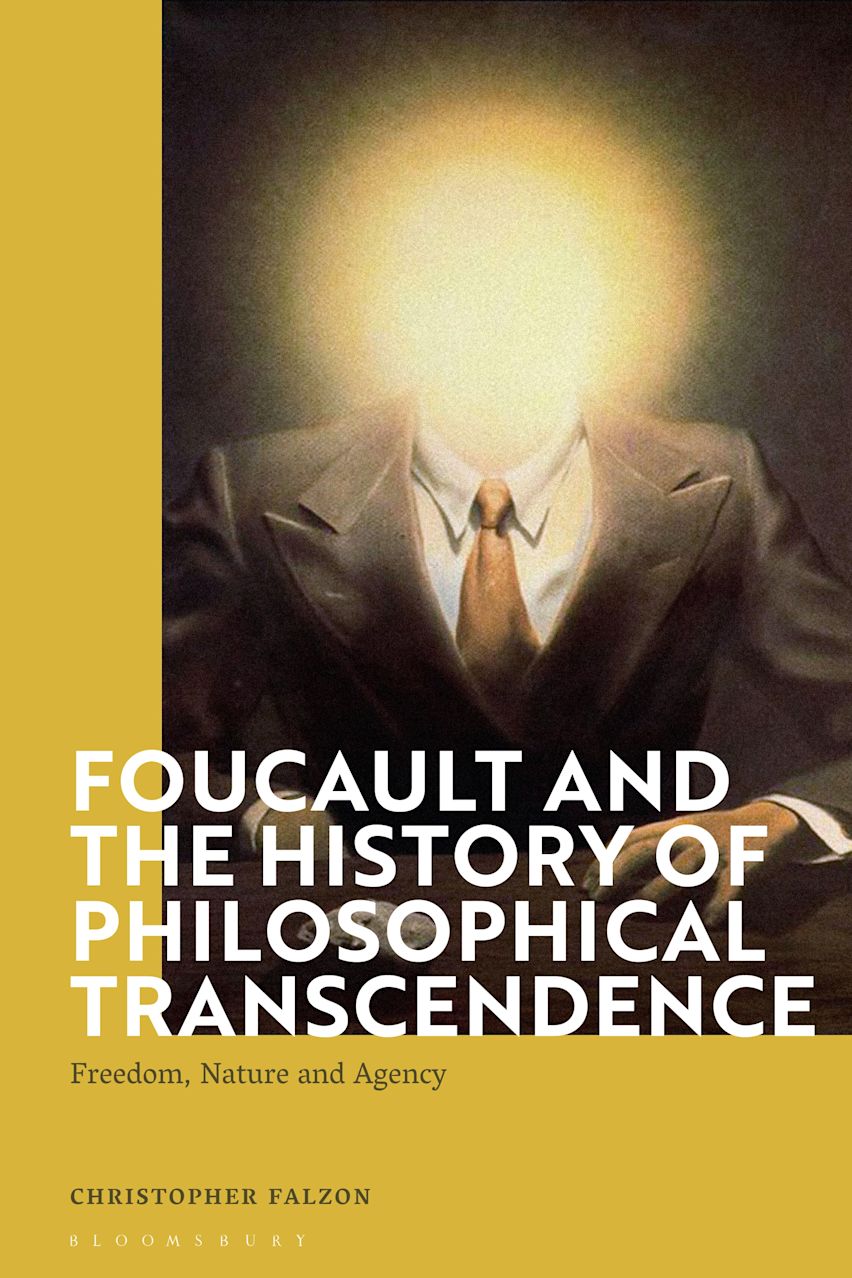
Adam Takács, Foucault’s Critical Philosophy of History. Unfolding the Present, Lexington Books, 2023

PDF flyer with discount offer

Foucault’s Critical Philosophy of History: Unfolding the Present
provides a comprehensive interpretation of Foucault’s work by focusing on its methodological, procedural, and epistemological elements. Adam Takács argues that despite all its thematic and analytical diversity, Foucault’s procedure can be understood within a unified framework based on the historical problematization of the present. This procedure, triggered by current social issues and aiming at a diagnostic screening of the present through a constructive exploration of the past, thus sets in motion not only a specific philosophical vision of history and a research practice often related to the procedures of historiography, but also new ways of critical analysis of social phenomena. This book subjects all these elements to a systematic analysis, demonstrating that within this framework, Foucault’s often debated views on historical realism and constructivism—his methodological choices and ontological commitments—take on a coherent profile, culminating in a timely social critical project of “liberation of knowledge” and “political subjectivation.”

Adam Takács is senior lecturer at Eötvös Loránd University.

Abuhassan, L.B., Dweiri, M.M.
A heterotopic perception of ‘wall’ in psychological thriller films: a place, a labyrinth and a panoptic power
(2024) Cogent Arts and Humanities, 11 (1), art. no. 2303180, .

DOI: 10.1080/23311983.2024.2303180

Abstract
A wall is often viewed simply as a structure that divides and isolates different worlds, spaces, or places. However, an alternative perspective, known as the heterotopic point of view, suggests that a wall can be seen as a place. Such a place possesses panoptical characteristics and spatial experiences that might be felt as a panoptic power and a labyrinth, rendering it suitable for the setting of many psychological thriller films. To illustrate this phenomenon, this article examines two examples from psychological thrillers and compares them with Foucault’s concept of Heterotopia. This is accomplished by breaking down his six principles of space parameters. By doing so, the article reveals the intricate and multifaceted nature of walls, as well as their potential to be portrayed in a myriad of ways in the cinematic arts. © 2024 The Author(s). Published by Informa UK Limited, trading as Taylor & Francis Group.

Author Keywords
Art & Visual Culture; Arts; Arts & Humanities; Directing; Filmmaking and Postproduction; Filmmaking Bibles; Heterotopia; Humanities; labyrinth; Lincoln Geraghty, School of Media and Performing Arts, Eldon Building, University of Portsmouth, Winston Churchill Ave, Portsmouth, PO1 2DJ, UK; Media & Film Studies; panoptic power; Philosophy; place; psychological thriller films; Screenwriting; space; Visual Arts; wall

Eric Schliesser, Bentham and Foucault on Biopolitics and Political Epistemology, digressionsimpressions’s Substack, Feb 13, 2024

Bonus Post: Foucault, the Benthamite in 1978-1979

[…]
Today’s post is a long read. The pay-off is that I show that the state’s essential role is the production and diffusion — as a machinery of record — of knowledge for Bentham. In fact, it is the main exception to laissez-faire. And so somewhat surprisingly a certain conception of political epistemology is central to Bentham’s art of government.* Oddly, Foucault seems to have grasped this while we have no reason to believe he read the salient source, while some of the most informed readers of Bentham (Viner, Keynes, Halévy) botch the argument.
[…]

In the first lecture of The Birth of Biopolitics (hereafter: BoB), 10 January 1979, Foucault claims that in the middle of the eighteenth century there is a change in what he calls ‘modern governmental reason.’ This change “consists in establishing a principle of limitation that will no longer be extrinsic to the art of government, as was law in the seventeenth century, [but] intrinsic to it: an internal regulation of governmental rationality.” (p. 10 in the Graham Burchell translation) He lists four characteristics of such an internal regulation.
[…]

There will be transmissions online during both days at the following addresses:
7th May: https://www.youtube.com/watch?v=CmAod0zJYzg
8th May: https://www.youtube.com/watch?v=R5d9tqvIg-Q