Foucault News

News and resources on French thinker Michel Foucault (1926-1984)

Jean-Louis Fournel et Xavier Tabet, Alessandro Fontana, philosophe et pivot des études foucaldiennes, Le Monde, 20 février 2013

Alessandro Fontana naît le 25 mars 1939 dans une famille de la bourgeoisie cultivée de la Vénétie. Orphelin de mère à l’âge de quatre ans, il est élevé d’abord par des tantes puis par son père, proviseur de lycée à Sacile, une petite ville de la campagne vénète. Après des études de lettres et philosophie à l’Université de Padoue où il soutient un mémoire de fin d’études sur la notion de mythe, il part pour la France comme assistant de langue italienne à Montpellier, puis rejoint rapidement Paris au milieu des années 1960, là où se situe pour lui l’espace intellectuel le plus stimulant.
[…]

Au début des années 1970, la rencontre avec Michel Foucault est un tournant dans sa vie. Il quitte le séminaire de Furet pour celui de Foucault et devient vite l’un des ” passeurs ” de la pensée foucaldienne en Italie : il participe à Moi, Pierre Rivière et traduit La Naissance de la clinique et L’ordre du discours pour Einaudi. Il sera aussi notamment à l’origine d’un recueil d’articles et d’interventions de Foucault paru chez Einaudi en 1977 sous le titre Microphysique du pouvoir, un petit ouvrage qui connut un succès de librairie impressionnant : vendu à plusieurs dizaines de milliers d’exemplaires, il devint un des livres de référence pour les acteurs des mouvements sociaux italiens de la fin des années 1970.
[…]

Ganguly, A., Foucault, government and acts of obedience, Law, Culture and the Humanities, Volume 8, Issue 3, October 2012, Pages 448-465
http://dx.doi.org/10.1177/1743872110392285

Abstract
Conventional political writings influenced by Foucault emphasize how various kinds of coercive measures are hidden behind the veil of a justified government. Their investigations tell us what makes it possible for the sovereign to exercise power over its subjects, and how, subject as we are to such constraints, we may still evolve ways and means to ensure our political liberties. In their endorsement of Foucault, they, however, lean in favor of political liberalism and find common theoretical grounds with his rivals. Instead we use Foucault to examine the nature and character of governance in Europe since the late medieval period focusing on the relationship between the framing of sovereignty and the application of pastoral power. This takes us on a journey from Aquinas to the literature on “advice-to-prince” and finally Kant. The idea is to capture what their theoretical preoccupations with governance suggest when we read them with Foucault’s principles.

Author keywords
“Acts of obedience”; Aquinas; Government upon government; Kant; Machiavelli; Morality; St. benedict

UChicago Professor Helps Uncover Lost Lectures by French Philosopher Foucault, 7 February 2013
Source Newsroom: University of Chicago

Newswise — More than 30 years ago, French philosopher Michel Foucault gave a landmark series of seven lectures at the Catholic University of Louvain in Belgium In them, Foucault linked his early and late work—exploring the role of confession in the determination of truth and justice from the time of the Greeks forward to the 1970s.

While the lectures had been mythic among Foucault scholars, only a partial, poorly transcribed account had survived. Recently rediscovered, details of the lectures have been published in a new book co-edited by Prof. Bernard E. Harcourt.

“These 1981 lectures form a crucial link between Foucault’s earlier work on surveillance in society, the prison and neoliberal governmentality during the 1970s, and his later work on subjectivity and the care of the self in the 1980s,” said Harcourt, co-editor of Mal faire, dire vrai: La fonction de l’aveu en justice [Wrong-Doing, Truth-Telling: The Function of Avowal in Justice], which Louvain and the University of Chicago Press recently released in French.

read rest of article

Judith Revel, “Foucault and the history of our present”

part of the series….
“Foucault and the critique of our present: Reworking the Foucauldian tool-box”
A workshop organized with the support of the Department of Politics at Goldsmiths and of mf / materiali foucaultiani

February 28 , 4-6 pm
NAB 314
Goldsmiths University of London

Contacts:
Yari Lanci: yari.lanci@gmail.com
Martina Tazzioli: martinatazzioli@yahoo.it

pdf flyer

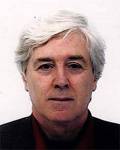
fontanaAlessandro Fontana 1939 -2013

Alessandro Fontana was Emeritus Professor of Italian Studies at the Ecole Normale Supérieure de Lyon and the author of numerous essays which were partially collected in Il vizio occulto (1989) and La polizia dell’anima (1990). He  collaborated with François Furet (Livre et société au XVIIIe siècle, 1970) and Michel Foucault (I, Pierre Rivière… 1973). He contributed to the Storia d’Italia Einaudi (La scena, 1972), the Einaudi Enciclopedia (La scena, 1972) and the Einaudi Letteratura Italiana (Piazza, corte, salotto e caffè, 1986). On the bicentenary of the fall of the Venetian Republic, he edited a collective work Venise 1297-1797. La république des castors (ENS Éditions, 1997), as well as the collection Venise et la Révolution Française (Éditions Laffont, 1997).  He was general editor with François Ewald of the volumes of Michel Foucault’s lectures at the Collège de France (Gallimard – Le Seuil). He also participated in published discussions with Foucault and conducted two interviews with him.

Source: Variazione foucaultiani

Orazio Irrera, “Toward a Postcolonial Genealogy of Environmental Subjectivities”

A presentation in the series…

“Foucault and the critique of our present: Reworking the Foucauldian tool-box”

A workshop organized with the support of the Department of Politics at Goldsmiths and of mf / materiali foucaultiani

February 21 , 5-7 pm

(RHB) 141

Goldsmiths University of London

pdf flyer

Contacts:

Yari Lanci: yari.lanci@gmail.com

Martina Tazzioli: martinatazzioli@yahoo.it

Stéphane Haber, Du néolibéralisme au néocapitalisme ? Quelques réflexions à partir de Foucault, Actuel Marx, Volume 51, Issue 1, 2012, Pages 59-72
In French and English
http://dx.doi.org/10.3917/amx.051.0059

Résumé
From Neoliberalism to Neocapitalism. Some Reflections Drawn from Foucault
The article takes up Foucault’s analysis of neoliberalism in the 1970s. It begins by showing how this analysis represents an unforeseen effect of his introduction of the new category of biopower. It goes on to propose a hypothesis suggesting that, if we are to reappropriate the explanatory potential of the latter notion, it is advisable that we leave aside the political and cultural problematic of neoliberalism, focusing on the specific locus of the economic evolutions which are involved. Biopower has in fact largely become a constitutive function of neocapitalism, and must be examined as such.

Keywords
Foucault, neoliberalism, capitalism, biopower, biopolitics

PLAN DE L’ARTICLE

L’apport des cours de 1978 et 1979
Néolibéralisme
La fin apparente de l’extériorité du capitalisme
Biocapitalisme

A Foucault News exclusive.

Colin Gordon, A Note On “Becker On Ewald On Foucault On Becker” : American Neoliberalism And Michel Foucault’s 1979 Birth Of Biopolitics Lectures. A conversation with Gary Becker, François Ewald, and Bernard Harcourt” [1]

This is a response to a discussion linked to earlier on this blog: American Neoliberalism and Michel Foucault’s 1979 ‘Birth of Biopolitics’ Lectures (2012)

Full pdf of article

Opening paragraph

In 1991, I published a short account of Foucault’s 1978-9 lectures on governmentality, liberalism and neoliberalism, as part of my introduction to The Foucault Effect. This had been preceded by an earlier, briefer summary contained in an essay on Weber and Foucault, published in 1987. Since the publication of the lectures themselves in 2004 (in the original French) and 2007-8 (in excellent English translations) [2] interest in their content has, very justifiably, continued to grow, while the need for those interested to rely on my highly condensed accounts and discussions has, for the most welcome of reasons, diminished. Access to the full texts of Foucault’s lectures allows everyone to form their own unmediated assessment of their merits and relevance – and also, if they so wish, to test the accuracy of early, interim bulletins of what they contain. I have done some retrospective checks myself, noting a number of important elements in the lectures, several of which are of continuing and growing interest in the light of subsequent developments, which my overview failed to adequately address. [3] But of course these lectures, including notably those on neoliberalism, are, just as much now as then, so prodigiously dense and rich in original insight that each re-reading of them leads one to notice, seemingly for the first time, further arresting and highly relevant insights. [4]


[1] Becker, Gary S. and Ewald, Francois and Harcourt, Bernard E., ‘Becker on Ewald on Foucault on Becker’: American Neoliberalism and Michel Foucault’s 1979 ‘Birth of Biopolitics’ Lectures (September 5, 2012). University of Chicago Institute for Law & Economics Olin Research Paper No. 614, U of Chicago, Public Law Working Paper No. 401, Available at SSRN: https://ssrn.com/abstract=2142163 or http://dx.doi.org/10.2139/ssrn.2142163

[2] Michel Foucault, Security, Territory, Population: Lectures at the Collège de France 1977—1978.  Edited by Michel Senellart, translated by Graham Burchell. Palgrave Macmillan, 2008; Michel Foucault,The Birth of Biopolitics: Lectures at the Collège de France, 1978-1979: Lectures at the College De France, 1978-1979.  Edited by Michel Senellart, translated by Graham Burchell. Palgrave Macmillan, 2009.

[3] Colin Gordon, “Governmentality and the genealogy of politics”, Seminar. Birkbeck College, 2011. 

[4] Two points which struck me anew while preparing these notes: that Foucault cites liberalism as historically crucial to the legitimation of new sovereign legitimacy not only in West Germany after 1945, but also in the American colonies after 1776; and that migration is discussed not only as a life-experience of several among the founders of neoliberalism, but also as itself a theme of neoliberal economic thinking.

Continue reading

Schlosser, Jennifer A. (2013). “Bourdieu and Foucault: A Conceptual Integration Toward an Empirical Sociology of Prisons”. Critical criminology , p. 1-16.
https://doi.org/10.1007/s10612-012-9164-1

Abstract
Although the similarities between them are under analyzed, Pierre Bourdieu’s and Michel Foucault’s theories of culture and power are interrelated in some compelling ways. Outline of a Theory of Practice (1977) and Discipline and Punish (1979) are two of the most influential contributions in post-structural and postmodern theory. Yet, far more attention is paid to Foucault’s contributions in criminology than to Bourdieu’s. This essay brings together the work of these influential theorists to argue for a critical examination of the sociology of prisons. Bourdieu’s concepts of: (1) habitus, (2) ethos, (3) doxa, and (4) the theory of practice are related to Foucault’s ideas about (1) discipline, (2) docile bodies, (3) panopticism, and (4) history of the present by comparing specific examples from the original works. Then, the combination of those primary concepts is used to address specific methodological concerns researchers should consider when doing empirical research in prison.

A Thought of/from the Outside: Foucault’s Uses of Blanchot

Date: 21 February 2013, 6:00pm to
21 February 2013, 9:00pm
Location: Lecture Theatre E002, Granary Building, Central Saint Martins, London
Free

Lecture by Étienne Balibar (CRMEP).

A well-known essay published by Foucault in 1966 on the work of Maurice Blanchot, La pensée du dehors, was translated into English in two different ways: ‘The thought of the outside’, and ‘The thought from outside’. This indicates a deep ambiguity concerning its possible interpretations. Together with the earlier essay on Bataille (‘Preface to Transgression’), the essay forms the metaphysical counterpart to the early ‘archeological’ work, beginning with History of Madness and ending with The Order of Things, centered on the ‘anti-humanist’ doctrine of the elimination of the subject. It is widely supposed that, in his later work, when studying apparatuses of power-knowledge, and when outlining a history of regimes of subjectivation and truth, Foucault had entirely reversed this orientation. The lecture will discuss the enigmatic notion of the ‘outside’ and its relationship to transcendental philosophy, assess the importance of a dialogue with Blanchot in the formation of Foucault’s philosophy, and argue that, contrary to established wisdom, it never ceased to frame the critique of subjectivity in Foucault’s work.

With thanks to Dirk Felleman for this info