Foucault News

News and resources on French thinker Michel Foucault (1926-1984)

Seantel Anaïs, Genealogy and critical discourse analysis in conversation: texts, discourse, critique, Critical Discourse Studies, January 2013
http://dx.doi.org/10.1080/17405904.2012.744321

Abstract
Although genealogy is a popular methodological choice for philosophers, a number of social scientists in numerous fields have taken it up as way of studying historical texts. How one might use genealogy as a methodological approach, however, is not always clear. In this article, I argue for the combination of critical discourse analysis with a genealogical ethos of analysis, despite some differences in their respective approaches. The aim of the article is to contribute to debates around how qualitative textual research can be opened up as a site of contact, negotiation, and unification for genealogical and critical discourse analytic approaches.

Barry Stocker's avatarStockerblog

This post refers back to the last post, and particularly the post before that which is inaugurated this sequence of posts on law over legislation. The last paragraph of that first post refers to Jürgen Habermas and Michel Foucault, referring to the need to detail further what is briefly in that paragraph.

The issue is whether we can talk about law as something distinct from, and superior to, legislation. That idea has precedents in distinctions made between customary law and statute law, or between the recognised laws of a community and the commands of whoever has political power. An awareness of such distinctions, and the deep tension associated with such distinctions, goes back at least to the tragedies of Golden Age Athens. As I am discussing those Attic tragedies in a series of 9 weekly posts, which refer to my teaching, I will not go into that here. I will…

View original post 1,094 more words

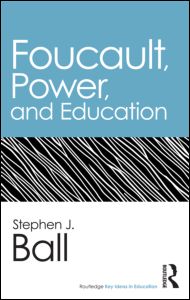
ballStephen J. Ball, Foucault, Power, and Education, London: Routledge, 2012
Series: Routledge Key Ideas in Education

Description

Foucault, Power, and Education invites internationally renowned scholar Stephen J. Ball to reflect on the importance and influence of Foucault on his work in educational policy. By focusing on some of the ways Foucault has been placed in relation to educational questions or questions about education, Ball highlights the relationships between Foucault’s concepts and methods, and educational research and analysis. An introductory chapter offers a brief explanation of some of Foucault’s key concerns, while additional chapters explore ways in which Ball himself has sought to apply Foucault’s ideas in addressing contemporary educational issues.

In this intensely personal and reflective text, Ball offers an interpretation of his Foucault—That is, his own particular reading of the Foucauldian toolbox. Ideal for courses in education policy and education studies, this valuable teaching resource is essential reading for any education scholar looking for a starting point into the literature and ideas of Foucault.

Source Variazioni foucaultiane

CAPA_foucault

Marcos Nalli, Sonia Regina Vargas Mansano, Michel Foucault em múltiplas perspectivas, Eduel, 2013

Acaba de ser publicada, pela EDUEL, a coletânea “Michel Foucault em múltiplas perspectivas”. Contando com a colaboração de autores que estudam a obra de Michel Foucault, esta coletânea analisou questões emergentes na atualidade, percorrendo perspectivas distintas. Tais pesquisadores buscaram problematizar alguns aspectos da vida contemporânea e as interrogações que ela coloca em curso. Com Foucault, aprendemos que a produção de conhecimento, bem como o sentido histórico do vivido é perspectivo, “ele olha de um determinado ângulo, com o propósito deliberado de apreciar”.

Assim, acolhendo o desafio de produzir um “saber perspectivo”, inspiração nietzscheana que sempre foi tão cara a Foucault, aceitamos os riscos de tomar em análise questões, impasses, acontecimentos, diálogos e conceitos que, guardando sua dimensão complexa e atual, não admitem certezas ou convicções. Talvez, o objetivo seja mesmo escapar das armadilhas das respostas prontas e multiplicar tanto os problemas quanto os ângulos de análise. Pode-se dizer, então, que o liame dos textos desta coletânea foi tecido pelo vínculo que nos liga ao autor que lhe “emprestou” o nome, bem como à atualidade dos temas por ele analisados. Nesse sentido, em cada capítulo o leitor encontrará um ensaio sobre “temas menores” que, de diferentes maneiras, nos atravessam e convocam e problematizar a vida na atualidade.

A coletânea foi dividida em dois eixos: “Interfaces e Polêmicas” e “Temas e Questões”. No primeiro eixo, os textos buscam estabelecer os mais diversos paralelos que o pensamento foucaultiano permite. Em seguida, os estudos recorrem àqueles teóricos com os quais Foucault dialogou de modo contundente e que contribuíram para a própria formação do pensamento do filósofo.

A organização da obra foi realizada por dois professores da Universidade Estadual de Londrina: Marcos Nalli é doutor em filosofia pela UNICAMP e pós-Doutor pelo Centre de Recherche Historique – École des Hautes Études en Sciences Sociales CRH-EHESS – Paris (2008). É autor do livro “Foucault e a Fenomenologia”, publicado pela Editora Loyola em 2006. Atua no Departamento de Filosofia / UEL. Sonia Regina Vargas Mansano é doutora em Psicologia Clínica, com Pós-doutorado em Psicologia Clínica pela PUC/SP (2011). É autora dos livros “Vida e Profissão: cartografando trajetórias” (2003) e “Sorria, você está sendo controlado” (2009), ambos publicados pela Editora Summus. Atua no Departamento de Psicologia Social e Institucional / UEL. Os autores são professores e/ou alunos de pós-graduação que se dedicam ao estudo da obra de Michel Foucault.

Desejamos, com esta coletânea, atingir um público variado e ligado a diferentes áreas de conhecimento como Filosofia, Psicologia, Sociologia, Literatura e Artes. Trata-se, portanto, de um material que poderá ser utilizado tanto nos trabalhos acadêmicos e de pesquisa realizados em graduação e pós-graduação, quanto ser explorado por um público de leitores que esteja minimamente familiarizado ou interessado em conhecer a obra do filósofo por meio destes comentadores. Espera-se, com isso, não apenas difundir os conceitos e ideias de um pensador comprometido com a análise dos modos de existência na contemporaneidade, mas também atrair leitores que acolham o desafio de levar tais conhecimentos para outras áreas, fazendo da obra deste filósofo o que ela já é para este grupo de autores: uma referência conceitual para analisar criticamente os caminhos que seguimos na construção da vida em sociedade.

rpow21.v006.i01.coverClaire Blencowe, Biopolitical authority, objectivity and the groundwork of modern citizenship
Journal of Political Power
Volume 6, Issue 1, 2013
Special Issue: Special Issue on Authority
http://dx.doi.org/10.1080/2158379X.2013.774968

Abstract
Authority is a powerful concept for coming to terms with the diversity of power. This article reframes the concept of ‘authority’ and articulates its continued relevance in a context of radical contingency and biopolitics. It argues that authority is essentially objectivist. Biopolitics is conceived as a historical process of constituting biological life and economic forces as objectivity. The paper addresses the question of whether biological-type relations destroy or foster capacities for politics. Arguing against Arendt’s diagnosis of the fate of authority in modernity, the article maintains that biological knowledges and economism create new groundworks of politics, citizenship and authority. This suggests that politics is instigated not simply through breaking given aesthetic orders (dissensus), but also through aesthetic productions of objectivity.

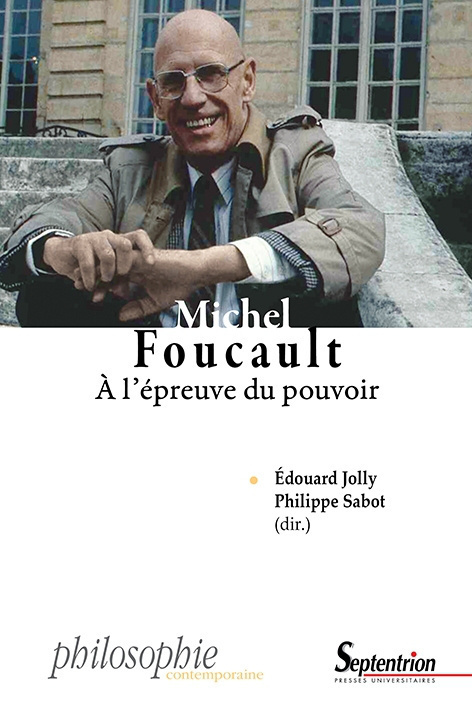
Michel Foucault: À l’épreuve du pouvoir. Édité par Edouard Jolly, Philippe Sabot, Septentrion Presses Universitaires, mai 2013

Description
Tout au long de son œuvre, Michel Foucault n’a cessé d’interroger les formes et les dispositifs de pouvoir qui définissent, dans nos sociétés modernes, les modalités du contrôle social et de la production normative des individualités déviantes (le fou, le criminel, le pervers). Parallèlement à ce travail d’analyse et de diagnostic de notre présent, il s’est attaché à développer une réflexion critique concernant les conditions pratiques et les enjeux politiques d’une résistance active à l’emprise du pouvoir et des normes sur la vie des sujets. « Là où il y a pouvoir, il y a résistance », écrit-il dans La Volonté de savoir.
Les études qui composent le présent ouvrage interrogent à nouveaux frais cette articulation entre pouvoir et résistance, qui forme le cœur de la pensée politique et de la démarche critique de Michel Foucault. Elles permettent ainsi d’apporter un éclairage original sur l’hypothèse du « bio-pouvoir ». Mais elles visent surtout à inscrire la problématique biopolitique dans un cadre plus large qui permet de faire apparaître l’ancrage philosophique et l’actualité de la pensée de Michel Foucault.
La confrontation des enjeux critiques et politiques de cette pensée à celles de Kant, de Heidegger, de Deleuze, d’Agamben, de Negri, de Butler et de Walzer conduit alors à renouveler l’approche des relations entre pouvoir et résistance, en montrant que ces relations concernent toujours des enjeux vitaux, subjectifs et pratiques qui forment le socle de la mobilisation et de la lutte contre l’intolérable.

Support Livre broché
Nb de pages 160 p.

ISBN-10 2757404563
ISBN-13 978-2-7574-0456-0
GTIN13 (EAN13) 9782757404560

Call for sponsorship to buy Michel Foucault’s archives

Paris, 8 May 2013, Art Media Agency (AMA).

The Ministry of Culture sent out a call for sponsorship to French companies in order to purchase the archives of Michel Foucault.

The archives of the French philosopher consist of 37,000 hand-written or typed documents. The Bibliothèque Nationale de France (BNF) stated its intention to acquire these documents, ranked as a national treasure, a year ago.

The call for sponsorship concerns €3.5m. Supporting the purchase of a national treasure for the State will allow indebted companies with company taxes to benifit from a reduction of up to 90% within 50% of the sum due.

The national treasure title is a way of protection in order to avoid goods holding a major historical, artistic and archeological value for the country from being exported. The BNF often uses this procedure to enrich its collection. That is how in 2009 it bought the archives of Guy Debord, while Yale University showed its interest in the purchase as well.

Appel au mécénat d’entreprise pour l’acquisition des archives de Michel Foucault

Paris, le 8 mai 2013, Art Media Agency (AMA).

Le ministère de la Culture Français lance un appel aux entreprises soumises à l’impôt sur les sociétés, afin d’acquérir les archives de Michel Foucault.

Les archives du philosophe français comportent près de 37.000 documents manuscrits ou dactylographiés. La Bibliothèque Nationale de France (BNF) a déclaré son intention de se porter acquéreur de ce document, classé trésor national depuis un an.

L’appel porte sur un montant de 3,5 millions d’euros. Le mécénat d’entreprise permet aux entreprises redevables de l’impôt sur les sociétés de bénéficier d’une réduction de cet impôt de 90% dans la limite de 50% du montant de l’impôt dû si elles participent à l’achat d’un trésor national pour l’Etat.

La qualification de trésor national est une mesure de protection qui permet l’interdiction de sortie du territoire de biens présentant un intérêt majeur pour l’histoire, l’art et l’archéologie. La BNF utilise fréquemment ce procédé pour enrichir ses collections. Elle a de cette manière pu acquérir les archives de Guy Debord en 2009, alors que l’université de Yale s’était montrée intéressée et avait formulé une offre d’achat.

Rob Iliffe, “Self-experiment, Sex, and the Care of the Self”

This is a lecture on the life and practices of the self of Isaac Newton.

With thanks to Dirk Felleman for this link

Fryer D., Duckett P.: Publishing, Overview. In: Teo T. (Ed.) Encyclopedia of Critical Psychology: Springer Reference (www.springerreference.com). Springer-Verlag Berlin Heidelberg, 2013.

Introduction
Within the discipline of psychology publishing is widely positioned as ‘a good thing’. Within the discourse currently dominant, publication in ‘peer reviewed’ journals (publication of and in books is less favoured in psychology in contrast to other disciplines, like philosophy) is positioned as a quality-controlled, contribution to ‘knowledge’ or ‘science’ and is positioned as the result of individual, creative, painstaking, sustained, intellectual work which is independent of political and economic agendas.

In this entry we argue that publishing in peer reviewed journals is indeed a ‘good thing’ for many interest groups in many respects. Publishing is a ‘good thing’: for those who manage psychologists; for those who subject psychologists’ research and intervention to theoretical, methodological and ideological surveillance and, sometimes dangerous, policing; for the commercial companies which make huge profits out of research publications; for the pharmaceutical industry and other bio-medical industries which use publications as marketing to increase their profits. However, in this entry, we argue that publishing is not ‘good thing’ for many who are published about and those trying to work from a critical standpoint.

Definition
From a critical perspective, publishing, in relation to psychological research, involves the writing up of research and scholarship in a style and format accepted by an academic journal, submitting it for peer review and, if accepted, entering into a copyright agreement for the paper to be made available to the ‘research community’. From a critical perspective, publishing, in relation to psychological research, involves: generating income for a neoliberal entrepreneurial institution; providing management with levers to pull in order to ‘divide and rule’; creating functions for bureaucracies and jobs for bureaucrats; making huge profits for ideologically problematic commercial companies; contributing to the mechanisms of oppression of those subjected to research; contributing to the tsunami of information overload; and subjecting oneself to theoretical, methodological and ideological governmentality and dangers of being silenced.

Keywords
Publishing; research; knowledge; governmentality; neoliberalism; New Public Management; colonisation.

Naissance de la clinique_affiche

Naissance de la clinique de Michel Foucault : cinquante ans après

PDF of flyer

Vendredi 31 mai 2013 :
École normale supérieure
46 rue d’Ulm, 75005 Paris
Salle des Conférences

Samedi 1er juin 2013 :
Université Paris Descartes
83 boulevard Saint-Germain, 75006 Paris
Salle du Conseil
(entrée libre)

Avec le concours de l’Association pour le Centre Michel Foucault
Contact et renseignements :l.paltrinieri@gmail.com
Organisation :
Philippe Artières, François Delaporte, Frédéric Gros, Luca Paltrinieri


VENDREDI 31 MAI 2013

Nouveaux regards sur Naissance de la clinique

Ouverture de la journée à 11h

Présidence : Luca Paltrinieri (ENS Ulm)

11h15 : Julie Cheminaud (Université Paris 4)
Une esthétique de la clinique

11h45 : Philippe Sabot (Université Lille 3)
La lumière du Raymond Roussel

12h15 : Discussion & Déjeuner

Présidence : Fréderic Gros (UPEC)

14h00 : Arianna Sforzini (UPEC)
Présences du corps

14h30 : Jérémy Romero (UPEC)
Le jeu de la mort

15h00 : Discussion & Pause café

15h30 : Emmanuel Péhau (Université Paris 8)
Naissance de la clinique ou Capitale de la douleur?

16h00 : Ali Benmakhlouf (UPEC)
Le primat de la clinique

17h00 : Lecture-performance
Le collectif Foucault 71 lit
Le corps utopique de Michel Foucault

SAMEDI 1ER JUIN 2013

La médecine clinique

Ouverture de la journée à 9h45

Présidence : Bernard Devauchelle
(Centre hospitalier et universitaire d’Amiens)

10h00 : Julie Mazaleigue-Labaste (UPJV)
L’échec du rêve anatomo-clinique en psychiatrie

11h00 : Emmanuel Fournier (Université Paris 6)
« L’invisible pensée visible ». Essai de déplacement du regard

12h30 : Déjeuner

Présidence : Jean-François Braunstein
(Université Paris 1)

14h30 : Gérard Jorland (EHESS/CNRS)
Foucault et Koyré

15h30 : François Delaporte (UPJV)
La clinique et les sources de l’histoire archéologique