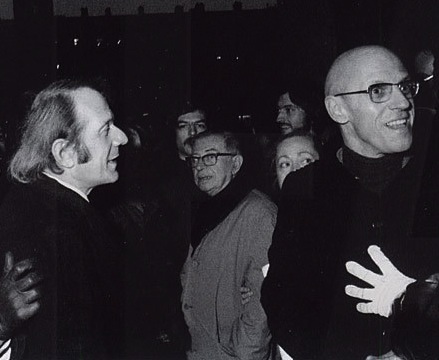
Foucault News

News and resources on French thinker Michel Foucault (1926-1984)

Luciano Nuzzo,
Foucault and the Enigma of the Monster
(2013) International Journal for the Semiotics of Law, 26 (1), pp. 55-72.

https://doi.org/10.1007/s11196-012-9275-8

Abstract
In this paper Foucault’s thought on monstrosity is explored. Monsters appear whenever and wherever knowledge/power assemblages emerge. That which eludes the latter, and which threatens to subvert them, is the monstrous. Foucault distinguished the production, throughout history, of juridical-natural monsters, moral monsters, and political monsters. In this paper it is argued that Foucault must have sensed that monstrosity eludes all notions of identity and difference, and therefore also the notion that places it ‘outside’. It is the space of emergence itself, i. e. the location where sheer potentiality becomes the possible of and in the event. All monstrosity is therefore deeply, and inevitably, political. It is the promise of unsettling subversion.

Author Keywords
Foucault; Limits of Thought/Thought of Limit; Monster, Monstrous, Monstrosity; Normalization device; Political emergence

DOI: 10.1007/s11196-012-9275-8

Theresa Sauter, (2013), ‘What’s on your mind?’ Writing on Facebook as a tool for self-formation, New Media and Society, 16(5), 823-839.
https://doi.org/10.1177/1461444813495160

Abstract
In the context of modern western psychologised, techno-social hybrid realities, where individuals are incited constantly to work on themselves and perform their self-development in public, the use of online social networking sites (SNSs) can be conceptualised as what Foucault has described as a ‘technique of self’. This article explores examples of status updates on Facebook to reveal that writing on Facebook is a tool for self-formation with historical roots. Exploring examples of self-writing from the past, and considering some of the continuities and discontinuities between these age-old practices and their modern translations, provides a non-technologically deterministic and historically aware way of thinking about the use of new media technologies in modern societies that understands them to be more than mere tools for communication.

The Unsaveables: Sovereignty and Biopolitics in the 18th Brumaire

Dr Dimitris Vardoulakis (UWS)

Date:             Tuesday 6 August
Time:            1 p.m.
Venue:          Morven Brown 310, University of NSW )

 I approach the 18th Brumaire from a double trajectory. First, I examine its relation to how the exception was thought in the work of Carl Schmitt and Walter Benjamin’s response to it. Second, I analyze the ways in which the rise of Bonaparte to power was carried out through forms of regulating the behaviour of those sections of the population who supported him. A key insight in Marx’s analysis, according my reading, is that every time society is “saved” the circle of power contracts. The question I pose, then, is whether it is possible to identify anyone who is “unsaveable” – in other words, anyone who resists the workings of sovereign power.

Dimitris Vardoulakis is senior lecturer in philosophy at the University of Western Sydney. His books include the monographs The Doppelganger: Literature’s Philosophy (2010), and Sovereignty and its Other: Toward the Dejustifications of Violence (2013), both with Fordham UP. He is also the editor of the volume Spinoza Now (U of Minnesota P, 2011).

Coordinator:

Dr Joanne Faulkner, j.faulkner@unsw.edu.au
School of Humanities and Languages

Ansgar Allen, The Examined Life. On the Formation of Souls and Schooling, American Educational Research Journal, April 2013 vol. 50 no. 2 216-250
https://doi.org/10.3102/0002831212466934

Abstract
The spread of examination throughout educational institutions is often viewed as an overly constraining influence, one that distorts pedagogic relationships and prevents more genuine educational activities from taking place. This critique of examination ignores the extent to which the structure of the school and the soul of the child are already constituted by examining techniques. A survey of the 19th-century emergence of mass schooling shows that examining techniques have long been embedded in schools. The early development of mass schooling incorporated two distinct and enduring approaches to the formation of souls: disciplinary and pastoral examination. These examining practices would help construct the kind of self-governing subjectivities required by the nation-state. Those who seek to confront practices of examination today face a task that is far more demanding than it first appears. This confrontation would involve nothing less than a rigorous and wide-ranging critique of how examination and schooling in their various forms continue to assemble us as subjects of power.

Daan Wesselman, The high line, “the balloon,” and heterotopia
(2013) Space and Culture, 16 (1), pp. 16-27.

https://doi.org/10.1177/1206331212451669

Abstract
The High Line, a new park on an old elevated railway on Manhattan, is an otherworldly space that invites an understanding in terms of Foucault’s concept of heterotopia. However, this often-used term requires critical reflection, particularly to extend it beyond the immediately spatial to include the realm of the discursive. To this end, an analysis of the High Line is paired with a reading of a similarly different space in Donald Barthelme’s short story “The Balloon.” Bringing together a real park and a literary space shows how Foucault’s concept requires combining the focus on the spatial in “Of Other Spaces” with the focus on structural order in The Order of Things, if it is to be used for understanding not just theoretical or fictional but also actual spaces.


Author Keywords

Barthelme; The Balloon; Foucault; heterotopia; The High Line

DOI: 10.1177/1206331212451669

13 Things You Didn’t Know About Deleuze and Guattari – Part III, by Eugene Wolters, 2 July 2013

Some interesting anecdotes

foucault-and-deleuze

#11 Foucault saw Deleuze as a rival

Some may find it surprising that the author of “Anti-Oedipus’” glowing introduction kind of hated the book. While Michel Foucault put on airs of amicability towards Deleuze, he was secretly jealous of Deleuze’s popularity. A close friend of Foucault’s claimed “I got the feeling that Foucault saw Deleuze as a rival.”

The rivalry rarely manifested publicly, Deleuze and Foucault could often be seen at public protests together, and Foucault even offered Deleuze a job in his philosophy department (which Deleuze had to initially refuse due to a prior commitment). Foucault even join the ranks of Nietzsche and Spinoza when Deleuze wrote “Foucault.”

read more

#12 Deleuze worked in a philosophy department headed by Foucault that lost its ability to give out diplomas

After the events of May ’68, Paris-VIII, also known as Vincennes, was created to be a refuge for radical students. A committee of 20 peoples that included Jacques Derrida and Roland Barthes set out to model Vincennes after MIT. Michel Foucault was named the head of the philosophy department.  While Deleuze could not initially work at Vincennes, he later joined a staff that was comprised of Alain Badiou, Jacques Ranciere, Jean-Francois Lyotard and Judith Miller.

If you wondered what could go wrong in a department filled with radicals and communists, the answer is everything. Students tore open ceilings to see “if the police had bugged the rooms” and matters of administration were often seen as fascist coups. Department members invited friends to teach classes, many of whom would not even show up for class.

read more

Editor: Foucault did not head the department for long- barely a year in 1969. I was enrolled in a degree there in the early 1980s and it was still pretty anarchic at that stage.I attended Deleuze’s lectures on cinema in a packed and very large room filled with cigarette smoke. Amongst other lectures I attended were some of Jacques Rancière’s seminar series on Marx and the Paris Commune of 1871. There was a small group of around 10 people in attendance.

Free 1 Day Conference
Foucault and Education: retrospect and prospect

29 January 2014, ICOSS, University of Sheffield

[Editor: Update 14 March 2026. Link above is to the archived page on the Wayback Machine.]

Conveners: Ansgar Allen & Wilfred Carr; Keynotes: Erica Burman & Stephen Ball

Hosted, sponsored and funded by the international journal Pedagogy, Culture and Society and The School of Education.

Call for Papers

This conference is free to delegates and places will be limited. Students and early career researchers are particularly welcome to attend and present papers, alongside more established academics.

Our first call for papers is Friday 20 September 2013. To submit an abstract, complete a Presentation Form.

You can also contact us to book a place at the conference by completing a Booking Form.

Abstracts and booking requests should be sent to Lindsey Farnsworth at: l.j.farnsworth@sheffield.ac.uk.

If you would like to discuss a presentation, please contact Ansgar Allen at: a.allen@sheffield.ac.uk.

Overview

This conference will critically review the extended impact of Michel Foucault on educational research. Educational researchers have made frequent use of Foucault’s ideas, concepts and perspectives. The common assumption that Foucault ‘would have something to say’ or that the Foucauldian perspective must have something to offer, has brought Foucault into the educational canon. This conference will examine the costs of this widespread adoption, for Foucault, his ethos, and for educational research.

Those ‘faithful’ to a Foucauldian ethos may, indeed, sense these dangers most acutely. This conference will ask whether those committed to a spirit of critique that retains its value only to the extent that it remains marginal, able to upset convention, common sense, and popular perception, might wish to reconsider their allegiances. Now that Foucault has become a mainstream educational theorist, is it finally time to Forget Foucault?

Focus

This conference will debate the continued relevance of Foucault. It will review educational work that takes Foucault as its point of departure addressing questions such as:

  • How have Foucault’s ideas been used?
  • What explains Foucault’s ‘success’ in the field of education?
  • Why has his work been so influential?
  • What effects has it had?
  • What does it mean to be faithful to Foucault?
  • Should we be faithful to the Foucauldian canon?
  • Is Foucault still relevant in the 21st century?

Schedule

The conference will be divided into two parts. Each part will begin with a short keynote presentation. These presentations will be followed by individual discussion papers, where each paper will consist of a 15-20 minute presentation followed by 15-20 minutes for discussion. The day will end with a panel discussion responding to the themes that have emerged throughout the day. Lunch and refreshments will be provided free of charge.

Morning

Retrospect: Foucault and Education

Keynote: Professor Stephen Ball, Institute of Education, University of London.

Afternoon

Prospect: Foucault in the 21st Century

Keynote: Professor Erica Burman, School of Education, University of Manchester.

Special Issue

Conference delegates will be invited to submit papers to a special issue of the international journal, Pedagogy, Culture & Society, provisionally titled ‘Foucault and Education: retrospect and prospect’, edited by Ansgar Allen and Wilfred Carr.

This conference is funded by the international journal Pedagogy, Culture and Society. It is affiliated to the Centre for the Study of Educational Development and Professional Lives at the University of Sheffield School of Education.

battle-roarMeinrad Calleja, (2012) The Battle Roar of Silence: Foucault and the Carceral System, Malta: FARAXA Publishing House

Description
The Battle Roar of Silence: Foucault and the Carceral System explores the philosophical rationales sustaining morality, law, punishment and the carceral system as part of the discourse of globalisation. This text attempts to desacralize the foundations of this globalisation discourse by drawing upon Foucault’s ‘archaeological’ and ‘genealogical’ study of institutions, knowledge, discourse and power. This is an interdisciplinary study fusing aspects of sociology and psychoanalysis within a philosophical framework to tender a politically-charged critique of the contemporary modes of domination and power. Pseudo-scientific pathologies born from carceral discourses are disseminated and reproduced as an integral feature of the contemporary political culture and its dominant ideology. The proliferation of these pathologies often serves as a reference point against which various categories, identities and values are registered, classified and rendered plausible.

In The Battle Roar of Silence, Meinrad Calleja attempts to deconstruct the very plausibility structures that sustain these ideological constructs. The text correlates the carceral system discourse to political, social, and economic antagonisms that have eroded human rights, democracy and freedom. Consumers of discourse repress the negative features of this despotic order and suffer in silence. This text articulates the battle roar of silence.

The preface to the book can be found on the author’s blog.

Description of book by the author

When I wrote The Battle Roar of Silence – Foucault and The Carceral System I wanted to share my reading of Foucault’s analysis of power, discourse, and knowledge from a genealogical and archaeological perspective. Foucault actually states that he never wrote for ‘readers’ but for ‘users’, and I certainly used his works! This reading focused on law, punishment, democracy and the contemporary political culture.The basic thrust of this reading is that today ‘power’ has monopolised and is mainly concerned with reproducing the interests of an elite associated with a ruthless neo liberalism. The discourse that is manufactured today, particularly through knowledge and the academia, is atomised and appears as discourse fractals. In splendid isolation these are often unrecognisable. However, the propositions this discourse disseminates are the very basis of a logic structure that consumers of this discourse draw upon to relate and understand reality. These very discourse fractals actually build “plausibility-structures” and allow these consumers to then assemble their own individual syllogisms and logic. This re-enforces a value belief system in which individuals believe they are exercising a form of ‘rationality’ that is objective, scientific and true, while also giving the impression of autonomy and freedom. The carceral system at certain junctures and certain instances appears to be the R & D of this mode of production of discourse, particularly through the pseudo-scientific discourse it creates. However, incarceration may also unveil and demystify these forms of alienation by illustrating the despotism of these orders, and the fragility of ‘freedom’ as espoused by law, punishment and democracy. This reveals the possibility of “radical freedom”. The process itself accrues an amount of frustrations that despotic order creates, that are suffered in silence. This accumulated silence, becomes the battle roar of silence, as Foucault alerted.

Having read most of Michel Foucault’s works, this book, though primarily about the carceral system, was not singularly influenced by his ‘Discipline and Punish – The Birth of the Penitentiary’. The book is influenced by Foucault’s general system of archaeological and genealogical investigation of discourse, knowledge and power, explicated forcefully and provocatively throughout his works. This investigation was actually conceived in several stages, both readings related to Foucault, as well as the other topics covered in my text. It was the result of systematic reading concerned with the despotism of power, and the flaws of democracy. It was a text moved by the rapid erosion of human rights and justice. This is a political text.

My readings of Foucault were undertaken in an order that was different to the chronological order Foucault wrote his texts. The main Foucault texts I read were written by Foucault in the following chronological order: ‘Madness and Civilisation’, ‘The Birth of the Clinic’, ‘The Order of Things’, ‘The Archaeology of Knowledge’, ‘Discipline and Punish’, and the three volumes of ‘The History of Sexuality’. I started off reading his ‘Discipline and Punish’, followed by ‘Madness and Civilisation’, the three volumes of ‘The History of Sexuality’, ‘The, Archaeology of Knowledge’, ‘The Order of Things’, and finally, ‘The Birth of the Clinic’, also reading some other texts of his at some point during this reading. The point of this chronological presentation is simply that Foucault’s thought was constantly evolving, and he was regularly revising his own thoughts, as even the changes in various editions of his work illustrate. Thus the order I undertook, quite unintentionally, allowed me to note aspects of this evolution, and the relevance of this change. Having read the above-cited major works, I then ventured to read a number of other French thinkers that either influenced Foucault (like Althusser, Bachelard, Canguilhem, and Derrida among others), as well as those that were influenced by Foucault (like Badiou, Deleuze, Guattari, and Lyotard). Some years later, I read a number of Foucault ‘readers’ by authors like Gutting, Oliver, and, one of my favourite ‘readings’ (for it corroborated my interpretation and reading), Deleuze.

Another part of my investigation concerned the philosophy of punishment, including readings on morality, ethics, justice, law, human rights, and carceral systems. Here my search, incidentally via comments Said made about Bachelard, and Derrida about ‘the wisdom of the prison cell’, also explored ‘space’ readings. This led to readings on psychoanalysis, particularly the works of Freud, Fromm, and Marcuse, and the relationships between psychoanalysis and mind. Other subjects like neurology, institutionalisation, cybernetics, media imagery, organised crime dynamics, and political culture were also useful. The relationships of these knowledge-clusters to the carceral system discourse and globalisation illustrated that the spirit of ‘democracy’ was rapidly being eroded by despotic legal systems built upon the very carceral system discourse. Citizens in various jurisdictions were suffering in silence the consequences of these despotic systems sustained primarily by deception.

‘The Battle Roar of Silence – Foucault and The Carceral System’ actually shows how these despotic forces operate to deny political literacy, consciousness, and the exercise of fundamental human rights. The importance of this book is that it actually highlights the deficiencies and ruthlessness of neo liberalism, and the limits of freedom it imposes. This book shows how freedom is gradually being ‘circled-in’ by ‘governmentality’, that actually structures the plausibility of its logic and discourse through the carceral system. This text is a politically-charged critique of a subtle ideology that has felt comfortable enough to raise its ugly head safe in the knowledge it can despotically oppress simply because the discourse it has created via institutions like the carceral system, can be circulated to recruit consent and constrain contestation, while consumers of this discourse suffer in silence. The accumulated suffering of these citizens has now become ‘The Battle Roar of Silence’. People all over the world are close to reaching their ‘tipping-point’, and many of those who have realised they will only be saved by themselves, have in fact translated their ‘silence’ into a ‘battle roar’ of affirmative action of revolt. These citizens now take to street to battle against vicious riot squads and power hungry despots. Reading ‘The Battle Roar of Silence – Foucault and The Carceral System’ allows readers to understand these complex dynamics. Its also liberates citizens from the constraints of despotic dominance.

All this work was undertaken in a prison cell while I served more than a decade of incarceration. I was fortunate to also have been visited by various academics who taught at the prison school. During these years I also read works by other major thinkers like Marx, the Frankfurt School, Kant, Hume, Bourdieu, Mao, Dostoevesky, Badiou, Gramsci, al-Koni, Baudrillard, Ibn Taymiyya, Ritzer, Freire, and many others. Naturally, I admit the prison environment was conducive to critical reflection. This work was the actual ‘work-in-progress’ that led to my very own perspective transformation and development.

Meinrad Calleja

Philosophers: Debates and Dialogues

A series by Fons Elders

Released by Icarus Films, New York

Update September 2025. This series is no longer available from Icarus films and the link above is to their page as it is archived on the Wayback Machine. The Chomsky Foucault debate can now be found on YouTube however

Text below from the Icarus site
In 1971, a Dutch initiative called the International Philosophers Project brought together the leading thinkers of the day for a series of one-on-one debates. The participants included intellectual superstars Alfred Ayer and Arne Naess, Karl Popper and John Eccles, Leszek Kolakowski and Henri Lefèbvre, and – most notably, in a now justifiably famous exchange – Noam Chomsky and Michel Foucault.

This four-disc set collects all four remarkable conversations, along with introductions and commentary by Dutch philosopher and writer Fons Elders. Elders moderated the original debates – hand-picking each of the participants after spending some time getting to know them. Now, looking back four decades later, he offers perspective and context, summarizing the arguments and highlighting the key moments of each debate.


DISC ONE (80 minutes)

Noam Chomsky and Michel Foucault

The Chomsky-Foucault debate has become a much-studied classic. This DVD captures all the energy and passion of the two philosophers, as they discuss whether or not some form of universal human nature – an inherent ability to understand language and scientific concepts, for instance – exists, or whether our responses are purely socially and culturally conditioned.


DISC TWO (74 minutes)

Alfred Ayer and Arne Naess

A lively debate between British empiricist Alfred Ayer, who champions a limited skepticism, and Norwegian philosopher Arne Naess, the founder of the deep ecology movement, whose philosophy embraces interconnectedness.


DISC THREE (80 minutes)

Karl Popper and John Eccles

Historian of science Karl Popper and his close friend, Nobel-prize-winning neuroscientist John Eccles, discuss Popper’s famous criterion of falsifiability: the idea that a statement is only scientific if it could possibility be proved false, which he had articulated against the traditional positivist view of the scientific method.


DISC FOUR (77 minutes)

Leszek Kolakowski and Henri Lefebvre

Polish philosopher Leszek Kolakowski and French thinker Henri Lefebvre (both former Communist Party members) debate the ongoing significance of Marxism and the concept of alienation – while at the same time struggling to define what a future, post-capitalist society might hold.


Each of these conversations captures the intellectual and social ferment of the late 1960s and early 1970s, when dramatic social and economic transformation seemed imminent – and philosophical questions underpinned discussions about what form the new society would take. Though many of the questions under discussion are timeless, this social and political context gives them a particular sense of urgency.

311 minutes / color
Release: 2012
Copyright: 2012
Sale: $498

stuartelden's avatarProgressive Geographies

Until recently, there were only two texts by Foucault explicitly on Nietzsche.

1. ‘Nietzsche, Freud, Marx’, Cahiers de Royaumont, VI, 1967, pp. 183-200. (The note in Dits et écrits says this was from a symposium at Royaumont in July 1964.)

2. ‘Nietzsche, la génealogie, l’histoire’, in Hommage à Jean Hyppolite, Paris: PUF, 1971, pp. 145-72.

Both texts are reprinted in Dits et écrits and appear, among other places, in volume 2 of Essential Works. There is also the discussion of Nietzsche in the first of the ‘Truth and Juridical Forms’ lectures given in Rio in May 1973 (in Dits et écritsand Essential Works, Volume 3).

Now, with the publication and translation of Lectures on the Will to Know, we have the text of a lecture from April 1971, given at McGill University. This lecture is given as an appendix to the course from the Collège…

View original post 639 more words