Foucault News

News and resources on French thinker Michel Foucault (1926-1984)

Anna Anderson, The critical purchase of genealogy: Critiquing student participation projects (2013) Discourse. Article in Press.
https://doi.org/10.1080/01596306.2013.828417

Abstract
Until recently the dominant critique of ‘student participation’ projects was one based on the theoretical assumptions of critical theory in the form of critical pedagogy. Over the last decade, we have witnessed the emergence of a critical education discourse that theorises and critically analyses such projects using Foucault’s notion of ‘governmentality’. In this paper, I argue that while these governmentality studies challenge some of the key theoretical and taken for granted assumptions upon which such initiatives rest, they neglect to challenge the central assumption that such initiatives represent a historical break with traditional schooling practices. The importance of accounting for and critically analysing these projects within a historical framework will be argued through a discussion of Foucault’s notion of genealogy as a particular conception and method of critique. It will also be demonstrated using an example, which shows an unacknowledged nineteenth century history of the current discourse and practice of student participation.

Author Keywords
genealogy; governmentality; student participation; student voice

Pierre Lauret, « Foucault est un personnage extraordinaire » entretien avec le collectif théâtral F71, Cahiers philosophiques, 2012/3 (n° 130), 112-126

Further info and text

Fondé en 2004, le collectif F71 est composé de cinq comédiennes (Sabrina Baldassarra, Stéphanie Farison, Emmanuelle Lafon, Sara Louis, Lucie Nicolas), qui co-assument la responsabilité de la mise en scène et de la direction artistique, et d’une directrice de production, Thérèse Coriou. Depuis sa création, ce collectif a monté et présenté trois spectacles autour de Michel Foucault :

  • Foucault 71, qui porte sur l’engagement de Michel Foucault et d’autres intellectuels (Gilles Deleuze, Claude Mauriac…) en 1971 ;
  • La Prison, qui prend pour objet l’institution carcérale et les pouvoirs disciplinaires et de contrôle à l’œuvre dans le champ social ;
  • Qui suis-je maintenant ?, méditation théâtrale rêveuse et poétique sur l’identité et le regard, inspiré par le texte de Foucault « La vie des hommes infâmes » (Dits et Écrits, 1977, n° 198).

Dans l’entretien qui suit, on trouvera le détail de la constitution et de l’histoire de ce collectif théâtral et des enjeux qui nouent sa manière de travailler, mais aussi d’exister dans le champ théâtral, et plus largement dans la société, à la réflexion et à la pratique publique de Foucault.

suite

Call for Papers

Michel Foucault: Ethnography and Critique
Convenors: Orazio Irrera & Martina Tazzioli

Bergamo, June 5-7, 2014
Deadline: February 17, 2014

Conference Website and contact details

[Editor: Link Updated 16 April 2026 to page archived on Wayback Machine]

Since the Sixties, Michel Foucault had described his work in ethnographic terms, stressing that for him it was a question of situating outside of the culture we belong to, in order to critically show the way in which this latter was built. Foucault’s perspective, far from representing only an historical analysis of the nexus between powers and knowledges, as a genealogy was firmly anchored to the analysis of the present; and it was also grounded on the ethical and political necessity to understand the present as the threshold that splits up what we have become from what we are no longer, in order to open some possibilities to think ourselves differently from what we are.

On the one hand, ethnography appears for sure among the human and the social sciences that on the one hand are susceptible of the critique addressed by Foucault, but on the other in the last decades it seemed to be able to take the critical solicitations produced by the French philosopher. For this reason, it seems useful to question the way in which today –a present which is certainly different from the present of Foucault – ethnographic practices still succeed in making operatives some of the conceptual tools offered by Foucault tool-box. However, the uses of these tools are not limited to a mere application: rather, the application itself becomes a moment of test, of experimentation and of theoretical and methodological innovation, extending further the Foucaultian trajectory beyond the lines of research undertaken by him.

Therefore, we will welcome contributes able to show how ethnographic practices have adopted and re-elaborated analytical strategies and categories which come out from Foucault’s texts, both  in relation both to the construction of a specific fieldwork, both regarding to the changing and productive relationships that who does an ethnographic work established with it. Concerning this last point, we refer to the way in which Foucault could be used also “reflexively”, to grasp the transformations that specific ethnographic practices generate on those who conduct ethnographic researches, modifying epistemologically and/or ethically the relationship that one has with oneself and with the others.

We are particularly interested to contributions both in English and in Italian on the following themes:

  • Ethnographic practices in relation to the nexus space-knowledge (Urban studies, migrations)
  • Ethnographic practices in relation to governmentality, biopolitics and neoliberalism
  • Ethnographic practices and normalization/medicalization of societies (racism, gender issues, education)
  • Ethnographic practice and production of subalternity
  • Ethnographic practices and discursive analysis
  • Ethnographic practices and forms of reflexivity (transformation of the point of view of the ethnographer in relation to the construction/observation of the ethnographic field)

Julien Cavagnis, Michel Foucault et le soulèvement iranien de 1978 : retour sur la notion de « spiritualité politique », Cahiers philosophiques 2012/3 (n° 130), 51-71

Further info

Résumé

La série d’articles écrits par Michel Foucault sur le soulèvement iranien de 1978 a été l’objet de vives polémiques. L’analyse sérieuse et attentive d’un tel corpus montre pourtant l’intérêt qui est le sien tant sur le plan historique que conceptuel. C’est sur la notion de « spiritualité politique », certainement la plus importante des articles, que nous nous arrêterons tout particulièrement ici. Nous tenterons d’abord de comprendre pourquoi, comment et contre quoi une telle notion a émergé dans l’entreprise de description de l’événement. Nous verrons ensuite les pistes et hypothèses qu’elle ouvre aujourd’hui, tant pour la recherche proprement foucaldienne que pour les recherches d’ordre théologico-politique.

PLAN DE L’ARTICLE

De la pensée du soulèvement à l’émergence de la « spiritualité politique »
Critique du paradigme de fondamentalisme : la « spiritualité politique » comme religiosité non normative
Critique du paradigme de l’idéologie : la spiritualité politique comme transformation de soi
Penser la « spiritualité politique » : de la théologie politique aux subjectivités politico-religieuses
Religion et politique : les échos de 1976 et le dialogue avec Carl Schmitt
Culture, subjectivités et liberté : la « spiritualité politique » comme pratique subversive

CFP: Theoria: The Police and the Theory of the State

Submission deadline: Friday, February 28 2014

The editors of Theoria: A journal of Social and Political Theory invite contributors to interrogate contemporary political and social theory through the lens of policing, with the view of connecting politics and policing. Well documented reflections based on a variety of case studies would be welcomed, with a non exclusive privilege given to the ‘Global South’.

No government can maintain the rights of the citizens without a rigorous police force; but the difference between a free regime and a tyrannical one is that, in the former, the police is being employed against the minority, opposed to the general good, as well as against the abuses and negligences of the authority; while in the latter, the State’s police is being used against the poor offered to the injustice and the impunity of power.”

This claim was made in April 1794 by the french revolutionary Saint-Just. Redeployed and redefined in the burning context of the Terror and necessity to terminate it, some of the most classical concepts of the history of political thought (Freedom vs tyranny, General good vs particular interest, elite accountability vs impunity of power) provided the ideological principles framing the organization of a new police force. By doing so, Saint-Just’s claim might well represent the introduction of the question of policing, in the current signification of the term, into the realm of modern political thought and the theory of the State.

However, if the police, an institution by nature ambiguous (P. Napoli, Naissance de la police moderne, 1997), is at the core of contemporary politics, and a central object of literature and cinema, contemporary political theory has generally disregarded the question of policing. The main reason might be that it requires us to think about politics and general principles through history, practices, techniques, means of action, and ‘tainted occupations’. A recent phenomenon in the social sciences, the theory of policing formed its first paradigm precisely by rejecting any formulation aiming at linking policing and politics. It had defined the role of the police through its allegedly more specific element: its capacity and license to use force (E. Bittner, The Functions of the Police in Modern Society, 1970). This paradigm has oriented most sociological research on police: either they focused on the professionalization of the agents, describing it as a central element of the civilizing process, or they focused on the brutality and abuses of the same agents, showing the civilizing process as reversible.

This paradigm was recently scrutinized with the aim of providing a more complete, comprehensive and systematic theory of policing (J.-P. Brodeur, The Policing Web, 2010, chap. 4).

– A major dimension of policing now reintegrated into the framework of analysis is ‘high political policing’, such as intelligence work (Brodeur 2010, chap. 7), already conceived by Saint-Just as a political activity at the core of a modern democratic police. This points to another set of questions concerning the lack of interest in policing in contemporary political theory: considering the nature and function of policing leads to the interrogation of the practical as well as doctrinal place of Reason of state and secrecy in liberal democracy, and in the theory of liberal democracy.

– A second important dimension reintegrated into the theory of policing is ‘military policing’, in particular in the sense of militarized forces in charge of maintaining order and riot control (Brodeur 2010, chap. 9). Amongst other worldwide events inviting to reconceptualize the distinction between protest and sedition, the recent events of Marikana, when a special unit of the South African Police service opened fire against striking mineworkers, illustrated in the most spectacular way what it is when ‘the State’s police is being used against the poor’. It raised many questions about the situation of the right to life, the right to protest, and the maintenance of order in the post apartheid era. It points out also the necessity to develop the reflection on the doctrines, norms, practices and techniques of policing protest.

These two dimensions (‘high political policing’ and ‘military policing’) taken together generate the following question: what does the ongoing process of normalizing the state of exception and emergency measures – ranging from the demand for general control of common citizens to the use of massacre against protestors – say about the state of the society, and the theory of the state and of democracy?

Case-studies could include:

–  recent action movies (e.g. Padilha’s Tropa de Elite on the brazilian BOPE) as well as classical thriller (e.g. Rosi’s Illustrious Corpses on mafia, terrorism and the state). Is there a theory of the State and of the State’s action emerging of the genre?

– recent experiences in setting up new police forces in order to fight against police and elite corruption (e.g. Chàvez’s Policia Nacional Bolivariana)

– historical experiences in setting up dedicated units in charge of policing protest, tending to exclude massacre from the repertory of actions (e.g. the French CRS), and more recent developments.

– recent trends in policing studies in the Social sciences as well as in History (e.g. critical accounts on the impact of postcolonial studies in evaluating the current practices of maintaining order in the ‘Global North’)

– evaluations of Brodeur’s framework of analysis in the context of the policing web in South africa and the ‘Global South’; its implications for a general theory of the state.

– the place of Reason of state, secrecy and exception, from the point of view of policing, in contemporary theories of the state and of the liberal democracy (e.g. how to situate the heritage of Carl Schmitt or of Michel Foucault – the former showing a nostalgia for the  medieval conception of the mystery of the State, the second discovering the doctrine of Raison d’Etat after he published Discipline and Punish – in that undertaking?).

Contact: Christopher Allsobrook (THEORIASA@GMAIL.COM)

Foucault News editorial comment: I was interested by the opening sentence of this piece in The Guardian and my thought was that Foucault actually should be brought precisely into these kind of arenas. I have observed that practitioners can really benefit from engaging with Foucault’s ideas and have their ideas about their professional practice considerably broadened. If nothing else, coming to grips with his ideas gives people’s brains a good workout in this era of obsession with brain training. Certainly more productive than endless sudoku in my view!

Stephen Hoare, City Unrulyversity: a pop-up education, theguardian.com, Tuesday 12 November 2013

Anyone expecting rows of eager postgrads critiquing philosopher Michel Foucault will think they have landed on Mars. City Unrulyversity is a new concept in higher education outreach, described as a “pop-up” and based at the Brick Lane offices of digital media company Unruly. Here, no one takes an attendance register and there are no assignments.

“It’s very informal. We pull together couches and bean bags, and you get a beer and crisps,” says Caroline Wiertz, co-founder of City Unrulyversity and reader in marketing at Cass Business School. [now Bayes Business School, updated 2021]

Launched at the start of 2013 with a mission to inform, inspire and empower the next generation of Tech City entrepreneurs, City Unrulyversity offers a programme of free, early-evening lectures.

read more

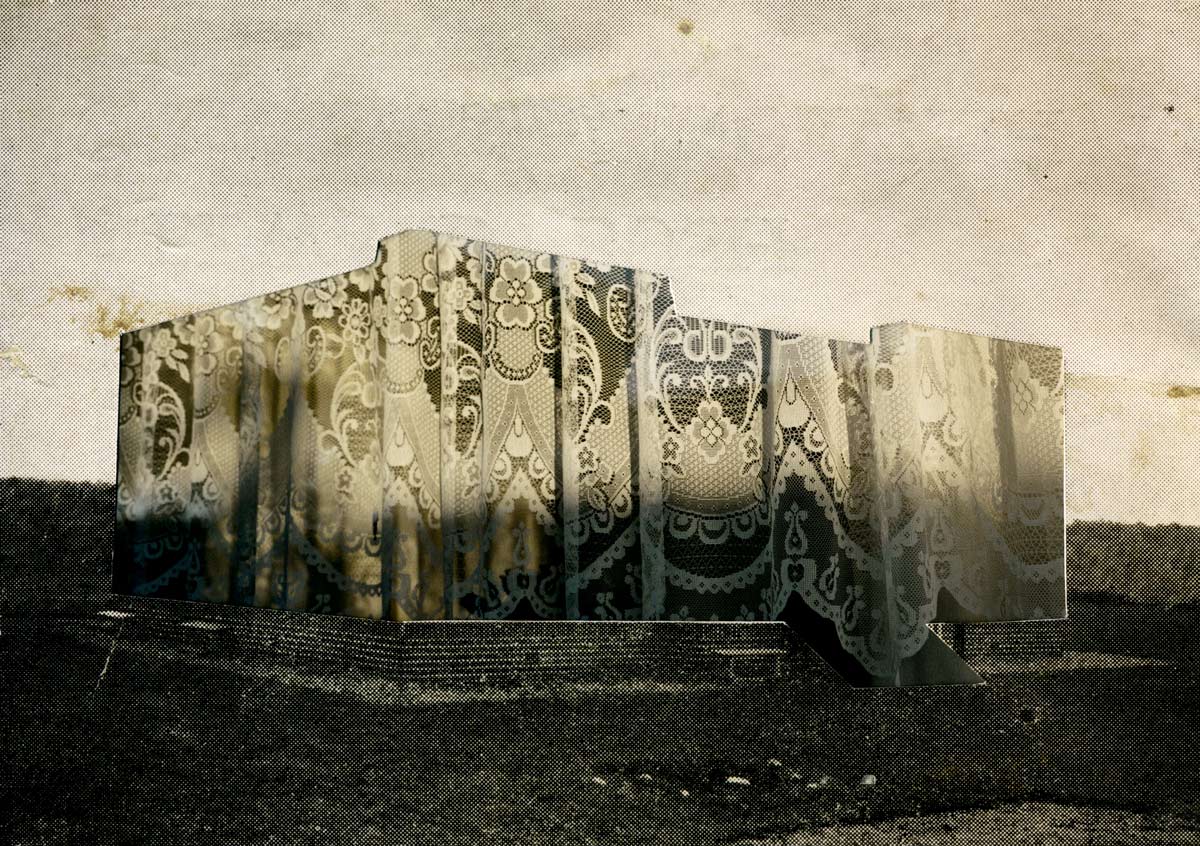
Shangri-la-study-5, 2013. Giclee Collage on Archival Paper, handmade Perspex Frame (30 x 21cm)

Shangri-la-study-5, 2013. Giclee Collage on Archival Paper, handmade Perspex Frame (30 x 21cm)

[Editor: Update 14 April 2026. Links updated to archived pages on the Wayback Machine]

Rachel Wilberforce takes her photographic inspiration from Foucault, notably his notion of heterotopia:

“As we know, the great obsession of the nineteenth century was history: themes of development and arrest, themes of crises and cycle, themes of accumulation of the past, a great overload of dead people, the threat of global cooling. The second principle of thermodynamics supplied the nineteenth century with the essential core of its mythological resources. The present age may be the age of space instead. We are in an era of the simultaneous, of juxtaposition, of the near and the far, of the side-by-side, of the scattered. We exist at a moment when the world is experiencing, I believe, something less like a great life that would develop through time than like a network that connects points and weaves its skein”. Michel Foucault (1984)

My practice engages the relationship between our interior and exterior worlds and approaches landscape, the body and architecture as interchangeable. In photographing empty spaces or reworking found imagery and objects; I draw from the residual and trace, and issues of memory and transition in detailing its history and presence. These spaces, outside of the ordinary, are linked to Foucault’s concept of ‘heterotopia:’ “something like counter-sites, a kind of effectively enacted utopia in which the real sites… found within the culture, are simultaneously represented, contested, and inverted… It makes the place that I occupy when I look at myself in the glass at once absolutely real, and absolutely unreal” (1967). Heterotopology introduces a way of reading and diversifying space. Here, with different aspects of ‘formal’ heterotopias – an heterotopian play of elements, without settling. In our modern life, things can become dislocated, non-fixed and overlooked, and my work attempts to convey this feeling through evoking both a distance and sense of empathy with my subject matter. We can interpret our material world from our imprints and how we project ourselves (some truths some fiction) onto it, and vice versa. In so doing, my work considers the ways we (un)knowingly assimilate, appropriate or reject societal ideologies. In an attempt to reflect on what is revealed, it questions what could or might have been, and what can still be.

I am currently exploring the geometric, spatial and the psychological within different spaces and dimensional formats, via sculpture and photography.

Source: Heterotopian Studies

Source: Critical Theory blog

[…] Chomsky proceeds to answer a question concerning Foucault’s idea of regimes of truth, attacking Foucault as someone who “wildly exaggerates” the influence of power in scientific discourse. This is the idea that what is portrayed as incontrovertible scientific fact is rather a product of specific power relations which produce that fact as truth. Instead, he argues,

“I think Foucault wildly exaggerates. There’s kind of a truism which is not controversial that power systems have some effect on how scientific work proceeds so that it can be accepted and so on. At the extreme it’s Stalinist biology, there’s corporate influence on how drug trials are conducted, that’s true, there are professional constraints, I’ve lived through them in my entire life, when I started my work I couldn’t publish because it was too inconsistent with accepted ideas. In fact, the first book I wrote in 1955, it didn’t come out for 20 years. When it came out then it was submitted but rejected. When it came out later it was more a historical interest as the field had grown. But it’s marginal. There are self-correcting procedures in the sciences which work pretty well…not perfectly…but pretty well. So there is an element of power relations that enter into say, scientific work, to talk about regimes of power that seems to me to be radically overstating the case. Like moving from non-controversial moral relativism to incoherent moral relativism.”

fuggle Sophie Fuggle, Foucault/Paul: Subjects of Power, Palgrave Macmillan, 2013

Description
What is power? Where does it come from and who is in possession of it? How should we think about power and authority in a post-secular society in which traditional boundaries between individual and collective faith and secular governments and institutions are becoming increasingly blurred? The way which we conceive of power in the twenty-first century will effectively determine how we approach issues such as market reform and environmental disaster. Placing the twentieth-century French philosopher Michel Foucault into critical conjunction with the apostle Paul, Foucault/Paul re-evaluates the way in which power operates within society and underpins our ethical and political actions.

Source: Variazioni foucaultiane

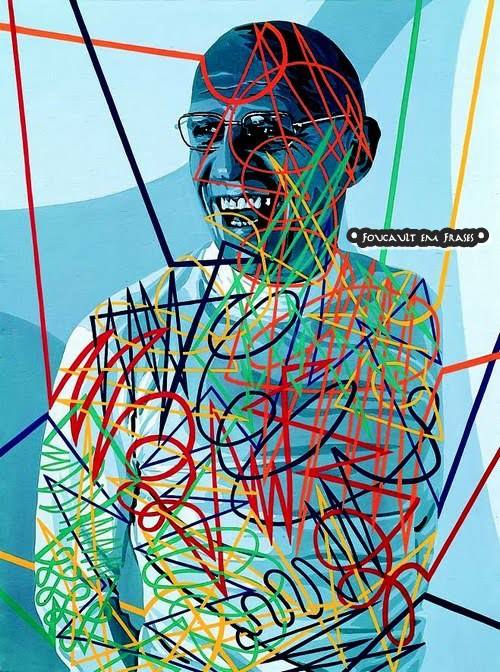
A new Facebook page in Portuguese: Foucault em Frases (Foucault in Quotes)

frases