Foucault News

News and resources on French thinker Michel Foucault (1926-1984)

Magnus Dahlstedt and Andreas Fejes, Family makeover: coaching, confession and parental responsibilisation (2013) Pedagogy, Culture and Society. 22(2), 169–188.
https://doi.org/10.1080/14681366.2013.812136

Abstract
Today, there is a widespread idea that parents need to learn how to carry out their roles as parents. Practices of parental learning operate throughout society. This article deals with one particular practice of parental learning, namely nanny TV, and the way in which ideal parents are constructed through such programmes. The point of departure is SOS Family, a series broadcast on Swedish television in 2008. Proceeding from the theorising of governmentality developed in the wake of the work of Michel Foucault, we analyse the parental ideals conveyed in the series, as an example of the way parents are constituted as subjects in the ‘advanced liberal society’ of today. The ideal parent is a subject who, guided by the coach, is constantly endeavouring to achieve a makeover. The objective of this endeavour, however, is self-control, whereby the parents will in the end become their own coaches.

Author Keywords
citizenship; confession; governmentality; nanny TV; parent education; responsibilisation

Natasha Saltes, ‘Abnormal’ Bodies on the Borders of Inclusion: Biopolitics and the Paradox of Disability Surveillance, Surveillance and Society, Vol 11, No 1/2 (2013)
https://doi.org/10.24908/ss.v11i1/2.4460

Abstract
When conducted according to the biomedical definition of disability, ‘disability surveillance’ involves monitoring bodies against normative ontological standards, classifying ‘abnormality’ and problematizing ‘abnormal bodies’ as risky. While disability surveillance that operates within a biomedical perspective contributes to the exclusion of disabled people, the counting and classifying of disabled people is necessary to achieve the aims and objectives of the disability rights movement. In examining this paradox, this paper looks at the ways in which the Canadian government defines and measures disability and the implication of discriminatory immigration policies and ableist biometric technologies. A theoretical framework with which to situate and examine disability surveillance is proposed. Drawing from the work of Foucault on normality/abnormality and subsequent literature on biopolitics, this paper contextualizes the paradoxical implications of surveillance practices that target disabled people.

Richard Herbert, Madness and Superheroes. A Foucaultian analysis of the madness of the gritty, realistic superhero movie, Overthinking It site, September 3rd, 2013.

‘We must understand it not as reason diseased, or as reason lost or alienated, but quite simply as reason dazzled’.

–Michel Foucault, Madness and Civilization

In 1938, Americans who tuned into Mercury Theater on Air’s Halloween program a bit late listened with rapt-attention and evolving terror as their radio-broadcast ostensibly reported the invasion of Earth by Martians. Of course, had they tuned in a few minutes earlier, they would have heard the program’s disclaimer identifying the work as a radio drama; a drama that used the format of news broadcasting to tell a science-fiction story. The panic that ensued, though probably not as great as the newspapers of the time would have us believe, was an example of a rational response to an imagined situation. After all, Orson Welles and Co. had carefully studied Herbert Morrison’s reporting of the Hindenburg disaster, and the broadcast ran without the commercials listeners would expect from a radio drama—all to increase the production’s sense of realism. Furthermore, this was during America’s peak alien fervor, well before better observation of Mars had discredited the supposed “Martian canals” and failed to reveal any evidence of intelligent life or civilizations on the Red Planet’s surface (Ray Bradbury’s The Martian Chronicles was still over a decade away).

Therefore, listeners who thought the broadcast was real, keeping in mind the lengths Welles and his cadre of performers went to in order to present a “real” experience, were not necessarily acting irrationally when they made frightened phone calls to the police, or peered out their windows to catch a glimpse of spaceships in the sky. But these reactions, though rationally justified, were nonetheless within the confines of a very convincing illusion: there were no spaceships, only the suggestion of them.

trainAnother, similar urban legend alleges that during the first screening of L’arrivée d’un train en gare de La Ciotat, a nineteenth century documentary short film of a train pulling into a station, audience members went screaming through the aisles in panic, due to the realism of the film and the unfamiliarity most people of the time had with motion pictures. While, again, accounts have probably been exaggerated (or confused with a later, stereoscopic viewing of the film), they nonetheless highlight the fine line between reality and a convincing illusion.

But how do you describe a physical response to what is clearly imagination, perfectly reasoned as it may be for the person doing it? It is not irrationality, because if you are convinced of an alien invasion or that you are about to be flattened by a train, action is the only rational response. But neither is it exactly reason: a better sense of judgment should keep a person from being fully convinced of a false image in the first place, even intuitively. To find the answer, we might look to Madness and Civilization, Michel Foucault’s first major work, wherein he describes the history (or at least his version of it) of the relationship between madness and European society, from the Middle Ages through the end of the Age of Reason. In doing so, he proffers both an extensive examination of how different periods have viewed and reacted to madness, as well as his own, more general definition of what makes someone mad:

All that madness can say of itself is merely reason, though it is itself the negation of reason. In short, a rational hold over madness is always possible and necessary, to the very degree that madness is non-reason. There is only one word which summarizes this experience, Unreason: all that, for reason, is closest and most remote, emptiest and most complete; all that presents itself to reason in familiar structures—authorizing a knowledge, and then a science, which seeks to be positive—and all that is constantly in retreat from reason, in the inaccessible domain of nothingness.

read more

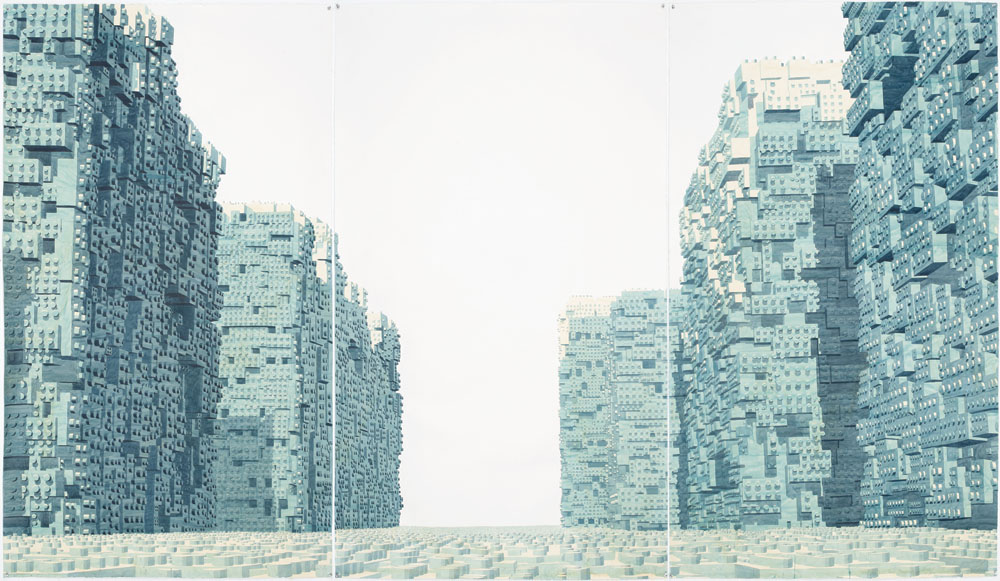
Los Carpinteros, Avenida, 2013 (triptych) Courtesy Edouard Malingue Gallery

Los Carpinteros, Avenida, 2013 (triptych) Courtesy Edouard Malingue Gallery

Source: Cuban Art News

[Editor: Link Updated 17 April 2026 to page archived on the Wayback Machine]

Los Carpinteros in Hong Kong. They may construct sculptures out of Lego blocks, but when it comes to the theoretical underpinnings of their work Los Carpinteros don’t kid around. Heteropias, the title of their first solo show in Asia, was inspired by the French philosopher Michel Foucault, who defined heteropia as a space of otherness—not one place or another but simultaneously physical and mental, like the experience of a phone call. At Edouard Malingue gallery, the Legos are confined to two dimensions, in large-scale watercolors detailing crumbling cityscapes assembled from the plastic blocks. Also on view: meticulously crafted models of openwork structures that reference Foucault’s concept of the panopticon—including a model of Güiro, the full-sized party bar made for last year’s Art Basel Miami Beach. On view through November 23.

Katie R. Place and Jennifer Vardeman-Winter, Hegemonic discourse and self-discipline: Exploring Foucault’s concept of bio-power among public relations professionals, Public Relations Inquiry September 2013 vol. 2 no. 3, 305-325
https://doi.org/10.1177/2046147X13494965

Abstract
This qualitative study of 20 public relations practitioners examines power in public relations through the lens of bio-power – the control and management of human life through regulatory and discursive forces (Foucault, 1978; Macey, 2009; Vogelaar, 2007). Results suggest that biopower exists as (1) hegemonic knowledges of ‘brokering information’, ‘shaping public opinion’, ‘adding value’, and ‘pleasing people’ and (2) disciplining forces of a workaholic culture and self-censorship. Findings suggest that based on specific hegemonic discourses about public relations, practitioners encounter bio-power and discipline themselves to conform with industry hegemonic discourses.

CFP, Itineration, Special Edition

Call for Projects: Itineration: Cross-Disciplinary Studies in Rhetoric, Media, and Culture Special Edition: Privacy and Dataveillance Due February 1, 2014

The special edition, Privacy and Dataveillance

Itineration: Cross-Disciplinary Studies in Rhetoric, Media, and Culture invites projects that engage questions of data collection and dataveillance. Some possible areas of inquiry may include, but are not limited to:

* Foucault’s metaphor of the panopticon and its relationship to questions concerning dataveillance
* The rhetorical means companies use to promote dataveillance tracking
* The concept of anonymity within social networks, social applications, or other data gathering endeavours (such as medical and financial fields)
* Means, implications, and consequences of subverting and resisting data-mining online
* Emergent needs of identity protection online from tracking technologies
* Public rhetorics concerning security and privacy
* The political and social implications of increased observational structures (online or not) and the resulting decrease in privacy
* Issues of legal and educational advocacy for greater privacy protection
* Technical communication regarding how terms of service and end user agreements discuss tracking technologies along with privacy and anonymity
* How data mining and advertising customization leads to assumptions about the attitudes and beliefs in geographical areas
* The roles of embodiment and disembodiment connected with gender and identity/privacy and anonymity
* The relationship between decreased privacy and anonymity online and boutique and big data practices.

Interested parties are invited to submit multimedia projects of varying style, form, and content. We are especially interested in projects that push the boundaries in their composition and presentation. In short, please experiment. Play. Learn a new trick. To that end, please note that Itineration no longer publishes text-based articles (“traditional” essay format). Please send any questions concerning project design, format, technical specifications, etc. to Senior Editor and Technical Specialist, Gerald Jackson, at geraldsjackson@gmail.com

Submissions should be emailed directly to Special Edition editor, Estee Beck, at esteenbeck@gmail.com.

Deadline for submissions is February 1st, 2014. Submission accepted for publication will be published on a rolling basis upon completing the editorial process.

Schiffrin-obitAndré Schiffrin, Publishing Force and a Founder of New Press, Is Dead at 78
By ROBERT D. McFADDEN
The New York Times Books, December 1, 2013

André Schiffrin, a publishing force for 50 years, whose passion for editorial independence produced shelves of serious books, a titanic collision with a conglomerate that forced him out to stem losses, and a late-in-life comeback as a nonprofit publisher, died in Paris on Sunday. He was 78.

The cause was pancreatic cancer, his daughter Natalia Schiffrin said.

The son of a distinguished Paris publisher who fled Nazi-occupied France during World War II, Mr. Schiffrin grew up in a socialist New York literary world and became one of America’s most influential men of letters. As editor in chief and managing director of Pantheon Books, a Random House imprint where making money was never the main point, he published novels and books of cultural, social and political significance by an international array of mostly highbrow, left-leaning authors.

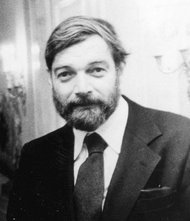
Taking risks, running losses, resisting financial pressures and compromises, Mr. Schiffrin championed the work of Jean-Paul Sartre, Günter Grass, Studs Terkel, Michel Foucault, Simone de Beauvoir, Noam Chomsky, Julio Cortázar, Marguerite Duras, Roy Medvedev, Gunnar Myrdal, George Kennan, Anita Brookner, R. D. Laing and many others.

Read more

See also article by LORI HINNANT, Schiffrin, rebel of corporate publishing, dies
Seattle Times, December 2, 2013
Associated Press.

punitiveMichel Foucault (2013) La société punitive. Cours au collège de France 1972-1973, Paris: Gallimard Seuil, Éditions Points 05 Décembre 2013, 356 pages.

Frédéric Gros, Foucault et « la société punitive », Pouvoirs, 2010/4 n° 135, pp.5-14

Résumé

Foucault prononce en 1973 un cours au Collège de France intitulé « La société punitive ». Ce cours, encore inédit, offre les premières grandes propositions théoriques de Foucault sur la naissance de la prison. Elles seront reprises, infléchies, reproblématisées dans Surveiller et Punir. Mais, en 1973, elles sont données avec une netteté conceptuelle et un tranchant polémique qu’elles ne retrouveront plus par la suite. Trois grandes notions sont définies : le « pénitentiaire », le « carcéral » et le « coercitif ». C’est le nouage de ces trois dimensions qui rend compte de l’invention de la prison.

” L’organisation d’une pénalité d’enfermement n’est pas simplement récente, elle est énigmatique. Qu’est-ce qui pénètre dans la prison ? En tout cas, pas la loi. Que fabrique-t-elle ? Une communauté d’ennemis intérieurs. ” C’est en ces termes que Michel Foucault dénonce, dans ce cours prononcé en 1973 – et que viendra compléter, en 1975, son ouvrage Surveiller et punir – le ” cercle carcéral “. La Société punitive étudie ainsi comment les sociétés traitent les individus ou les groupes dont elles souhaitent se débarrasser, c’est-à-dire les tactiques punitives, mais aussi la prise de pouvoir sur le corps et sur le temps et l’instauration du couple pénalité-délinquance. Michel Foucault retrace l’histoire des ” tactiques fines de la sanction ” dont il distingue quatre modalités : exiler ; imposer un rachat ; marquer ; enfermer. C’est dans la seconde moitié du XVIIIe siècle que se développe une ” science des prisons ” à fonction corrective et que se construit un discours sur le criminel et son traitement possible, donnant naissance à un schéma de société qui vise à l’absolu du contrôle et de la surveillance. L’ajustement entre le système judiciaire et le mécanisme de surveillance (l’organisation d’une police), entre l’émergence de la richesse et la pratique des illégalismes, entre la force corporelle de l’ouvrier et l’appareil de production s’accomplit ensuite au tournant du XIXe siècle. Foucault démontre donc que ce sont les instances de contrôle para-pénal du XVIIe et du XVIIIe siècle qui ont abouti, in fine, au fonctionnement de la prison, visant à l’élimination du désordre, au contrôle de la distribution spatiale des individus, de leur emplacement par rapport à l’appareil productif. La Société punitive finit par poser la question, cruciale aux yeux du philosophe, de la validité intrinsèque de la loi pénale. A-t-elle vocation universelle ou se limite-t-elle à la douteuse applicabilité d’une somme de décrets ?


Foucault and “the Punitive Society”

In 1973 at the Collège de France, Foucault presented a seminar entitled “The Punitive Society”. This as yet unpublished seminar introduced Foucault’s first great theoretical propositions regarding the origin of the prison. He then took them up, corrected them and reformulated them in Discipline and Punish. But in 1973, they were presented with a conceptual clarity and a polemical edge that they lost afterwards. Three great notions were defined : the penal system, the carceral system and the coercive system. It was the intertwining of these three dimensions that accounted for the invention of the prison.

Politiques de Foucault

Séminaire du 14 décembre 2013 au 14 juin 2014

10h-12h
 Séminaire organisé par le laboratoire Sophiapol (EA 3932)

Michel Foucault est mort il y a près de trente ans. Son influence va croissant, ses livres sont lus et traduits partout dans le monde, la publication de ses cours fait à chaque fois  événement. Mais au-delà des phénomènes de la mode éditoriale et des rituels de la commémoration,  il importe de se demander ce que ses analyses peuvent nous apporter pour mieux comprendre le monde dans lequel nous vivons.

Le séminaire annuel du Sophiapol, qui associe philosophes et sociologues, sera consacré cette année et l’année prochaine aux multiples rapports de Foucault au politique.

On sait que la question du pouvoir est au centre de son œuvre. Foucault, tout en se refusant à la politique des partis, a été le penseur de l’actualité au sein de laquelle il lui a été donné de vivre, il a été  l’acteur d’une opposition qui s’est voulue radicale et intransigeante  aux pouvoirs. Autant dire que « les politiques de Foucault » doivent s’entendre  dans toutes leurs dimensions : une réflexion sur le pouvoir et ses formes historiques ; une intervention  dans les luttes de son temps ; un effet pratique et théorique de sa pensée et de ses engagements qui se prolonge jusqu’à aujourd’hui.

L’objectif du séminaire n’est pas d’extraire de la masse des écrits et des propos de Foucault une théorie politique plus ou moins unifiée qu’on pourrait réutiliser telle quelle. Il s’agira plutôt de saisir dans leurs contextes des prises de position, des analyses de l’actualité, des engagements et de les rapporter à des œuvres et à des concepts. Il s’agira également de repérer comment les travaux de Foucault continuent de produire des effets dans différents domaines pratiques comme dans divers champs théoriques et d’en discuter l’importance et le sens.

Comité d’organisation :
Philippe Combessie
Stéphane Dufoix
Stéphane Haber
Christian Laval
Christian Lazzeri
Emmanuel Renault
(Université Paris Ouest, Sophiapol)

PROGRAMME

Samedi 30 novembre 2013, 10h-12h
Jean Terrel (Université Bordeaux 3)
Unité des politiques de Foucault

Samedi 14 décembre 2013,  10h-12h (salle D04)
François Boullant (Professeur honoraire)
Foucault et la question carcérale
Présentation détaillée

Samedi 25 janvier 2014, 10h-12h
Catherine Deschamps (ENS Architecture de Paris Val-de Seine/Université Paris Ouest)
Politiques du sexe

Samedi 15 mars 2014, 10h-12h
Christian Laval (Université Paris Ouest)
Foucault, sécurité et surveillance

Samedi 29 mars 2014, 10h-12h
Judith Revel (Université Paris 1)
Foucault, sujet et pouvoir

Samedi 17 mai 2014, 10h-12h (salle D04)
Luca Paltrinieri (ENS Lyon)
Foucault et la population

Samedi 14 juin 2014, 10h-12h
Jean-François Bert (Université de Lausanne)
Usages de Foucault dans les sciences humaines

PDF flyer

Foucault

Premières lectures, premières réactions, et pistes de recherches
Journée d’étude autour de Michel Foucault, La Société punitive (1972-1973)

Mardi 17 décembre 2013
de 10h à 13h, salles du conseil A & B
de 14h30 à 18h, salle Jean-Pierre Vernant, 8e étage,
EHESS
190 av de France 75013 Paris

Videos of sessions.

Programme

10h00 Ouverture de la journée d’étude

10h00 – 11h20 Interventions d’Étienne Balibar ; Daniel Defert ; Corentin Durand ; Pierrette Poncela / Modérateur : Bernard Harcourt

11h20 – 11h30 Pause

11h30 – 12h50 Interventions d’Antoine Garapon ; Rainer Maria Kiesow ; Daniele Lorenzini ; Mikhaïl Xifaras / Modérateur : François Ewald

13h00 – 14h30 Pause déjeuner

14h30 – 16h00 Interventions de Guy Casadamont ; Liora Israël ; Fabien Jobard ; Sacha Raoult / Modérateur : Michel Senellart

16h15 – 17h45 Interventions de Frédéric Gros ; Pascal Beauvais ; Paolo Napoli ; Arianna Sforzini ; Stephen Sawyer / Modérateur : Olivier Cayla

17h45 – 18h00 Fermeture de la journée d’étude

18h00 Réception