Foucault News

News and resources on French thinker Michel Foucault (1926-1984)

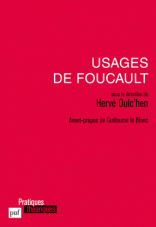
oulchen Hervé Oulc’hen (dir.), Usages de Foucault, Paris, PUF, coll. « Pratiques théoriques », 2014, 406 p., avant-propos de Guillaume le Blanc, ISBN : 978-2-13-062110-2.

Further info
Compte rendu de Alexandre Klein

Sommaire
L’oeuvre de Foucault est toute entière traversée par la question théorique et pratique des usages. Question de méthode, d’abord : Foucault fait usage de l’archive à des fins de mise en intelligibilité du présent. Question thématique, ensuite : Foucault s’interroge sur la manière dont les individus font usage des normes qui les régissent dans un contexte historique donné. Question critique, enfin : le primat alloué à l’usage définit l’intellectuel non plus comme le détenteur d’un savoir réservé en position régalienne, mais comme un usager et un utilisateur des savoirs.

Lire Foucault aujourd’hui suppose de se saisir à nouveaux frais de ces dimensions multiples du motif de l’usage, ce qui implique de conjuguer la rigueur du commentateur et la liberté de l’utilisateur. Les contributions réunies dans le présent ouvrage donnent une vue d’ensemble des différents usages qu’il est possible de faire de Foucault aujourd’hui : tantôt en creusant des problèmes qu’il nous a légués et qui sont encore les nôtres (l’articulation du mental et du carcéral, la gouvernementalité, les régimes de vérité, la biopolitique), tantôt en mettant ses thèses à l’épreuve d’autres terrains, explorés notamment par les sciences sociales.

Avec les contributions de Philippe Artières, Thomas Benatouïl, Karine Bocquet, François Dubet, Emmanuel Gripay, Bruno Karsenti, Frédéric Keck, Hélène L’Heuillet, Didier Lapeyronnie, Christian Laval, Guillaume Le Blanc, Éric Macé, Todd Meyers, Maria Muhle, Hervé Oulc’hen, Luca Paltrinieri, Mathieu Potte-Bonneville, Sandrine Rui, Philippe Sabot, Michel Senellart, Shigeru Taga, Ferhat Taylan et Jean Terrel.

Hervé Oulc’hen (dir.) est agrégé de philosophie et enseigne en lycée. Actuellement doctorant et membre de l’équipe SPH à l’université de Bordeaux 3, il prépare une thèse intitulée “L’intelligibilité de la pratique : Entre Foucault et Sartre”. Il a publié plusieurs articles consacrés à Foucault, Sartre et Bourdieu.

Gouvernementalité et biopolitique : les historiens et Michel Foucault
Revue d’histoire moderne et contemporaine, 2013/4-5 (n° 60-4/4 bis). 208 pages.

Further info

Sommaire
Foucault historien ?

Michael C. Behrent
Penser le XXe siècle avec Michel Foucault

Paolo Napoli
Foucault et l’histoire des normativités

Luca Paltrinieri
Biopouvoir, les sources historiennes d’une fiction politique

Des outils pour l’histoire

Sezin Topçu
Technosciences, pouvoirs et résistances : une approche par la gouvernementalité

Luc Berlivet
Les ressorts de la « biopolitique » : « dispositifs de sécurité » et processus de « subjectivation » au prisme de l’histoire de la santé

Jean-Baptiste Fressoz
Biopouvoir et désinhibitions modernes : la fabrication du consentement technologique au tournant des XVIIIe et XIXe siècles

Parcours foucaldiens en histoire

Vincent Denis
L’histoire de la police après Foucault. Un parcours historien

Philippe Artières
Un historien foucaldien ?

binkleySam Binkley, Happiness as Enterprise: An Essay on Neoliberal Life, SUNY Press, 2014.

Publisher’s page

Summary
Examines the contemporary discourse on happiness through the lens of governmentality theory.

Recent decades have seen an explosion of interest in the phenomenon of happiness, as evidenced by self-help books, talk shows, spiritual mentoring, business management, and relationship counseling. At the center of this development is the expanding influence of “positive psychology,” which places the concern with happiness in a new position of professional respectability, while opening it to institutional applications. In settings as diverse as college education, business, military training, family, and financial planning, happiness has appeared as the object of a new technology of emotional self-optimization. As such, happiness has come to define a new mentality of self-government—or a “governmentality” as the concept is developed in the work of Michel Foucault—one that Sam Binkley demonstrates is aligned closely with economic neoliberalism. Happiness as Enterprise blends theoretical argumentation and empirical description in an engaging and accessible analysis that brings governmentality theory into contact with sociological theories of practice and temporality, particularly in the work of Pierre Bourdieu. This book invites readers not only to consider the new discourse on happiness for its relation to contemporary formations of power, but to rethink many of the assumptions of governmentality theory in a manner sensitive to the mundane practices and everyday agencies of government, and the unique and specific temporalities these practices imply.

Sam Binkley is Associate Professor of Sociology at Emerson College. He is the author of Getting Loose: Lifestyle Consumption in the 1970s and the coeditor (with Jorge Capetillo-Ponce) of A Foucault for the 21st Century: Governmentality, Biopolitics, and Discipline in the New Millennium.

Foucault-white

Edmund White, Edmund White recalls a night at the opera with Michel Foucault in 1981, The Telegraph, 28 Feb 2014

Author Edmund White looks back at his friendship with the late Michel Foucault

By the time this photo was taken in Paris in 1981 I knew Foucault fairly well. In the late Seventies I had been director of the New York Institute – a think tank involved with the university – where Foucault had lectured. I had taken him out for dinner while he was there, which was a pretty terrifying prospect. Although I had a grand title, I was really just making the coffee. But he was very friendly. He didn’t like to talk about his ideas unless he was in seminars; he talked about everyday life as anyone else would.

He was attracted to tough guys and liked young and effeminate gay boys as friends. I was neither young nor especially effeminate but somehow he liked me. I remember on this occasion in Paris he was very gracious. That evening he took me to the opera – something by Rameau, I think, and a very modern production with a lot of rubber on stage. It was a pretty big deal for him to take me. Sitting in the orchestra at the Paris opera house was terribly expensive. I do recall I made rather a faux pas: during the intermission I ordered a white wine, and Foucault told me you could order a white wine anytime in France except at the Paris opera bar. It wasn’t the done thing.

read more

Olga Campbell-Thomson, Theory as method: the importance of Foucault in my doctoral research, Social Theory Applied blog, November 4 2013

Now that I have completed my doctoral dissertation, I have the feeling it could be accomplished in a shorter time and it could progress in a more straightforward manner… In short, I wish I knew where my search for method and theoretical underpinnings would lead my work to. Well, back then I didn’t know. So, the entire process of doctoral research was lengthy and rather circuitous, but it was also rewarding as it evolved.

What started as a search for the method, ended up as a propitious finding of the theoretical framework for the analysis and interpretation of the data. My encounter with Foucault’s theorizing on the constitution of the subject not only shaped my thinking, it also allowed me to gather a voluminous corpus of the data into a manageable structure, and helped decide on the methods of data analysis. In this respect, theoretical perspective and method evolved in tandem and were supporting each other. However, meaningful encounter with Foucault did not happen right away, and the name itself was nowhere in my initial research proposal.

read more

Association Tunisienne des Etudes Philosophiques
Michel Foucault trente ans après

Les 17, 18 et 19 mars 2014
à l’Hôtel Marina Palace Hammamet Tunisie

Avec le soutien de :
Ministère de la Culture et de la sauvegarde du patrimoine,
L’Association pour le Centre Michel Foucault,
La Faculté des Sciences Humaines et Sociales de Tunis,
L’Ecole Normale de Tunis, L’Institut Français de Tunis.

PDF flyer

Lundi 17 mars

15h30 Ouverture Ali Chennoufi
Président de l’Association

Première séance
Président : Salah Mosbah

16h Frederic Gros (France)
Foucault et le libéralisme

16h20 Manoubi ghabech (Tunisie)
Foucault et le contrat social

16h40 Daniele Lorenzini(France)
Ontologie(s) et critique chez le dernier Foucault

17h Pause
17h30 Discussion

19h Dîner

Mardi 18 mars

Deuxième séance Président : Mustapha Kamel Farhat

9h30 Khemais Bou Ali(Tunisie)
ﻓﻭﻜﻭ ﻤﻥ ﻤﻨﻅﻭﺭ ﺩﻝﻭﺯ
9h50 Khaled Bahri (Tunisie)
ﺇﺒﺘﻜﺎﺭ ﺍﻝﺫﺍﺕ
10h10 Hassen Hamed (Egypte)
ﺍﻝﺫﺍﺕ ﻋﻨﺩ ﻓﻭﻜﻭ

10h30 Discussion
10h50 Pause

Troisième séance Président : Frédéric Gros

11h20 Naima Riahi (Tunisie)
Les espaces clos

11h40 Luca Paltrinieri (France)
Du savoir-pouvoir au gouvernement par la vérité

12h Kaïser Jlidi (Tunisie)
ﻓﻨﻴﺎ ﻨﺎﻗﺩﺍ ﻓﻭﻜﻭ

12h20 Discussion
13h Déjeuner

Quatrième séance Président : Taoufik Chérif

15h30 Mounira Ben Mustapha (Tunisie)
La vie comme oeuvre d’art

15h50 Arianna Sforzini (France)
Les représentations du pouvoir

16h10 Omezine Ben Chikha (Tunisie)
ﻓﻭﻜﻭ ﻭﺍﻝﺭﺴﻡ

16h30 Discussion
17h Pause

17h30 -18h30 Table ronde:
Foucault du moment Tunisien à la réception arabe
A. Attia- A. Safar – F. Triki
M.A. Touati- A. Bachta – F.Meskini

Mercredi 19 mars

Cinquième séance Président : Fethi Meskini

9h Hélène L’Heuillet (France)
Foucault et le souci des autres

9h20 Jamel Mfarej (Algérie)
ﺘﻜﻨﻭﻝﻭﺠﻴﺎ ﺍﻹﻋﺘﺭﺍﻑ ﻭﺍﻝﻤﺭﺍﻗﺒﺔ ﺍﻝﺸﺎﻤﻠﺔ

9h40 Slah Daoudi (Tunisiie)
Foucault en Italie

10h Discussion
10h20 Pause

Sixième séance Président : Khémais Bou Ali

11h Abdessalem Hidouri (Tunisie)
ﻓﻭﻜﻭ ﻭﺍﻝﻤﻘﺎﻭﻤﺔ

11h20 Hichem Massoudi (Tunisie)
Art et Folie

1h Discussion
12h30 Clôture
13h Déjeuner

Life and Debt: Living through the Financialisation of the Biosphere
Philip Mirowski keynote for ‘Life and Debt’ conference

Comments on Foucault at around the 14 minute mark
Published on Aug 18, 2013

Update September 2025: This lecture is no longer on YouTube. The link above is to the archived page on the Wayback machine

How can it be that the climate crisis, the biodiversity crisis and the deepest financial crisis since 1930s have done so little to undermine the supremacy of orthodox economics?

The lecture will preview material from Mirowski’s new book: Never Let a Serious Crisis Go to Waste: How Neoliberalism Survived the Financial Meltdown (Verso, 2013).

In this lecture, Professor Mirowski responds to the question of how it is that science came to be subordinate to economics and the very future of nature to be contingent upon the market. Charting the contradictions of the contemporary political landscape, he notes that science denialism, markets for pollution permits and proposals for geo-engineering can all be understood as political strategies designed to neutralize the impact of environmentalism, as they all originated in the network of corporate-sponsored think-tanks that have made neoliberal accounts of society, politics and the economy so prevalent that even the most profound crises are unable to shake their grip on the political imagination.

For those of us who are still paying attention, the task of constructing an alternative politics of science and markets is a vital one.

Philip Mirowski is Carl E. Koch Professor at the University of Notre Dame, Indiana. His most famous book, More Heat Than Light: Economics as Social Physics (1989) established his reputation as a formidable critic of the scientific status of neoclassical economics. His Machine Dreams: Economics becomes a Cyborg Science (2002) presents a history of the Cold War consolidation of American economic orthodoxy in the same intellectual milieu that produced systems theory, the digital computer, the atomic bomb, the strategy of Mutually Assured Destruction, and the ‘think tank’. The Road from Mont Pelerin: the Making of the Neoliberal Thought Collective (with Dieter Plewhe, 2009), drawn from the archives of the Mont Pelerin Society and the Chicago School, presents a scholarly history of neoliberalism: the political movement initiated by Friedrich Hayek and Milton Friedman in the 1940s, which has since become the world’s dominant philosophy of government. As a leading exponent of the Institutional school, he has published formal treatments of financial markets that update Mynsky’s ‘financial instability hypothesis’ for the world of computerised derivative trading.

This lecture is presented by the UTS Cosmopolitan Civil Societies Research Centre and the Australian Working Group on Financialisation at the University of Sydney.

With thanks to Chuck Willer for this link

Biopolitical Studies Research Network

Prof. Thomas Lemke

Tuesday 11 March – Tuesday 18 March

Never Stand Still

Faculty of Arts Social Sciences

School of Humanities Languages

Thomas Lemke is Professor of Sociology with focus on Biotechnologies, Nature and Society at the Faculty of Social Sciences of the Goethe- University Frankfurt/Main in Germany. Among his recent publications: Governmentality. Current Issues and Future Challenges (co-edited with Ulrich Bröckling and Susanne Krasmann), New York/London: Routledge 2011; Biopolitics. An Advanced Introduction, New York: New York University Press 2011; Perspectives on Genetic Discrimination, New York/London: Routledge, Lemke, T. (2013).

Schedule of Events

Date Time Event Venue
11/03 3-5pm Public Lecture Morven Brown 310, UNSW
Rethinking Biological Citizenship: DNA Kinship Testing in German

Immigration Policy “In my talk, I will present findings of a recent research project. I aim to broaden and complement the existing theoretical discussion on biological citizenship, which so far has been limited to the medical sphere by investigating a new empirical field. By analyzing the use of DNA analysis for family reunification, I will show that biological criteria still play an important role in decision making on citizenship rights in nation-states.”

17/03 2-4pm Workshop 1 Morven Brown 310, UNSW
What is Governmentality?
18/03 10-12pm Workshop 2 Morven Brown 310, UNSW
Biopolitics and the Question of the Subject with Professor Catherine Waldby, Department of Sociology and Social Policy, University of Sydney


stuartelden's avatarProgressive Geographies

Many thanks to everyone who came to the two talks this week on The Birth of Territory at Monash and RMIT. There were good audiences for both and some interesting questions. I recorded the RMIT talk and will try to upload the audio to this site soon. Details for next week’s talks on Foucault are:

3 March 2014, 11am, “Foucault’s La société punitive”, Monash University, Caulfield campus (Clayfield Room A1.34 – map here)

4 March 2014, 2pm, “Foucault’s La société punitive”, University of Melbourne (Level 4 Linkway, John Medley Building, Grattan Street entrance, opposite University Square) – flyerwebsite (registration required)

View original post

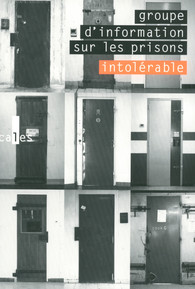
intolerables Intolérable
Textes réunis par le Groupe d’Information sur les prisons, présentés par Philippe Artières

Chronologie et postface de Philippe Artières
Collection Verticales, Gallimard
Parution : 19-04-2013

Further info

Ce volume contient
En février 1971, des intellectuels dont Michel Foucault, Daniel Defert, Jean-Marie Domenach, Pierre Vidal-Naquet et Gilles Deleuze fondent le Groupe d’Information sur les Prisons pour s’attaquer aux «barreaux du silence». Deux années durant, le GIP a su rassembler magistrats, journalistes, médecins, travailleurs sociaux, détenus, ex-détenus et leurs proches autour d’une volonté commune : «faire savoir la prison» et pratiquer à cette fin une intolérance active envers l’intolérable.
Cinq brochures ont paru, fruit d’enquêtes militantes, relayant la parole des détenus, sans filtre, dans sa brutalité et son intensité. S’y succèdent réponses à des questionnaires, correspondances, cahiers de revendications de mutins, entretiens avec un Black Panther incarcéré… Autant de documents qui permettent à ces invisibles de sortir de l’ombre, de s’inventer comme force politique.
Pour replacer cette expérience collective d’exception dans son contexte socio-politique, l’ouvrage comporte une chronologie détaillée des années GIP conçue par Philippe Artières.