Foucault News

News and resources on French thinker Michel Foucault (1926-1984)

The comments quoted here appear at the end of a post from Barry Stocker’s blog reblogged earlier on Foucault News http://foucaultnews.com/2015/01/02/another-liberty-canon-foucault/

Brandon Christensen's avatarNotes On Liberty

Jacques and Barry had an excellent back-and-forth on Barry’s post about Foucault’s contributions to liberty. Here is Dr Stocker’s final response to Dr Delacroix’s questions:

Well Jacques, my last comment was not supposed to be the full reply to your preceding comment, as I tried to make clear. As I said I needed time to think before posting anything from Foucault. I was just preparing the way with comments on the background to Foucault’s style. On Montaigne, how easy is Montaigne? Maybe he seems clear to you and other French people who read him in the Lycée. I teach a lot of Montaigne in Istanbul and students don’t find him easy. Maybe his style at a sentence by sentence level is clearer than Foucault, but I would say only Foucault at his most supposedly obscure. Montaigne can seem clear because he writes in a conversational way, appearing to just comment…

View original post 1,306 more words

Séminaire « Avec Foucault 2015»
Responsable : Philippe Sabot

1ère séance de l’année 2015 : jeudi 29 janvier 2015, 16h30-18h30
Intervention de Philippe Sabot (STL / Lille 3) : « Archives »

Université Lille 3, Bât. B, salle de séminaire STL (B1. 663)

Seront proposés les premiers résultats d’un travail en cours sur les archives de Michel Foucault en dépôt à la BnF. Il sera question notamment du “Dossier préparatoire” aux Mots et les choses (le “fichier” de Foucault) mais aussi des méditations foucaldiennes sur le thème archéologique dans ce qu’il est convenu d’appeler son “Journal intellectuel”.

MOVIE REVIEW: ‘Blackhat’: Techno-thriller hacks into Michael Mann’s directorial signatures, By Peter Suderman — Special to The Washington Times – – Friday, January 16, 2015

The cinematic world of Michael Mann, the director behind “Heat,” “Collateral,” “The Insider” and “Miami Vice,” might look more or less like ours on the surface, but in fact it’s an alternate universe with unique rules and customs.

It’s a world in which the top three buttons of any men’s shirt are useless and designer sunglasses are always at hand. It’s a world of ultramodern architecture and eerie neon urban vistas, a world in which no human ever says “hello” or “goodbye” while on the telephone, and in which the most powerful form of communication between two individuals is the glower, the glance, the look that is at one mysterious and perfectly telling.

[…]

The alpha-hacker at the center of it all is Nicholas Hathaway (Chris Hemsworth), a convict with the legendary ability to penetrate practically any computer security system. When we first encounter him, he’s in prison, listening to high-end headphones and reading Foucault. He wears his hair long, in a lionlike blonde mane, and his biceps look like chiseled marble. He gets into trouble with the prison guards. Then he does some push-ups, just because.

Read more

stuartelden's avatarProgressive Geographies

Update 19Since the last update I’ve spent two long days working on the individual chapter files, checking and rechecking things, filling in references, and reorganising some things. In particular I reworked all the parts on the lettres de cachet. I’ve decided I need to re-read Le désordre des familles once more and might say more about it. It’s one of Foucault’s least-known works, but he worked on this topic, on and off, in the 1960s, 1970s and 1980s. This book is hard to fit into the overall chronology because it spans so much time, and I’m not yet convinced with how I’m dealing with it. I’ll be taking a copy with me to Melbourne.

I now have a single file for the manuscript of this book. It’s not quite as good as I’d hoped to have at this stage, and there are still lots of things to do. The book is…

View original post 388 more words

Catarina Dutilh Novaes, Conceptual genealogy for analytic philosophy – Part II.4: Foucault on archeology and genealogy, New APPS: Art, Politics, Philosophy, Science, 13 January 2015

Extract
I am now back to working on my conceptual genealogy project; this post is the fifth installment of a series of posts on the project.  Part I is herePart II.1 is herePart II.2 is here; Part II.3 is here; a tentative abstract of 2 years ago, detailing the motivation for the project, is here.

In this section, I pitch genealogy against its close cousin archeology in order to argue that genealogy really is what is needed for the general project of historically informed analyses of philosophical concepts that I am articulating. And naturally, this leads me to Foucault. As always, comments welcome! (This is the first time in like 20 years that I do anything remotely serious with Foucault’s ideas: why did it take me so long? Lots of good stuff there.)

—————————————–

I hope to have argued more or less convincingly by now that, given the specific historicist conception of philosophical concepts I’ve just sketched, genealogy is a particularly suitable method for historically informed philosophical analysis. In the next section, a few specific examples will be provided. However, and as mentioned above, I take genealogy to be one among other such historical methods, so there are options. Why is genealogy a better option than the alternatives? In order to address this question, in this section I pitch genealogy against one of its main ‘competitors’ as a method for historical analysis: archeology. Naturally, this confrontation leads me directly to Foucault.

As is well known, early in his career Foucault developed and applied the archeological method in a number of works, which then received a more explicit methodological reflection in The Archaeology of Knowledge (1969).

An “archaeology of knowledge” is an investigation that examines artifacts unearthed in an excavation, but the kind of artifact is not bone, pottery, or metalwork, it is what people said and wrote in the past: their “statements” (in French, énoncé: what has been enunciated or expressed). (Packer 2010, 345)


Read more

SEMINAIRE FOUCAULT
Animé par Jean-François Braunstein

Samedi 24 janvier
Philippe Sabot (Université Lille III)
Relire Les Mots et les choses à la lumière des archives

Samedi 24 janvier 2015, 10 h 30 – 12 h 30

Université Paris 1 Panthéon-Sorbonne
UFR de philosophie
17 rue de la Sorbonne, Escalier C, 1er étage droite, salle Lalande
Université Paris 1 Panthéon-Sorbonne
EA3562 PhiCo – Centre de philosophie contemporaine de la Sorbonne – EXeCO

SEMINAIRE FOUCAULT
Animé par Jean-François Braunstein
Programme 2014-2015

Samedi 24 janvier
Philippe Sabot (Université Lille III)
Relire Les Mots et les choses à la lumière des archives

Samedi 21 février
Jose Luis Moreno Pestaña (Université de Cadix)
Relire Le Pouvoir psychiatrique pour faire de la sociologie de la maladie mentale

Samedi 21 mars
Bernard Harcourt (Columbia Law School)
Le contre-positivisme critique de Foucault

Samedi 18 avril
Judith Revel (Université Paris-Ouest Nanterre)
Foucault avec Merleau-Ponty : une ontologie politique

Vendredi 22 mai – Samedi 23 mai
Journées d’études organisées par Ivan Moya Diez et Matteo Vagelli (Université Paris 1- Centre de philosophie contemporaine de la Sorbonne)
Epistémologie historique. Commencements et enjeux actuels

Les séances ont lieu de 10 h 30 à 12 h 30 à l’UFR de philosophie de la Sorbonne, escalier C, premier étage droite, salle Lalande.

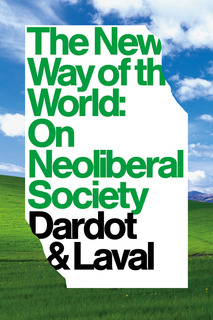
dardotPierre Dardot and Christian Laval, The New Way of the World: On Neoliberal Society, Verso 2014

Publisher’s page

Exploring the genesis of neoliberalism, and the political and economic circumstances of its deployment, Pierre Dardot and Christian Laval dispel numerous common misconceptions. Neoliberalism is neither a return to classical liberalism nor the restoration of “pure” capitalism. To misinterpret neoliberalism is to fail to understand what is new about it: far from viewing the market as a natural given that limits state action, neoliberalism seeks to construct the market and make the firm a model for governments. Only once this is grasped will its opponents be able to meet the unprecedented political and intellectual challenge it poses.

See e-flux for an edited extract from the book

Reviews

  • The New Way of the World is the best modern realization of Foucault’s pioneering approach to the history of neoliberalism. It wonderfully explores the European roots and branches of the neoliberal thought collective over the twentieth century, and warns that unthinking misrepresentations of its political project as espousing ‘laissez-faire’ has had the effect of allowing the Left to submit to its siren song.”
  • “To understand these debates [on neoliberalism], the book by Christian Laval and Pierre Dardot on the ‘neoliberal society’ offers us analytical keys. This monument of scholarship draws on the history of ideas, philosophy and sociology.”
  • “Extremely scholarly, this book is an insistent invitation to push theoretical and social critique of the present order beyond the standard analyses.”


With thanks to Colin Gordon for this news

Michel Foucault, Wrong-Doing, Truth-Telling: The Function of Avowal in Justice, Fabienne Brion and Bernard E. Harcourt (eds.), Stephen W. Sawyer (tr.), University of Chicago Press, 2014, 344pp., $35.00 (hbk), ISBN 9780226257709.

Reviewed by Todd May, Clemson University, Notre Dame Philosophical Reviews, 13 January 2015

This volume consists of six lectures, preceded by an inaugural lecture and followed by three interviews, that Michel Foucault delivered in 1981 at the Catholic University of Louvain in Belgium at the request of its School of Criminology. That fact has bearing on the lectures themselves. In these lectures (six of which were transcribed from videotapes, and the inaugural lecture from the manuscript), Foucault offers a rough genealogy of practices of what in French is called aveu, and is translated here as avowal.[1] Near the end of the final lecture, Foucault considers the role of avowal in recent penal practices, and it is clear that his interest is in good part giving an account of how avowal came to have the place it does in those practices.

For those who have read the recently released Collège de France lectures On the Government of the Living, some of the material will be familiar. Other parts harken back to Foucault’s first Collège de France presentations, Lectures on the Will to Know. However, the structure of these lectures is, to my mind, unique in Foucault’s corpus. Rather than focusing on a period of several hundred years, as was his normal practice, he covers a broad sweep from Homeric Greece to the present. In that sense, the Louvain lectures are not a genealogy in the sense many of us have come to identify in Foucault’s work. Rather than showing how the intersection of particular practices give rise to something that had not previously existed (madness, sexuality, the normal, etc.), the lectures trace changes over nearly three millenia in the way subjectivity was constituted in particular practices through the changing nature of avowal. As with his standard genealogies, Foucault is interested here in the relation of subjectivity and truth. Moreover, that interest is focused on the way certain forms of subjectivity are constituted by certain practices of truth. However, whereas in other works the focus is on the emergence of those forms of subjectivity as historical novelties, here the focus is on the changing nature of a particular type of practice: that of avowing. To put the point another way, whereas in the genealogies the focus is on new emergences, in the Louvain lectures it is on the evolving character of a particular practice.

[1] The editors note that they prefer the term avowal to the more commonly used confession, since the former has a wider use, which better reflects the variety of uses in the lectures.


Read more

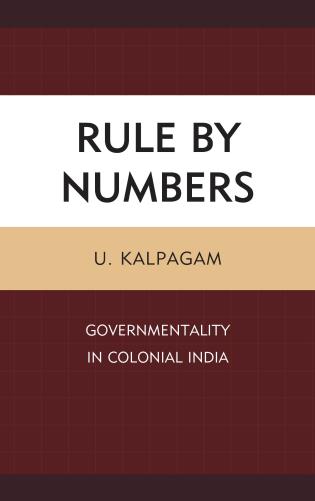
indiaU. Kalpagam, Rule by Numbers: Governmentality in Colonial India. Bloomsbury, Lexington Books imprint, 2014

Description
This book examines aspects of the production of statistical knowledge as part of colonial governance in India using Foucault’s ideas of “governmentality.” The modern state is distinctive for its bureaucratic organization, official procedures, and accountability that in the colonial context of governing at a distance instituted a vast system of recordation bearing semblance to and yet differing markedly from the Victorian administrative state. The colonial rule of difference that shaped liberal governmentality introduced new categories of rule that were nested in the procedures and records and could be unraveled from the archive of colonial governance. Such an exercise is attempted here for certain key epistemic categories such as space, time, measurement, classification and causality that have enabled the constitution of modern knowledge and the social scientific discourses of “economy,” “society,” and “history.” The different chapters engage with how enumerative technologies of rule led to proliferating measurements and classifications as fields and objects came within the purview of modern governance rendering both statistical knowledge and also new ways of acting on objects and new discourses of governance and the nation. The postcolonial implications of colonial governmentality are examined with respect to both planning techniques for attainment of justice and the role of information in the constitution of neoliberal subjects.

With thanks to Chathan Vemuri  and Colin Gordon for this news