Foucault News

News and resources on French thinker Michel Foucault (1926-1984)

Guilfoyle, M.
Therapy and the aesthetics of the self
(2015) British Journal of Guidance and Counselling, 11 p. Article in Press.

DOI: 10.1080/03069885.2014.1002075

Abstract
Post-structuralists argue that personal identity is a function of societal power dynamics. This becomes especially problematic for persons recruited into problem-saturated identities. In this paper, inspired by Foucault’s call for us to ‘create ourselves as a work of art’ (p. 262), I explore the therapeutic value of an aesthetic approach to identity. Instead of orienting to the client as one to be known and understood, we might envisage his or her life as an open-ended, never quite finalised oeuvre. Identity is therefore conceptualised not as something one ‘is’, but as a creative performance. A therapeutic case is presented to highlight some of the possibilities and challenges associated with such an approach.

Keywords
aesthetics of experience; Foucault; multiplicity; narrative therapy; therapy; values

Rutherford, V., Conway, P.F., Murphy, R.
Looking like a teacher: fashioning an embodied identity through dressage
(2015) Teaching Education, 15 p. Article in Press.

DOI: 10.1080/10476210.2014.997699

Abstract
This article makes a case for bringing in the body from the margins of research on teacher education. In doing so, it considers the personal and socio cultural issues reported by seventeen pre-service teachers (PSTs), who are part of a one-year post graduate diploma in post-primary teaching, when learning to embody and fashion teacher identity. The article focuses on embodiment drawing on qualitative interview data from a large-scale government-funded study on initial teacher education. Drawing on Foucault’s general theory of dressage, at the center of which reigns the notion of disciplining and applying the methodology of critical discourse analysis, this article presents three themes tethered to the analysable and manipulable teacher body, namely dressage as compliance, dressage as discipline and dressage as performance. For PSTs, ‘looking like a teacher’ and dressage as a practice of power is a significant part of the fabric of their professional school life.

Keywords
dressage; embodiment; Foucault; pre-service teacher education; teacher identity

Mifsud, D.
Circulating power and in/visibility: Layers of educational leadership
(2015) Journal of Workplace Learning, 27 (1), pp. 51-67.

DOI: 10.1108/JWL-09-2013-0065

Abstract
Purpose: The purpose of this paper is to study circulating power and in/visibility. In the unfolding Maltese education scenario of decentralization and school networking, suffused with entrenched power, with added layers of leadership and more subtle levels of accountability, this paper explores the underlying power relations among the top educational leaders, namely, the College Principal and Heads of School, and among the Heads of School themselves.

Design/methodology/approach: Foucault’s theories of power, governmentality and subjectivation are used as “scaffoldings” for the exploration of power relations. This case study research exploring one “college” is carried out through in-depth semi-structured interviews, participant observation of Council of Heads (CoH) meetings, as well as documentary analysis of the policy mandating this reform, explored through narrative analysis.

Findings: Analysis shows that layers of hierarchical leadership do translate into layers of “visibility”, with the Principal being rendered the most “visible” actor according to role designation and policy rhetoric. Struggles in the dynamics between tiers of leaders are a reality. Despite a deeply felt presence of the circulation of power, it is the Principal who has the final say.

Originality/value: This is expected to contribute to educational leadership literature with regards to the relationship among top educational leaders. Through its provision of a diverse reading of leadership, it is deemed to be of particular relevance to professional work and learning in areas of leadership, of interest to budding scholars, seasoned Foucauldians and practicing educational leaders.

Keywords
Distributed leadership; Foucault; In/visible power relations; Professional identities; School network; Tensions

See also artist’s site

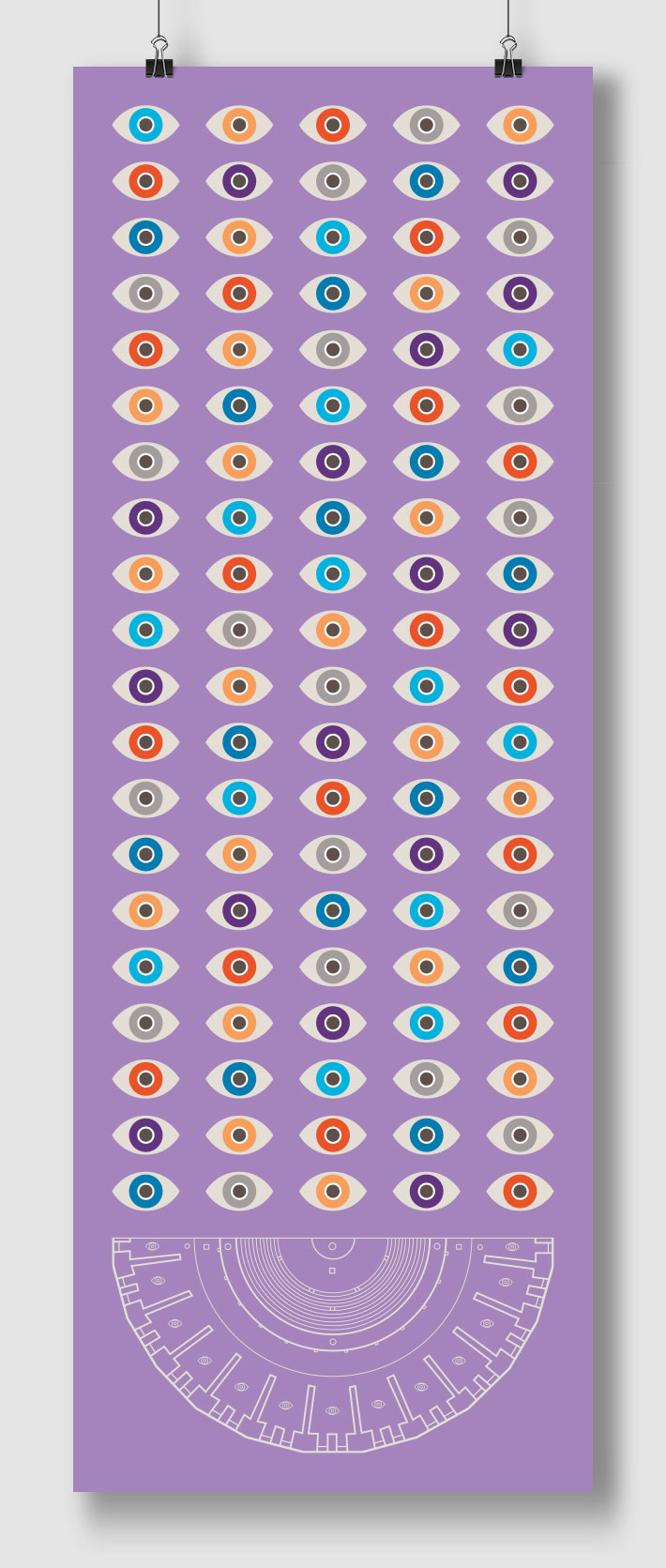
360 Foucault, 2014
Andy Bennett
01:00 projected video loop
Dimensions vary with installation
*Preferred viewing: 1080p

To Be King

To Be King - Christine Dixie

To Be King – Christine Dixie

To Be King

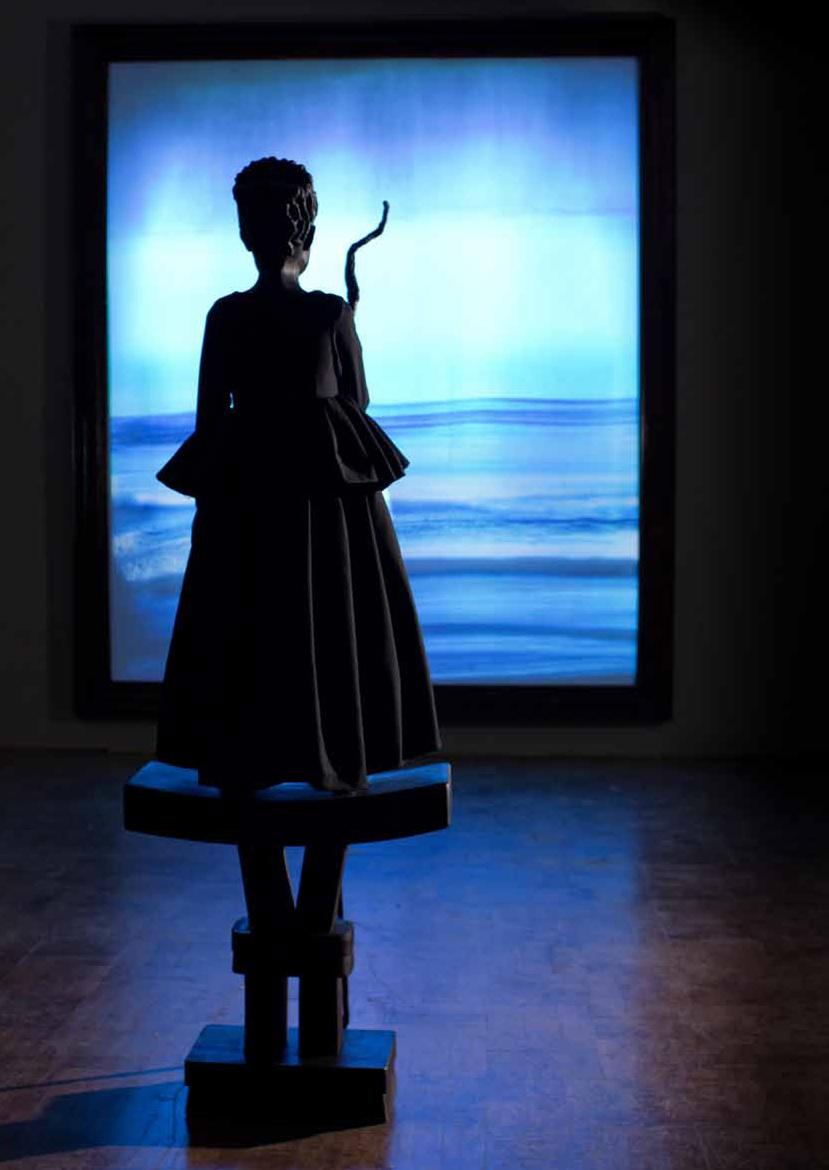
To Be King by Christine Dixie is an animated video installation informed by the first chapter in Michel Foucault’s book ‘The Order of Things’ (1966), entitled Las Meninas.

Opening Reception: 26th February 2015 from 6pm, Preview from 4pm with the artist

Exhibition: 26th February – 7th March 2015 (Sulger-Buel Lovell Cape Town)

Talk by James Sey: 28th February 11am (limited space available, please book, free of charge, RSVP to info@sulger-buel-lovell.com)


To be King is informed by the essay ‘Las Meninas’ which Michel Foucault published in 1966 as the first chapter to his book The Order of Things. Foucault in his description of the painting by Velàsquez suggests (amongst other things) that it is through language, the taxonomy of the day, that things are ordered. This order, particular yet tenuous, is dependent on who is in control of the gaze, who is ‘king’.

To be King situates itself as a destabilizing narrative in which the king is ‘dethroned’. Positioning characters and spaces from the periphery in the place from which the dominant gaze originates points to the possibility of a different order of things and highlights the fragility of the established and dominant order.

The sculptural component, the Black Infanta embodies everything the Spanish King, Philip IV is not. Her pose imitates that of the seventeenth century portrait paintings of royal children. She is placed on an enlarged headrest, an object associated with sleeping, dreaming and the unconscious and holds instead of a sceptre, orb or sword, a stick made of Port Jackson willow.

The Black Infanta’s placement in front of the ‘painting’ places her in the role reserved for the king for whom Las Meninas was originally made and who also stands outside the frame of the painting. Completing the circuit of gazes is the museum guard who role is witness to the viewer looking at the ‘painting’. In addition she functions as an ironic indicator of status, an embodiment of the value placed by the cultural centre on a ‘masterpiece’.

You can find a large number of open access books and articles on Foucault at Open Editions. Items are mainly in French and Spanish with a few in English.

You can also find open access academic articles through the search engine FreeFullPdf and JURN (with thanks to David Haden for the JURN link).

Lectures de Michel Foucault

3 volumes originally published by ENS editions, now available in their entirety as open access at Open Edition books

Les interventions et discussions réunies dans les trois volumes des Lectures de Michel Foucault sont issues de trois rencontres. La première, organisée à l’initiative de l’association Autrement dit, de l’association pour le centre Michel-Foucault et du Centre de recherches en rhétorique, philosophie et histoire des idées (CERPHI – ENS Fontenay / Saint-Cloud) eut lieu à Chauvigny les 31 mai, 1er et 2 juin 1996. La seconde était organisée à Fontenay-aux-Roses par le Centre de recherche sur la pensée politique italienne (CERPPI – ENS Fontenay / Saint-Cloud) le 14 décembre 1996, à l’occasion de la parution du cours de 1976 au Collège de France « Il faut défendre la société ». Enfin la troisième rencontre, consacrée aux Dits et écrits, était organisée conjointement par le CERPHI et le Centre de synthèse. Elle s’est déroulée à Paris le 23 octobre 1997.

Lectures de Michel Foucault, 1
À propos de « Il faut défendre la société »
Textes réunis par Jean-Claude Zancarini
2001 – ISBN 2-9021126-80-8 – 118 pages

Lectures de Michel Foucault, 2
Foucault et la philosophie
Textes réunis par Emmanuel da Silva
2003 – ISBN 2-84788-017-8 – 138 pages

Lectures de Michel Foucault. Volume 3
Sur les Dits et écrits
Pierre-François Moreau (dir.)

Michael Bibby, Foucault’s Lectures on ‘Psychiatric Power’ at the Collège de France (1973-74)

Notes on selections
Here is a selection I have made from Foucault’s lectures at the Collège de France between 1973-4, translated by Graham Burchell, and published by Macmillan in 2006 with the title Psychiatric Power.

The first thing I think that should be said about these lectures, given their title, is that they should be viewed as less about the ‘power of psychiatry’ and more about the ‘psychiatric character of power’ (although as soon as I invoke the word ‘power’ I feel the need to place that loaded word in quotation marks, to bracket it off, so that its meaning is no longer self-evident, and it is allowed to wander in the uncertainty of its meaning. Perhaps a better word here would be ‘discipline’, with which it is more or less synonymous).

In these lectures Foucault’s takes up again some of the themes which he first took up in Histoire de la folie. In some respects, it could be seen as a follow up to that earlier work which took up so much of his energies and represented the culmination of his first efforts (chronologically it begins roughly where that book left off, and, after all, he did say that Histoire de la folie was going to be the first volume of a much larger work), but it can also be seen as preparatory work for his Discipline and Punish (which was published the following year). Here is a link to a selection from the chapter ‘The Birth of the Asylum’ from Histoire de la folie.

My selection represents an attempt to distill the contents of these lectures so that they can be allowed to express themselves more forcibly (of course, it can in no way be said to replace the Macmillan publication, and I can satisfy my conscience for the crime of violating intellectual property laws– even though the size of my selection falls under 10% of the text– with the knowledge that, if anything, my dissemination of its contents will only lead to more interest in that publication). I have also added some supplementary material to further augment the text.

Here is the link to a selection I have made from Tuke’s Description of the Retreat, and see here for a selection from Pinel’s Treatise on Insanity.

Read more

Work by A. Henderson for Palgrave Macmillan

henderson

Thomas Zummer. Foucault, the apparatus and the sublime. 2014

Published on 12 Feb 2015

http://www.egs.edu/ Thomas Zummer, artist and independent scholar, giving a talk on the apparatus in Foucault and Agamben, the phantasma and the sublime. In the final section of the clip, Leslie Thornton’s film “A philosopher’s walk on the sublime” is shown. Theorists discussed include Foucault, Nietzsche, Agamben, Heidegger, Sophocles, Jean-Luc Nancy and others. The talk essentially presents a complex meditation on the philosophical concepts of dispositif/apparatus, withdrawal, violence, the sublime, the phantasm and the aporias of communication. Public open lecture for the students and faculty of the European Graduate School EGS Media and Communication Studies department program Saas-Fee Switzerland Europe 2014 Thomas Zummer and Leslie Thornton.

Thomas Zummer is an artist and lecturer at the Tyler School of Art and a visiting professor in critical studies in the Transmedia Programme at the Hogeschool Sint Lukas, Brussels, as well as visiting professor at the European Graduate School in Saas-Fee. Thomas Zummer is an internationally aclaimed independent scholar and writer, as well as being an artist and curator. As an artist he has exhibited internationally since 1976, including at Exit Art, Thread Waxing Space, and The Dia Foundation in New York City as well as at the CAPC in Bordeaux and Wigmore Hall in London. With his wife, they have had a long collaboration as well with The Wooster Group, acting in many of their performances. Most recently, Zummer was artist in residence at the haudenschildGarage in La Jolla, California. In 1995 Thomas Zummer won 5th Prize in the ACA/CODA Architectural Design Competition for the City of Atlanta for the 1996 Olympics.

Education has played an essential role in the development of Thomas Zummer as both an artist and writer. His academic career began in Michigan where his undergraduate studies at Delta College and University of Michigan. Zummer’s undergraduate studies focused on paleozoology, philosophy and cinema. In 1974 Thomas moved to Hartford, Connecticut. Thomas Zummer obtained his BFA in 1976, focusing on Aesthetics and Cinema Studies at the Hartford Art School / University of Hartford. Thomas Zummer participated as a panelist and attended seminars at the Center for 20th Century Studies at the University of Wisconsin in Milwaukee room 1979-82. From 1980-81 Thomas was at the New School for Social Research where he was a graduate faculty and studied philosophy. In 1982 Thomas Zummer began his studies with Paul de Man and Jacques Derrida at Yale University in the Comparative Literature department. Thomas Zummer then worked as a research assistant to Michel Foucault. at the University of California, Berkeley. From 1981-86 Zummer studied with Michel Foucault, Jacques Derrida, Umbert Eco, Paul Ricoeur and John Searle at the University of Toronto, Institute for Semiotics and Structural Studies. From 1991-92 Zummer studied Arabic Languages at The New School for Social Research.