Foucault News

News and resources on French thinker Michel Foucault (1926-1984)

Flanagan, K.
A Genealogy of Public Housing Production: Practice, Knowledge and the Broadacre Housing Estate
(2015) Housing, Theory and Society, 22 p. Article in Press.

DOI: 10.1080/14036096.2015.1054947

Abstract
The rise of neoliberalism in the 1970s and its consequences for housing policy have long interested researchers. This study treats neoliberalism as a discursive practice that produces knowledge, including our knowledge of the past. Using a Foucauldian approach to the analysis of historical files housed in the archives of one Australian state, I examine the emergence of the “failed” broadacre public housing estate as an object of discourse. I argue that this object emerged as a localized effect of a reconfiguration in what Foucault refers to as the “discursive constellation” which placed neoliberalism at a higher level within that constellation. The effect was to change the conditions of possibility for the production of knowledge within lower discursive levels, and in the case of housing policy, it became difficult to know that broadacre development was anything other than a mistake and a failure. I argue that widespread acceptance of this view within the policy community today arises from a set of relations between knowledge and power predicated upon particular discursive rules and procedures of control. Recognition that our knowledge is conditional is the first step in a process of critique that can transform our responses to locational disadvantage, poverty and stigmatization.

Angus, Gail and Winslade, John M. (2015) “How Foucault’s Panopticon Governs Special Education In California,” Wisdom in Education: Vol. 5: Iss. 1, Article 2.

Abstract
Special education laws in California function to create compliance by creating an environment of constant surveillance and monitoring from a range of perspectives. Even those who do the monitoring are themselves subject to this surveillance. This process is explained with reference to Bentham’s design of the panopticon and analyzed in relation to Foucault’s concept of governmentality. The intent here is to show how professionals’ and laypersons’ actions are governed by seeking to avoid being seen to behave incorrectly or getting caught behaving inappropriately. The governing of people’s lives is thus dispersed through professional decision-making and reporting. The intent of this article is not to single out the monitoring of special education laws for negative criticism. It is, however, the intent to open up a field of study as illustration of how governmentality functions throughout society.

Keywords
panopticon, special education, California, governmentality, monitoring, surveillance

Authors

Gail Angus graduated from the EdD program at California State University San Bernardino. She currently works at Collaborative Learning Solutions.

John Winslade
is a professor in the Department of Special Education, Rehabilitation and Counseling at California State University San Bernardino.

Ettlinger, N., Hartmann, C.D.
Post/neo/liberalism in relational perspective
(2015) Political Geography, 48, pp. 37-48.

DOI: 10.1016/j.polgeo.2015.05.009

Abstract
Within a decade of the new millennium new left governments in many countries across Latin America developed new constitutions that bespeak a new, postneoliberal era, supplanting neoliberal hegemony. Debates about postneoliberalism-as-governance or as a discourse lack resolution. Drawing from Foucault’s lecture series The Birth of Biopolitics, which engages the relation between neoliberalism and liberalism, as well as from his general analytic approach, we cast postneoliberalism, neoliberalism, and liberalism in relational terms relative to principles not time periods, and offer precision on how different discourses co-exist and become mutually entangled and politicized in the context of neoliberal practices. We reference points in our argument with empirical research in various Latin American contexts, and in the penultimate section we thread the argument through current dynamics in one context, Nicaragua. Although overall we concur with the critical literature about the neoliberal character of pink-tide governments in practice, in the final section we depart from the prevailing approach that focuses on formal government as the bellwether of change and conclude by drawing attention to prospects for postneoliberal practices in the microspaces of daily life. Drawing from Foucault’s late scholarship on ethics and mindful of the longstanding role of informality in Latin American political economy, we clarify how postneoliberal values can materialize in everyday life while formal governmental actions and policies persist as neoliberal amid liberal, postneoliberal, as well as socialist discourses. © 2015 Elsevier Ltd.

Author Keywords

Feminism; Foucault; Informal; Latin America; Liberalism; Neoliberalism; Nicaragua; Postneoliberalism

Danielle Guizzo and Iara Vigo de Lima

“Foucault’s contributions for understanding power relations in British classical political economy”, Journal EconomiA, 2015, Volume 16, Issue 2 (in press)
doi:10.1016/j.econ.2015.06.002

Abstract
This paper analyzes the strategic role played by British classical political economy in constructing new technologies of power. Michel Foucault drew attention to a change that political economists promoted concerning the role of the state, which has been overlooked by historians of economic thought. This paper explores the main arguments provided by the most important British political economists of the 18th and 19th centuries on what concerns population management, State’s role and economic dynamics in order to examine Foucault’s considerations. Although British classical political economy consolidated the mechanism of markets and economic individuality, thus creating a system of truth that changed economic norms and practices, its discourse also established a political conduct that was responsible for creating mechanisms of control that disseminated new forms of power relations.

Key Words: British classical political economy; Genealogy of power; Liberal art of government; Biopolitics.

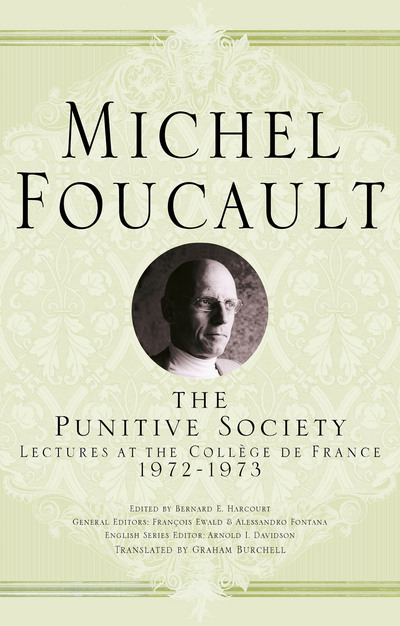
punitive1Michel Foucault, The Punitive Society: Lectures at the Collège de France, 1972-1973, Editors: Bernard E. Harcourt, François Ewald, Alessandro Fontana, Trans. Graham Burchell, Palgrave Macmillan, September 2015

‘Unfortunately, when we teach morality, when we study the history of morals, we always analyze the Groundwork of the Metaphysics of Morals and do not read [Colquhoun], this character who is fundamental for our morality. The inventor of the English police, this Glasgow merchant … settles in London where, in 1792, shipping companies ask him to solve the problem of the superintendence of the docks and the protection of bourgeois wealth. [This is a] basic problem …; to understand a society’s system of morality we have to ask the question: Where is the wealth? The history of morality should be organized entirely by this question of the location and movement of wealth.’
Michel Foucault

These thirteen lectures on the ‘punitive society,’ delivered at the Collège de France in the first three months of 1973, examine the way in which the relations between justice and truth that govern modern penal law were forged, and question what links them to the emergence of a new punitive regime that still dominates contemporary society.

Presumed to be preparation for Discipline and Punish, published in 1975, in fact the lectures unfold quite differently, going beyond the carceral system and encompassing the whole of capitalist society, at the heart of which is the invention of a particular management of the multiplicity of interweaving illegalisms.

The lectures, which stand as an essay in its own right, bring together hitherto unpublished historical material concerning classical political economy, the Quakers, English ‘Dissenters,’ and their philanthropy – the discourse of those who introduce the penitentiary into the penal – and the moralization of the worker’s time. Through his criticism of Thomas Hobbes, Michel Foucault offers an analysis of civil war that is not the war of all against all, but a ‘general matrix’ that makes it possible to understand the functioning of the penal strategy, the target of which is less the criminal than the social enemy within. The Punitive Society is one of the great texts recounting the history of capitalism. Our human sciences prove to be, in the Nietzschean sense, ‘moral sciences.’

Michel Foucault, acknowledged as the pre-eminent philosopher of France in the 1970s and 1980s, continues to have enormous impact throughout the world in many disciplines.

Arnold I. Davidson,
Series Editor, is the Robert O. Anderson Distinguished Service Professor at the University of Chicago, USA, and Professor of the Philosophy of Cultures at the Università Ca’Foscari, Venice, Italy. He is co-editor of the volume Michel Foucault: Philosophie.

Graham Burchell is a translator. As well as translating Foucault’s lectures at the Collège de France he has written essays on Foucault’s work and was an editor of and contributor to the influential volume The Foucault Effect: Studies in Governmentality.

rousselRAYMOND ROUSSEL

Galerie Buchholz
17 East 82nd Street, Manhattan
Through Aug. 29 2015
via Review: The Writer Raymond Roussel and His Legacy, at Galerie Buchholz – The New York Times.

The German dealer Daniel Buchholz, long a fixture on the contemporary art scene in Cologne and Berlin, has opened a gallery in Manhattan and, for his debut show, given us something wonderful that we haven’t had before: a retrospective of the French writer Raymond Roussel (1877-1933).

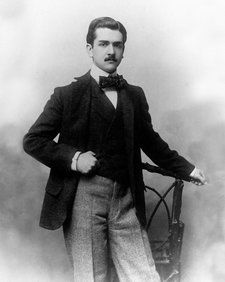
Born into the Parisian beau monde, as a child Roussel had Marcel Proust for a neighbor; as an adult, he befriended Jean Cocteau when the two were patients in drug rehab. Rich, gay, habitually solitary, Roussel developed a literary mode in poetry, fiction and drama based on linguistic ingenuity and the use of super-realism to lift off into fantasy. Although his work was met with public scorn at the time — Roussel was crushed and died by suicide — it has been hugely influential to artists and writers since. Marcel Duchamp and Michel Foucault claimed him as a liberating hero. Max Ernst and Joseph Cornell revered him. The poet John Ashbery has written brilliantly about him.

This show — organized by Mr. Buchholz, the art historian Christopher Müller and the Roussel scholar François Piron — is an archival exercise in literary and art-world ephemera. It pieces together Roussel’s elusive private life from rare surviving images (photographs of his adored mother; a unisex childhood portrait of the writer) and personal effects (treasured editions of Jules Verne novels; a cookie that he saved from a landmark literary lunch and enshrined like a relic). It traces the path of his writing career through often self-financed publications and calamitous stage presentations. And it concludes with a section demonstrating his continuing influence, on Mr. Ashbery’s poetry and collages, and on artists like Zoe Beloff, Lucy McKenzie and Henrik Olesen.

The selection is scrupulously annotated, and every scrap of information is worth reading. (Although a contemporary art specialist, Mr. Buchholz comes from a background in antiquarian book selling.) If this show were at the Museum of Modern Art, you’d pay to see it and still feel rewarded. At Galerie Buchholz, it’s a free introductory welcome to a new space, which should feel strongly encouraged to enliven New York with comparable offerings in seasons ahead.

Governmentality, Neoliberalism, Economy: strategies for critiques of power
(7 – 9 December 2015)
CBS – Copenhagen Business School, Denmark

PhD School
Doctoral School of Organisation and Management Studies
Department of Management, Politics and Philosophy

Faculty

Mitchell Dean, Professor of Public Governance, CBS
Stuart Elden, Professor, Monash University
Ute Tellmann, Fakultät Wirtschafts- und Sozialwissenschaften, Universität Hamburg
Kaspar Villadsen, Professor (mso), Department of Management, Politics & Philosophy, CBS, Denmark
Marius Gudmand-Høyer, Post.Doc. Scholar, Department of Management, Politics & Philosophy, CBS, Denmark

Course coordinator
Kaspar Villadsen and Mitchell Dean

Prerequisites

Only PhD students can participate in the course.

The course requires the submission of a short paper that deals with conceptual problems or analytical designs in relation to Foucauldian inspired/governmentality studies. Furthermore, papers that apply Foucauldian concepts to empirical problems in a variety of domains are welcomed. The paper should state the theme and the analytical strategy of the PhD project and it should be approx. 5 pages. In the paper, the PhD student should state his/her main analytical challenge/concern at his/her current stage in the project.

Papers must be in English. DEADLINE is 2 December 2015.

It is a precondition for receiving the course diploma that the student attends the whole course.

Aim

The course will provide the participants with:

a) An updated introduction to key analytical concepts in the governmentality literature, and the potentials and limits of these concepts will be discussed

b) Possibilities for supplementing the governmentality approach with other analytical resources will be discussed. and

c) a discussion of Foucault’s relationship to neoliberalism and his understanding of the economy

In brief, the course aims to provide participants with a thorough understanding of the governmentality framework, that is, its analytical possibilities, its current status, and its possible directions of development with a particular emphasis on contemporary debates on neoliberalism and the economy.

Overview

Over the last 20 years, post-Foucauldian “governmentality studies” have come to growing prominence. These studies have been effective in critically analysing new types of liberal government, in particular by demonstrating ‘the active side of laissez faire’. They describe how the motto of ‘pulling back the state’ has been accompanied by a series of governmental strategies and technologies aimed at shaping institutions and subjects in particular ways. Perhaps most noticeably, they have presented a diagnosis of a proliferation of regimes of enterprise and accounting in new and surprising places. But a wide range of other domains have been subjected to governmentality analysis spanning from genetic screening and risk calculation, new crime prevention strategies, to health promotion by self-responsibilisation. In this respect the concepts in governmentality studies continue to constitute effective tools for critical social analysis.

Nevertheless, in recent years critical objections have been raised against the governmentality approach. It has been noted by some observers that the Foucauldian and post-structuralist language, originally used for critical academic purposes, seems to be increasingly appropriated by ‘the powers’ that were the object of such critique. Most notably, this point has been voiced (although in different versions) by Zizek, Boltanski, and Hardt & Negri. These thinkers suggest that a post-structural ’politics of difference’ increasingly seems to be an integral part of the ways, in which institutions and companies organise themselves. Contemporary liberal ways of governing have begun to speak for the dissolution of binary essentials, the destabilisation of rigid power structures, the creation of space for the subject’s self-transforming work upon itself, and so on. In light of this development, we need to think of how to revitalise the Foucauldian concepts of critique/criticism or whether we must push a critical perspective beyond Foucault. A central theme of the PhD course is the search for effective analytical strategies for critique of power (some perhaps less noticed) in the works of Foucault and other writers within and outside the governmentality tradition.

The course gives importance to the need for contextualizing both the concepts that we use for making analysis, both in terms of being aware of how concepts emerge in a particular historical-political context that shape them. We shall hence discuss how to do intellectual history on recent thinkers, including Foucault himself. Foucault’s most intensive reflection on political questions was in the 1970s. Given that the key source of his reflections here are lectures and interviews, we should attend to this reflection less as elaborated theory and more as a kind of performance in a definite context with specific interlocutors. A Foucault very different from his Anglo-American decontextualized reception as a theorist of omnipresent micro-powers emerges if we do so. There are of contemporary events and political currents: European terrorism, state socialism, French Maoism, the Iranian Revolution, the prospects of a Socialist government in France, etc. But there are specific interlocutors including his assistants (Kriegel, Ewald), seminar participants (Pasquino, Procacci, Rosanvallon), colleagues (Donzelot, Castel, Deleuze), auditors, political fractions such as the Second Left and Italian autonomist Marxists. If statements should be read in terms of what they do as much as what they mean, then the diverse trajectories of these thinkers are also relevant to reading Foucault’s political thought.

Teaching style

The course will use lectures given by specialists in the field, round table discussions, and presentation of papers from PhD students. Participation in the course requires a paper with an outline of PhD project or parts of the project. See more details above.

Enroll no later than
Wednesday, 28 October, 2015

Jiang, M.
Managing the micro-self: the governmentality of real name registration policy in Chinese microblogosphere
(2015) Information Communication and Society, 18 p. Article in Press.

DOI: 10.1080/1369118X.2015.1060723

Abstract
This paper investigates the real name registration (RNR) policy introduced by Chinese authorities in 2011 to regulate its vibrant microblogosphere by encouraging users to manage their ‘micro-self’. Foucault’s concept of governmentality is adopted to understand how the Chinese state ‘governs at a distance’ its colossal microblog population through technologies of the state and technologies of the self. We provide a critical case study of the governmentality of the RNR policy in Chinese microblogosphere by detailing the broad range of user experiences based on 22 in-depth interviews conducted in 2012 and 2013 with users and weibo editors. Shedding a new light on the practices of Chinese Internet regulation through the perspective of governmentality, we challenge the notion of the Chinese state as an omnipotent agent, contest popular media’s portrayal of the Chinese microblog subject as either obedient or resistant, and foreground the importance of Internet firms in mediating the negotiation between the state and users. © 2015 Taylor & Francis

Author Keywords
anonymity; censorship; Chinese Internet; governmentality; identity; microblog; policy; real name registration; self-expression; Sina; Tencent; Weibo

Greig, C.J., Holloway, S.M.
A Foucauldian analysis of literary text selection practices and educational policies in Ontario, Canada
(2015) Discourse, 14 p. Article in Press.

DOI: 10.1080/01596306.2015.1043239

Abstract
Like schools, curricula are socially constructed and constituted within broader social, political, and historical relations of power, powerfully shaping students’ beliefs and attitudes about themselves and their relationship toward the world. In light of this, the importance of literature selection cannot be overstated. School-sanctioned texts often provide the core curriculum, and secondary school English teachers rely on them heavily. The self-regulatory practices a teacher engages in will shape not only how the teacher begins to understand the self, but also works to construct an ‘appropriate’ teacher identity. Using a Foucauldian theoretical lens, this paper draws upon findings from a synthesis of school board policies and interviews with English teachers and department heads in Ontario, Canada, to explore the discursive practices that shape literary text selection. © 2015 Taylor & Francis

Author Keywords
curricula; discourse; Foucault; literary text selection; literature; power

Hardy, M., Jobling, H.
Beyond power/knowledge—developing a framework for understanding knowledge ‘flow’ in international social work
(2015) European Journal of Social Work, 18 p. Article in Press.

DOI: 10.1080/13691457.2015.1043240

Abstract
How are different ‘forms’ of knowledge developed, transmitted and institutionalised in social work? Foucault’s concept of ‘power/knowledge’ famously enabled us to understand such developments via the evolving methodological approach he variously referred to as archaeology, genealogy and governmentality. In this paper, we will use this and other conceptual resources as the basis for advocating an adapted and flexible methodological framework which constitutes knowledge as local, situated and embedded, but also dynamic, interactive and ‘flowing’ between actors, institutions and jurisdictions at an international level. The model has the potential for integrating two distinct cross-disciplinary approaches to understanding the operation of power within society: first, ‘an analytics of government’, specified by Dean as particularly useful in addressing ‘how’ questions and second, the potentially complementary approach known as historical–political sociology which seeks to integrate explanatory and descriptive causal formulations. Together, these act as a basis for extending Foucault’s formulation of power/knowledge to accommodate the dynamic nature of trans-disciplinary, intercontinental knowledge flow. We will examine the potential relevance and utility of the model using the example of how one ‘form’ of knowledge, in this case, policy knowledge, has informed the development of a particular approach to social work practice—supervised community treatment in mental health—in various Western jurisdictions over the last few decades. © 2015 Taylor & Francis

Author Keywords

community treatment orders; governmentality; historical–political sociology; knowledge; mental health; social work