
Foucault News

News and resources on French thinker Michel Foucault (1926-1984)

Behrouz Ghamari – Foucault, Spirituality, And The Perils Of Universal History, Paper delivered at the Johannesburg Workshop in Theory and Criticism, July 2015
mp3 for download

See also Soundcloud
 
Response by Jorge Daniel Vásquez and Megan Eardley

The beginning of Friday’s session was marked by a radical commitment to putting the analysis of religion within a framework that addresses “happiness” in its political and revolutionary dimensions. Behrooz Ghamari raised questions concerning limits and the moving boundaries between history and memory as he reflected on his experience as part of the organizational process of the Iranian Revolution. Addressing the personal interest that Michel Foucault had in Shiite Islam (its rituals and legal practices) and his theoretical writing on the revolution in Iran (1978-1979), Ghamari argued that Foucault’s readers need to understand the characteristic ambiguity of the political process alongside an analysis of revolutionary religious expression. He reveals a Foucault for whom religion is a space in which the popular imagination is formed— both in the policy of the Iranian Revolution and in the Carter administration in the United States. The ambiguity that is engendered by revolutionary religious claims may open a space through and in which teleological thinking might be transgressed.

Foucault arrived in Iran a week after the “Black Friday” massacre, when even the death of more than two hundred protestors, shot down from helicopters, could not stop people from their revolution. Foucault’s presence in Iran can serve as an anchor for understanding his thinking about the history and the subject (i.e. the history of the present – its reinvention, the ambiguity that it produces) that is configured through a political spirituality: the subject is ‘entirely’ wrapped in a History that is not determined, but becomes a particular form of self-production, keeping the subject in a constant search for that is worth defending even beyond one’s own life. Thus, the analysis of the ‘politics of spirituality’ is located far from the reduction of revolutionary religious expression to an “archaic fascism.” On the contrary, it gives way to an important analytical challenge; to consider the religious-political phenomenon in its completely modern sense (reflecting on the relationship between different spheres in which the subject is produced). This analytical move allows Ghamari to return to questions surrounding the murder of the cartoonists of the Charlie Hebdo magazine and the “Arab Spring” beyond the Manichaeism of the freedom of expression as universalized value or Enlightened anti-Islam. To take the analysis further, we might echo some of the questions raised in the debate.

In the global geopolitical context, to what extent is the analysis of the Arab Spring articulated in the same terms as Foucault’s analysis of the Iranian Revolution? What is the relationship between the specter (the ghost of the Iranian Revolution) and the ways we engage with revolution as either as a rupturing event or as an inheritance? Another entry would be to think about Foucault and the Iranian Revolution alongside the way Susan Buck-Morss thinks about the abstraction of the Haitian Revolution in Hegel’s Phenomenology of Spirit.

The talk also opened possibilities of imagining a confluence of political spirituality and a political reading of the eschatological tension of St. Paul’s theology. Is a return to Saint Paul—and the tension between the now and the to-come—an attempt to take us out of the teleological prison of modern thought? What are Foucault’s links with theoretical Orientalism and how can an event like the Iranian Revolution be read not as a ‘break’ in Foucault’s thought but as a radicalization of the project which is manifested in his College de France seminars since 1977?

Jorge Daniel Vásquez Facultad Latinoamericana de Ciencias Sociales, Ecuador and Megan Eardley Princeton University School of Architecture
Sifakakis, P., Tsatsaroni, A., Sarakinioti, A., Kourou, M.
Governance and knowledge transformations in educational administration: Greek responses to global policies
(2016) Journal of Educational Administration and History, 48 (1), pp. 35-67.

DOI: 10.1080/00220620.2015.1040377

Abstract
This article explores the localisation of the global and European discourse of educational governance in the Greek education system through the changes that have been introduced in the field of education administration since 2009 by the then socialist government. Our research aims to contribute to the critical policy literature on the spreading marketisation and privatisation in the governing of education around the world and in Europe – through the adoption of New Public Management and Educational Leadership models. In developing our theoretical perspective, we use the Foucauldian concepts of governmentality and discourse, and in order to conceptualise power and control relations in the organisation, transmission, acquisition, and evaluation of pedagogical knowledge, we draw on Bernstein’s theory of symbolic control.

Our study has examined how the field of education administration is governed through power and knowledge transformations. We trace these transformations by analysing systematically the pedagogic discourse through which the global governance discourse is relayed and becomes a ‘regime of truth’ within public policy and practice in Greece. We argue that such changes have significant implications for everyday educational practice and for the kinds of knowledge that are considered legitimate, and they may affect educational professionals’ subjectivities in fundamental ways. © 2015 Taylor & Francis.

Author Keywords
education administration; global policies; governance; pedagogic discourse; symbolic control

Call for book proposals: Theory as method in education research From the Social Theory Applied blog, 2 January 2016

Update October 2025: Link above is to the archived page on the Internet Archive Wayback Machine.

Mark Murphy is currently in negotiations with a book publisher regarding a potential book series on the topic: Theory as method in education research. He is keen to talk to those of you who are interested in this topic and have ideas/plans for publishing in this area – that includes those of you who are nearing completion of doctoral theses as well as more established academics. The series has enormous potential for breaking new theory/method ground and he is open to suggestions from all areas of social theory, methodology and research topic. Please have a read of the short summary below and if you are interested in discussing this further, please get in touch with Mark Murphy via mark.murphy.2@glasgow.ac.uk (don’t forget the .2!)

Summary:

This series is designed to provide a set of books exploring various applications of social theory in educational research design. Each book will provide a detailed account of how theory and method influence each other in specific educational research settings, such as schools, early years, community education, further education colleges and universities. The series will represent the richness of topics explored in theory-driven education research, including leadership and governance, equity, teacher education, assessment curriculum and pedagogy and policy studies. It will also provide a timely platform for highlighting the wealth of work done in the field of social theory and education research a field that has grown considerably in recent years and has made the likes of Pierre Bourdieu and Michel Foucault familiar names in educational discourse.

It is envisaged that the series will include a variety of texts, including single/co-authored monographs, edited volumes and potentially readers/anthologies

Key features and benefits:

Explicit connections between theory and research practice
Accessible and illuminating accounts of applied social theory
Provides innovative ways of thinking about methodology in educational research design

Pedagogical features

Embedded in the design of the series is a strong pedagogical component – with a focus on the ‘how’ of applying theory in methods and an emphasis on operationalising theory in research. This pedagogical remit will be addressed explicitly in all texts – the responsibility of addressing this will fall to the authors and editors, but can take the form of case studies, learning activities, ‘focus’ sections and glossaries detailing the key theoretical concepts utilised in the research.

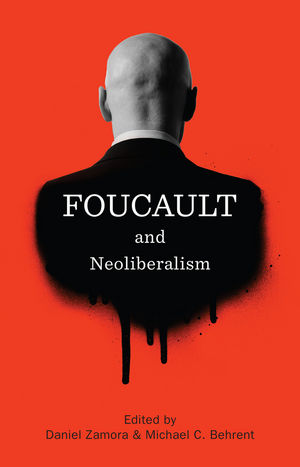
zamora-engDaniel Zamora and Michael C. Behrent (eds), Foucault and Neoliberalism, Polity Press, 2016

Description
Michel Foucault’s death in 1984 coincided with the fading away of the hopes for social transformation that characterized the postwar period. In the decades following his death, neoliberalism has triumphed and attacks on social rights have become increasingly bold. If Foucault was not a direct witness of these years, his work on neoliberalism is nonetheless prescient: the question of liberalism occupies an important place in his last works. Since his death, Foucault’s conceptual apparatus has acquired a central, even dominant position for a substantial segment of the world’s intellectual left.

However, as the contributions to this volume demonstrate, Foucault’s attitude towards neoliberalism was at least equivocal. Far from leading an intellectual struggle against free market orthodoxy, Foucault seems in many ways to endorse it. How is one to understand his radical critique of the welfare state, understood as an instrument of biopower? Or his support for the pandering anti-Marxism of the so-called new philosophers ? Is it possible that Foucault was seduced by neoliberalism?

This question is not merely of biographical interest: it forces us to confront more generally the mutations of the left since May 1968, the disillusionment of the years that followed and the profound transformations in the French intellectual field over the past thirty years. To understand the 1980s and the neoliberal triumph is to explore the most ambiguous corners of the intellectual left through one of its most important figures.

foucault-hermeneuticsMichel Foucault, About the Beginning of the Hermeneutics of the Self. Lectures at Dartmouth College, 1980, University of Chicago Press, 2015.

Translated by Graham Burchell

Edited by Henri-Paul Fruchaud and Daniele Lorenzini
Introduction and critical apparatus by Laura Cremonesi, Arnold I. Davidson, Orazio Irrera, Daniele Lorenzini, Martina Tazzioli
160 pages | 5 1/2 x 8 1/2 | © 2015

In 1980, Michel Foucault began a vast project of research on the relationship between subjectivity and truth, an examination of conscience, confession, and truth-telling that would become a crucial feature of his life-long work on the relationship between knowledge, power, and the self. The lectures published here offer one of the clearest pathways into this project, contrasting Greco-Roman techniques of the self with those of early Christian monastic culture in order to uncover, in the latter, the historical origin of many of the features that still characterize the modern subject. They are accompanied by a public discussion and debate as well as by an interview with Michael Bess, all of which took place at the University of California, Berkeley, where Foucault delivered an earlier and slightly different version of these lectures.

Foucault analyzes the practices of self-examination and confession in Greco-Roman antiquity and in the first centuries of Christianity in order to highlight a radical transformation from the ancient Delphic principle of “know thyself” to the monastic precept of “confess all of your thoughts to your spiritual guide.” His aim in doing so is to retrace the genealogy of the modern subject, which is inextricably tied to the emergence of the “hermeneutics of the self”—the necessity to explore one’s own thoughts and feelings and to confess them to a spiritual director—in early Christianity. According to Foucault, since some features of this Christian hermeneutics of the subject still determine our contemporary “gnoseologic” self, then the genealogy of the modern subject is both an ethical and a political enterprise, aiming to show that the “self” is nothing but the historical correlate of a series of technologies built into our history. Thus, from Foucault’s perspective, our main problem today is not to discover what “the self” is, but to try to analyze and change these technologies in order to change its form.

Gordon Hull, Foucault, Descartes and Monastic Subjectivity, New APPS: Art, Politics, Philosophy, Science, 07 January 2016

Extracts
[,,,]

So Descartes is an Augustinian, at least on this point. What I’d like to do here is point out that Foucault further situates Descartes in a traditional Catholic framework of confession. Recall that, in general, On the Government of the Living basically argues that modern, Western subjectivity developed with Christianity and out of its break with the ancient Greeks and Romans, and that one of the key breaks was around the topic of confession. Beginning with 4th Century monasticism, Christianity developed a very precise theory of confession as an enumeration of specific faults and failures, a practice of alethurgy (producing the truth of the subject) that was alien to the forward-looking Greeks and Romans.

In the last lecture of GL, Foucault distinguishes between ancient and Christian concepts of discretio. For the ancients, the problem is straightforwardly one of passions. For Christians, on the other hand, the problem was “illusion, the lack of discrimination between the representation of good and the representation of evil between the representation or suggestion coming from God, that coming from Satan, and that coming from oneself” (GL 297). In other words, the focus is “on the subject himself, on the subject insofar as he is inhabited by another principle, by a foreign principle that is at the same time a source of illusions” (GL 297). We need, ultimately, God’s help in sorting this out through “the structure, the examination-confession apparatus” (GL 297). “It is not the question of the truth of what I think, but of the truth of I who things” (GL 303)

[,,,]

Finally, it is not too hard to see why Foucault would see neoliberalism as confessional (and thus reject it.  For a more detailed argument, though one that does not take GL into account and which focuses on employee wellness programs, see here): we become known through a permanent data trail of Facebook likes, phone metadata, GPS tracking, Amazon purchases, etc. Confession becomes sufficiently intensified that we no longer have to do anything deliberately confessional at all: mere existence becomes confessional because whatever we do (or don’t do) reveals something about us as compared to others. This isn’t causal knowledge, of course, but it is often enough to justify action, particularly at the population level (this point is made very well in Mayer-Schönberger and Cukier’s Big Data).

Hardy C., Maguire S.
Organizing risk: Discourse, power, and “riskification”
(2016) Academy of Management Review, 41 (1), pp. 80-108.

DOI: 10.5465/amr.2013.0106

Abstract
Drawing on the work of Foucault, we develop an integrated framework for understanding how risk is organized in three different modes: prospectively, in real time, and retrospectively. We show how these modes are situated in a dominant discourse of risk that leads organizations to normalize risk in particular ways by privileging certain forms of knowledge and authorizing certain risk identities over others. In addition to identifying the common way risk is organized in each mode and showing how it is held in place by the dominant discourse, we propose alternative ways to organize risk that resist this dominant discourse, and we explain why they are difficult to enact. We then extend our analysis by theorizing how, even when it occurs, resistance to the dominant discourse of risk can contribute to “riskification,” with more and more organizing undertaken in the name of risk because of intensification, discipline, and governmentality

Vichnar, D.
‘Territories Of Risk’ within ‘Tropological Space’: From Zero to 2666, and back
(2015) Fear and Fantasy in a Global World, 81, pp. 55-73.

DOI: 10.1163/9789004306042_005

Abstract
The essay examines the subversive treatment of discourses of fear and anxiety on both local and global scales to which they are subjected within what Michel Foucault has described as the “tropological space” of literature. The two case studies under focus are Ignacio de Loyola Brandão’s 1979 novel Zero and Roberto Bolaño’s 2004 novel 2666. Brandão’s fictitiously journalistic narrative of a complex discursive collage subverts the hypocrisy of some of the official political discourses of the 1970s Brazilian dictatorship, while Bolaño’s epically broad narrative revolves around Ciudad Juárez, the scene of some of the most terrifying, yet continuously silenced, crimes of post-World War II history. The essay hopes to demonstrate that although incapable of competing with social sciences in their analytic depth and methodological breadth, literature engaging with evil, violence, fear and fantasy can aspire to enrich their viewpoints in two broadly conceived fashions: in staging the problematic nature of writing and writability, and in calling attention to the medium through which any such writing must take place. Ugliness, shapelessness and repulsiveness are no longer the concerns of aesthetic novelty, but the very condition of writing that takes its task (of an ethical engagement with the complex present) seriously. © 2015 by Koninklijke Brill nv, Leiden, The Netherlands. All rights reserved.

Andreas Folkers, Daring the Truth: Foucault, Parrhesia and the Genealogy of Critique, Theory, Culture & Society, January 2016 vol. 33 no. 1 3-28

doi: 10.1177/0263276414558885

Abstract
This paper draws attention to Foucault’s genealogy of critique. In a series of inquiries, Foucault traced the origins and trajectories of critical practices from the ancient tradition of parrhesia to the enlightenment and the (neo)liberal critique of the state. The paper will elucidate the insights of this history and argue that Foucault’s turn to the genealogy of critique also changed the valence of his theoretical assumptions. Foucault developed a more affirmative practice of genealogy that not only discredits truth claims by tracing them back to their inglorious origins. Rather, he presents a politics of truth as a complex interaction of (governmental) power-knowledge and critique that questions the power effects of truth and rationality. This genealogy of critique contributes to current problematizations of critique by thinkers like Boltanski, Latour and Rancière in highlighting the role of epistemological and technical critique of social rationalization and political reason.

Keywords
critique Foucault genealogy governmentality neoliberalism rationality truth

Cristina Chimisso,
Narrative and epistemology: Georges Canguilhem’s concept of scientific ideology
(2015) Studies in History and Philosophy of Science Part A, 54, pp. 64-73.

https://doi.org/10.1016/j.shpsa.2015.08.016

Abstract
In the late 1960s, Georges Canguilhem introduced the concept of ‘scientific ideology’. This concept had not played any role in his previous work, so why introduce it at all? This is the central question of my paper. Although it may seem a rather modest question, its answer in fact uncovers hidden tensions in the tradition of historical epistemology, in particular between its normative and descriptive aspects. The term ideology suggests the influence of Althusser’s and Foucault’s philosophies. However, I show the differences between Canguilhem’s concept of scientific ideology and Althusser’s and Foucault’s respective concepts of ideology. I argue that Canguilhem was in fact attempting to solve long-standing problems in the tradition of historical epistemology, rather than following the lead of his younger colleagues. I argue that Canguilhem’s ‘refurbishment without rejection’ of Bachelard’s epistemology, which the concept of scientific ideology was aimed to implement, was necessary to justify the historical narratives that Canguilhem had constructed in his own work as a historian of concepts. A strict acceptance of Bachelard’s epistemology would have made it impossible to justify them. Canguilhem’s concept of scientific ideology therefore served as a theoretical justification of his practice as a historian. I maintain that the concept of scientific ideology was needed to reconcile Bachelard’s normative epistemology with Canguilhem’s view of the history of science and its aims, which differed from Bachelard’s more than it is generally acknowledged. © 2015 Elsevier Ltd.


Author Keywords

Gaston Bachelard; Georges Canguilhem; Historical epistemology; Ideology; Louis Althusser; Michel Foucault