
Foucault News

News and resources on French thinker Michel Foucault (1926-1984)

Panopticon Pandemonium: New videogame brings to life Jeremy Bentham’s unrealised prison, UCL Bentham Project

You can download the Panopticon Pandemonium for PC from this site.

For around a decade of his life until 1803, the renowned English philosopher and reformer, Jeremy Bentham (1748–1832) lobbied the British government to build a ‘panopticon’ prison of his design. Bentham had envisaged an ‘Inspection House’—a circular building with the prisoners’ cells arranged around the outer wall and an inspection tower at the centre, from which the prison inspector could look into the cells at any time, though the inmates would be unable to see the inspector. The prisoners would have to assume that they were being watched, and Bentham expected that they would thus modify their behaviour in a positive manner in order to avoid the additional punishment which would inevitably follow for breaching the prison’s discipline.

The failure of the panopticon scheme was a crushing blow and the greatest disappointment of Bentham’s life. No prison which adhered to Bentham’s design has ever been built, and Panopticon Pandemonium sees the construction—virtually—of a working panopticon for the first time. The player, assisted by Bentham himself, acts as governor of the prison and has to balance economies of the social benefits of Bentham’s vision—happiness, rehabilitation, work—against the functions of discipline, punishment, and surveillance, while also ensuring that their panopticon is orderly and profitable. These conflicting functions, rooted in Bentham’s writings, are realised as game mechanics with the player managing economies of work and nutrition, the recruitment and deployment of staff, and reforming prisoners. Panopticon Pandemonium brings to life the complexities and ambiguities of Bentham’s prison scheme.

Based in large part on Bentham’s published works, and unpublished manuscripts being explored by volunteers for UCL’s award-winning Transcribe Bentham initiative, Panopticon Pandemonium will provide players with fresh insights into one of the most controversial aspects of Bentham’s thought.

This news sourced from Watching Jeremy, Watching Me, Watching Jeremy and dmf
Editor: Although Rodrigo Firmino’s long running Panopticam project has stopped working, this is worth knowing about.

Watching Jeremy, Watching Me, Watching Jeremy

About this Project
The idea of this project came from the irony of having the skeleton of the British philosopher Jeremy Bentham (with a wax head and real clothes) – known, among other things, for designing and proposing the panopticon, later explored by the French philosopher Michel Foucault – recording images of passers-by and visitors in one of the rooms in the main building of the University College London (UCL).

In his will, Bentham requested that after his death, his body be displayed in public, in what he called the “Auto-Icon”. At the UCL now, it is possible to see what is left from his body in a glass case. As part of a research project called PanoptiCam, from UCL Centre for Advanced Spatial AnalysisUCL Centre for Digital HumanitiesUCL Public and Cultural Engagement, and UCL’s Bentham Project, a webcam was installed on the top of the Auto-Icon watching the reaction of passers-by looking at Jeremy’s remains, and broadcasts the images live online via twitter and youtube.

read more

Karen Winter and Viviene E. Cree, Social Work Home Visits to Children and Families in the UK: A Foucauldian Perspective, British Journal of Social Work (2016) 46, 1175–1190.
doi: 10.1093/bjsw/bcv069

Abstract
The home visit is at the heart of social work practice with children and families; it is what children and families’ social workers do more than any other single activity (except for recording), and it is through the home visit that assessments are made on a daily basis about risk, protection and welfare of children. And yet it is, more than any other activity, an example of what Pithouse has called an ‘invisible trade’: it happens behind closed doors, in the most secret and intimate spaces of family life. Drawing on conceptual tools associated with the work of Foucault, this article sets out to provide a critical, chronological review of research, policy and practice on home visiting. We aim to explain how and in what ways changing discourses have shaped the emergence, legitimacy, research and practice of the social work home visit to children and families at significant time periods and in a UK context. We end by highlighting the importance for the social work profession of engagement and critical reflection on the identified themes as part of their daily practice.

Key words
Social work theory social work and sociology children and families child protection

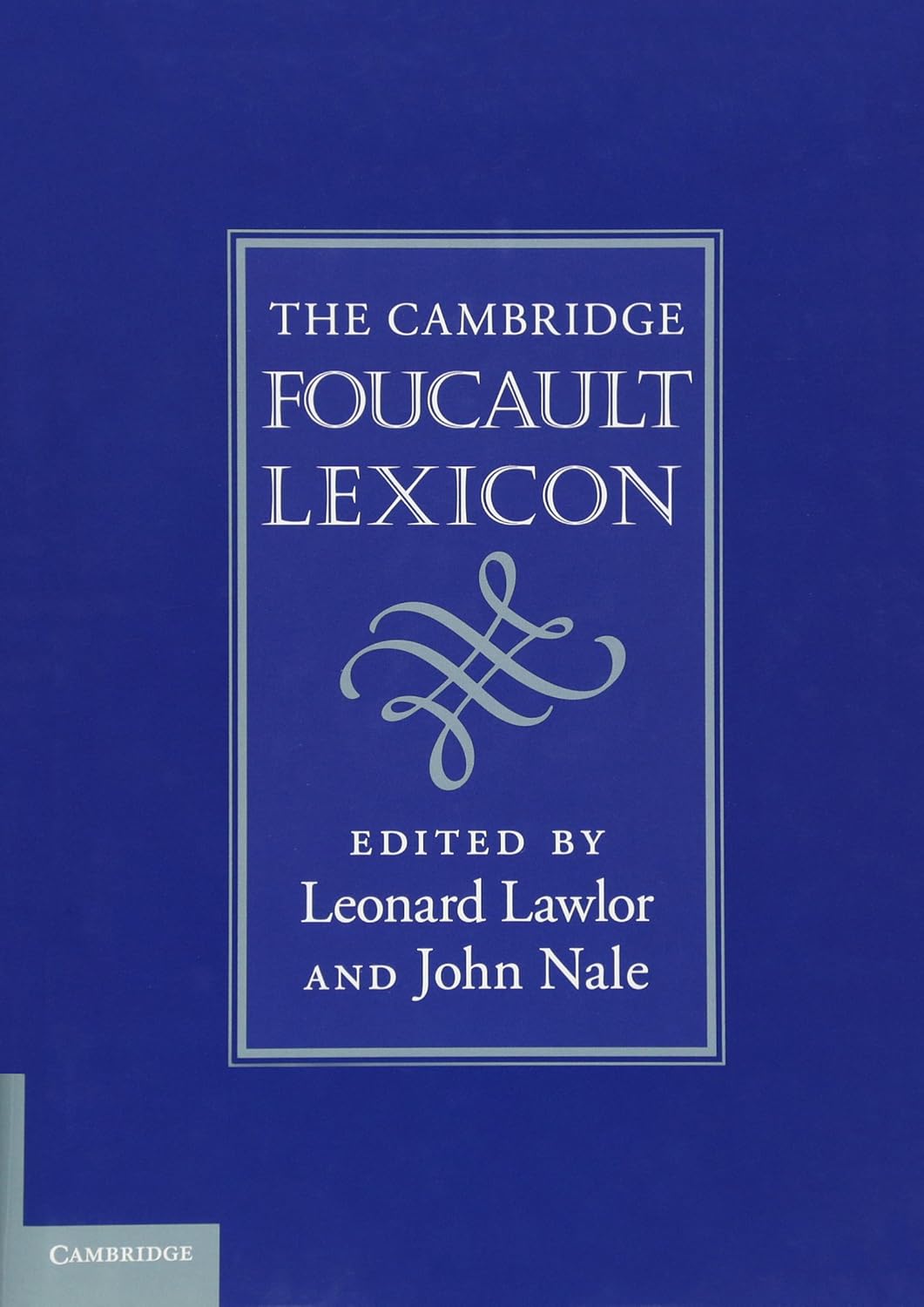
Colin Gordon, Review Article: The Cambridge Foucault Lexicon, History of the Human Sciences 2016, Vol. 29(3) 91–110
https://doi.org/10.1177/0952695116653948

Also on academia.edu

Leonard Lawlor and John Nale (eds) The Cambridge Foucault Lexicon. New York:Cambridge University Press, 2014. 741 pp. £99.99. ISBN: 9780521119214 (hbk)

Extract
This big and potentially influential volume is one sign among others of Michel Foucault’s ongoing elevation to classic status within the history of recent thought. The publishers say that the 117 entries in this volume are written by ‘the world’s leading scholars in Foucault’s thought’. Some of the 72 contributors certainly fit that billing. Alongside many established experts, there are also younger scholars whose renown lies, hopefully, in the near future; this mix gives a range of generational perspectives which is to be welcomed.The contributors are comprised overwhelmingly of philosophers working in the USA and Canada, plus a handful from western Europe, and two Australians. Foucault’s creative impact has long extended across a far wider global and intellectual community than is adequately represented here. The mass presence of philosophers doubtless reflects the commercial fact that academic reference works targeted at the university library market generally need a definite primary departmental focus. Nevertheless, it is a pity that a few more contributions have not been provided to this lexicon by some of those academics based in geography, history, politics, criminology, sociology, anthropology or classics who have engaged with, used or tested Foucault in their fields.This might have also diminished a tendency, perhaps compounded by the legacy of a past generation of commentaries focused on Foucault’s earlier books, to produce an overall emphasis which underplays Foucault’s public and political engagements.

Davies, W. (2012), The Emerging Neocommunitarianism. The Political Quarterly, 83: 767–776.
doi:10.1111/j.1467-923X.2012.02354.x
Full text on academia.edu

Abstract
The financial crisis which began in 2007 has been widely interpreted as a crisis of neoliberalism, akin to the crisis of Keynesianism of the 1970s. But there is little sign of a major paradigmatic alternative, either in theory or in practice. This article looks at how the crises and failures of neoliberalism are occurring at a micro-policy level, where they are interpreted in terms of the fallibility of individual rational choice. Policy responses to this crisis, drawing on more psychologically nuanced accounts of economic behaviour, can be described as ‘neocommunitarian’, inasmuch as they echo the communitarian critique of the liberal self. Where neoliberalism rests on a vision of the individual as atomised and rational, neocommunitarianism treats individuals as governed by social norms and incentives simultaneously. And where neoliberalism subjects individuals to periodic audit organised around targets and outputs, neocommunitarianism conducts a constant audit of behavioural fluctuations in real time.

Laurence McFalls & Mariella Pandolfi, Post-Liberalism, Academic Foresights, No. 5: July-September 2012

Update October 2025: There is something wrong with the formatting of this page but you can read the article if you highlight the page

How do you analyze the present status of post-liberalism?

Post-liberalism is the currently emergent historical formation that has both grown out of and broken with liberalism and neo-liberalism. Like its antecedents, post-liberalism entails its own forms of truth, of subjectivity, and of power. In the terminology of Michel Foucault, it is a governmentality, that is, a mode of government drawing on its own typical (post-) political rationality, practices, techniques and agents.

We can initially define post-liberalism by distinguishing it from liberalism and neo-liberalism. From liberal governmentality post-liberalism retains the “conduct of conduct” through the manipulation of interests, and from neo-liberal economic theory it adopts the idea that the market as a locus of veridiction, that is, as a mechanism that empirically produces truth through prices, is not natural but rather a fragile social construct. Well beyond neo-liberalism’s reinforcement and redeployment of market mechanisms and privatization of social services, post-liberalism through its multiplication and radicalization of mechanisms for controlling human life more fundamentally, even ontologically, redefines the human experience, replacing the self-interested liberal subject and the neo-liberal entrepreneur of the self with what Michael Dillon and Julian Reid call the “biohuman.” Unlike both classic and neo-liberalism, post-liberalism collapses the distinction between the individual and the collectivity through what we call the therapeutic government of individual bodies understood and understandable as particularly configured and manipulable exemplars of the human species in its diversity, with each susceptible to its particular vulnerabilities. The post-liberal subject is a composite subject, contingently pieced together genetically and socially. Humans, of course, have always been such constructs, but today they are subjected to social scientific discourses and biomedical technologies ranging from “intersectionality” to genetic engineering that empty them of the transcendent qualities of the autonomous, rational (neo-)liberal subject. (Indeed, post-liberalism’s simultaneous government of individuals and populations can most easily be understood through one of the biomedical practices that inspire it, namely “personalized medicine,” or the use of genetic, molecular, and environmental profiling for the optimization of individual patients’ preventive or therapeutic care.)

read more

Zerva, K., Nijkamp, P.
Tour guides as information filters in urban heterotopias: Evidence from the Amsterdam Red Light District
(2016) Tourism Management Perspectives, 18, pp. 42-50.

DOI: 10.1016/j.tmp.2015.12.020

Abstract
An unconventional urban environment often acts as an attraction for tourists. This is exemplified by the old city centre of Amsterdam, through its urban gentrification which offers a unique tourist experience through an interplay of contradicting concepts: legal and illegal, or moral and immoral. Based on Foucault’s heterotopias of informational deviance and the informational role of tour guides, the aim of this paper is to show the critical influence of the tour guide’s contribution to the tourist experience of visiting these often morally contradicting concepts. Tour guides operate in this context as ‘information filters’, based on the tourist guides’ personalities and background. To analyse this information sensitivity, five tours were examined in the Red Light District, three related to prostitution and two to Coffee Shops. Through systematic participant observation, descriptive results were obtained, which highlight the importance of the guides’ personal profile in interpreting this experience to tourists. © 2016 Elsevier Ltd.

Author Keywords
Coffee shops; Heterotopia; Interpretational skills; Prostitution; Tour guides

Done, E.J., Murphy, M., Knowler, H.
University-based professional learning for women teachers and the ‘to care’ or ‘to lead’ dilemma
(2016) Professional Development in Education, 42 (4), pp. 610-627.

DOI: 10.1080/19415257.2014.948690

Abstract
The authors consider the recasting of teaching as leadership with reference to school principals or heads and claim that many women teachers decline such senior roles and instead prioritize an ethics of care in resistance to neoliberal performative educational cultures. A future-orientated poststructuralist version of authenticity or authentic practice derived from Deleuze and Guattari, Foucault and Grosz is introduced that does not risk reinforcing gender stereotypes and a consequent political marginalization of women teachers. Grosz mobilizes the concept of authentic futurity in relation to feminism, but the authors contend that this concept might usefully provide women teachers with a less potentially marginalizing lexicon of resistance, and facilitate localized initiatives informed by an affirmative poststructuralist ethics embracing contingency and relationality. Care is interpreted as supporting virtual potentialities and their actualization. The Deleuzo-Guattarian concepts of ‘becoming-woman’ and ‘becoming-imperceptible’ are explained in relation to ‘active listening’ as a leadership ‘skill’. The importance of university-based professional learning in addressing variations in professional capital and problematizing tired neoliberal discourses concerning leadership, teacher quality and ethics is emphasized throughout the paper. © 2014 International Professional Development Association (IPDA).

Author Keywords

feminist-poststructuralist ethics; leadership; professional learning

Welsh, J.
Governing Academics: The Historical Transformation from Discipline to Control
(2016) International Journal of Politics, Culture and Society, pp. 1-24. Article in Press.

DOI: 10.1007/s10767-016-9228-4

Abstract
Given the transformation in the government of academic life over recent decades, the article attempts to derive a political critique of the changing psychosocial conditions of academic life via a historical juxtaposition with the nomos of the labour camp in Solzhenitsyn’s Gulag Archipelago. The aim is to address the need to think beyond normative disciplinary power, to explore a distinctly capitalist governmentality in relation to Foucault’s genealogy of power and to elaborate the techniques and practices of an emergent ‘meta-disciplinary’ technology of labour control in academia. Therefore, a broadly Foucauldian analysis on these questions will be undertaken, and augmented with Marxian and post-Freudian insights into the role of capital accumulation dynamics, in order to texture the conventional presentation of governmental rationality. The result is a metonymic presentation of the ‘camp’ as a physiological structure of capitalist Modernity, whose imprint can be discerned in numerous social and institutional settings, in this case Academia and the Gulag. From this outcome, insights into the transformation of living and labouring in academia, and the effects on psychological and intellectual well-being stemming from the new complex of control can be derived. The piece concludes with some thoughts on strategies of intellectual survival in academia, on counter-conducted techniques of subjectification and on possible means of resistance in the meta-disciplinary idiom. © 2016 Springer Science+Business Media New York

Author Keywords
Camp; Governmentality; Gulag; Labour; Meta-disciplinary; Society of control; University

Gillies, D. and Mifsud, D. (2016) Policy in transition: The emergence of tackling early school leaving (ESL) as EU policy priority, Journal of Education Policy, 31:4, 443-465,
DOI: 10.1080/02680939.2016.1196393.

Abstract
This paper explores, from a Foucauldian perspective, the emergence and nature of the current EU education policy priority issue of ‘early school leaving’. The paper suggests that a number of problematisations developing from the failure to secure Lisbon Strategy objectives have served to create a much stronger focus on the issue of young people deemed to be leaving education and training early in EU states. In examining how EU policy discourse positions such young people (subjectivation), the paper highlights how this has narrowed to a concern with young people as economic problems and principally positioned as economic units which are required to be more productive. Education and training are understood as investments in human capital and as the principal means to secure the dominant global economic position desired by the EU. The paper suggests, however, that human capital theory has been modified within this approach so that merely being retained in an educational setting is seen as proxy for the investment which education and training represent. This is a weaker policy position than previously espoused but, born of economic crisis, one which addresses related EU political aims of softening youth unemployment figures, dampening associated unrest and reducing risks to social cohesion.