Foucault News

News and resources on French thinker Michel Foucault (1926-1984)

Robin Rymarczuk, The Heterotopia of Facebook, Philosophy Now, Issue 107, August/September 2016

The other spaces and faces of Michel Foucault by Alex Lawrence Foucault images © Alex Lawrence 2015 Please visit preposterous.carbonmade.com

The other spaces and faces of Michel Foucault by Alex Lawrence
Foucault images © Alex Lawrence 2015 Please visit preposterous.carbonmade.com

Robin Rymarczuk is Michel Foucault’s ‘friend’.

Facebook was founded on February 4, 2004, by Mark Zuckerberg and his Harvard University room-mates Eduardo Saverin, Andrew McCollum, Dustin Moskovitz and Chris Hughes. What started out as an on-campus online ‘hot or not’ tool resulted in the registration of a billion users by 2012. Its rapid growth and perpetually expanding corporate power, as well as its part in the ‘digital privacy’ controversy, has attracted many seeking to explain its remarkable popularity as well as peoples’ discontent with it. Although interesting and important, these studies focus predominantly on what users do on Facebook, leaving underexposed what Facebook does to the user.

Facebook possesses properties that can be construed not just in terms of globalized online networks, but also in terms of a type of space. In these terms, Facebook is a world within the world that attracts or repels people by its geography as much as by its social life. So what kind of space is Facebook? I claim that it’s what philosopher Michel Foucault (1926-1984) ingeniously called “un espace autre” – “an other space”; better known as a heterotopia. As I will elaborate, understanding Facebook as a heterotopic space offers a style of critical thinking that invites moral reflection on digital culture and its relation to other spaces in our everyday lives.

Read more

Ott, J.C.
Perceptions of the Nature of Happiness: Cultural, but Related to the Dynamics of the Human Mind and the Gratification of General Needs: Review of Laura Hyman: Happiness; Understanding Narratives and Discourses, Palgrave Macmillan, 2014, ISBN: 978-1-137-32152-7
(2016) Journal of Happiness Studies, pp. 1-7. Article in Press.

DOI: 10.1007/s10902-016-9720-6

Abstract
In her book ‘Happiness’ Laura Hyman identifies some discourses, as defined by Foucault, about happiness among 19 middle-class respondents in the UK. A discourse is a way of thinking and communicating about some issue, and comparable to a ‘perception’ or a’ view’. The dominant ‘Therapeutic Discourse’, is based on the view that happiness is an individual and normative challenge; it is to be worked on by selfcare and self-knowledge. A somewhat contradictory discourse puts more priority on social relations, as a condition for happiness. Hyman explains the co-existence of these discourses as a consequence of individualization. Individualization puts more priority on individual responsibility, but can easily lead to a neglect of social relations. It is difficult to assess the universality of these discourses, because the sample of respondents is very homogeneous. If individualization is an important factor we might expect different discourses in more collectivistic cultures. There are, however, theoretical reasons to believe that these discourses are rather universal. We may expect that the gratification of general needs is important. If certain needs are not gratified they will get more attention, and more priority, in a discourse about happiness. The ‘Therapeutic Discourse’, more in particular, is apparently a logical consequence of the dynamics of the human mind. The characteristics of the human consciousness clearly support this discourse. We need more empirical research, about discourses in different cultures, to find out for sure! © 2016 The Author(s)

Author Keywords
Capitalism; Discourse; Enlightenment; Gratification of needs; Happiness; Hedonic level of affect; Human needs; Individualization; Life-satisfaction

Index Keywords
clinical article, consciousness, empirical research, happiness, human, human tissue, individualization, narrative, neglect, perception, responsibility, social interaction, theoretical model

Kojiro FUJITA, Comment la philosophie de Foucault voyage-t-elle ?
Ici et ailleurs, Association pour une Philosophie Nomade, 14 juin 2016

Introduction

La question qui m’intéresse particulièrement est : « comment la philosophie, les théories et les concepts voyagent-ils ? » ; plus précisément, « la philosophie, les théories et les concepts occidentaux peuvent-ils se transférer à l’Orient sans y apporter aucune domination coloniale ou commerciale ? » Or, moi, chercheur extrême-oriental, je travaille depuis longtemps sur une philosophie occidentale, la pensée de Michel Foucault : après l’avoir étudiée en France pendant longtemps, j’ai soutenu l’année dernière ma thèse portant sur un aspect théorique des travaux foucaldiens (1) et c’est avec ce résultat de recherche que je suis récemment retourné à mon pays d’origine, le Japon, pour développer cette philosophie occidentale dans notre contexte oriental. Ainsi, dans mon cas, il conviendrait de spécifier la question ainsi : « comment la philosophie de Foucault voyage-t-elle ? » ; plus précisément, « peut-elle se transférer au Japon sans colonisation ni commercialisation ? »

read more

Sam Kriss, Flat-Earthers Have a Wild New Theory About Forests – The Atlantic SEP 9, 2016

What it means to believe that “real” trees no longer exist.

Something tremendous is happening; over the last few weeks, without too many of its globe-headed detractors noticing, a surprisingly vast community on the tattered fringes of intellectual orthodoxy is in turmoil. A bizarre new theory has turned the flat earth upside down. The flat earth is still flat, but now it’s dotted with tiny imitations of the truly enormous trees that once covered the continents, and which in our deforested age we can hardly even remember.
[…]

Against both the panpsychicism of hippie ecology, the bleary-eyed invocations of some dismally all-encompassing Mother Earth, and the pedantic materialism of most sciences as they’re actually practiced, ‘No Forests on Flat Earth’ proposes a kind of hylothanatism, a pessimism for our own weary age: this world was once alive, everything was once beautifully connected, but not any more. This earth has been dead for millennia; what we think of as progress is just the rot spreading through the cadaver of the world.

There are mythic assonances here—beyond the familiar world-trees of Norse cosmogony, the notion of a world built on a corpse has always fascinated people; Babylonian mythology, for instance, has the entire universe butchered out of the body of Tiamat, the primordial mother. Its mode of argument—‘this thing looks like this other thing, therefore they’re the same thing’—is also familiar. In The Order of Things, Foucault describes the medieval episteme: “It was resemblance that organized the play of symbols, made possible knowledge of things visible and invisible, and controlled the art of representing them.” The world was configured as one single text, a great chain of being explicable to those who knew how to read the signs. Bestiaries would record not just the physical characteristics of various animals, but their symbolic attributes. If a plant resembled a part of the human body, it could be used to treat its diseases; the map of the cosmos is also a map of the human body, and the pattern of the stars is also a horticultural manual. Foucault quotes Crollius: “Just as each herb or plant is a terrestrial star looking up at the sky, so also each star is a celestial plant in spiritual form, which differs from the terrestrial plants in matter alone.”

Foucault himself has a very ‘No Forests’ sadness for the loss of this world of interlinking resemblances in the 16th century, lamenting that “there is nothing now that still recalls even the memory of that being. Nothing, except perhaps literature.” The experience of modernity is one of a lost unity, and with an emerging capitalism came a world no longer required to be explicable, only fungible. But this lost world is not just something that falls away with modernity—as Freud points out, the formation of the conscious mind is similar: the ego is a “precipitate of lost objects.”

Johanna Oksala, Foucault, Marx and Neoliberal Subjects, Theory, Culture and SocietyFebruary 16, 2015

Daniel Zamora’s edited volume Critiquer Foucault: Les années 1980 et la tentation néolibérale, published in November 2014, has been the subject of a heated debate recently on the philosophical blogosphere. Many Foucault scholars have been puzzled and surprised by the stir it has caused. Verena Erlenbusch (2015) suggests that the controversy has more to do with Zamora’s interview with Jacobin Magazine, provocatively titled “Can We Criticize Foucault?” than with the book itself because many of the arguments presented in it are neither as revolutionary nor as provocative as the interview would make it seem. Stuart Elden (2014) notes that Zamora’s ‘revelations’ are not in fact based on any new material that would have come to light recently and that Foucault’s relationship with neoliberalism has already been subject to critical scrutiny for a number of years by a host of thinkers.

Source: Johanna Oksala on Foucault, Marx and Neoliberal Subjects

Work by Michele Khazak, Cats and Quotes

Work by Michele Khazak, Cats and Quotes

Work by Michele Khazak posted on her now defunct Quotes and Cats site.

Update October 2025: Link above is to the site archived on Internet Archive Wayback Machine. Pictures however were not saved.

Elisabetta Basso, À propos d’un cours inédit de Michel Foucault sur l’analyse existentielle de Ludwig Binswanger (Lille 1953–54), Revue de Synthèse. December 2016, Volume 137, Issue 1, pp 35–59
https://doi.org/10.1007/s11873-016-0297-3

Résumé
Cet article examine la manière dont Michel Foucault se rapporte à la psychologie et à la psychopathologie phénoménologiques dans les années 1950, à la lumière des nouvelles sources documentaires que nous avons aujourd’hui à notre disposition. Notre contribution se concentre en particulier sur le manuscrit inédit de l’un des cours donnés par Foucault à l’université de Lille entre 1952 et 1954 : le cours sur « Binswanger et la phénoménologie » (1953-54). L’analyse de ce cours, conçu par Foucault dans le contexte d’une réflexion philosophique sur le problème anthropologique de la psychopathologie, nous permettra enfin de restituer à Foucault la place qui lui revient dans le domaine de la « philosophie de la psychiatrie ».

Mots-clés
Daseinsanalyse psychopathologie anthropologie philosophique philosophie de la psychiatrie

Elisabetta Basso, née en 1976, est postdoctorante au « Centro de Filosofia » de l’Université de Lisbonne et membre associée de l’UMS-3610 CAPHÉS (CNRS-ENS, Paris). Ancienne boursière de la Fondation A. v. Humboldt, elle est aussi chercheuse associée de l’« Innovationszentrum Wissensforschung » de la Technische Universität, Berlin. Elle a publié plusieurs articles sur Michel Foucault et sur l’histoire du mouvement phénoménologique en psychiatrie. Parmi ses publications, Foucault e la Daseinsanalyse : un’indagine metodologica (Milano, Mimesis, 2007) ; l’édition italienne de Ludwig Binswanger, Il sogno (Macerata, Quodlibet, 2009) ; le volume collectif Foucault à Münsterlingen. À l’origine de l’Histoire de la folie, avec Jean-François Bert (Paris, EHESS, 2015).

On Michel Foucault’s unpublished lectures on Ludwig Binswanger’s existential analysis (Lille 1953–54)

Abstract
This paper aims to analyze Michel Foucault’s position toward phenomenological psychology and psychopathology during the 1950s, in light of the new documentary sources available today. Our investigation is especially focused on one of the courses given by Foucault at the University of Lille between 1952 and 1954, namely, the course on “Binswanger and phenomenology” (1953-54). The analysis of this course, which was conceived by Foucault within the context of a philosophical reflection on the anthropological problem of psychopathology, will finally allow us to re-ascribe Foucault the place he deserves in the field of “philosophy of psychiatry”.

Keywords

Daseinsanalyse psychopathology philosophical anthropology philosophy of psychiatry

stuartelden's avatarProgressive Geographies

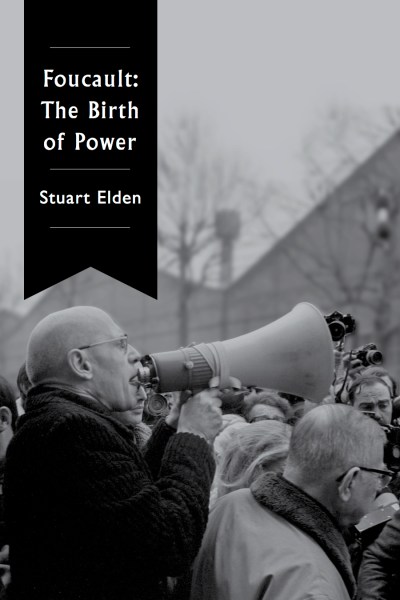
FBP cover.jpgHere is the cover for Foucault: The Birth of Power. The book is forthcoming in early 2017 with Polity, and the design fits with Foucault’s Last Decade which came out earlier this year. There is a lot about Foucault’s political activism in this second book, so the covers make a nice contrasting pair. More information on the two books here.

Michel Foucault’s The Archaeology of Knowledge was published in March 1969; Discipline and Punish in February 1975. Although only separated in time by six years, the difference in tone is stark: the former is a methodological treatise, the latter a call to arms. What accounts for the radical shift in Foucault s approach?

Several transitions took place during this period. Foucault returned to France from Tunisia, first to the experimental University of Vincennes and then to a prestigious chair at the Collège de France. Tunisia was a political awakening for…

View original post 150 more words

gautamSanjay k. Gautam, Foucault and the Kamasutra. The Courtesan, The Dandy, And The Birth Of Ars Erotica As Theater In India, University of Chicago Press, 2016

The Kamasutra is best known in the West for its scandalous celebration of unbridled sensuality. Yet, there is much, much more to it; embedded in the text is a vision of the city founded on art and aesthetic pleasure. In Foucault and the “Kamasutra”, Sanjay K. Gautam lays out the nature and origin of this iconic Indian text and engages in the first serious reading of its relationship with Foucault.

Gautam shows how closely intertwined the history of erotics in Indian culture is with the history of theater-aesthetics grounded in the discourse of love, and Foucault provides the framework for opening up an intellectual horizon of Indian thought. To do this, Gautam looks to the history of three inglorious characters in classical India: the courtesan and her two closest male companions—her patron, the dandy consort; and her teacher and advisor, the dandy guru. Foucault’s distinction between erotic arts and the science of sexuality drives Gautam’s exploration of the courtesan as a symbol of both sexual-erotic and aesthetic pleasure. In the end, by entwining together Foucault’s works on the history of sexuality in the West and the classical Indian texts on eros, Gautam transforms our understanding of both, even as he opens up new ways of investigating erotics, aesthetics, gender relations, and subjectivity.

Contents
Preface
Acknowledgments
Introduction

1 Foucault and the Notion of Ars Erotica: Pleasure as Desubjectivation
2 Pleasure and Patriarchy: The Discourse of Dharma and the Figure of the Wife
3 The Courtesan and the Birth of Ars Erotica asTheater
4 The Courtesan and the Origins of the Na?yasastra: From Ars Erotica to Ars Theatrica
5 The Dandy-Guru and the Birth of the Discourses of Erotics and Theater
6 The City Dandy and the Vision of the City Based on Art
7 Foucault and the Kamasutra: Parting Ways

Special Issue: Bioethics, Biopolitics and Selfhood, (2016) European Journal of Cultural Studies, 19 (1)

McCormack, D., Salmenniemi, S.
The biopolitics of precarity and the self
(2016) European Journal of Cultural Studies, 19 (1), pp. 3-15.

DOI: 10.1177/1367549415585559

Abstract
This Special Issue explores the biopolitics of precarity and the self. In so doing, its aim is to critically examine the changing landscape of technologies of the self and techniques of domination in late capitalism. It brings Foucault’s work on biopolitics into conversation with recent feminist, Marxist, postcolonial, disability and queer scholarship on precarity. In a feminist tradition of thinking through relationality and ethics, this Special Issue engages with those moments when technologies of regulation, surveillance and normalization do not quite work. ‘The Biopolitics of Precarity and the Self’ analyzes recent debates on precarity and precariousness in relation to migration and labour, health and illness, and the formation of the self and collectivities. It identifies temporality and care of both the self and others as key dimensions of precarity and explores how biopolitical structures of neoliberal capitalism institutionalize precarity that exacerbates existing global and local inequalities. We therefore raise questions around what it means to live, endure, survive and make life and labour possible without doing harm to the self or others. In this sense, this Special Issue brings to the fore the temporalities, politics and ethics of what is not always recognized in biomedical practices, labour migrations, media representations, labour of the self and everyday agency. © 2015, © The Author(s) 2015.

Author Keywords
ethics; Judith Butler; Lauren Berlant; precarity; the self