With all my very best wishes for the festive season and the new year from Foucault News.

(This picture was found some years ago on the Blingee site)

With all my very best wishes for the festive season and the new year from Foucault News.
(This picture was found some years ago on the Blingee site)
Leonard D’Cruz, The Limits of Radical Historicism: The Methodological Significance of Foucault’s Relationship to Transcendental Philosophy, Angelaki, 29(6), 2024, 53–76.
DOI: https://doi.org/10.1080/0969725X.2024.2430899
Abstract:
This article examines the methodological significance of Foucault’s relationship to transcendental philosophy. While Foucault presents his work as a historicist transformation of Kant’s critical project, some commentators question whether he succeeds in eradicating the transcendental dimension of critique. In this way, they raise doubts over whether he can sustain his methodological commitment to radical historicism. In response, I argue that Foucault can reflexively account for his use of transcendental motifs while remaining faithful to his historicist methodology. More specifically, I show how the concept of sedimentation can give coherence to the supposedly paradoxical notion of the historical a priori. Furthermore, I demonstrate that Foucault’s ostensibly transcendental assumptions about power and subjectivity are best understood as contingent features of his analytical framework rather than earnest metaphysical claims.
Keywords:
Foucault genealogy transcendental critique historical a priori sedimentation
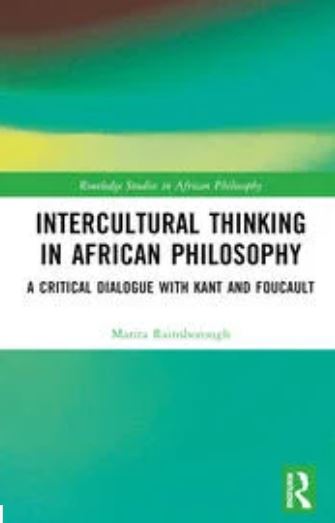 Rainsborough, M.
Intercultural Thinking in African Philosophy: A Critical Dialogue with Kant and Foucault, Routledge (2024)
Abstract
This book sets up a rich intercultural dialogue between the philosophy of Immanuel Kant and Michel Foucault, and that of key African thinkers such as Kwame Anthony Appiah, Achille Mbembe, Kwasi Wiredu, Kwame Gyekye, Tsenay Serequeberhahn, and Henry Odera Oruka.
The book challenges western-centric visions of an African future by demonstrating the richness of thought that can be found in African and Afrodiasporic philosophy. The book shows how thinkers such as Serequeberhan have criticised the inconsistencies in Kant’s work, whereas others such as Wiredu, Gyekye, Appiah and Mbembe have referenced his work more positively and developed progressive political concepts such as the metanational state; partial cosmopolitanism and Afropolitanism. The book goes on to consider how Mbembe and Mudimbe have responded to Foucault’s ideas in deciphering the various Western, African and Afrodiasporic discourses of knowledge on Africa.
The book concludes by considering various theories of intercultural exchange, from Gyekye’s cultural borrowing, to Appiah’s conversation across boundaries, Wiredu’s cross cultural dialogue, Mbembe’s thinking outside the frame, Serequeberhan’s dialogue at a distance, and Oruka’s call for global re-distribution and a new ecophilosophical attitude to safeguard human existence on the planet.
This book invites us all to engage in intercultural dialogue and mutual respect for different cultural creations. It will be an important read for researchers in Philosophy wherever they are in the world. © 2024 Marita Rainsborough.
Ratcliffe, J.
Genealogy: A conceptual map (2024) European Journal of Philosophy
DOI: 10.1111/ejop.12949
Abstract
The blossoming literature on genealogy in recent years has come as somewhat of a pleasant surprise to the historically inclined among us. It has not, however, come without its difficulties. As I see it, the literature on genealogy is guilty of two conflations, what I call the “debunking/problematizing conflation” and the “problematizing/rationalizing conflation.” Both are the result of the inadequate typological maps currently used to organize the literature. As a result, what makes many genealogies philosophically interesting often remains obscure. In response, I propose a new two-dimensional typology that avoids these conflations and outfits us with a richer conceptual vocabulary with which to understand and organize the genealogies which populate the literature. By identifying a second dimension of analysis which has thus far gone untheorized, my typology enables us to elucidate the various normative objectives and objects of investigation structuring a literature which is more diverse than previously acknowledged. We can thus get a clearer understanding of the problems those genealogies face, of their critical potential, and of their implications for our conception of critique. © 2024 The Authors. European Journal of Philosophy published by John Wiley & Sons Ltd.
Author Keywords
background frameworks; Brandom; debunking; debunking/problematizing conflation; Foucault; genealogy; genetic fallacy; problematizing; problematizing/rationalizing conflation; rationalizing; self-defeat; two-dimensional typology; vindicatory; Wittgenstein
Bigoni, M., Maran, L., Occhipinti, Z.
Of power, knowledge and method: The influence of Michel Foucault in accounting history
(2024) Accounting History
DOI: 10.1177/10323732241243088
Abstract
Michel Foucault’s work had a strong influence not only in philosophy but also in a wide range of humanistic and social disciplines, including accounting. Notably, the first studies which brought Foucault’s thought to the attention of interdisciplinary accounting scholars were historical. This article documents how Foucault’s ideas have directly inspired accounting history scholars, how the latter have interpreted and brought Foucault’s work into their field as well as what future research paths may lie ahead. The article offers a systematisation of how the complex ideas of Foucault have been translated into eight key themes that have provided a crucial interpretive prism to many studies in accounting history. In doing so, it assists scholars wishing to familiarise themselves with Foucault’s work and employ it in their research. © The Author(s) 2024.
Author Keywords
accounting history; Foucault; interdisciplinary; knowledge; literature review; power
Disney+ Lands Exclusive French Broadcast Rights to 2025 Oscars, by Ben Croll, Variety, Dec 10, 2024
[…]
Disney execs also announced a brand new French original, “Surveiller et punir” (a name that plays as a wink to the French title of Michel Foucault’s “Discipline and Punish”). Described as a workplace comedy about a pair of prison guards, the series comes courtesy of “Simply Black” creators John Wax and Jean-Pascal Zadi.
[…]
Disney+ va diffuser “en exclusivité” les Oscars et prépare de nouvelles séries produites en France, franceinfo Culture avec AFP 11/12/2024
[…]
La plateforme, qui revendique la place de 3e en France, entend renforcer sa présence avec des programmes produits dans l’Hexagone, via notamment une série comique portée par Jean-Pascal Zadi et située en prison. Titrée Surveiller et Punir, la nouvelle production tricolore de Disney+ suivra “avec humour les seules personnes qui ont volontairement décidé de passer toute leur vie derrière les barreaux : les surveillants”, a annoncé mardi Kévin Deysson, directeur des productions originales Disney+.
Incarnée par Jean-Pascal Zadi (Tout simplement noir), cette fiction en huit épisodes de 30 minutes est présentée comme une comédie de bureau “dans la plus grande tradition des sitcoms américaines”. La date de diffusion n’est pas connue.
[…]
The Bibliography of Foucault’s shorter works in English translation which is maintained by Daniele Lorenzini and hosted on this site has been updated.
As always if you notice anything missing please either post in the comments on the page or email Daniele Lorenzini directly.
Wang, C., Wang, S.
Educating the Autonomous Learner in a Confucian School: Subjectivity, Memorisation, and Dilemma
(2023) China Perspectives, 2023 (135), pp. 61-70.
Abstract
The current literature on Chinese governmentality and subjectivity lacks rigorous discussion of the involvement of Confucian education. This article applies Foucauldian conceptual tools to explore this scholarship gap empirically. Based on ethnographic fieldwork at a Confucian school, we explore how Confucian pedagogical techniques are used to create a type of subject. This article first presents pedagogical reform in a Confucian school. The resultant pedagogy of individualised memorisation combines two paradoxical knowledge sources: the individualised teaching principle and the method of repetitive memorisation. We then demonstrate how the Confucian teaching techniques used in the classroom result in contradictory processes of subject-making. Students are governed by the technologies of power in the disciplined classroom but are also encouraged to be the “master” of their own study according to the technologies of the self, so as to become autonomous learners. The revived Confucian education is encountering a profound cultural dilemma between autonomy/individuality and coercion/authority in the making of subjects. © 2023, Francais sur la Chine Contemporaine China. All rights reserved.
Author Keywords
Confucian education; Foucault; governmentality; power; subjectification
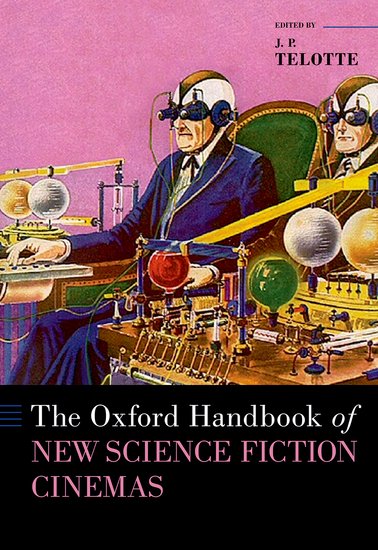 Vint, S. Biopolitics and Bioethics (2023) The Oxford Handbook of: New Science Fiction Cinemas, Ed. J. P. Telotte, Oxford University Press, pp. 193-205.
DOI: 10.1093/oxfordhb/9780197557723.013.12
Abstract
This chapter outlines ideas central to biopolitical theory and demonstrates how they have proven especially useful for analyzing science fiction (sf) films, particularly those concerned with the social reproduction of humanity into the future, and those exploring themes about society’s differentiation between valued and disposable life-a distinction that sf has often represented as a matter of species difference. The primary text used to examine ideas about the valuation of life is Claire Denis’s High Life. © Oxford University Press 2023. All rights reserved.
Author Keywords
body; governance; medicine; Michel Foucault; population; reproduction; violence
Gordon, J. Heterotopias The Oxford Handbook of: New Science Fiction Cinemas, Ed. J. P. Telotte, Oxford University Press, (2023) pp. 101-112.
DOI: 10.1093/oxfordhb/9780197557723.013.6
Abstract
Drawing on the intellectual archaeologies of Michel Foucault, the notion of the heterotopic-of the other place that is neither utopian nor dystopian, and of the other figures who might inhabit such places-uses configurations of abnormality as a way of interrogating our sense of the normal. Capitalizing on the new digital technologies common to science fiction (sf) film, sf heterotopias are able to visualize, almost effortlessly, other possible spaces and beings, in the process doing the most fundamental work of sf-challenging a set and bounded sense of world and self, while hinting at better alternatives. This chapter primarily considers District 9 (2009) and Arrival (2016) in terms of Foucault’s formulation and Mary Louise Pratt’s notion of the “contact zone,” a contested site of colonialist heterotopias. © Oxford University Press 2023. All rights reserved.
Author Keywords
aliens; contact zone; culture; dystopia; invasion; language; Michel Foucault; utopia
 Foucault News