Foucault News

News and resources on French thinker Michel Foucault (1926-1984)

Delf Rothe, Christine Hentschel, Ursula Schröder,
Recomposing the climate-security nexus: A conceptual introduction,
Geoforum, Volume 159, 2025,

https://doi.org/10.1016/j.geoforum.2024.104195

Abstract:

What is security in an age of catastrophic climate change? This conceptual introduction to the special issue “Critical Climate Security” develops a new theoretical approach to studying the complex linkages between climate change, security, and conflict. Through a comprehensive review, it identifies three ways of theorizing the climate-security nexus in the existing literature: as a set of causal relations, as a discourse, and as a field of practice. To transcend these ideal types and capture the climate-security nexus in its multiplicity, we propose to theorize it as a composition. This approach is attentive to the material, discursive, affective, practical, spatial, and temporal dimensions of the nexus and puts a focus on change through processes of composing and recomposing. Acknowledging the crucial role of the researcher in composing climate security, it also offers new ways of practicing critique. While critical research on climate security in the past often focused on debunking taken-for-granted knowledge and deconstructing hegemonic discourses, our perspective outlines how climate security could be recomposed around new “matters of care”, and thus be gradually reoriented toward more progressive goals. In this way, our approach is also a proposal to think differently about the future of climate security: beyond the established pathways of either dystopian catastrophe or utopian promise. Instead, a compositional approach requires a constant commitment to practices of protecting, caring, and repairing, also in the sense of reparation: not just as compensation for past damages but as a future-oriented project of world-making in which redistribution and just transformation matter.

Keywords:
Anthropocene; Climate change; Composition; Conflict; Critique; Security

Dossier: Foucault, 40 años después: Foucault desde el Sur Global (No. 41)
EN EL MARCO DEL WORLD CONGRESS: FOUCAULT 40 YEARS AFTER

Dossier: Foucault desde el Sur Global (No. 41)

Dossier: Foucault from the Global South (No. 41)

Coordinadores / Coordinators:

Hugo David Tavera Villegas
Bertha Bermúdez Tapia

FECHA LÍMITE DE ENVÍO: 17 DE FEBRERO DE 2025

DEADLINE FOR SUBMISSION: FEBRUARY 17th, 2025

CONVOCATORIA EN ESPAÑOL (ENGLISH BELOW)

A cuarenta años de su fallecimiento, la obra de Michel Foucault sigue ejerciendo una considerable influencia dentro de una amplia variedad de disciplinas y campos de investigación, incluidas la filosofía, la sociología, la teoría política, la teología, la psicología, la arquitectura, las ciencias de la salud, la ética y la sexualidad, entre otras. En buena parte impulsado por la publicación póstuma de sus cursos dictados en el College de France, así como de otra clase de materiales orales como conferencias y seminarios, el número de escritos y de eventos académicos dedicados a su pensamiento no ha dejado de crecer en el último tiempo. Este dossier de la revista CONfines pretende reunir artículos inéditos acerca del pensamiento de Foucault que estén concebidos desde una perspectiva desde/sobre el Sur Global. Nuestro objetivo con este nuevo número es el de contribuir a los estudios foucaultianos ofreciendo a nuestros lectores un conjunto de artículos que aborden problemáticas del Sur Global a través de conceptos y herramientas analíticas tomadas de la obra de Foucault.

El dossier se encuentra enmarcado en las conmemoraciones por los cuarenta años desde su muerte ocurrida en junio de 1984. Como Revista CONfines decidimos sumarnos a la convocatoria lanzada por la Universidad Complutense de Madrid para la realización de diversos eventos y publicaciones con el objeto de discutir el legado intelectual del filósofo e historiador francés. Dentro de este contexto, el dossier acompaña a la Conferencia “Foucault desde el Sur Global”, organizada por integrantes del Departamento de Ciencia Política y Relaciones Internacionales del Tecnológico de Monterrey, campus Monterrey, que se realizará de manera virtual el 17 de octubre del presente año. Tanto la Conferencia como el dossier especial de nuestra Revista constituyen una excelente oportunidad para abordar críticamente el trabajo y conceptos de Foucault desde las exigencias de nuestro complicado presente.

¿Qué pueden ofrecernos las herramientas analíticas de Foucault a quienes investigamos acerca/desde el Sur Global? ¿Cuáles son las aportaciones de conceptos como los de biopolítica o gubernamentalidad en el contexto de investigaciones sobre migraciones o la gestión de las fronteras? ¿Pueden las reflexiones de Foucault sobre la vigilancia y el castigo echar luz sobre los debates en torno al fenómeno de la violencia, los ilegalismos y la crisis de seguridad por la que atraviesan actualmente nuestros países? ¿Qué hay de la crisis climática, de su gestión y de sus consecuencias sobre las poblaciones -humanas y no-humanas- en los países del Sur Global? Las anteriores son tan solo algunas de las interrogantes a las que invitamos a los y las autoras a contribuir.

En línea con las temáticas de la Conferencia “Foucault desde el Sur Global”, el dossier se estructurará en torno a tres ejes temáticos principales: a) biopolítica, movilidad humana y migraciones; b) violencias, vigilancia y control social, y c) gubernamentalidad, gobernanza ambiental y crisis climática. Si bien se privilegiarán los envíos que se ajusten a estas líneas temáticas, no se descartarán trabajos que aborden otras problemáticas del/desde el Sur Global.

Como guía general para los y las autoras, se sugieren los siguientes temas:

La gestión de poblaciones migrantes
Biopolítica y frontera en los procesos migratorios contemporáneos
Gobernanza y gubernamentalidad en el gobierno del tránsito migratorio
Gobierno de la migración y subjetividad migrante
Violencia policial y militar en el marco de política de seguridad
Prisiones y otras formas de sanción de los ilegalismos en clave contemporánea
La sociedad punitiva: cambios y continuidades
Desarrollo tecnológico y nuevos dispositivos de vigilancia y control
El gobierno de la naturaleza en la era del Antropoceno
Biopolítica y conservación en las geografías del Sur Global
Crisis climática y gobernanza ambiental en el Sur Global

Se recibirán trabajos escritos en español o inglés con una extensión mínima de 6 mil y máxima de 8 mil palabras (resumen y notas al pie incluidas). Las referencias bibliográficas se enlistan al final del documento y no serán consideradas en el conteo de palabras.

Los trabajos deberán cumplir, además, con los siguientes lineamientos de formato:

Documento Word, espaciado 1.5 líneas, márgenes superior e inferior de 2.5 cm e izquierdo y derecho de 3 centímetros;
Fuente Times New Roman de 12 puntos;
Título del artículo, en español y en inglés;
Un resumen de máximo 120 palabras, en español y en inglés;
Un recuento de tres a cinco palabras clave en español y en inglés;
Referencias bibliográficas en formato APA (Edición 7), tanto en el cuerpo del texto como en la recapitulación final;
En notas de pie de página solo se aceptan comentarios aclaratorios y sugerencias que amplíen la discusión. No debe incluir referencias;
Si el artículo contiene figuras, deben contar con los permisos de reproducción. Deben ser enviadas, en archivo separado, en formato JPEG o TIFF con una resolución de 360 dpi y en escala de grises. En el cuerpo del texto, se indicará cuál sería la colocación más adecuada de la figura, por ejemplo: [FIGURA 1 Aquí]

Las contribuciones deberán enviarse a más tardar el 17 de febrero de 2025 a través del sistema editorial en línea gestionado por el Open System Journal (OJS). Los trabajos deberán ser inéditos. No deben haberse publicado con anterioridad ni estar en proceso de dictamen en otras revistas. Para garantizar el anonimato en el proceso de dictaminación, los trabajos deberán omitir el o los nombres de las y los autores y cualquier referencia a éstos. Sin embargo, a través de la plataforma OJS, las y los autores deberán proveer a la revista de la siguiente información:

Nombre(s) y apellido(s) tal y como aparecerán en el artículo, en caso de ser publicado
Ciudad y país de residencia
Institución de adscripción actual
Breve currículum (no más de 5 líneas) que incluya máximo grado académico y la institución donde lo obtuvo, principales líneas de investigación y sus más recientes publicaciones (máximo 3).

Los manuscritos serán sometidos a un proceso de doble dictaminación por pares y, en caso de ser rechazado, el texto no podrá ser presentado nuevamente a la revista. Una vez aceptados los trabajos para su publicación, en el caso de que lo sean, los autores deberán enviar una carta de cesión de derechos según el formato que les sea remitido.

CALL FOR PAPERS (ENGLISH)

Forty years after his death, Michel Foucault’s work continues to exert considerable influence within a wide variety of disciplines and fields of research, including philosophy, sociology, political theory, theology, psychology, architecture, health sciences, ethics and sexuality, among others. Largely driven by the posthumous publication of his courses given at the College de France, as well as other oral materials such as lectures and seminars, the number of writings and academic events devoted to his thought has been growing steadily in recent times. This dossier of the journal CONfines aims to bring together unpublished articles on Foucault’s thought that are conceived from a perspective from/about the Global South. Our aim with this new issue is to contribute to Foucauldian studies by offering our readers a set of articles that address issues of the Global South through concepts and analytical tools taken from Foucault’s work.

The dossier is framed in the commemorations for the fortieth anniversary of his death in June 1984. As CONfines Magazine we decided to join the call launched by the Complutense University of Madrid for the realization of various events and publications to discuss the intellectual legacy of the French philosopher and historian. Within this context, the dossier accompanies the Conference “Foucault from the Global South”, organized by members of the Department of Political Science and International Relations of the Tecnológico de Monterrey, Monterrey campus, to be held virtually on October 17 of this year. Both the Conference and the special dossier of our Journal are an excellent opportunity to critically approach Foucault’s work and concepts from the demands of our complicated present.

What can Foucault’s analytical tools offer to those of us who research about/from the Global South? What are the contributions of concepts such as biopolitics or governmentality in the context of research on migration or border management? Can Foucault’s reflections on surveillance and punishment shed light on the debates around the phenomenon of violence, illegalisms and the security crisis that our countries are currently going through? What about the climate crisis, its management and its consequences on populations -human and non-human- in the countries of the Global South? These are just some of the questions to which we invite the authors to contribute.

In line with the themes of the “Foucault from the Global South” Conference, the dossier will be structured around three main thematic axes: a) biopolitics, human mobility and migrations; b) violence, surveillance and social control, and c) governmentality, environmental governance and climate crisis. Although submissions along these thematic lines will be privileged, works that address other issues of/from the Global South will not be discarded.

As a general guide for authors, the following topics are suggested:

– Management of migrant populations

– Biopolitics and borders in contemporary migratory processes

– Governance and governmentality in the government of migratory transit

– Migration governance and migrant subjectivity

– Police and military violence in the security policy framework

– Prisons and other forms of punishment of illegalisms in a contemporary perspective

– The punitive society: changes and continuities

– Technological development and new surveillance and control devices

– The governance of nature in the Anthropocene era

– Biopolitics and Conservation in the Geographies of the Global South

– Climate crisis and environmental governance in the Global South

Papers written in Spanish or English will be accepted with a minimum length of 6,000 and a maximum of 8,000 words (abstract and footnotes included). Bibliographical references are listed at the end of the paper and will not be considered in the word count.

Papers must also comply with the following format guidelines:

Word document, 1.5 line spacing, 2.5 cm top and bottom margins and 3 cm left and right margins;
12 point Times New Roman font;
Title of the article, in Spanish and English;
An abstract of no more than 120 words, in English and Spanish;
A count of three to five key words in Spanish and English;
Bibliographic references in APA format (Edition 7), both in the body of the text and in the final summary;
In footnotes, only clarifying comments and suggestions that broaden the discussion are accepted. It should not include references;
If the article contains figures, they must have the reproduction permissions. They should be sent, in a separate file, in JPEG or TIFF format with a resolution of 360 dpi and in grayscale. In the body of the text, the most appropriate placement of the figure should be indicated, for example: [FIGURE 1 Here].

Contributions must be submitted no later than February 17, 2025 through the online editorial system managed by the Open System Journal (OJS). Papers must be unpublished. They should not have been published previously or be in the process of being reviewed in other journals. To guarantee anonymity in the review process, the papers should omit the name(s) of the authors and any reference to them. However, through the OJS platform, authors should provide the journal with the following information:

Name(s) and surname(s) as they will appear in the article, if published
City and country of residence
Current institution of assignment
Brief curriculum vitae (no more than 5 lines) including maximum academic degree and the institution where it was obtained, main lines of research and most recent publications (maximum 3).

Manuscripts will be submitted to a double peer review process and, in case of rejection, the text cannot be resubmitted to the journal. Once the papers have been accepted for publication, in the event that they are accepted, the authors must send a letter of assignment of rights according to the format that will be sent to them.


Pietro Barbetta, Giovanni Mascaretti, Lorenzo Petrachi (eds), Michel Foucault.Quarant’anni e poi, Orthotes Editrice, 2024

Sono trascorsi quarant’anni dalla scomparsa di Michel Foucault. Da allora, il corpus foucaultiano e i suoi utilizzi non hanno fatto che moltiplicarsi, diffondersi e diffrangersi, incontrando sulla loro strada movimenti sociali, studi post-coloniali e di genere, letterature e torsioni filosofiche inattese.

Questo volume, dal respiro internazionale, si propone di tracciare un bilancio e di esplorare alcune tra le frontiere più vivaci del foucaultismo contemporaneo.

Saggi di:

Pietro Barbetta, Jean-François Bayart, Renato Busarello, Judith Butler, Eleonora de Conciliis, Jurandir Freire Costa, Ruby Faure, Paola Gandolfi, Béatrice Hibou, Orazio Irrera, Daniele Lorenzini, Giovanni Mascaretti, Lorenzo Petrachi, Arianna Sforzini, Mohamed Tozy, Enrico Valtellina, Federico Zappino

[Editor:] Back in 2019 I posted a piece that noted that Foucault ranked number 1 on the H-Index with the caveat that there was a separate ranking for the high energy physicists with hyper-authored papers. I thought I might revisit this and see what the current ranking news on this was. [Update February 2026: I have updated some of the details in the 2019 post.]

All the usual warnings about the validity of H-index scores apply here of course. Gaming of this system has increased considerably since the advent of readily available Large Language Models such as Chat GPT and the Retraction Watch blog is instructive in terms of inflationary practices around publication and citation.

This 2020 report notes: “At the very top of the list is philosopher Michel Foucault, who has an h-index of 296 and was cited 1,026,230 times.”
This 2024 book review of Chomsky’s work further adds: “Not many academics do better than Chomsky citation-wise. But there are a few… Philosopher and historian Michel Foucault (1,361,000 = 2.72 Chomskys)”.
[Update 8 March 2026, Foucault now has an h-index of 309 with 1,454,696 citations]

Foucault’s current yearly citation rate indicates the pinnacle of his H-index citation fame was in fact in 2020 and has been declining since.

There are a number of complex reasons for this, which would certainly bear more detailed analysis. One reason is the acceptance and normalisation of some of Foucault’s ideas and concepts dispensing with the need for the obligatory citation. Examples include “biopolitics”, “genealogy” understood as historical method, and particular uses of the notion of “discourse”. The increasing power and uptake of right wing ideologies is of course another factor. But one might also mention the general passing of time and other shifts in the social, political and cultural landscape. As someone who started studying Foucault’s work while he was still alive, watching him gradually become a historical figure has been an interesting trajectory.

Antti Saari & Jan Varpanen, Critical ambiguities – ambiguities of critique: Technologies of the self in entrepreneurial activism, Ephemera. Theory and Politics in Organization, 2024

Open access

Keywords
critical theories, social movements, power, entrepreneurial activism, Foucault, subjectivity Theory U, Ambiguity

Extract from introduction

In Foucauldian organization studies, a shift of emphasis has taken place from the ‘hermeneutics of suspicion’ (Ricoeur, 2008) – uncovering modes of subjugation behind the smokescreen of individual freedom – towards the task of discovering potentials of agency, change and resistance (Raffnsøe et al., 2022; Randall and Munro, 2010; McKinlay and Taylor, 2014; Paulsson, 2011). Such positive registers of subjectivity have been sought by drawing on Foucault’s work on care of the self (souci de soi). This work sees ethics as practical work of self on the self in relation to aims, techniques, and substance to be worked on and a way of attending to one’s self as a certain kind of subject (Foucault, 1997a). A key theoretical effort in this line of inquiry has been the attempt to transcend the rigid opposition between conduct and counter-conduct – that is, conducts either sustaining or challenging the status quo (Brewis, 2019; Michaeli, 2017; Munro, 2014; Raffnsøe et al., 2019).

Edizione Efesto

Archeologia del presente è una nuova collana che prova a contaminare pensiero e racconto, cronaca e archivio, giornalismo filosofico e urgenze politiche per elaborare una presa di posizione sulla realtà attuale. Questo campo di ricerca interpella i dispositivi di sapere-potere nel tempo della fine. Pensare questo tempo significa comprendere ciò che resta – forme di vita, esperienze, relazioni – quando i dispositivi di potere sono inoperosi per troppo funzionamento.

Fare l’archivio del presente significa, come indicava Michel Foucault, cercarne la provenienza per scoprire gioiose possibilità di liberazione. Non rinunciare a tale ricerca è il compito assegnato a questa generazione che è testimone del consumo di ogni aspetto della vita.

In questo tempo del disastro l’autore che cerca, analizza, “crea”, si riduce a essere consumatore della sua stessa scrittura. L’editoria si é convertita in una banalissima questione di capitale e indipendente è quella casa editrice che “vorrebbe” ma “non può”. L’editore illuminato oggi é colui che riconosce la vendibilità di uno scritto, autori e autrici non sono più scopritori di un sapere volto alla costruzione del comune, ma possessori di risorse economiche per finanziare le pubblicazioni. I restanti sono quelli che non possono. Di fronte alle rovine dell’editoria abbiamo deciso di prendere posizione per riaprire il possibile, per reinventare l’esistenza.

Paolo Vernaglione Berardi, Lo scriba e la farfalla. Appunti sul tempo della fine, Edizione Efesto, 2024

Sinossi

Non vedo più la farfalla e temo il peggio. Non sento più il suo battito d’ali a New Delhi e qui il tifone ha devastato le baracche e l’acqua ha sommerso le strade, affogato la memoria… Quindi un panorama dell’umanità alla fine si è disteso davanti agli occhi ciechi dello scienziato dello sviluppo liberale. Quindi multimiliardari insani hanno indicato vie possibili di fuga dal pianeta devastato… Un’archeologia del presente deve raccontare cosa accade

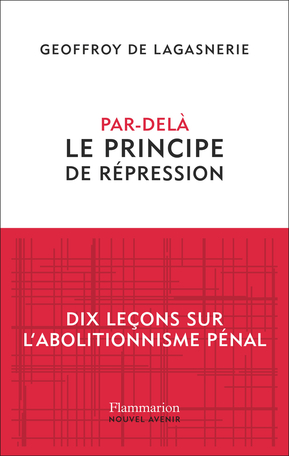
Geoffroy de Lagasnerie, Par-delà le principe de répression. Dix leçons sur l’abolitionnisme pénal, Flammarion, 2025

« Tout interroger, tout bousculer, tout refonder, et produire, à partir de là, quelque chose comme une désorientation générale de nos sens, une transformation des affects que nous sommes souvent conduits à éprouver lorsque nous sommes victimes ou témoins d’une agression, d’une scène de violence ou d’une injustice : tel serait le projet que j’aimerais accomplir ici.

Comme une entreprise de destruction de nos repères culturels et de construction d’une nouvelle morale, qui se situerait au-delà du principe de répression – qui serait débarrassée, enfin, de l’emprise que les notions de crime, de responsabilité, de plainte et de punition exercent sur notre appréhension des actions humaines et de leur régulation.

En un sens, je conçois ce livre comme une sorte d’expérimentation radicale, qui testerait la capacité de la réflexion d’être plus forte que les impulsions premières et les impensés sociaux. Sommes-nous capables d’être affectés par un raisonnement au point de remanier complètement nos manières de percevoir et donc aussi de nous comporter individuellement et politiquement ? Et si non, à quoi sert la philosophie ? »

Urošević, Milan. 2024. “Therapy culture and the production of subjectivity in neoliberalism.” Philosophy and Society

https://doi.org/10.2298/FID240220005U

ABSTRACT
This article explores the relationship between neoliberalism and the phenomena of “therapy culture”. We define therapy culture as a consequence of the spread of ideas, discourses, and practices from psychology and psychotherapy into various realms of society. Previous studies, drawing from cultural sociology, Marxism, and governmentality theory, have failed to adequately address how therapy culture integrates subjectivity with the institutions of the neoliberal mode of regulation. We begin with a historical overview of therapy culture’s evolution through the twentieth century and its role in neoliberal economic reforms. Our analysis then delves into conceptualizing the neoliberal mode of regulation, emphasizing the role it gives to subjectivity. Finally, we propose a theoretical framework integrating Foucault’s “technologies of the self” and Lacan’s concept of “fantasy” to conceptualize the relationship between neoliberalism and therapy culture. By relying on this framework, we will conclude that therapy culture serves as a governmental technology through which neoliberalism integrates subjectivity into the process of capital accumulation.

KEYWORDS
subjectivity, therapy culture, neoliberalism, apparatus, Foucault, Lacan, fantasy, technologies of the self

Bufkin, S. The hunger strike as a biopolitical technology: re-reading the 1981 Irish republican prison protest (2024) Cultural Studies.

DOI: 10.1080/09502386.2024.2405584

Abstract

This article uses the case of the 1981 Irish republican prison protest to show that indefinite hunger strikes can force Euromodern states to the negotiating table by undercutting their commitment to good government. Drawing on a Foucauldian analysis of biopower and political reason, I argue that these acts of willed self-starvation exert pressure on state officials by exploiting a tension between the modern state’s juridical claim to sovereignty and its biopolitical investment in fostering life. In the case of the famed IRA hunger strike on the H-Blocks, the archive shows that the Thatcher government experienced more pressure to reach a negotiated settlement than the prime minister or her top advisers publicly acknowledged. Such pressure, however, stemmed not from a moral or humanitarian investment in saving the individual hunger strikers’ lives, but instead from officials’ biopolitical concern that the protest was undermining British attempts to restore ‘life as usual’ in the conflicted region. Ultimately, Thatcher was willing to let ten of the Irish republican strikers die rather than grant them any concessions that might indicate they were political prisoners. The article closes by showing how an indefinite hunger strike’s efficacy is often foreclosed in securitized and postcolonial contexts like that of Northern Ireland, where the protesters can be framed as a ‘biopolitical remainder’ that is allowed to die so that the broader society might thrive. © 2024 The Author(s). Published by Informa UK Limited, trading as Taylor & Francis Group.

Author Keywords
biopolitics; Foucault; Hunger strike; Northern Ireland; protest; Troubles