Foucault News

News and resources on French thinker Michel Foucault (1926-1984)

Up in smoke: should an author’s dying wishes be obeyed? | Books | The Guardian
Blake Morrison
Sat 10 Mar

Harper Lee never wanted Go Set a Watchman brought out, Sylvia Plath’s diary was burned by Ted Hughes – the controversial world of literary legacies

And then there’s Foucault, the fourth volume of whose major work The History of Sexuality existed only as a first draft when he died in 1984, but has just been released under the title Confessions of the Flesh. “The rights-holders of Michel Foucault considered that the time and the conditions had come to publish this major unreleased work,” the philosopher Frédéric Gros writes in his introduction, though Foucault was clearly opposed. “Pas de publication posthume,” he used to tell friends. “Don’t pull the Max Brod-Kafka trick on me.” It may have been Foucault who was playing a trick, since Brod is the most famous example of an executor serving posterity by denying the author’s wishes. “Dearest Max,” Kafka wrote when he was dying of TB, “Everything that I leave behind in the way of diaries, manuscripts, letters of my own and from others, sketches, etc … should be burned, completely and unread.” But Brod had already told Kafka he wouldn’t oblige him. Throughout their “unclouded friendship”, Brod “never once threw away the smallest scrap of paper that came from [Kafka], no, not even a postcard”, and he wasn’t about to start now. Without Brod, The Trial, The Castle and Amerika would never have been published.

stuartelden's avatarProgressive Geographies

BHI_Foucault_Le_souci_Plat.inddMy review essay of the fourth volume of Foucault’s History of Sexuality, Les aveux de la chair is now available in Theory, Culture and Society. The essay will appear in the annual review of the journal later this year, but this version is open access.
Almost thirty-four years after his death, the book Foucault was working on even in hospital is finally published. Histoire de la sexualité 4: Les aveux de la chair, edited by Frédéric Gros, appeared on 8 February 2018 with Gallimard, in the Bibliothèque des Histoires series in which the first three volumes had appeared. The back cover simply has the line of René Char that also appeared on volumes II and III. “The history of men is the long succession of synonyms of the same term [vocable]. To contradict them is a duty”. Can we read this book in straight-forward continuity with those…

View original post 63 more words

L’œuvre de jeunesse de Michel Foucault : psychopathologie, phénoménologie et anthropologie

Appel à participation à un atelier doctoral sur l’œuvre de Michel Foucault
Université de Lübeck, 12-14.07.2018

PDF of call for Papers. French and German

Cet atelier doctoral sera focalisé sur des textes et manuscrits de jeunesse de Foucault, dans le cadre de ses premiers travaux critiques sur les sciences de l’esprit, dont l’édition est en cours de réalisation. La base de ce projet éditorial est un ensemble de manuscrits, traductions, es-quisses de thèse de doctorat et notes de cours jusqu’ici inédits, que Foucault a rédigés dans la période qui va de la fin de ses études à l’École Normale Supérieure (auprès de Maurice Mer-leau-Ponty, Jean Hyppolite et Louis Althusser) à sa thèse de doctorat (Folie et déraison, 1960). Pour expliciter le contexte, rappelons que Foucault a été recruté comme assistant de psychologie à l’Université de Lille en 1952, et qu’il se confronte alors aux problèmes posés par l’anthropologie philosophique, la phénoménologie, la psychologie clinique et la psychopathologie. Il a été formé comme psychologue stagiaire aux techniques de l’électro-encéphalographie et aux méthodes des tests psychologiques à l’Hôpital Sainte-Anne (Paris) et entretient des échanges scientifiques avec les psychiatres Roland Kuhn et Ludwig Binswanger en Suisse. Il écrit Maladie mentale et personnalité (1954), introduit Le Rêve et l’existence de Ludwig Binswanger et traduit le Cycle de la structure de Viktor von Weizsäcker.

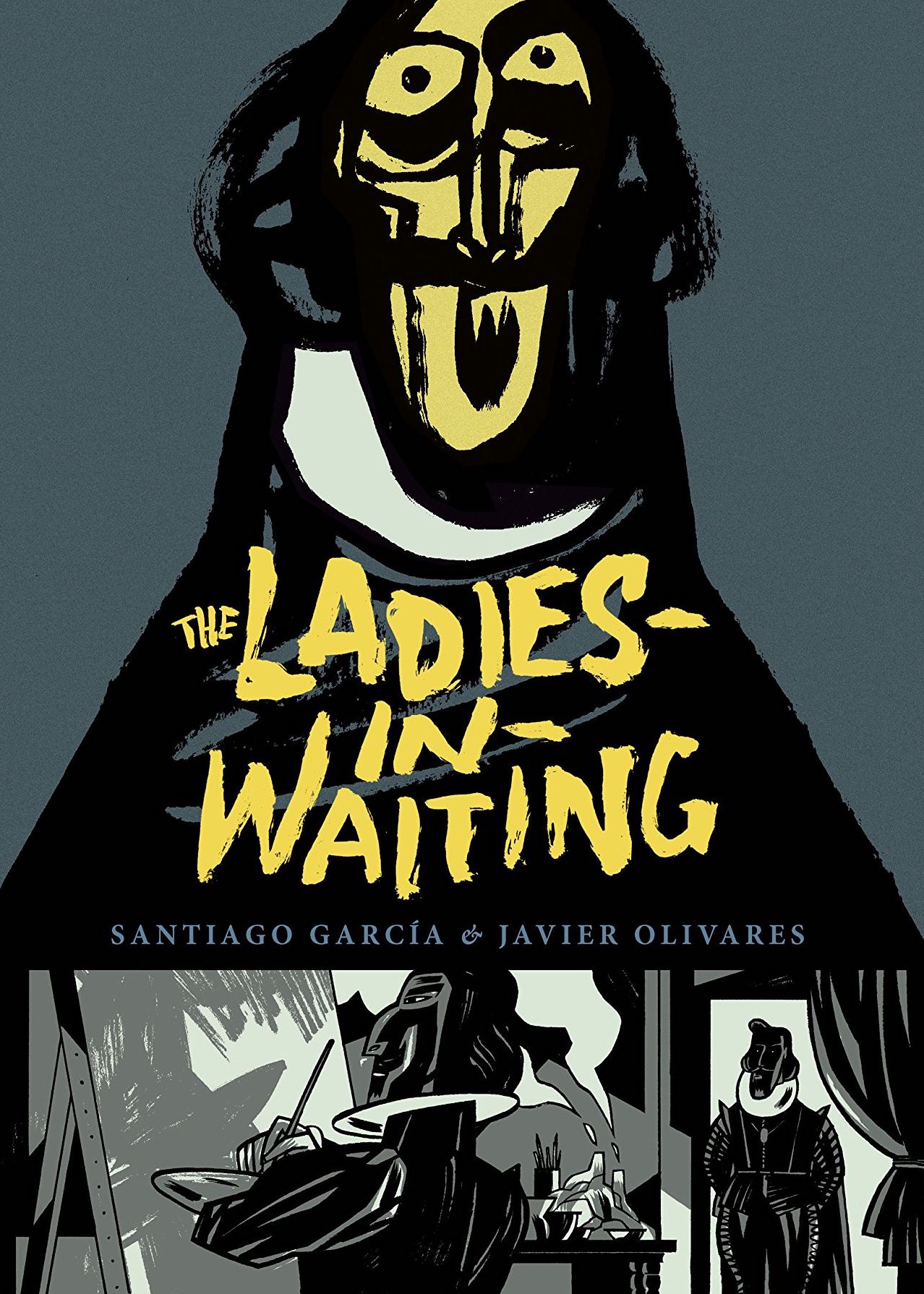
This graphic novel is the biography of a painting. But perhaps it’s really about reality

Review by Debkumar Mitra, Scroll.in, Published Oct 15, 2017

Santiago Garcia and Javier Olivares’s ‘The Ladies-In-Waiting’ tries to lift the veil of mystery over Velázquez’s famous work ‘Las Meninas’.

A fictional account of a mysterious and famous painting and a fragmented history of its birth add up to make for an unusual subject for a graphic novel. Santiago Garcia and Javier Olivares’s The Ladies-In-Waiting is an attempt to unveil the mystery shrouding Spanish painter Diego Rodríguez de Silva y Velázquez’s famous work Las Meninas, while meditating about the Spaniard’s life. A postmodern novel with a touch of pastiche, an absence of verifiable facts, and accounts of events by unreliable witnesses, this graphic narrative is a smörgåsbord of ideas with broad flatline German Expressionist style illustrations.

[…]

Many of the people fascinated by Las Meninas feature in the novel: French philosopher Michel Foucault, artists Francisco Goya, Pablo Picasso, and Salvador Dalí, playwright Antonio Buero Vallejo, and even the little-known American painter William Merrit. These characters appear suddenly, disrupting the narrative flow. Olivares’s use of different styles and colours are a bit shocking at times, as in the case of his depiction of Foucault, for instance. It appears to be a deliberate effort to capture an era through its dominant art style, albeit improvised.

See also this review

Helen Lock, The transformative effect of university-level learning inside prisons | Times Higher Education Features

Prisoners rarely get tertiary lessons, let alone have undergraduates study alongside them, but the results can be profound. Helen Lock reports. March 15, 2018

PDF if you can’t access online

Extracts

[…]

HMP Isis is located in south-east London, not far from Goldsmiths. Although the university has plenty of experience teaching former inmates through its well-established Open Book programme, it started teaching inside prisons only last year, beginning with a successful 10-week pilot programme covering social sciences. The male inmates are all between 18 and 30, so they fall into the typical age range for students. However, they have a variety of prior education levels, to which the courses must be able to adapt. Learning alongside the prisoners are current students from Goldsmiths, taking extra credits or on access courses.

Thomas is very impressed by the response to the programme from her inmates. “They are avid learners, which has been very exciting to see,” she says. “I wanted to get something like this to happen because it’s aspirational – there tends to be a focus on vocational training in prisons, which is important, but this is something different.”

[,,,]

It is hard to overstate the genuinely transformative impact that the course seems to have had on the group. One of the speakers says that by taking part in the course he realised that everything could be questioned and that his opinion was important. Another found that, as a gay man, he identified with the writings of Michel Foucault, and observed that a discussion on the topic of sexuality had led to a shift in the wider group’s attitudes.

[…]

It is nothing new to find teachers and academics working inside prisons; various types of ad hoc education have been on offer to prisoners for years. But formal, university-led lessons such as the programme at Isis have developed only relatively recently in the UK, Clark says. The model that Goldsmiths is using – of undergraduate students learning alongside prisoners – was pioneered in 2014 by Durham University with its Inside/Out criminology module. The following year, the University of Cambridge launched a similar programme, called Learning Together.

[Editor: Update January 2026. Links to Durham and Cambridge programs now only available on the internet archive]

Emanuele Iula, “L’eredità foucaultiana di Judith Butler”, in Rassegna di teologia, 2017 (4), pp. 639-660.

Article on academia.edu

Abstract:
Foucauldian influence on Butler’s work is evident at least in
three points: in the constitution of the subject by a true speech
about sexuality, in the genealogical method and in inheriting the
Foucauldian project itself. The research of the American author
will then deal with deconstructing the current regulatory regimes
and deepening her own vision of gender.

Abstract (italian):
L’influenza foucaultiana nell’opera di Judith Butler appare evidente
almeno in tre punti: nella costituzione del soggetto a
partire dai discorsi veri sulla sessualità, nel metodo genealogico
e, in ultimo, nel farsi erede dello stesso progetto foucaultiano.
Le ricerche dell’autrice americana si occuperanno
poi di decostruire i regimi normativi vigenti e di approfondire
la propria visione del gender.

Index:
Intro
1. Foucault e la sessualità
1.1 Tra la volontà di sapere e il bisogno di parlare
1.2 Le sessualità problematiche
1.3 La svolta: il contro.discorso dell’omosessualità
2. Judith Butler
2.1 Il progetto
2.2 Come è fatto il “gender”?
2.3 Che senso ha resistere?
3. Conclusioni

Emanuele Iula has a PhD from Paris, Centre Sèvres, focused on generativity as a new ethical approach. He teaches Ethics and conflict mediation in Naples.

Foucault and Nietzsche: A Critical Encounter (Bloomsbury Studies in Continental Philosophy) Edited by Joseph Westfall and Alan Rosenberg, Bloomsbury Academic, 2018

Foucault’s intellectual indebtedness to Nietzsche is apparent in his writing, yet the precise nature, extent, and nuances of that debt are seldom explored. Foucault himself seems sometimes to claim that his approach is essentially Nietzschean, and sometimes to insist that he amounts to a radical break with Nietzsche. This volume is the first of its kind, presenting the relationship between these two thinkers on elements of contemporary culture that they shared interests in, including the nature of life in the modern world, philosophy as a way of life, and the ways in which we ought to read and write about other philosophers.

The contributing authors are leading figures in Foucault and Nietzsche studies, and their contributions reflect the diversity of approaches possible in coming to terms with the Foucault-Nietzsche relationship. Specific points of comparison include Foucault and Nietzsche’s differing understandings of the Death of God; art and aesthetics; power; writing and authorship; politics and society; the history of ideas; genealogy and archaeology; and the evolution of knowledge.

Table of contents
Acknowledgments

Introduction
Alan Rosenberg (Queens College) and Joseph Westfall (University of Houston-Downtown)

1 ‘Foucault, Nietzsche and the History of Truth’
Paul Patton (UNSW Australia)

2 ‘Nietzsche and Foucault’s “Will to Know”’
Alan D. Schrift (Grinnell College)

3 ‘“We are Experiments”: Nietzsche, Foucault’
Keith Ansell-Pearson (University of Warwick)

4 ‘Nietzsche and Foucault: Modalities of Appropriating the World for an Art of Living’
Alan Rosenberg and Alan Milchman (Queens College)

5 ‘Foucault and Nietzsche: Sisyphus and Dionysus’
Michael Ureand Federico Testa (Monash University)

6 ‘Truth and Becoming Beyond the Liberal Regime’
Jill E. Hargis (California State Polytechnic University, Pomona)

7 ‘Twice Removed: Foucault’s Critique of Nietzsche’s Genealogical Method’
Brian Lightbody (Brock University)

8 ‘The Religion of Power: Between Nietzsche and Foucault’
James Urpeth (University of Greenwich)

9 ‘Nietzsche and Foucault on Power: From Honneth’s Critique to a New Model of Recognition’
João Constâncio and Marta Faustino (Universidade NOVA de Lisboa)

Updated bibliographies :: Heterotopian Studies

Two updated bibliographies related to heterotopia:

  1. General Bibliography gen pdf (updated March 2018)
  2. Under topic headings bibliography topic pdf  (updated March 2018)

Essay on the death of Hayden White
Scott McLemee, Inside Higher Ed, March 9, 2018.

The author of Metahistory, one of the most influential books in the humanities over the past four decades, died Monday. Scott McLemee takes him out of the poststructuralist pigeonhole.

Pursuing such a line of thought meant turning to sources outside history as a profession. The usual shorthand here is to say that White’s thinking converged with the work of structuralist and poststructuralist theorists in Europe — and indeed, White published one of the earliest papers on Michel Foucault to appear in an Anglophone journal. But emphasizing the French connection seriously understates the distinctiveness of the conceptual tool kit he put together. To analyze the modes of storytelling historians found themselves using to narrate the past, he borrowed from Northrop Frye’s The Anatomy of Criticism. For insights into historians’ rhetorical patterns, he turned to Kenneth Burke’s classic essay “Four Master Tropes.” And White’s interest in the aesthetic dimension of historical writing, while owing something to Roland Barthes, seems to have been inspired by Italian philosophers (especially Giambattista Vico and Benedetto Croce) rather than Parisian semioticians.

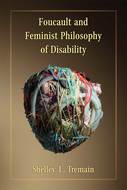
Shelley L. Tremain, Foucault and Feminist Philosophy of Disability, University of Michigan Press, 2017

Addresses misrepresentations of Foucault’s work within feminist philosophy and disability studies, offering a new feminist philosophy of disability

Description

Accessibility features: The EPUB version includes textual description of images to make visual content accessible to readers with disabilities that affect reading.

Foucault and Feminist Philosophy of Disability is a distinctive contribution to growing discussions about how power operates within the academic field of philosophy. By combining the work of Michel Foucault, the insights of philosophy of disability and feminist philosophy, and data derived from empirical research, Shelley L. Tremain compellingly argues that the conception of disability that currently predominates in the discipline of philosophy, according to which disability is a natural disadvantage or personal misfortune, is inextricably intertwined with the underrepresentation of disabled philosophers in the profession of philosophy. Against the understanding of disability that prevails in subfields of philosophy such as bioethics, cognitive science, ethics, and political philosophy, Tremain elaborates a new conception of disability as a historically specific and culturally relative apparatus of power. Although the book zeros in on the demographics of and biases embedded in academic philosophy, it will be invaluable to everyone who is concerned about the social, economic, institutional, and political subordination of disabled people.

“A much-needed contribution to the general intellectual discussion of disability, to Foucault studies, and to feminist theory. Tremain plows into some central tenets of disability theories and some of the most taken-for-granted feminist criticisms of Foucault. She also indicts professional philosophy in North America for its structural exclusion of disabled scholars. The evidence she presents and the arguments she makes are strong and sound.”
—Ladelle McWhorter, University of Richmond

“Foucault and Feminist Philosophy of Disability offers a master class on Foucault and feminist theory as it addresses the dangerous and biased exclusion of disability within academic philosophy. Its most powerful gifts are the tools it gives readers for recognizing the same exclusion and discrimination within their own fields—it is a book that has the potential to change academia.”
—Jay Dolmage, University of Waterloo

“An important work not just for those working on disability, but for anyone working on social justice, broadly understood. It is clearly argued, full of original ideas and insightful argument, and also a significant political intervention into debates over philosophical method. Tremain is unrelentingly materialist and structuralist in her analysis of ableist, sexist, and racist oppression. The book is an urgent call for all of us to do better.”
—Sally Haslanger, Ford Professor of Philosophy and Women’s and Gender Studies, Massachusetts Institute of Technology

“Sets the scene for philosophy of disability and opens new paths for critical disability studies . . . . Tremain carefully corrects misreadings and misappropriations of Foucault among disability theorists and feminists alike, and shows how these thinkers inadvertently reinscribe the status quo when it comes to theorizing disability. In working through the many ways disability is constructed, the book radicalizes philosophical consideration of topics ranging from epistemic injustice to stem cell research.”
—Melinda Hall, Stetson University

Shelley L. Tremain holds a Ph.D. in Philosophy and has taught in Canada, the U.S., and Australia. This book was awarded the 2016 Tobin Siebers Prize for Disability Studies in the Humanities. The author was also the 2016 recipient of the Tanis Doe Award for Disability Study and Culture in Canada.