Foucault News

News and resources on French thinker Michel Foucault (1926-1984)

Editor’s note

Over the next few weeks I will be posting ‘old news’ of various art exhibitions and performances as I finally catch up with my backlog of news feeds. Even if these exhibitions are no longer current, they provide general information about artists working with Foucault’s ideas in interesting ways. I will add a note to these posts that they are ‘old news’.

These posts reflect my own interest in the wide and diverse uptake of Foucault’s work.

As always, don’t hesitate to send me news for posting on the blog.

The Podcast for Social Research : The Podcast for Social Research, Episode 19: Biopolitics in Bloomberg’s New York, Thu, 30 March 2017

The nineteenth episode of the Podcast for Social Research features BISR research associate Jeffrey Escoffier, formerly the director of health, media, and marketing for the New York City Department of Health and Mental Hygiene under Michael Bloomberg, in conversation with Ajay Singh Chaudhary and Danya Glabau. Jeffrey, Ajay, and Danya talk through Foucault’s conception of the biopolitical, regimes of biopolitics in New York City, the history of public health, the policing of pleasure, health as morality, the strategies and politics of marketing healthy behavior, and coming down with a bad case of Aristotelian akrasia.

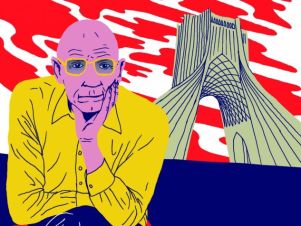
Behrooz Ghamari-Tabrizi examines Foucault’s writings on the Iranian Revolution as an attempt to write the history of the present without binding commitments to a teleological historiography. Is it possible for a people to envision and desire futures uncharted by already existing schemata of history? Is it possible to think of dignity, justice, and liberty outside the cognitive maps and principles of the Enlightenment? Ghamari-Tabrizi argues that Foucault’s encounter with the Iranian revolution left a significant mark on his later works on the care of the self and the hermeneutics of the subject.

Behrooz Ghamari-Tabrizi is Professor of History and Sociology at the University of Illinois, Urbana-Champaign. He is the author of Islam and Dissent in Postrevolutionary Iran (I.B. Tauris & Palgrave-MacMillan, 2008), Remembering Akbar: Inside the Iranian Revolution (OR Books & Counterpoint Press, 2016), and Foucault in Iran: Islamic Revolution after the Enlightenment (University of Minnesota Press, 2016).

CFP: Critical Theories Graduate Workshop: Adorno and Foucault – PhilEvents

Conference date(s):April 20, 2018 – April 21, 2018
Conference Venue: DePaul University Chicago, United States

Topic areas
20th Century Philosophy
Continental Philosophy
European Philosophy
Aesthetics
Philosophy of Gender, Race, and Sexuality
Social and Political Philosophy
Value Theory,
Miscellaneous

Details
Theodor Adorno and Michel Foucault are undoubtedly two of the twentieth-century’s most prominent philosophers and social critics, and this workshop aims to broaden the discourse of critical theory by thinking them with and against one another. Already in 1980 Foucault reported that he saw “striking parallels between his own analysis of the disciplinary, carceral society and Adorno’s administered world,” yet there has been very little work until recently to bring these two thinkers together.[1] Thus, this workshop aims to contribute to a growing interest in scholarship surrounding these two figures.

Topic Areas
We invite abstract submissions from any area of philosophy related to the works of Theodor Adorno and/or Michel Foucault. Given the nascent nature of this dialogue, there is no expectation that presenters be fluent in both figures. We simply ask that presenters are open to exploring dissimilarities and continuities between them during the workshop’s discussions. Possible topics include any scholarship on Foucault and/or Adorno as well as related figures, criticisms, and fields. We especially welcome submissions which draw upon underrepresented areas of philosophy.

Keynote Speaker:
Deborah Cook, University of Windsor
Prof. Cook received her doctorate from Paris I-Panthéon-Sorbonne in 1985. In Paris, she took courses with Jacques Derrida at the École Normale Supérieure and with Michel Foucault at the Collège de France.  Her first book was on Foucault, The Subject Finds a Voice: Foucault’s Turn Toward Subjectivity, and to date, she has published more than thirty articles on Adorno. The Culture Industry Revisited: Theodor W. Adorno on Mass Culture was published by Rowman and Littlefield in 1996 and Adorno, Habermas, and the Search for a Rational Society by Routledge in 2004. A book she edited, Theodor Adorno: Key Concepts, published by Acumen, appeared in 2008, and her text Adorno on Nature was also published by Acumen in 2011. Prof. Cook’s The Critical Matrix: Adorno and Foucault is forthcoming with Verso this year. 

Format
Presentations will be 20 minutes long and will be accompanied by prepared responses. Presenters will be asked to circulate their papers with fellow participants 1 week prior to the workshop.
Prof. Deborah Cook will provide a keynote address, and there will be a panel discussion of her forthcoming, The Critical Materix: Adorno and Foucault. 

Submission Guidelines
Please submit a 300-600 word abstract prepared for blind review to depaul.philosophy@gmail.com by February 16. Include your name, institutional affiliation, and paper title in the body of your email.You will hear back from conference organizers by February 20.

January 19 – Mar 10 2018
EX-VOTO the body + the institution – Galway Arts Centre
Lucy Beech
Jenna Bliss
Cecilia Bullo
Judy Foley
Sinéad Gleeson
Rajinder Singh  

“the cataclysm which was my body…this dislocated assemblage, this piece of damaged geology.”The Peyote Dance, Antonin Artaud

Ex-Voto is a group exhibition that addresses the colonisation of the human body, the treatment of the body by State, corporate, medical and pharmaceutical institutions.This exhibition also explores the subjective experiences of health and illness in the context of institutions.  The relationship between Institution and the individual, the role of power and the impact of capitalism and commerce are investigated in works by five contemporary visual artists and a writer.

The exhibition frames the artist as witness, mirroring Michel Foucault’s theories in The Birth of the Clinic, that clinical medicine is fundamentally an encounter between people. Michel Foucault’s The Birth of the Clinic addressed the patient’s corporeal experience and vulnerability in the context of modern medicine:”The presence of disease in the body, with its tensions & its burnings, the silent world of the entrails, the whole dark underside of the body lined with endless unseeing dreams, are challenged as to their objectivity by the reductive discourse of the doctor, as well as established as multiple objects meeting his positive gaze.” (Foucault, The Birth of the Clinic  xi).

stuartelden's avatarProgressive Geographies

16420742.jpgMichel Foucault, l’Iran et le pouvoir du spirituel – previously unpublished 1979 interview in Bibliobs (requires subscription). A shorter version is published in the print version of L’Obs, 8 February 2018. I have the print version, but if anyone can access the online version please let me know.

Many thanks to Sebastian Budgen for the link.

C’est un document fascinant, daté du 1979 et retrouvé l’année dernière dans ses archives: un entretien avec “l’Obs”, jamais publié, où le philosophe justifie son intérêt pour la révolution iranienne et défend la spiritualité comme force politique. Le voici dans son intégralité.

View original post

Paolo Vernaglione Berardi
Archeologia della penalità psichiatrica.
Psichiatri, giudici e degenerati

During the 1970s, Michel Foucault realized the most important ensemble of research about psychiatry intertwined with the penal system. The courses at the Collège de France: ‘La Societé Punitive’ (1971-72), ‘Le Pouvoir Psychiatrique’ (1972-73), ‘Les anormaux’ (1974-75), the book Surveiller et Punir (1975), combined with the frequent interventions about prison and the institutions of contention, constitute the field of archaeology of the societies of discipline.

The transformation of the sovereign power exercised by the King into bio-power constitutes a radical change of the techonologies of government. Bodies and population are the target of bio-power. Psychiatric hospitals, schools, the army, and prisons were all built on the model of Bentham’s “Panopticon”, which had assumed the function of control and of behavioural correction.

After the reform of the penal code (1835 in France), the psychiatric report had been introduced at large in trials. Meanwhile, the psychiatry had built the profile of the “dangerous individual”, which was put together in the nineteenth century. This profile was broken down into three categories: the “criminal monster”, the “pervert”, the “misfit”. In short, every small figure of abnormality.

These two articles (XIX-XX) try to reconstruct the specific issue related to the archaeology of penal psychiatry, following the main transformations of the discipline. Societies of normalization produce a docile subject. The practices of confession and self interrogation produce a theatre of the self. All these measures emerge in social conflicts, and mark the relationships between disciplinary power and anti-psychiatry. These experiences could have configured “another knowledge” and “another life”, and very well may continue to as such.

stuartelden's avatarProgressive Geographies

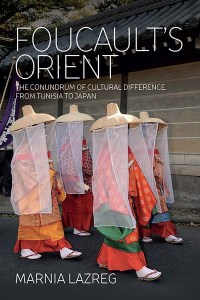
LazregFoucaultMarnia Lazreg, Foucault’s Orient: The Conundrum of Cultural Difference, From Tunisia to Japan – now out with Berghahn. Looks fascinating, and the use of archives and interviews should make this revealing. The Introduction is available online and has some interesting, though not unproblematic, claims. But the price for the book! £92 or $130…

Foucault lived in Tunisia for two years and travelled to Japan and Iran more than once. Yet throughout his critical scholarship, he insisted that the cultures of the “Orient” constitute the “limit” of Western rationality. Using archival research supplemented by interviews with key scholars in Tunisia, Japan and France, this book examines the philosophical sources, evolution as well as contradictions of Foucault’s experience with non-Western cultures.  Beyond tracing Foucault’s journey into the world of otherness, the book reveals the personal, political as well as methodological effects of a radical conception of cultural difference that extolled the local over the…

View original post 92 more words

Sophie Wintgens and Audrey Weerts, (eds.) L’État dans tous ses états Peter Lang,
Series: Géopolitique et résolution des conflits / Geopolitics and Conflict Resolution, 2017

ISBN: 9782807603646

Depuis l’avènement de l’État moderne au 17e siècle, l’État a connu de nombreuses évolutions. De l’idée d’État-nation en passant par celle d’État-providence, le concept s’est imposé dans nos sociétés contemporaines. Toutefois, son affirmation en tant que forme d’organisation du pouvoir politique s’accompagne également de questionnements croissants. L’État a-t-il la capacité de répondre aux enjeux nationaux et internationaux actuels ? Soumis à un grand nombre de contraintes tant internes qu’externes, dispose-t-il encore d’une marge de manœuvre ? Est-il en voie de transformation, voire de disparition ?

Cet ouvrage collectif a pour objectif d’apporter un éclairage original à ces interrogations. Construit autour de trois grands axes de réflexion mettant tous les aspects de l’État en question, il est un terrain d’échange entre plusieurs disciplines des sciences sociales. Mêlant réflexions théoriques et études de cas, il vise à enrichir le débat sur les évolutions de l’État dans une perspective pluridisciplinaire.

XI Colóquio Internacional Michel Foucault: Foucault e as práticas de liberdade será realizado entre 25 e 29 de setembro de 2018, no Centro de Cultura e Eventos da Universidade Federal de Santa Catarina, em Florianópolis, Brasil.

Facebook

O evento dá continuidade à série iniciada em 1999, cujo objetivo é aprofundar o conhecimento sobre o pensamento filosófico e político de Michel Foucault, reunindo especialistas nacionais e internacionais de diferentes áreas do conhecimento. Todos esses encontros resultaram na publicação de livros que reúnem um conjunto de artigos indispensáveis para o conhecimento e a discussão das contribuições foucaultianas para as distintas áreas do conhecimento: Retratos de Foucault, Nau, 2000; Imagens de Foucault e Deleuze, DP&A, 2002; Figuras de Foucault, Autêntica, 2006; Cartografias de Foucault, Autêntica, 2008; Por uma vida não-fascista, Autêntica, 2009; Foucault: filosofia & política, Autêntica, 2011; e O Mesmo e o Outro: cinquenta anos de História da Loucura, Autêntica, 2013.

A edição de 2018 do evento é uma promoção de diversas instituições: o Programa de Pós-Graduação em Literatura | UFSC, o Programa de Pós-Graduação em Linguística | UFSC, o Programa de Pós-Graduação Interdisciplinar em Ciências Humanas | UFSC, o Programa de Pós-Graduação em Filosofia | PUC-PR e a Pró-Reitoria de Pesquisa e Pós-Graduação | UFSC. Tem, ainda, apoio institucional da Universidade Federal de Santa Catarina, do Centro de Comunicação e Expressão | UFSC e do Consulado da França no Brasil.

A edição de 2018 reunirá mais de quarenta pesquisadores|as convidados|as, que se dividirão em 2 conferências e 13 mesas redondas. Além disso, o XI Colóquio, de forma inédita, contará com espaço para apresentação de trabalhos em três Simpósios Temáticos (apenas para doutores|as e doutorandos |as).

As inscrições para ouvintes e para apresentação de trabalhos acontecerá: entre 10 de março e 10 de maio de 2018, exclusivamente por este site (para ouvintes); entre 1º de abril e 2 de maio (submissão de propostas de Comunicação Oral em Simpósio, conforme a Segunda Circular); entre 20 de maio de 10 de junho de 2018, exclusivamente por este site (das|dos aprovados para apresentação da Comunicação Oral em Simpósio Temático). As informações sobre as inscrições podem ser consultadas na ABA INSCRIÇÕES.

Os convidados e as convidadas que já confirmaram a participação são os seguintes:

CONFERENCISTAS
Prof. Dr. Diogo Sardinha – Colégio Internacional de Filosofia, Paris

Profa. Dra. Salma Tannus Muchail – PUC | São Paulo

PARTICIPANTES CONVIDADOS DAS MESAS REDONDAS
CONVIDADOS ESTRANGEIROS (EM ORDEM ALFABÉTICA)

Prof. Dr. Claude-Olivier Doron – Université Paris Diderot

Prof. Dr. Christian Laval – Université Paris Nanterre

Prof. Dr. Daniele Lorenzini – Columbia University

Prof. Dr. José Luís Câmara Leme – Universidade Nova de Lisboa

Prof. Dr. Orazio Irrera – Université Paris 8

Prof. Dr. Phillipe Sabot – Université de Lille

Prof. Dr. Rodrigo Castro Orellana – Universidade Complutense de Madrid