Foucault News

News and resources on French thinker Michel Foucault (1926-1984)

Stuart Elden, Do We Need a New Biography of Michel Foucault?, American Book Review, Volume 39, Number 2/3, January/April 2018
pp. 12-23

In the 34 years since his death, there has been no lack of interest in Michel Foucault’s work. His ideas continue to be analysed, critiqued, utilised, and cited, across an ever-broadening range of disciplines. New books of material by Foucault, whether lecture courses or other previously unpublished material, have appeared at a rapid rate over the last twenty years. Most of these have been quickly translated into English and other languages. Yet there has been no new biography of Foucault for twenty-five years. Didier Eribon’s biography was translated in 1991, and David Macey’s The Lives of Michel Foucault and James Miller’s The Passions of Michel Foucault both appeared in 1993.

Naturally, some of the many books on Foucault have had biographical elements, of which David Halperin’s Saint Foucault (1995) is perhaps the key example. But that book, as with so many other interpretations and analyses had a rather different purpose than a biography in a strict sense. It was to read Foucault as a gay saint, a figure who could be held up as an exemplar of a particular way of life. I do not doubt that he can be that, but he was of course much more. The second and third editions of Eribon’s biography, which appeared in French in 1992 and 2011, are important. The third, in particular, includes a lot of new material, and its English translation is overdue: the existing translation is of the first French edition (1989). Eribon’s Michel Foucault et ses contemporains also includes a lot of biographical material, and there are biographical discussions in his Insult and the Making of the Gay Self (1999, 2004). Macey moved onto other topics before his own early death in 2011. His biography will be reissued by Verso in 2019, with an afterword by me.


Histories of Violence: Nonviolence and the Ghost of Fascism – Los Angeles Review of Books MAY 21, 2018

This conversation is with Todd May, who is a political philosopher and social activist based at Clemson University. Among his many books are, more recently, A Fragile Life: Accepting Our Vulnerability (2017) and Nonviolent Resistance: A Philosophical Introduction (2015).

In your writings, you continue to highlight the contemporary importance of continental thinkers such as Michel Foucault, Gilles Deleuze, and Jacques Rancière, among others. How do they still help us develop a critique of violence adequate to our times?

Todd May: Let me address this in two parts: the issue of the critique of violence and then the alternative of nonviolence. Regarding violence, we need to ask a bit about what violence is. In my book on nonviolence, I confessed to being unable to come up with an adequate overall definition of violence. However, traditionally violence is considered to be of at least three types: physical, psychological, and structural. It is structural violence that is most relevant to consider here. Let me focus on Foucault and Rancière. In his most famous works, Discipline and Punish and the first volume of The History of Sexuality, Foucault can be read — rightfully so, in my view — as offering us genealogies of particular kinds of structural violence, violence that stems not from direct person-to-person contact but instead emerges from the structure of a social situation.

Catherine Soussloff, “Foucault on Painting” (U Minnesota Press, 2017) podcast

In Foucault on Painting (University of Minnesota Press, 2017), Catherine Soussloff discusses an area of Foucault’s development that has remained largely overlooked: his engagement with painting.  Indeed Foucault, we learn, described himself as a painter.  Throughout his career, he examined painting and the image as he pursued critical elements of his philosophical ideas. Soussloff examines Foucault’s engagement with periods in European art history that captured his attention in particular: the Baroque, mid-nineteenth century French painting, Surrealism, and figurative painting of the 1960s and 1970s. The book also considers Foucault’s interest in five artists: Velázquez, Manet, Magritte, Rebeyrolle, and Fromanger. Soussloff’s study reveals the importance of art in Foucault’s philosophy, and affirms the relevancy of Foucault in consideration of the role of the image in the twenty first Century.

Recent reviews of my Foucault books – Mike Gane, JM Moore and Nancy Luxon

26 May 2018


stuartelden's avatarProgressive Geographies

Foucault: The Birth of Poweris reviewed by Nancy Luxon in Perspectives in Politics, and by JM Moore in Justice, Power and Resistance. That book, and Foucault’s Last Decadeare also discussed in a review essay by Mike Gane in Cultural Politics, which also looks at two of Foucault’s courses. The Gane essay is critical, the Moore one is very positive, while the Luxon is positive but opens up some issues about how we might use Foucault too. The Moore one is open access, the others are behind pay-walls.

I’m not going to get into a bigger debate, especially with Gane, where there are clearly fundamental disagreements. But I will point out a few things. If I had wanted to write a book about how to use Foucault, then I would have tried to do that. I’ve been clear all along that I’m trying to write intellectual…

View original post 300 more words

stuartelden's avatarProgressive Geographies

garricks-temple-sept-3-2016.jpgFoucault and Shakespeare – symposium at Garrick’s Temple, 23 June 2018

David Garrick built his Shakespeare Temple beside the Thames at Hampton in 1755 as a place where ‘the thinkers of the world’ would meet to reflect on the plays. He hoped Voltaire would come. Now the Kingston Shakespeare Seminar is realising the great actor’s vision, with a series of symposia on Shakespeare in Philosophy. Each of these Saturday events features talks by leading philosophers and Shakespeare scholars, coffee and tea in the riverside garden designed by Capability Brown, and lunch at the historic Bell Inn.

I’ll be one of the speakers at this event, with other contributions from Tom Brockelman, Jonathan Dollimore, Kélina Gotman, Jennifer Rust, Duncan Salkeld and Richard Wilson. I’ll be speaking about ‘Foucault, Shakespeare, Contagion’, which is mainly through a discussion of Troilus and Cressida.

To register, go to the Eventbrite page; more details here

View original post 1 more word

Farrell, F., Lander, V.
“We’re not British values teachers are we?”: Muslim teachers’ subjectivity and the governmentality of unease
(2018) Educational Review, pp. 1-17. Article in Press.

DOI: 10.1080/00131911.2018.1438369

Abstract
This paper is a critical investigation of a group of eight Muslim religious education (RE) teachers’ views of fundamental British values in education (FBV). Findings demonstrate that as teachers of multicultural RE, they experience dissonance accommodating the requirements of FBV, and are critical of its divisive effects upon their students. They are able to reclaim some professional agency through their problematisation of FBV and reinterpretation of its requirements through the pluralistic discourse of RE. Drawing from Foucault’s analysis of power, we argue that the teachers’ views reveal that FBV is a disciplinary discourse, acting upon teacher and student bodies as a classificatory and social sorting instrument, which we conceptualise as an expression of the “governmentality of unease”. We conclude that further empirical research is required to critically examine how teachers are enacting this policy to assess how FBV continues to shape the education environment and the student and teacher subjects of its discourse. © 2018 Educational Review

Author Keywords
Foucault; Fundamental British values; governmentality; Muslim teachers; religious education; subjectivity


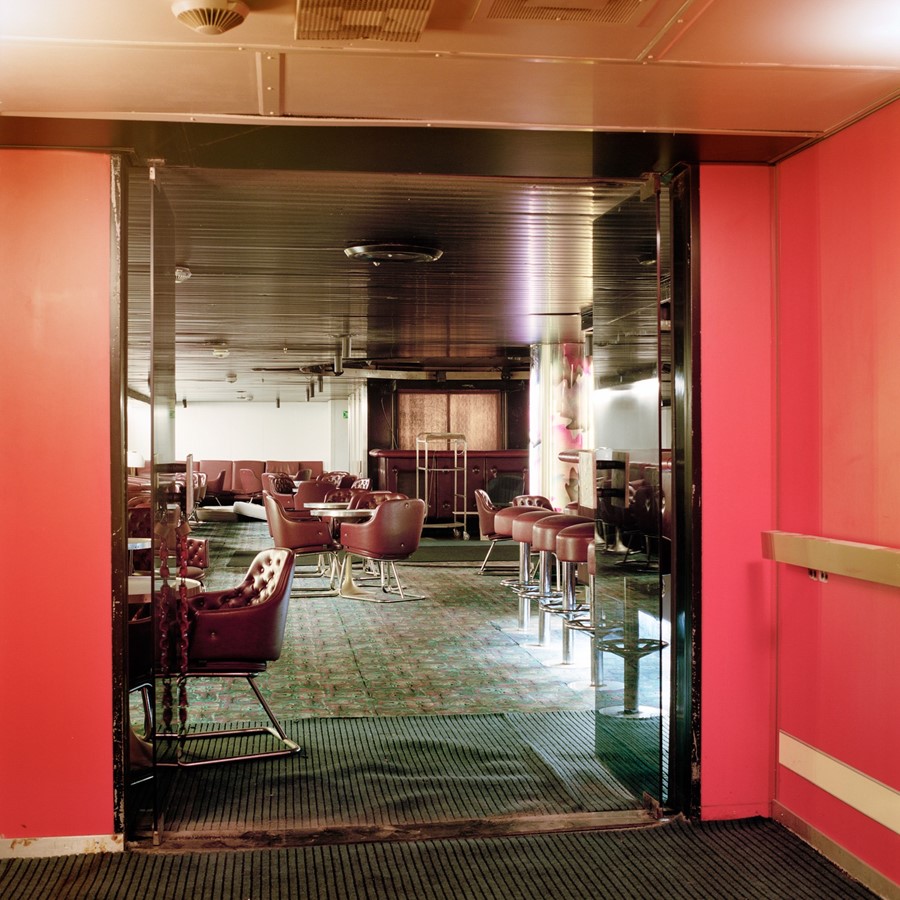
Photographing the Shiny, Kitsch Interiors of Italian Ferry Boats | AnOther, 9 May 2018
Allegra Martin is fascinated by the idea that ferries are “places suspended in time and space”, and has been photographing on board for almost a decade

20th-century philosopher Michel Foucault’s theory of heterotopia – the idea that spaces exist with various layers of functions and meanings – is one of his most famous. According to the French theorist, the ship is the “heterotopia par excellence”, “a floating piece of space, a place without a place”. This concept spoke to Italian photographer Allegra Martin, who has been taking pictures on ferry boats since 2009, and the resulting project, A Bordo, is being exhibited at Milanese location agency Anticàmera, with whom the photographer co-curated the exhibition, until September. “My interest initially focused on passengers killing time during travel, portraits of the crew at work or in moments of relaxation, and then exclusively on the ferry’s interiors and details,” Martin explains. “The interiors, with their sofas and cabins and carpets were perfect proof of this condition of ‘suspension’ – a place suspended in time and space.” Indeed, one of the photographer’s only hints at the world outside the ferries is an image taken on deck on a sunny day, in which the sea is just visible through a window.

Michel Foucault (center) with Jean Genet (right) at a Paris demonstration in the wake of the killing of Mohamed Diab by police in 1972.

Bruce Robbins, The Other Foucault (book review) | The Nation, NOVEMBER 2, 2017

At his death in 1984, Michel Foucault left a letter stating that he wanted no posthumous publication of his work. He should have known better: The hunger for further clarification and elaboration of the master’s positions would prove irresistible. So too has been the flow of posthumous publications, the most eagerly awaited of which have been the dozen or so book-length compilations of his annual lectures at the Collège de France, which began to appear in English translation in 2003.

[…]

The lectures, diverging as they often do from the books that made Foucault famous, only added to the controversy. They are—along with various manifestos, unpublished drafts, interviews, and other miscellaneous writings—now also the subject of two fascinating new books by Stuart Elden: Foucault: The Birth of Power and Foucault’s Last Decade. In the former, Elden tries to soothe some of the long-standing tensions between Foucault and Marx, in part by displaying hidden continuities between Foucault’s early work on madness and knowledge and his later work on power. In the latter, Elden deals with the 10 years after Foucault finished the manuscript of Discipline and Punish and began (on the same day!) The History of Sexuality.

read more

stuartelden's avatarProgressive Geographies

9781138104372Ethics and Self-Cultivation: Historical and Contemporary Perspectives, edited by Matthew Dennis and Sander Werkhoven and published by Routledge (usual comments on pricing apply).
The aim of Ethics and Self-Cultivation is to establish and explore a new ‘cultivation of the self’ strand within contemporary moral philosophy. Although the revival of virtue ethics has helped reintroduce the eudaimonic tradition into mainstream philosophical debates, it has by and large been a revival of Aristotelian ethics combined with a modern preoccupation with standards for the moral rightness of actions. The essays comprising this volume offer a fresh approach to the eudaimonic tradition: instead of conditions for rightness of actions, it focuses on conceptions of human life that are best for the one living it. The first section of essays looks at the Hellenistic schools and the way they influenced modern thinkers like Spinoza, Kant, Nietzsche, Hadot, and Foucault in their thinking about self-cultivation. The…

View original post 166 more words

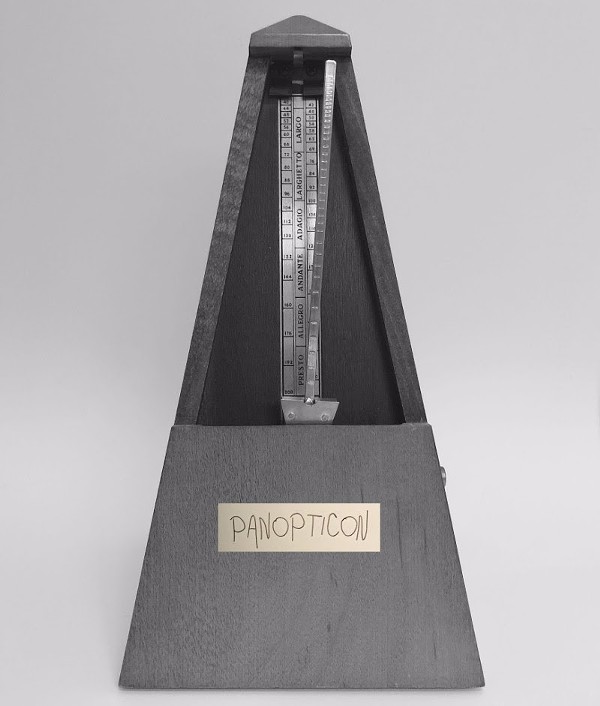
Britt Lorraine’s “Panopticon” Exhibition Formed Over 15 Years, Opens This Weekend | ArtSlut,, May 17, 2018

Free, Sat May 19, 7-10pm (on view through June 23 with additional performances to be announced), Sala Diaz, 517 Stieren St., San Antonio, Texas, USA (210) 972) 900-0047, saladiazart.org.

One of 19 local artists featured in the Contemporary Arts Museum Houston’s current exhibition “Right Here Right Now: San Antonio,” Lorraine’s latest endeavor takes shape in the solo show “Panopticon.” Prefaced by a text French philosopher Michel Foucault penned about the panoptic mechanism — essentially a strategically designed prison complex in which all inmates are visible at all times — the project arose from an image that popped into Lorraine’s head and stuck.