Foucault News

News and resources on French thinker Michel Foucault (1926-1984)

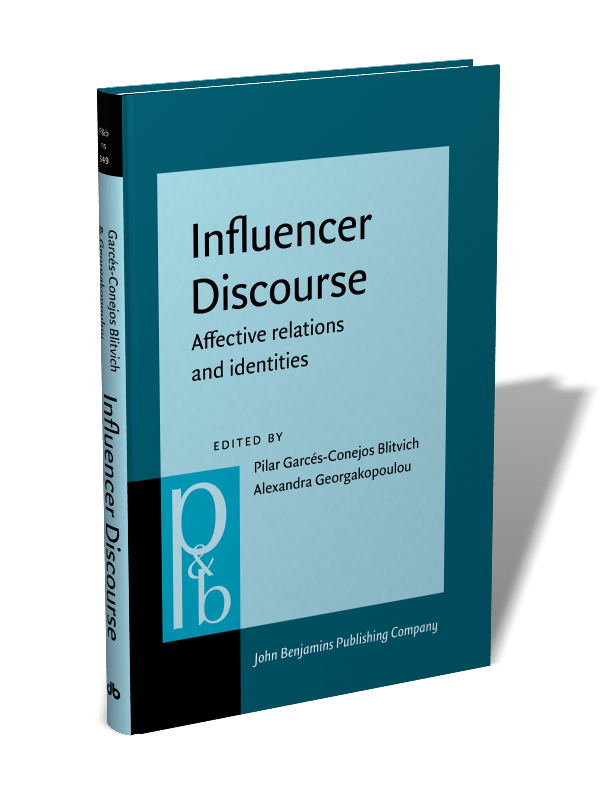
Droz-Dit-Busset, O., Spilioti, T. “Getting personal with you” Affect and authenticity in confessional videos of YouTube lifestyle and beauty influencers (2024) Influencer DiscourseAffective relations and identities, Eds. Pilar Garcés-Conejos Blitvich and Alexandra Georgakopoulou, John Benjamin’s Publishing Company, pp. 278-302.

DOI: 10.1075/pbns.349.11dro

Abstract

Since the Middle Ages, confession has been one of the ‘most highly valued techniques for producing truth’ (Foucault 1978). While confessional monologues have been researched in reality TV discourse (Lorenzo-Dus 2009; Tolson 2006), the communicative potential of confessional talk for Social Media Influencers has been largely underexplored. This chapter aims to fill this gap by exploring confession as a distinct genre in the communicative repertoire of lifestyle and beauty YouTubers. In this regard, we first map this genre in terms of its key themes, formal features and media production choices. Drawing on Giaxoglou’s (2021) notion of affective positioning, we also examine how the influencers and their audiences are affectively positioned in the discourse of confessional videos through the deployment of verbal, non-verbal, as well as other material (camera) and graphic (emojis) resources. We conclude this chapter by demonstrating how this type of positioning intersects with the production of an authentic selfhood on YouTube. © 2024 John Benjamins Publishing Company.

Author Keywords
(affective) positioning; affect; authenticity; confession; content creators; intimacy; lifestyle and beauty influencers; multimodality; social media influencers; vulnerability; YouTube

PhD Course: Foucault and Organization, Technology, and Subject-formation – 4 ECTS. Copenhagen Business School

Monday 16th June to Thursday 19th June 2025 in Copenhagen. Registration Deadline: Monday 5th May 2025 at 23:55. LINK to registration:
https://phdsupport.nemtilmeld.dk/38/

Course coordinator: Kaspar Villadsen, Department of Business Humanities and Law (BHL)

Faculty

Professor Sverre Raffnsøe
Department of Business Humanities and Law, CBS

Associate Professor Marius Gudmand-Høyer
Department of Business Humanities and Law, CBS

Professor (mso) Kaspar Villadsen
Department of Business Humanities and Law, CBS

Prerequisites
Only PhD students can participate in the course. Participation requires submission of a short paper after the PhD student’s choice (see more below). Papers must be in English and deadline is 1st June 2025.

It is a precondition for receiving the course diploma that the PhD student attends the whole course.

Aim
The course will provide the participants with:

1) An introduction to key analytical potentials reconstructed from Foucault’s wide-ranging authorship as well as the lecturers’ own research projects.

2) In particular, we will discuss different approaches to themes of organization, technology, and subject-formation as they are deployed in state-of-the-art Foucault-inspired scholarship.

3) The potentials and limits of the particular way Foucauldian analytics can be applied in the participant’s research will be discussed. Hence, a range of analytical resources and potentials will be explored and discussed in relation to the participants’ current research.

Course content
Michel Foucault’s work continues to offer a major source of inspiration for PhD projects across a wide range of disciplinary domains. This PhD course explores how Foucault’s work speaks to three broad themes in contemporary business school research and beyond: Organization, technology, and subject-formation. The lecturers on the course have all pursued substantive research on these themes, drawing upon different parts of Foucault’s authorship, and they will base their teaching on this research experience. A key aim of the course is that the participants acquire an effective overview of analytical possibilities in Foucault’s work, effective for selecting and deploying such analytics in their own research.

Overall, Foucault’s thinking can help to inquire into the organizations, technologies and techniques of self-formation that make up the conditions of possibility for our contemporary experiences. First, Foucault’s usual genealogical approach (Foucault 1977, 1984) works by tracing how contemporary forms of organization emerged from past struggles, political strategies, and accidental events. From this perspective, the prevailing modes of organizing can be better grasped by recovering their historical conditions of emergence and dispersion. Genealogy takes as its basic premise that history, as well as our present, is a site of evolving struggle, including contest over divergent interpretations, which the development of modern modes of organizing and managing clearly displays. Hence, struggles around definitions and uses of appropriate management, leadership, accountability, transparency or sustainability make up pertinent material for genealogical inquiry.

Foucault developed his own notion of technology during the 1970s, namely the concept of “the dispositive”. A dispositive is defined as a historical configuration, which connects a series of discursive and non-discursive elements such as laws, practices, material artefacts, procedures, and techniques (Foucault, 1980). It designates a propensity in knowledge production and social practice as well as a “dispositionality” in how institutions emerge and transform. The concept opens for analyzing how our practices – for example, risk assessments or anti-pandemic strategies – are conditioned by dispositives that have been formed in historical processes often spanning several centuries. Foucault (2007) suggested that the dispositives of law, discipline and security have been particularly important as responses to thorny governmental problems such as crime, infectious diseases, population welfare, and labor unrest. Current problems such as climate change, environmental degradation and extreme inequality could be analyzed as straddling between these deep-rooted frameworks of calculation, intervention and rationalization. The dispositive has recently been introduced into Foucauldian scholarship as a highly promising analytical resource (##), and the course will explore how it can be used for empirical inquiries.

Finally, Foucault’s late authorship in the early 1980s, often termed his “ethical turn”, took him back to techniques of self-formation in Early Christianity and Greco-Roman antiquity. There, Foucault noticed a “technical” notion of ethics less defined by submission to universal moral codes and instead focused more on the self’s work upon the self.

Foucault’s attention to ethics in the early 1980s hardly signified a departure from political issues, but a re-conception of politics as an ethical politics. The work on your own freedom that ethics comprise is political, Foucault argued, in the sense that our self-fashioning involves what we are willing to accept or want to change in ourselves as well as in our circumstances: “[T]here is no first or final point of resistance to political power other than in the relationship one has to oneself” (Foucault, 2005: 252). Perhaps, the urgent issues of our time call for developing another form of ethics rather than models rooted in legal frameworks and Christian morality. The recent emergence of responsible consumers, ‘life-long learners’, climate conscious youths, “freeganism”, and fluid gender identity could be analyzed with inspiration from Foucault’s work on ethics and self-formation. An analytical key task that will be addressed in this part of the course is how to integrating Foucault’s notion of technology, the dispositive, with his analysis of self-technology, hence bridging the mid-career Foucault’s analytics of power with the late Foucault’s ethics.

The theme of this PhD course requires that the participants engage in some way with Foucault’s historical work, his analytical frameworks, his concepts, or his approach to organization, technology, and subjectivity. Papers that are not underpinned exclusively by Foucauldian analytics but also derive from other thinkers and traditions are welcome too. Our point of departure is that Foucauldian analytics is not only pertinent to philosophical research, since such analytics can also find application in ethnographic, sociological, organizational, historical, and anthropological research.

Teaching style
The goal is to sharpen the participants’ knowledge of the Foucauldian toolbox of analytical resources and how these can be applied in PhD projects. To that end we will set aside sufficient time to carefully examine and discuss the papers submitted by the participants. The course will consist of both workshops and lectures/presentations by scholars who are specialist in Foucault’s work and subsequent Foucauldian scholarship. The goal of the lectures is, first, to clarify the ways in which Foucault worked with his most significant analytics and, second, to demonstrate how to put the analytics at work in specific analysis. The aim of the workshops is to explore how Foucauldian analytics function (or possible may be employed) in each participant’s research – with the aim of strengthening, deepening and nuancing the participants’ dissertations or research articles. In the workshops, the course participants are divided into smaller groups (using shared topics and/or approaches as choice criteria) enabling a substantial peer discussion of both paper and their research project. Each workshop will be supervised and organized by one of lecturers.

All participants are required to submit a paper that deals with the key theme(s) of the PhD project in question. Papers that apply Foucauldian analytics to empirical problems in a variety of domains are welcomed, but so are papers that draw upon other thinkers and traditions. Perhaps the PhD student is interested in considering whether it would be interesting to include perspectives drawn from Foucault and Foucauldian scholarship in their PhD project.

It is possible to submit two kinds of papers. The first option is a short paper/abstract, which briefly presents the PhD student’s project and perhaps poses some questions regarding how it could include perspectives from Foucault. The second option is to submit a brief paper (5-10 pages), which presents the PhD project and some key theoretical and/or empirical considerations, and it can perhaps include notions from Foucault such as power, knowledge, governmentality, technologies of power, self-technology, etc.  The key idea is that each participant will take home lots of beneficial inputs to his/her PhD project based on a discussion of challenges and potentials in the project.

Papers must be in English.

Learning objectives

  • Achieve a strong reflexivity regarding how the choice of analytics from Foucault’s authorship brings certain questions, problems, entities and processes into the foreground of analysis and critical consideration.
  • Awareness of different ways of working with Foucauldian analytics in PhD dissertations, articles and academic writing in general. This awareness will particular concern and be exemplified by the themes of organization, technology, and subjectivity. However, as mentioned above, these themes are not exclusive.
  • The course will increase participant’s critical ability to account for the potential role of Foucauldian analytics, in general, and how it is applied in the participant’s research, specifically. This reflexivity concerns, inter alia, the epistemological distinctiveness of Foucauldian analytics, the social ontology its assumes, the analytical practices involved in Foucauldian scholarship, and the potential critical effects of such scholarship. Finally, the increased reflexivity relates to the range of Foucauldian analytical resources that can be effectively explored in relation to the participants’ current research.

See here for further information.

Apr 22, 2024

There certainly is a multiplicity of pathways leading from Deleuze (and Guattari) to posthuman thought. This one explores the one leading from Deleuze’s reading of Foucault’s “vitalism” and his version of the “death of man” to today’s convergence of molecular biology and computer science. Bruno Latour’s actor networks and Donna Haraway’s cyborgs show up along the way. The conclusion is that our digital societies are literally built on sand…

Feb 23, 2025

Michel Foucault from A to Z.

War is certainly not a central entry in Foucault’s vocabulary. Nevertheless, in his lectures “Society Must Be Defended”, he deals extensively with the hypothesis that the model of war is well suited to analyzing the effects of power. In the end, however, he concludes that this model is not necessarily suitable for this purpose. The video makes it clear that Foucault also referred to the model of war in Discipline and Punish. By means of this model, he examines concrete practices of discipline. The interaction between body and weapon provides a telling analogy to today’s relations between humans and machines.

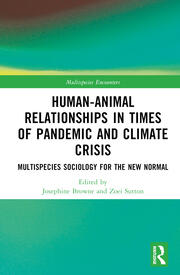
Cudworth, E. Resisting Zoopolis: Bordering species relations as a response to COVID-19 (2024) Human-Animal Relationships in Times of Pandemic and Climate Crises: Multispecies Sociology for the New Normal, Edited By Josephine Browne, Zoei Sutton, Routledge, pp. 133-150.

DOI: 10.4324/9781003257912-12

Abstract
Human publics are now more aware than ever of the presence and threat of zoonotic pandemics, originating in non-human animals; with microbial agents leaping from animal to human bodies. The dominant discourses constituting zoonotic politics have reflected our colonial present, with peoples and practices from the continents of Africa and Asia being demonized. The dominant discourse during the pandemic was also driven by the contradictory demands of the Capitalocene for business as usual. In light of this, the predominant political response to the zoonotic pandemic has been bordering and rebordering practices – restricting travel and mobility for some humans, attempting to limit trades in live animals and increasing surveillance of everyday practices at food markets. What COVID-19 illustrates, however, is that bordering, whether constituted by high politics, or cultural, economic and social activities, is a process to be found in a multiplicity of places and one which reveals the extent of our bio-insecurity.

Zoonotic politics necessarily extends Foucault’s biopolitics to include the non-human lifeworld as an object of power; and in pandemic times, the idea that politics is post-human rather than a discreet sphere of human activity gains traction. The awareness of rapidly developing new strains of pandemic disease has given salience to zoonotic discourses of bordering, however, rather than opening up to the critical voices demanding a different kind of zoonotic politics.

Yet, species borders are inevitably leaky – we live among other creatures, and zoonoses are illustrations of biomotility – their pathogens make us up, in the flesh. Our lack of acknowledgement of the lives of other animals whom we raise or hunt to kill and eat, whose habitats we destroy and encroach upon and whose populations we squeeze to the point of breaking has led us to the current human health crisis. A post-humanist politics seeks not to attempt to border the leaky boundaries of species, but to insist on a reordering of species relations and an opening up of the polis to the myriad creatures that constitute our world. To this end, this chapter reflects on the notion of zoopolis, arguing for a creaturely politics in which species binaries and boundaries are reconfigured

Dent, C.
Governmentality and the Common Law: Expansion of “Mind” 1835–1885 (2024) International Journal for the Semiotics of Law

DOI: 10.1007/s11196-024-10217-0

Abstract
The nineteenth century saw significant changes in how the law articulated the assessment of those who came before the courts. The judges made greater, and more refined, use of the concept of the mind as a way to refer to the internal lives of the parties. Using a Foucauldian lens, judgments from the sub-disciplines of criminal, succession and contract law will be assessed. Two specific aspects will be considered—the manner in which the law disciplined the subjects themselves and the manner in which the profession operated as a form of externalised governance. This deployment of the term “mind” used by the judges conforms with the idea that the law was taking on a new role in the governance of English society while emphasising specific tensions within each area. © The Author(s) 2024.

Author Keywords
19th century law; Discipline; Foucault; Mechanistic mind

Frédéric Gros : “Selon Foucault, la folie n’est rien d’autre que l’inquiétude de la raison”, France Culture, Publié le vendredi 21 février 2025. Radio program, podcast

Le philosophe Frédéric Gros nous parle de l'”Histoire de la folie à l’âge classique”, texte qui l’a bouleversé et dans lequel Michel Foucault trace une ligne de crête entre l’exaltation de la raison et l’idéalisation de la folie. Comment appréhender la folie sans l’enfermer dans le pouvoir médical ?

Avec
Frédéric Gros, Philosophe, essayiste, professeur de pensée politique à Sciences-po Paris

Le philosophe Frédéric Gros s’apprêtait à délaisser le monde académique lorsqu’il a découvert l’œuvre de Michel Foucault, par le biais de l’Histoire de la folie à l’âge classique : “je ne comprenais rien mais j’étais émerveillé par la texture granuleuse du texte. J’ai été impressionné, séduit et emporté par le mouvement de l’écriture : il y avait quelque chose comme un souffle lyrique. J’avais du mal à me repérer dans le texte, à saisir ce qui était important ou accessoire, c’était une vraie expérience d’étrangeté.”

Laisser remonter la folie première du monde
Selon Frédéric Gros, Foucault nous montre dans ce texte que nous n’avons pas toujours considéré la folie comme une maladie : cette tendance date du 19ème siècle. “Il invite à laisser remonter de notre culture d’autres expériences de la folie. Selon Foucault, derrière nos discours raisonnables grouille quelque chose comme une folie première du monde, qui parfois déborde. Il y a là l’idée d’un délire premier qu’on a réussi à maîtriser par nos paroles.” Ainsi, Foucault nous invite à faire une expérience de pensée, dont il n’arrive à rendre compte que par un langage qui brasse à la fois concepts et images, “qui déstabilise le beau parler français”.

“Néanmoins Foucault est très conscient qu’il existe un risque de romantisation de la folie, c’est pour ça qu’il écrit que la folie est absence d’œuvre : il ne prétend pas qu’il y a une alliance entre le génie et la folie, qui demeure pour beaucoup une souffrance psychique intolérable.”

Derrière chaque vérité se cache une opération de pouvoir
Frédéric Gros évoque la manière dont les psychiatres ont ressenti cet ouvrage : “comme un outrage, une insulte, une provocation et une déstabilisation, car Foucault y affirme que la folie n’est rien d’autre que l’inquiétude de la raison”. En effet, le philosophe démontre que la psychiatrie est un “dispositif de pouvoir-savoir”, puisqu’elle crée la vérité qu’elle affirme connaître – sans pour autant prétendre qu’elle est un montage idéologique.

“Foucault nous oblige à abandonner le fantasme d’une autorité décisoire et définitive de la Raison. Selon lui, la vérité ne peut cesser d’être dogmatique que si elle accepte d’être inquiète d’elle même – mais bien sûr qu’il nous faut des vérités.”

“Pour moi, Flaubert est glacial”
“J’aime sa correspondance, mais il y a quelque chose de tellement maîtrisé chez Flaubert que son œuvre me tombe des mains. En même temps, je me dis que je passe à côté de quelque chose, mais ça n’a pas résonné chez moi. Et pourtant Foucault l’adorait….”

Vrdoljak, T. Foucault’s Culturalist Axiomatic: A Nietzschean Naturalist Rejoinder
(2024) Nietzsche-Studien

DOI: 10.1515/nietzstu-2024-0013

Abstract
The Nietzsche-Foucault relationship has been the subject of extensive scholarship, highlighting their affinity. In contrast, this paper foregrounds what I take to be their most significant point of divergence: it compares Nietzsche’s naturalist to Foucault’s culturalist axiomatic of power. First, I introduce a minor, naturalist tradition in the philosophy of power that culminates with Nietzsche. Second, I show how Foucault revolutionized the field of political thought and analysis by drawing on Nietzsche’s critique of logocentrism, and in so doing introduced a different and significantly more expansive image of politics. Third, I survey Foucault’s key writings on power to support the claim that the contrast between Nietzsche and Foucault can be described in terms of a contrast between naturalism and culturalism. Finally, I follow this theme in the writings of “new materialist” thinkers and their ambiguous reception of Foucault. Although Foucault is often read as politicizing Nietzsche, his circumscribing of power-relations to intra-human relations alone, and thereby confining politics to human cultures, in effect led to him to depoliticizing Nietzsche. © 2024 the author(s), published by Walter de Gruyter GmbH, Berlin/Boston.

Author Keywords
Culturalism; Foucault; Naturalism; Politics; Power

Gouverner les âmes et les corps

« Cahiers d’études du religieux. Recherches interdisciplinaires »
* * *
Abstract

Ce dossier thématique des Cahiers d’études du religieux a pour objet d’interroger la pertinence du concept foucaldien de gouvernementalité en sciences religieuses. Plus précisément, on se demandera s’il s’agit là d’un concept opératoire pour décrire la relation pastorale qui unit une figure d’autorité religieuse à une communauté religieuse. L’on attendra plus précisément des études de cas, précises et correctement documentées, tirées des différentes traditions religieuses et aires géographiques, de l’Antiquité à nos jours.

Announcement

Appel à contributions pour le numéro thématique à paraître en juillet 2025

Argumentaire

Le concept de gouvernementalité, élaboré tout au long de ses cours au Collège de France depuis ses Leçons sur la volonté de savoir en 1970-1971 jusqu’au Gouvernement de soi et des autres II : Le Courage de la vérité en 1983-1984, sans compter ses ouvrages Surveiller ou punir ou Histoire de la sexualité, constitue un des grands apports conceptuels de la pensée de Michel Foucault. Or, de nombreux travaux, parmi lesquels ceux de Michel Senellart ou, plus récemment, d’Agustín Colombo, mais aussi la consultation du Fonds Foucault à présent disponible à la BnF, permettent aujourd’hui de comprendre ce que ce concept doit à la lecture assidue menée par Michel Foucault des écrits chrétiens, aussi bien de l’Antiquité et du Moyen Âge que de la Contre-Réforme.

Ce dossier thématique a donc pour objet d’interroger, par un choc en retour, la pertinence du concept foucaldien de gouvernementalité en sciences religieuses. Plus précisément, on se demandera s’il s’agit là d’un concept opératoire pour décrire la relation pastorale qui unit une figure d’autorité religieuse à une communauté religieuse. L’on attendra plus précisément des études de cas, précises et correctement documentées, tirées des différentes traditions religieuses et aires géographiques, de l’Antiquité à nos jours, susceptibles d’éclairer les interrogations suivantes :

Quels sont les processus rhétoriques, psychologiques, politiques, historiques, socioéconomiques ou anthropologiques grâce auxquels la relation pastorale se constitue en relation de pouvoir entre une figure d’autorité religieuse et une communauté religieuse donnée ? Quel est, dans ces processus, le rôle joué par les normes régissant l’individu dans son corps et son être-au-monde ?

Les cas pathologiques d’emprise physique ou psychologique doivent-ils être analysés comme des exceptions à la relation pastorale ou comme intrinsèques à la relation de pouvoir induite par celle-ci ?

La relation pastorale doit-elle être pensée uniquement à l’aune d’une relation verticale du pouvoir ou d’autres interactions entre une figure d’autorité religieuse et une communauté religieuse donnée sont-elles envisageables ?

Modalités de contribution

Cet appel à contributions est ouvert aux doctorants, aux post-doctorants et aux chercheurs confirmés ; les articles proposés par des doctorants devront être relus par leur directeur de thèse avant d’être soumis à la revue. Les articles peuvent être rédigés en français ou en anglais.

Les propositions d’articles (en français ou en anglais) sont à envoyer à l’adresse suivante : revue.cerri@gmail.com
avant le 1er mars 2025 (deadline may be extended)

Tous les textes publiés par les CER.RI sont soumis, avant leur publication, à l’évaluation du comité scientifique de la revue. Outre la qualité scientifique, figurent parmi les critères de sélection : la qualité de l’écriture et le respect des normes éditoriales.

Le comité éditorial se réserve le droit de refuser tout article qui ne respecterait pas ces deux critères de sélection.

Longueur des articles : de 25 000 à 40 000 signes maximum, espaces compris.

Les consignes éditoriales à respecter par les auteurs sont disponibles en ligne sur le site de la revue.

Les CER.RI publient par ailleurs, dans la rubrique Varia, tout article en lien avec le domaine des sciences religieuses dans une perspective interdisciplinaire et transhistorique.

Les CER.RI proposent également des recensions d’ouvrages récents en lien avec les sciences religieuses. À cet effet, les auteurs et éditeurs intéressés peuvent contacter la rédaction à l’adresse suivante : jerome.lagouanere@univ-montp3.fr

Présentation de la revue

Les Cahiers d’Études du Religieux. Recherches Interdisciplinaires (CER.RI) sont une revue en ligne paraissant depuis 2007.

Conçus comme un espace de recherche partagé, les CER.RI ont pour objectif de favoriser la collaboration, sur le plan diachronique, des spécialistes de périodes allant de l’Antiquité aux sociétés d’aujourd’hui pour saisir dans toute sa complexité le fait religieux. La revue est portée depuis 2022 par le Centre de Recherches Interdisciplinaires en Sciences Humaines et Sociales (CRISES) de l’Université Paul-Valéry Montpellier 3 et est référencée notamment par RelBib. Bibliographie de Science des Religions et l’Index Theologicus (Université de Tübingen).

Comité de rédaction

Guilhen Antier (Institut protestant de théologie, Montpellier)
Pierre-Yves Kirschleger (Université Paul-Valéry Montpellier 3)
Jérôme Lagouanère (Université Paul-Valéry Montpellier 3)

Bibliographie indicative

COLOMBO Agustín, Christianisme et subjectivité chez Michel Foucault : Paris, Hermann, « Philosophie », 2023.

DALARUN Jacques, Gouverner, c’est servir. Essai de démocratie médiévale, Paris, Alma, 2012.

LEGENDRE Pierre, COLLOVALD Annie, FRANÇOIS Bastien, « Qui dit légiste, dit loi et pouvoir. Entretien avec Pierre Legendre », Politix 32 (1995), p. 23-44.

LEVY Benny, Le meurtre du Pasteur : critique de la vision politique du monde : LagrasseParis, Verdier-Grasset, « Figures », 2002.

SENELLART Michel, Les Arts de gouverner, du regimen médiéval au concept de gouvernement : Paris, Seuil, « Des Travaux », 1995.

—, « Le christianisme dans l’optique de la gouvernementalité : l’invention de l’obéissance », in Damien BOUQUET, Blaise DUFAL & Pauline LABEY (éds), Une histoire au présent. Les historiens et Michel Foucault : Paris, CNRS Éditions, « Alpha », 2013, p. 205-211 (https://books.openedition.org/editionscnrs/24058).

—, « Gouverner l’être-autre. La question du corps chrétien », in Jean-François BRAUNSTEIN, Daniele LORENZINI, Ariane REVEL, Judith REVEL & Arianna SFORZINI (dir.), Foucault(s) : Paris, Publications de la Sorbonne, « La philosophie à l’œuvre », 2017, p. 205-224.

—, « Pastorat, direction, aveu. Limites d’un paradigme », in Philippe BÜTTGEN, Philippe CHEVALLIER, Agustín COLOMBO & Arianna SFORZINI (dir.), Foucault, Les Pères, le Sexe. Autour des Aveux de la chair, Paris, Éditions de la Sorbonne, « La philosophie à l’œuvre », 2021, p. 123-138.

Swiffen, A. From European Roots to Settler Soil: Adapting Foucault’s Biopolitics to Canadian Settler Colonialism (2024) Social and Legal Studies

DOI: 10.1177/09646639241288075

Abstract

This article examines the applicability of Michel Foucault’s biopolitical theory within the Canadian settler colonial context. Foucault’s concept of biopolitics, which describes the shift from sovereign power to the regulation of life and populations, is grounded in European historical contexts. In contrast, the Canadian settler colonial experience diverges significantly, necessitating a re-examination of biopolitics. The article argues that in Canada, the relationship between sovereignty, population, and territory does not follow the European model described by Foucault. Instead, Crown sovereignty established its control through legal mechanisms that defined ‘Indian’ status, displacing Indigenous territorialities and political structures. By analysing the evolution of ‘Indian’ status within the Indian Act (1985), the article highlights the centrality of law in constructing settler colonial biopolitics. This legal framework was used to manage and assimilate Indigenous populations, reflecting a unique biopolitical strategy aimed at creating a relationship to territory and population. The study contributes to a more specific understanding of biopolitics in settler colonial contexts, emphasizing the distinct role of law in these processes. © The Author(s) 2024.

Author Keywords
biopolitics; Canada; law; Michel Foucault; settler colonialism; sovereignty