Amy Allen, The Politics of ourselves, from Foucault Across the disciplines, Online on Soundcloud, 13 July 2019
See also Amy Allen’s book The Politics of ourselves, 2007, 2013

Amy Allen, The Politics of ourselves, from Foucault Across the disciplines, Online on Soundcloud, 13 July 2019
See also Amy Allen’s book The Politics of ourselves, 2007, 2013
Recently Published Book Spotlight: How Propaganda Became Public Relations Interview with Cory Wimberly by Nathan Eckstrand, Blog of the APA, July 6, 2020
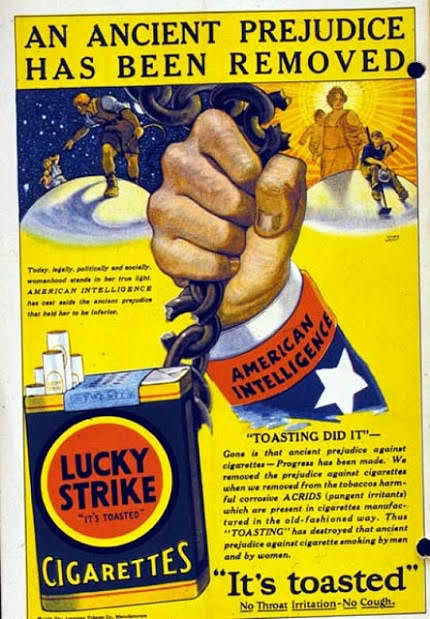
This edition of the Recently Published Book Spotlight is about Cory Wimberly‘s How Propaganda Became Public Relations: Foucault and the Corporate Government of the Public. Cory Wimberly is Associate Professor of Philosophy at the University of Texas Rio Grande Valley. His research primarily focuses on corporate governmentality—analyzing the corporate apparatuses responsible for the guiding and transforming public conduct. Wimberly’s past work has focused on propaganda and public relations and his current work is exploring other areas of corporate governmentality including marketing, advertising, and industrial design.
What is your work about?
How Propaganda Became Public Relations: Foucault and the Corporate Government of the Public is a philosophical investigation into the transformative effect propaganda has on us as individuals, on us as publics, and on society more broadly. I argue that propaganda does far worse than just lie to us: modern propaganda aims to transform us into the kind of subjects who carry out a particular line of conduct freely and as a key part of our identity. In other words, propaganda aims to transform who we are as individuals and as publics so that we become the kind of subjects who behave as the propagandists’ want as a matter of course and disposition. For example, why does someone spend an exorbitant amount on yoga pants only to wear them around the house? Or hoard assault rifles? Often, it is because they are convinced that a key aspect of their identity lies in that ownership; those goods have become a necessary extension of their very being. In Foucault’s language, propaganda is an apparatus that governs through subjectification—it directs our conduct through transforming our subjectivity—and it is not just a technique of mass deception as so many assume.
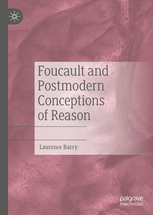 Laurence Barry, Foucault and Postmodern Conceptions of Reason, Palgrave Macmillan, 2020
For decades Foucault was mostly known for his diagnosis of modernity as a form of entrapment, both in our modes of thought and our behaviors. This book argues that Foucault’s reappraisal of modernity occurs with the 1978 and 1979 lectures, in which he sketches modern power as governmentality and neoliberalism. From this perspective, Foucault’s once surprising studies on the Greeks’ constitution of the ‘self’ can be seen as a continuation of his diagnosis of late modernity, and as an attempt to retrieve a form of autonomy for our modern selves. One finds in the late Foucault a postmodern conception of reason and not a destruction of reason; but this is possible only if postmodernity is seen as a critical exercise of reason in the analysis of norms.
Laurence Barry is an associate lecturer at the Hebrew University and a trained actuary. She currently researches the implications of big data for insurance as a practice of neoliberal governmentality at Chaire PARI (ENSAE/Sciences Po), France.
Matthew McManus interviews Judith Butler about power, performance, and feminism in the 21st century. What is post-Marxism for in the era of Covid-19 and Trump? Streamed live 21 July 2020 on the Zero Books Channel on YouTube
[Editor: Update 10 March 2026. The link above is to the video archived on the Wayback Machine.]
Special Issue: Pandemic and the Crisis of Capitalism. A Rethinking Marxism Dossier | Summer 2020
Foucault related articles in this large issue include
The Multitude Divided: Biopolitical Production during the Coronavirus Pandemic
Stijn De Cauwer & Tim Christiaens
The Biopolitics of the Coronavirus Pandemic: Herd Immunity, Thanatopolitics, Acts of Heroism
Ali Rıza Taşkale & Christina Banalopoulou
Special Issue “Philosophical Genealogy from Nietzsche to Williams”
Genealogy
Genealogy is a broadly encompassing historiographical technique that investigates the emergences and subversions of trends over time. Philosophical genealogy is a species of genealogy that generally turns this technique upon trends in philosophical ideas, especially upon values, norms, and societal structures. Although there were important precursors, the progenitor of this technique is largely acknowledged to be Friedrich Nietzsche, whose Genealogie der Moral (1887) supplied a genealogical analysis of contemporary European values as they emerged out of the confluence and disruptions of a long history of competing power interests. Famously, Michel Foucault both interpreted Nietzsche’s essay and used it to progress beyond what he labeled the “archeological” character of his earlier histories of madness and the clinic. Foucault’s genealogical method highlights the inextricably contingent and accidental character of power transfigurations, in that it is set against more conventional historiography’s attempt to either explain historical change according to their material conditions or else find a rational plan within the progressive maturation of ideas, events, or values. Foucault’s Surveiller et punir (1975) and L’Histoire de la sexualité (1976) proceed to analyze the power and domination dynamics inherent in the emerging social instantiations of punishment and sexuality, respectively. From a different perspective, Bernard Williams’ Truth and Truthfulness (2004) employs a genealogical technique to uncover the development humanity’s value for accuracy and sincerity out of a suspicion of being deceived and a reluctance to be considered naive. Williams’ project contributed significantly to contemporary social and virtue epistemology.
This Special Issue of Genealogy seeks to examine and to put into critical cross-interrogation several philosophical accounts of genealogy. Including but not limited to the cluster of ideas introduced by Nietzsche, Foucault, and Williams, we invite papers that investigate the prospects and problems genealogy has as a philosophical technique within and beyond these thinkers. In addition, we welcome intersections with critical race theory, feminist theory, virtue epistemology, value theory, the philosophy of history, anthropology, and political philosophy—all broadly construed. Our hope is to offer a space for the exploration and critical engagement with philosophical genealogy through these various lenses, and to advance genealogy as a historiographical enterprise.
Prof. Dr. Anthony Jensen
Guest Editor
Manuscript Submission Information
Manuscripts should be submitted online at www.mdpi.com by registering and logging in to this website. Once you are registered, click here to go to the submission form. Manuscripts can be submitted until the deadline. All papers will be peer-reviewed. Accepted papers will be published continuously in the journal (as soon as accepted) and will be listed together on the special issue website. Research articles, review articles as well as short communications are invited. For planned papers, a title and short abstract (about 100 words) can be sent to the Editorial Office for announcement on this website.
Submitted manuscripts should not have been published previously, nor be under consideration for publication elsewhere (except conference proceedings papers). All manuscripts are thoroughly refereed through a double-blind peer-review process. A guide for authors and other relevant information for submission of manuscripts is available on the Instructions for Authors page. Genealogy is an international peer-reviewed open access quarterly journal published by MDPI.
Foth, T. (2020). Humanitarian reason and the movement for overdose prevention sites: The NGOization of the Opioid “Crisis”. Nursing Philosophy, First published: 11 August 2020
doi:10.1111/nup.12324
Abstract
In August 2017, a group of activists erected in Ottawa’s downtown a tent as a first overdose prevention site as a response to what the public and the activists perceived as an epidemic—a devastating wave of opioid and fentanyl overdoses in Canada. The Ontario premier was urged to declare an emergency that would provide increased funding for harm reduction and also send a message to survivors and families that the lives of their loved ones mattered. Thus, the discourses around the so‐called opioid crisis used a language of moral sentiments to legitimate political action. This “new humanitarianism” is considered a priori as good, but in this article, I ask what is politically at stake if we base our actions on the logic of humanitarian reason. The new universalism of humanitarian organizations is based on the individualism of human rights and thus on a moral imperative that replaces the political. Initiatives like the OPS movement often fill the gaps in social services in the absence of the state and address social problems as emergencies and public health issues, thereby transforming them into medical problems—performing the medicalization of sociopolitical problems. This is what I call the NGOization of the opioid crisis. This form of humanitarianism is a universalism of the temporal present without any universal promise for a better future or the amelioration of human conditions—it is a humanitarianism of emergency. What characterizes new humanitarianism is that it responds to situations of suffering that are the result of increasing inequality and injustices without addressing the root causes of this suffering. Not addressing these causes means to be complicit in perpetuating the inequalities and to restrict visions of possible alternatives.
Gillespie, L.
Laws of Inclusion and Exclusion: Nomos, Nationalism and the Other (2020) Law and Critique, 31 (2), pp. 163-181.
DOI: 10.1007/s10978-020-09264-w
Abstract
This article explores how and why contemporary nationalist ‘defence leagues’ in Australia and the UK invoke fantasies of law. I argue these fantasies articulate with Carl Schmitt’s theory of ‘nomos’, which holds that law functions as a spatial order of reason that both produces and is produced by land qua the territory of the nation. To elucidate the ideological function of law for defence leagues, I outline a theory of law as it relates to (political) subjectivity. Drawing on the work of Foucault, Agamben and Brown, I demonstrate how subjects form and are formed by historically contingent relationships to law in the contemporary neo-liberal moment. Turning to Lacan, I show how nationalistic invocations of law provide nationalists with a fantasy that the nation’s law represents them and holds them together (as the nation itself). Similarly, I argue that nationalists imagine that the other has their own law as well, which not only corresponds to the other, but functions as a legible index of the other’s otherness—a metonym for the threatening uncertainty and radical difference that the other represents. Drawing on Lacan’s concept of the big Other, I ultimately argue that nationalists aggressively (re)assert law not only to defend the nation, but to ensure their own symbolic and ontological security therein. © 2020, Springer Nature B.V.
Author Keywords
Defence nationalism; Foucault; Lacan; Law; Neo-liberalism; Nomos
Kester, J.
Security in transition(s): The low-level security politics of electric vehicle range anxiety
(2019) Security Dialogue, 50 (6), pp. 547-563. Cited 1 time.
Abstract
By drawing on critical security studies in the context of a sociotechnical transition, this article calls for more attention to the presence and sometimes alternative use of mostly unobserved security practices in the materialization of everyday consumer goods and services. This call is illustrated through a discussion of the phenomenon of range anxiety and the intra-action between drivers of electric vehicles (EVs), designers, and algorithms that observe, estimate and nudge the remaining range of an EV. Inspired by Foucault and Barad, the range-anxiety discussion offers four alternative security insights. First, it supports an argument to include stress as an embodied instance of insecurity. Second, it draws attention to a security apparatus that is based on a constantly expanding assemblage around range estimates. Third, it shows how this apparatus rests on a novel algorithm that has a continuous instead of a binary output and is governed by a distributed sovereignty: where the driver simultaneously is the object of measurement, subject of governance for more efficient driving and the ultimate sovereign who decides on the trip. Lastly, the discussion highlights how range estimates not only mediate the materialization of EVs and their automobility but also (re)perform epistemological or ontological forms of uncertainty. © The Author(s) 2019.
Author Keywords
Algorithm; electric vehicles; insecurity; observation; range anxiety; security apparatus
Sarah Pedigo Kulzer & Ryan Phillips, Those Who Must Die: Syrian Refugees in the Age of National Security (2020) Human Rights Review, 21 (2), pp. 139-157.
https://doi.org/10.1007/s12142-020-00582-1
Abstract
The purpose of this study is to deconstruct the language used in President Trump’s Facebook posts while on the campaign trail, and the subsequent comments which reiterate and reify this rhetoric, to understand how Syrian refugees are labeled as a dangerous population unworthy of asylum. By utilizing the theoretical groundwork of Foucault (1980), Agamben (2005), and Mbembe (Public Culture 15: 11–40, 2003), this qualitative content analysis will explore how Syrian refugees, as depicted by Facebook comments, represent a “disposable population.” We conclude that by reducing Syrian refugees to a sub-human status and representing them as the dangerous and unworthy other, both President Trump who initiated this rhetoric, and those who responded in a way which legitimized his views, effectively labeled Syrian refugees as a dangerous population unworthy of asylum within the USA. © 2020, Springer Nature B.V.
Author Keywords
Biopolitics; Blowback; Disposable population; State of exception

