Foucault News

News and resources on French thinker Michel Foucault (1926-1984)

Córdoba-Pachón, J.-R.
Inter-work and ethical vigilance: Two scenarios for the (post-)pandemic future of systems thinking (2020) Systems, 8 (4), art. no. 36, pp. 1-12.

DOI: 10.3390/systems8040036

Open access

Abstract
For several decades, systems thinking has been a defined body of knowledge that has contributed to many areas of science. Its value has, critically, resided in (meta- or post-) paradigmatic and participative use of one or several systems approaches to help stakeholders’ structure and tackle complex problems. With renewed and (post-)pandemic interest in interdisciplinary work, this paper argues that to continue securing a future, system thinking requires a wider understanding of the dynamics and intertwining of knowledge unfolding and ethics in society. Two different but overlapping scenarios for systems thinking are proposed: (a) One based on inter-(disciplinary, para/professional, group) work and (b) another based on ethical vigilance. The first one is not so different from what has been envisaged for systems thinking in the last few years. Nevertheless, and following the ideas of the sociologist Andrew Abbott, this scenario proposes the explicit inclusion of the goal of knowledge rediscovery to promote a sense of solidarity, mutual understanding and compassion. For the second scenario, Michel Foucault’s notion of governmentality is used to problematize pandemic events and practices, and to offer possibilities for individual critical thinking and action, also leading us to consider the importance of (self-other) compassion. Features, implications, questions and examples of use are provided for each scenario. © 2020 by the author. Licensee MDPI, Basel, Switzerland.

Author Keywords
Andrew abbott; Approaches; Coronavirus; Ethics; Governmentality; Knowledge rediscovery; Michel foucault; Pandemic; Systems thinking

stuartelden's avatarProgressive Geographies

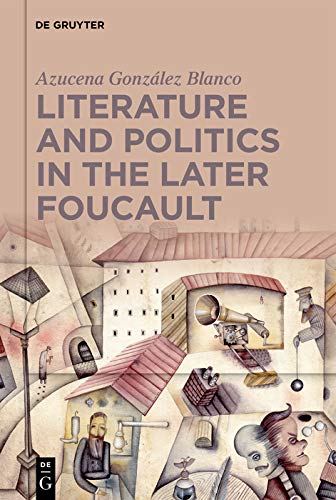
Azucena G. Blanco, Literature and Politics in the Later Foucault – De Gruyter, November 2020.

This appears to be currently open access as an e-book.

This study proposes a revised interpretation of Foucault’s views on literature. It has been argued that the philosopher’s interest in literature was limited to the 1960s and of a mostly depoliticized nature. However, Foucault’s previously unpublished later works suggest a different reality, showing a sustained interest in literature and its politics. In the light of this new material, the book repositions Foucault’s ideas within recent debates on the politics of literature.

View original post

stuartelden's avatarProgressive Geographies

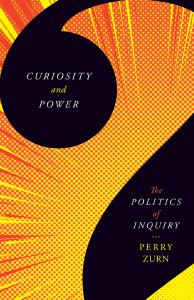
Perry Zurn, Curiosity and Power: The Politics of Inquiry – University of Minnesota Press, March 2021

Curiosity is political. Who is curious, when, and how reflects the social values and power structures of a given society. InCuriosity and Power, Perry Zurn explores the political philosophy of curiosity, staking the groundbreaking claim that it is a social force—the heartbeat of political resistance and a critical factor in social justice. He argues that the very scaffolding of curiosity is the product of political architectures, and exploring these values and architectures is crucial if we are to better understand, and more ethically navigate, the struggle over inquiry in an unequal world.

Curiosity and Powerexplores curiosity through the lens of political philosophy—weaving in Nietzsche, Foucault, and Derrida in doing so—and the experience of political marginalization, demonstrating that curiosity is implicated equally in the maintenance of societies and in their transformation. Curiosity…

View original post 98 more words

Azucena G. Blanco, Literature and Politics in the Later Foucault – De Gruyter, November 2020
Open access

This study proposes a revised interpretation of Foucault’s views on literature. It has been argued that the philosopher’s interest in literature was limited to the 1960s and of a mostly depoliticized nature. However, Foucault’s previously unpublished later works suggest a different reality, showing a sustained interest in literature and its politics. In the light of this new material, the book repositions Foucault’s ideas within recent debates on the politics of literature.

With thanks to Progressive Geographies for this info

See link below for registration

https://docs.google.com/forms/d/e/1FAIpQLScERgsD7YISBaFH4ZVW45Zzih7XBZjpLk_WKqWsemUCCdOrEQ/viewform

stuartelden's avatarProgressive Geographies

Adam Kotsko, Agamben’s Philosophical Trajectory – Edinburgh University Press, September 2020

  • Focuses on Agamben’s intellectual development
  • Offers the first study of the complete Homo Sacer series
  • Takes into account Agamben’s recently-published memoir
  • Addresses the full range of Agamben’s thought on linguistics, poetics, politics and theology

Giorgio Agamben has emerged as one of the most perceptive and even prophetic political thinkers of his era. Now that he has completed his multi-volume Homo Sacer series – his career-defining work – Adam Kotsko, one of his leading translators, shows how Agamben’s political concerns emerged and evolved as he responded to contemporary events and new intellectual influences while striving to remain true to his deepest intuitions. Kotsko reveals the trajectory of Agamben’s work and shows us what it means to practice philosophy as a living, responsive discipline.

Adam Kotsko’s brilliant study provides a chronological and systematic reading of Giorgio Agamben’s writings that allows us…

View original post 96 more words

Ryan Dillon, Mark Morris, Denis Macshane
Mark Cousins: Architectural theorist who captivated experts and enthusiasts alike, Independent, 22 October 2020

(photo: Pichan Sujaritsatit)


For more than 30 years, Mark Cousins’s Friday evening lectures at the Architectural Association were the place to be, not only for those who worked and studied at the school in London, but for people from all walks of life. An intellectual and theoretician, he was much loved by students and staff alike; a constant presence in the spaces of the AA and always ready to engage in or instigate an impromptu conversation.
[…]

Cousins was widely recognised as one of the best minds amongst his contemporaries, and a brilliant speaker, whether sitting around a dinner table or standing behind a lectern delivering countless talks and lectures. Despite co-authoring (with Athar Hussein) Michel Foucault (1984), his only completed book, he was mostly unable to translate the copious notes he took on every book read, nor his own research and thinking into anything more than the occasional article.

In contrast to the Anglo-Saxon model of the intellectual and university teacher that is based on written output, Cousins functioned more like the academic French masters, who delivered talks to groups of students who were tasked with the recording and transcribing of speeches into printed texts suitable for distribution. His intellectual contribution lay in la parole, not la page ecrite. Like his Oxford contemporary and friend, Christopher Hitchens, Cousins was better known for his wit and fluent pause-less deconstruction of modernity rather than doorstop bricks of many pages.
[…]

Colman, A.
School leadership, school inspection and the micropolitics of compliance and resistance: Examining the hyper-enactment of policy in an area of deprivation
(2020) Educational Management Administration and Leadership

DOI: 10.1177/1741143219898479

Abstract
This paper examines the influence of intense scrutiny from Ofsted on school leadership and policy enactment. Data was collected in a coastal area of deprivation, providing the setting for a detailed case study of school leadership in a state secondary school and a state primary school, both with recent or ongoing experience of intense scrutiny from Ofsted. Seventeen interviews were undertaken with staff involved in leadership roles. The analyses of data and discussion form an understanding of how policy is enacted in relation to the dual responsibility that school leaders negotiate between the local context at Seatown and Ofsted. This paper suggests that Ofsted forces a privileging of a compliant and consistent enactment of policy; a hyper-enactment of policy, that reduces the capacity of school leaders to address the significant social context of the school. Foucault’s work on self-disciplinary technologies provides insight into the micropolitical spaces which open up for some school leaders. The discussion on the micropolitics of compliance and resistance offers insight into the tensions pertinent to school leadership teams and explores issues relevant to those interested in policy and inspection activity, particularly those within areas of deprivation. © The Author(s) 2020.

Author Keywords

deprivation; hyper-enactment of policy; micropolitics of compliance; micropolitics of resistance; policy enactment; school inspection; School leadership

Eva Hartmann, Janja Komljenovic, The employability dispositif, or the re-articulation of the relationship between universities and their environment (2020) Journal of Education Policy
https://doi.org/10.1080/02680939.2020.1725983

Abstract
This paper focuses on how universities are increasingly made responsible for the employment of their students. Drawing on Governmentality Studies, we suggest framing this pressure as an employability dispositif. We join critical studies which link the employability imperative to a neo-liberal transformation of the higher education landscape. However, we criticise them for not paying enough attention to how the dispositif is put into practice by different universities and countries. As a consequence, they overlook important differences in terms of its institutionalisation. This contribution presents an overview of the dispositif’s variegation, based t on the findings of a survey with responses from 84 European universities in 26 European countries, which makes our study the most comprehensive in the field to date. Using an abductive approach, we aim, in addtion, to find explanations for the variegation. We show that a high youth unemployment rate has little explanatory power for the strength of the employability dispostif, in contrast to tuition fees and the country typology that we use and further develop. The dispositif is most advanced in Liberal Market Economies, indicating that universities in these countries seem to be on the way to becoming labour market institutions in their own right. © 2020, © 2020 Informa UK Limited, trading as Taylor & Francis Group.

Author Keywords
Foucault; Graduate employability; labour market; social media; university; varieties of capitalism

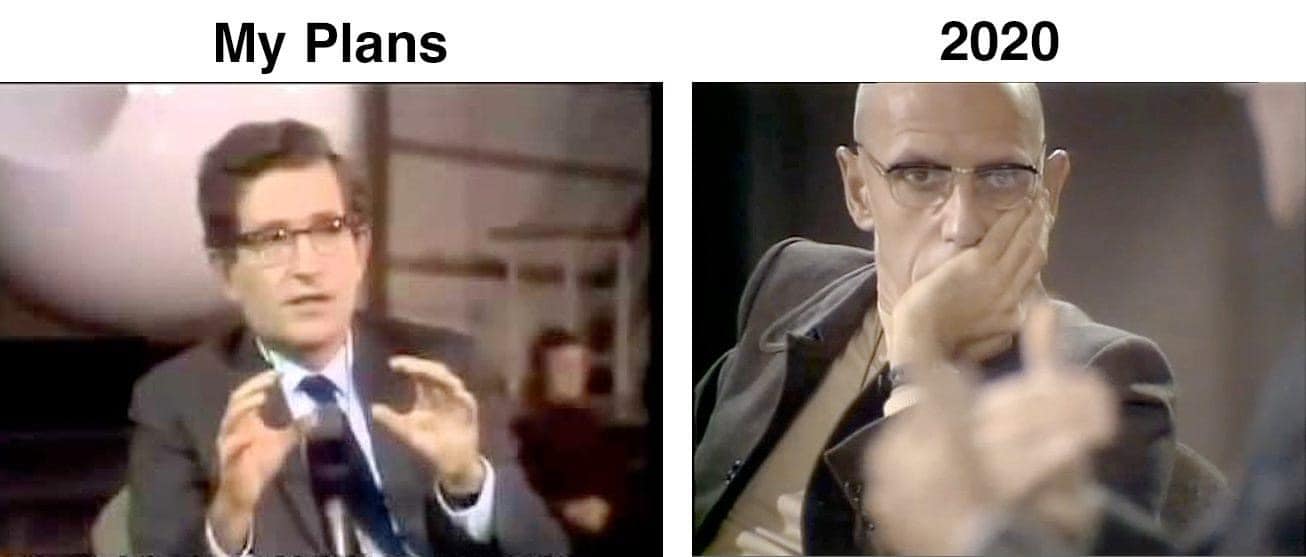
From the National Meme Board of Canada facebook page

[Editor: 10 March 2026. This was posted on Facebook and is no longer available. I have updated with a link to the Instagram page]