Foucault News

News and resources on French thinker Michel Foucault (1926-1984)

Richard Horton,
Offline: COVID-19—a crisis of power, The Lancet, COMMENT| VOLUME 396, ISSUE 10260, P1383, OCTOBER 31, 2020

DOI:10.1016/S0140-6736(20)32262-5

Open access

COVID-19 is about the politics of the body. In a series of lectures and essays in the 1970s and early 1980s, Michel Foucault (who died in 1984) argued that the discipline of public health emerged with the birth of capitalism in the 18th century. The body came to be understood as an instrument of economic production, of labour power, and so became a subject of significant political interest. Medicine and public health were endorsed as tools to enhance these productive forces, to ensure that people were fit for work. The priority given to the body as an important determinant of mercantilist prosperity ran parallel with a further historical turn—the meaning of government. The idea of government began with the narrow objective of retaining jurisdiction over a defined territory. But in the 18th century, European governments incorporated the idea of economy into their practice. Economy then referred to the family. Advances in statistical measurement brought attention to an entirely new concept for governments to consider—that of population. Governments switched their focus from families to populations as the units on which their political economies depended. Population became, according to Foucault, “the ultimate end of government”.
[…]

Sally McGrane A Guaranteed Monthly Check Changed His Life. Now He Sends Out 650, New York Times, November 6 2020

Michael Bohmeyer’s website, “My Basic Income,” has given randomly selected people almost $1,200 a month for a year to see if it improves their lives. His answer: Yes.

Enjoying life is no trivial matter for the slight, serious Mr. Bohmeyer, whose experimental, grass-roots platform has thus far given more than 650 randomly-selected people 1,000 euros a month, around $1,165, for a year, no strings attached, just to test a thesis. Namely, that what people need to thrive in a rapidly changing world is not more money, but more security, and that an unconditional basic income — a monthly sum to cover living expenses that, if implemented, would be paid by the government and received by everyone — could enable this.

The idea has resonated in Germany, a wealthy country that spends about a third of its G.D.P. on a robust social welfare system. In the six years since Mr. Bohmeyer first called for donations “My Basic Income” has raised about €8 million, thanks to 140,000 or so private donations of sums as low as a couple of euros a month.
[…]
He started reading the French philosopher Michel Foucault and reflecting on his own life. “Who am I, how do I want to live? What do I need for a good life?” he said. “Hard questions, but it’s totally cool if you have the chance to ask them.”

He noticed other changes, as well: His relationship with his partner improved. He was more patient with his 2-year-old daughter. His chronic stomach cramps went away. He started to wonder if a basic income, like the one he had, could help other people find more balance and equanimity in their lives, too.
[…]
See also the Basic Income European Network (BIEN) site.

Falkowski, T., Ostrowicka, H.
Ethicalisation of higher education reform: The strategic integration of academic discourse on scholarly ethos (2020) Educational Philosophy and Theory

DOI: 10.1080/00131857.2020.1740684

Abstract
The article presents the results of an analysis of the academic dispute about the scholarly ethos, conducted at the time of intense higher education reforms in Poland. Previous analyses of the academic debate on the change of the traditional university towards its entrepreneurial organization emphasize the polarization, that is, the criticism or affirmation of neoliberal reforms. The presented research proves that this discourse loses its dichotomous power when it focuses on ethical issues. The analysis shows the ‘polyvalence’ and ‘strategic integration’ of discourse in the Foucauldian sense of the terms. Firstly, the issue of the traditional scholarly ethos is clearly present both among the opponents and supporters of the current changes in higher education. Secondly, both critical and affirmative discourses refer to the traditional ethos, i.e. they do not attempt to develop any new ethopoiesis, which may be surprising especially in the case of the latter. Instead, they use a ‘peculiar reversal’, pointing to factors located outside the university and yet affecting academic standards. Thirdly, individual attributes of the traditional ethos are taken over by neoliberal discourse, which modifies them and adjusts them to its own purposes. The term ‘ethicalization’ of higher education reform describes ethical problematizations of the contemporary university transformation. © 2020, © 2020 Philosophy of Education Society of Australasia.

Author Keywords
Academic discourse; academic ethos; Foucault; higher education reform

Abdul-Jabbar, W.K.
Foucauldian parrhesia and Avicennean contingency in Muslim education: The curriculum of metaphysics
(2020) Educational Philosophy and Theory

DOI: 10.1080/00131857.2020.1738918

Abstract
This study examines the Foucauldian notion of “parrhesia” within the context of curricular practices through a renewal of scholarly interest in Islamic metaphysics as represented by the Avicennean modalities of reality: necessity, contingency, and possibility. It explores the role of contingency in advancing educational practices that generate inclusive dissemination of knowledge that captures the language of Tajdeed (legitimate renovation) in Islamic education. This article argues that contingency, as a causality-oriented modality, determines whether meaning is relative or absolute, while necessity, as an acknowledgment of universal truth, slips into demagoguery that can be used to canonize strict textualism and absolutism. Contingency is defined here as a practice that stimulates synthesis and dialogical understanding of knowledge. Accordingly, the study asks the following questions: How does infusing the Avicennean concept of contingency into curriculum practices offer opportunities for inclusivity and free speech? How can revisiting Islamic cosmological modalities help Muslim educators and curriculum writers move into the broader path of inclusive pedagogies? From an educational position, the article introduces a curriculum of metaphysics that advocates the implementation of contingency, which is considered essential to parrhesia and democracy. It also draws attention to an anti-metaphysical attitude that is generally present in curriculum theorizing. Accordingly, Metaphysics is invoked to challenge a state of flux or hegemonized assumptions; hence, metaphysics validates parrhesia. © 2020, © 2020 Philosophy of Education Society of Australasia.

Author Keywords
Avicenna; curriculum theory; Foucault; metaphysics; Muslim education; parrhesia

Halilovic-Pastuovic, Maja, Bosnian Post-Refugee Transnationalism. After the Dayton Peace Agreement, Palgrave Macmillan, 2020

This book develops a new concept of post-refugee transnationalism to describe experiences of Bosnian refugees who settled in Ireland after fleeing the conflict in 1990s Bosnia and Herzegovina. The book explores their ambivalent relationship with their host and home countries, Ireland and Bosnia, arguing that their current experiences are best described as post-refugee transnationalism. Post-refugee transnationalism is characterised by Bosnians dividing their time between the two countries rather than permanently settling in either and by engaging in summer migrations and diasporic interconnections and affiliations. The book proposes post-refugee transnationalism as different to other instances of transnationalism by stressing its enforced origin provoked by the conflict and institutionalized by the Dayton Peace Agreement. The book combines Foucault’s biopolitics, David Theo Goldberg’s understanding of nation states as racial states and Giorgio Agamben’s expansion on the idea of potentiality, to develop the concept of post-refugee transnationalism.

Maja Halilovic-Pastuovic is Senior Research Fellow in the School of Religion at Trinity College Dublin, The University of Dublin, Ireland. She specialises in the sociology of conflict with particular focus on post-Dayton Bosnia and Herzegovina. Her current research focuses on the subject of radicalisation in Europe and Balkan Peninsula.

Philo, C. (2019). Doing space and star power: Foucault, exclusion– inclusion and the spatial history of social policy. In Whitworth A. (Ed.), Towards a Spatial Social Policy: Bridging the Gap Between Geography and Social Policy (pp. 41-68). Bristol: Bristol University Press.

doi:10.2307/j.ctvs1g92b.7

Foucault as spatial historian of social policy
Heeding the central purpose of the present collection, I position Michel Foucault (1926–84), the French intellectual, as a spatial historian of social policy. Casting Foucault as a researcher of social policy is not necessarily how many see him, but, if ‘social policy’ refers to how different agencies – including formal state institutions and other civic bodies – operate upon ‘the social’ to shape, order or control it, then he can surely be so characterised. In this connection, it is instructive to recall Titmuss’ description of social policies as ‘concerned with the right ordering of the network of relationships between men and women who live together in societies’ (Titmuss, 1974: 28).

[…]

stuartelden's avatarProgressive Geographies

I’ve mentioned before the project to diigitise Foucault’s reading notes which are now archived at the Bibliothèque national de France.

Two interesting pieces report on the project. First, a presentation given at a recent conference which gives an indication of how this will look: Marie-Laure Massot, Jean-Philippe Moreux, Vincent Ventresque, “Expérimenter Transkribus sur les fiches de lecture de Michel Foucault”, presentationabstract

Intervention dans le cadre du colloque de clôture du projet ANR Foucault Fiches de lecture Seconde partie « Editer Michel Foucault (1994-2021) », le 26 septembre 2020 à la BnF, intitulée “Expérimenter Transkribus sur les fiches de lecture de Michel Foucault”. Entre 1994 et 2021, les textes du philosophe Michel Foucault ont fait l’objet d’une édition posthume. Un colloque dont la seconde partie a lieu à la BnF revient sur les questions qui se sont posées lors de cette entreprise de longue haleine. Cette présentation est en…

View original post 279 more words

Yang, C.
Historicizing the smart cities: Genealogy as a method of critique for smart urbanism
(2020) Telematics and Informatics, 55, art. no. 101438,

DOI: 10.1016/j.tele.2020.101438

Abstract
This study explores the utility of genealogy as a method of critiquing the history of the present in the smart cities. Taking a South Korean smart city of Songdo as a point of departure, this paper offers a genealogical understanding of a smart city that situates the current technics and technologies of data-driven urban governance within the broader context of South Korean history. Given the scarcity of a historically informed understanding of a smart city in the existing literatures on smart urbanism, this paper argues that a genealogical method helps us to counter the sweeping binarism that obscures the complexity and diversity of actually existing smart cities today. Through genealogy, this study underscores the multifaceted nature of the smart city, which consists of a combination of multiple urban diagrams that grows out of distinct problems and objectives of urban management – mobility, security, environment, and futurity. This paper illustrates how a smart city emerged out of multiple strings of history and problematizations that are contingently interweaved at a given time and space in multiple and diffused forms. © 2020 Elsevier Ltd

Author Keywords

Diagrams; Foucault; Genealogy; Smart city; Songdo; South Korea

Index Keywords
History, Regional planning; Data driven, Point of departures, Urban governance, Urban management; Smart city

Córdoba-Pachón, J.-R.
Inter-work and ethical vigilance: Two scenarios for the (post-)pandemic future of systems thinking (2020) Systems, 8 (4), art. no. 36, pp. 1-12.

DOI: 10.3390/systems8040036

Open access

Abstract
For several decades, systems thinking has been a defined body of knowledge that has contributed to many areas of science. Its value has, critically, resided in (meta- or post-) paradigmatic and participative use of one or several systems approaches to help stakeholders’ structure and tackle complex problems. With renewed and (post-)pandemic interest in interdisciplinary work, this paper argues that to continue securing a future, system thinking requires a wider understanding of the dynamics and intertwining of knowledge unfolding and ethics in society. Two different but overlapping scenarios for systems thinking are proposed: (a) One based on inter-(disciplinary, para/professional, group) work and (b) another based on ethical vigilance. The first one is not so different from what has been envisaged for systems thinking in the last few years. Nevertheless, and following the ideas of the sociologist Andrew Abbott, this scenario proposes the explicit inclusion of the goal of knowledge rediscovery to promote a sense of solidarity, mutual understanding and compassion. For the second scenario, Michel Foucault’s notion of governmentality is used to problematize pandemic events and practices, and to offer possibilities for individual critical thinking and action, also leading us to consider the importance of (self-other) compassion. Features, implications, questions and examples of use are provided for each scenario. © 2020 by the author. Licensee MDPI, Basel, Switzerland.

Author Keywords
Andrew abbott; Approaches; Coronavirus; Ethics; Governmentality; Knowledge rediscovery; Michel foucault; Pandemic; Systems thinking

stuartelden's avatarProgressive Geographies

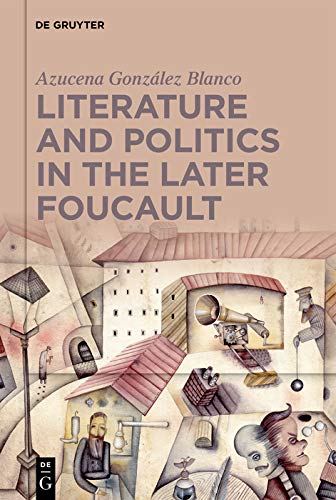
Azucena G. Blanco, Literature and Politics in the Later Foucault – De Gruyter, November 2020.

This appears to be currently open access as an e-book.

This study proposes a revised interpretation of Foucault’s views on literature. It has been argued that the philosopher’s interest in literature was limited to the 1960s and of a mostly depoliticized nature. However, Foucault’s previously unpublished later works suggest a different reality, showing a sustained interest in literature and its politics. In the light of this new material, the book repositions Foucault’s ideas within recent debates on the politics of literature.

View original post