
Foucault News

News and resources on French thinker Michel Foucault (1926-1984)

Matthew J. Dennis, Cultivating Our Passionate Attachments
Routledge Published September 14, 2020

Does a flourishing life involve pursuing passionate attachments? Can we choose what these passionate attachments will be? This book offers an original theory of how we can actively cultivate our passionate attachments.

The author argues that not only do we have reason to view passionate attachments as susceptible to growth, change, and improvement, but we should view these entities as amenable to self-cultivation. He uses Pierre Hadot’s and Michel Foucault’s accounts of Hellenistic self-cultivation as vital conceptual tools to formulate a theory of cultivating our passionate attachments. First, their accounts offer the conceptual resources for a philosophical theory of how we can cultivate our passionate attachments. Second, the exercises of self-cultivation they focus on allow us to outline a practical method though which we can cultivate our passionate character. Doing this brings out a significantly new dimension to the role of the passionate attachments in the flourishing life and offers theoretical and practical accounts of how we can cultivate them based on the Hellenistic conception of self-directed character change.

Cultivating Our Passionate Attachments will be of interest to advanced students and scholars working in virtue ethics, moral philosophy, and ancient philosophy.

With thanks to Progressive Geographies for this reference
The Public Intellectual Series So Far, Cassandra Voices
David Langwallner, November 7 2020

The Public Intellectual Series offers inter-disciplinary journalism, focusing on relevant authors and subject-matters crucial to negotiating our current age of extremes. We avoid specialisation, demystifying topics to provide readers with access to a broad view on contemporary challenges. Our aim is to contribute to a revival in the idea of the public intellectual, which we consider a necessary ingredient in a healthy body politic.

A public intellectual is a generalist, who brings together disparate strands of knowledge with a view to placing events in context. At one level this is a Sisyphean task, but throughout the ages intellectuals have faced the same challenges as today, forcing heavy objects up steep hills only to see them roll down again the following day.

The news media focus on the particular and the immediate sensationalism of soundbites, or the bric-a-brac of our existences, which occludes a wider field of vision.

In authoring this series as a lawyer I have strengths but also weaknesses. I studied history and lectured on the philosophy of law for many years. I read widely and as a mongrel – half-Irish-half-Austrian, now resident in London, and formerly a student in the London School Of Economics and Harvard University in the U.S. – I am lucky to have enjoyed a wide variety of cultural, educational and workplace settings.
[…]

Michel Foucault is the acceptable face of postmodernism, in that his focus is on empirical – adopting historical methods, not absurd generalisations. In that sense he is truth-seeking and many of the ideas stand up to serious scrutiny. He seems to have anticipated the mass surveillance society now upon us in the Covid-19 panopticon, with ever more extreme and intrusive regulation of our intimate behaviours.
[…]

A new global psychiatric power? Intro (2020), Psypolitics blog
by Federico Soldani – 6th Nov 2020

More than one year ago I presented the talk “Are we witnessing the emergence of a new global psychiatric power?” at the Royal College of Psychiatrists in London, in the summer of 2019.

The overdue transcript, with this introduction and brief comments, subdivided in thirteen parts will be published over the next few months on PsyPolitics.

[…]

Of note, some of the themes above discussed in 2019 such as power and biopolitics, as ideated by Michel Foucault, are now prominently presented in the medical literature about the 2020 pandemic, including an editorial of a few days ago on the British medical journal The Lancet by its historical editor Sir Richard Horton‘COVID-19 – a crisis of power’.

Foucault 1970s and 1980s lectures are cited and public health is put in relation to the global crisis of power: “We continue to live in this era of governmentality, where individual actions are shaped by power that claims its legitimacy in scientific truthPublic health developed amid these social and political currents.” “The growing importance of health to industrial societies led to the valorisation of doctors and the growth of medical science. An alliance formed between medicine and the state—“a politico–medical hold on a population”.

[…]

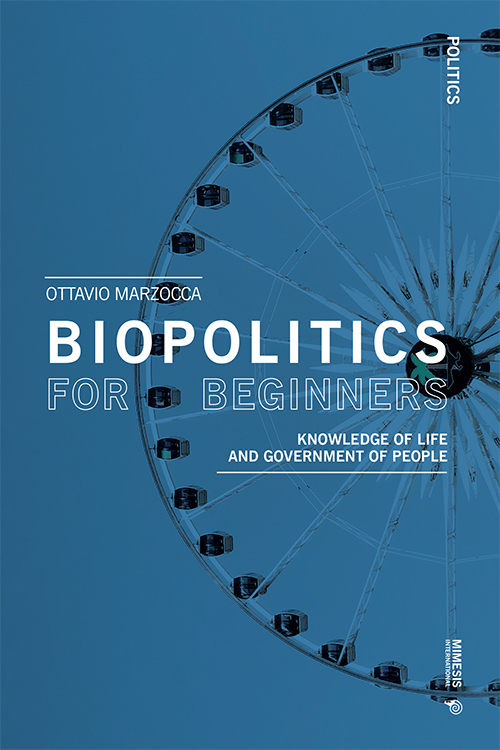
Ottavio Marzocca, Biopolitics for beginners. Knowledge of life and government of people, Mimesis International, 2020

The term biopolitics can be fully understood only within the context of modern forms of governing society. From this perspective, the development of modern medical knowledge, the re-organization of the hospital as a health institution, the growing attention to issues related to population, and the rise of biological knowledge can be connected with the influence of economic rationality on the most important political strategies. In this book, the crucial role that the family has played throughout the history of biopolitics is also explored explaining how it is firstly a place of government of life as well as a means to extend various forms of biopower to the whole society. By analysing the works of key figures in the debate on biopolitics – such as Agamben, Negri, Esposito, Rose, Cooper, among others – this volume offers a systematic examination of this notion also in relation to the current ecological crisis and the pandemic of Covid-19, addressing fundamental problems of political thought and referring to great thinkers such as Foucault and Arendt, Plato and Aristotle.

Ottavio Marzocca teaches Ethical Political Philosophy and Ethics and Politics of the Common World at the University of Bari ‘Aldo Moro’ (Italy). He has published, among other books: Perché il governo: Il laboratorio etico-politico di Foucault (2007); Il governo dell’ethos: La produzione politica dell’agire economico (2011); Il mondo comune: Dalla virtualità alla cura (2019); Foucault ingovernabile: Dal bios all’ethos (2017).

Thomas Corbin and JP Deranty, Foucault on the centrality of work. OnWork Newsletter, 2 November 2020

In recent weeks, our research has focused on Michel Foucault’s contribution to debates on work. Throughout his immense corpus, Foucault never ceased to take work as a central object of his analyses. The History of Madness for instance begins with an alternative account of the new value that work started to take on early in the 17th century, with a shift in the fundamental ethos justifying the condemnations of idleness. These are crucial pages to elaborate an alternative Foucauldian version of the “work ethic” hypothesis. Similarly, in Psychiatric Power, Foucault continues his historical analysis of work into the 18th century, now focusing specifically on “work discipline” and the rising emphasis on the control and management of workers time. The attention and significance Foucault gives to work in his writings is striking and gains yet more weight when we consider his corpus as a whole, over the entire span of his thinking life.

We have collated 84 citations throughout Foucault’s oeuvre in which work is significantly discussed. These citations are organised by publication and complement a collection of a further 133 citations from the secondary literature.

[…]

Richard Horton,
Offline: COVID-19—a crisis of power, The Lancet, COMMENT| VOLUME 396, ISSUE 10260, P1383, OCTOBER 31, 2020

DOI:10.1016/S0140-6736(20)32262-5

Open access

COVID-19 is about the politics of the body. In a series of lectures and essays in the 1970s and early 1980s, Michel Foucault (who died in 1984) argued that the discipline of public health emerged with the birth of capitalism in the 18th century. The body came to be understood as an instrument of economic production, of labour power, and so became a subject of significant political interest. Medicine and public health were endorsed as tools to enhance these productive forces, to ensure that people were fit for work. The priority given to the body as an important determinant of mercantilist prosperity ran parallel with a further historical turn—the meaning of government. The idea of government began with the narrow objective of retaining jurisdiction over a defined territory. But in the 18th century, European governments incorporated the idea of economy into their practice. Economy then referred to the family. Advances in statistical measurement brought attention to an entirely new concept for governments to consider—that of population. Governments switched their focus from families to populations as the units on which their political economies depended. Population became, according to Foucault, “the ultimate end of government”.
[…]

Sally McGrane A Guaranteed Monthly Check Changed His Life. Now He Sends Out 650, New York Times, November 6 2020

Michael Bohmeyer’s website, “My Basic Income,” has given randomly selected people almost $1,200 a month for a year to see if it improves their lives. His answer: Yes.

Enjoying life is no trivial matter for the slight, serious Mr. Bohmeyer, whose experimental, grass-roots platform has thus far given more than 650 randomly-selected people 1,000 euros a month, around $1,165, for a year, no strings attached, just to test a thesis. Namely, that what people need to thrive in a rapidly changing world is not more money, but more security, and that an unconditional basic income — a monthly sum to cover living expenses that, if implemented, would be paid by the government and received by everyone — could enable this.

The idea has resonated in Germany, a wealthy country that spends about a third of its G.D.P. on a robust social welfare system. In the six years since Mr. Bohmeyer first called for donations “My Basic Income” has raised about €8 million, thanks to 140,000 or so private donations of sums as low as a couple of euros a month.
[…]
He started reading the French philosopher Michel Foucault and reflecting on his own life. “Who am I, how do I want to live? What do I need for a good life?” he said. “Hard questions, but it’s totally cool if you have the chance to ask them.”

He noticed other changes, as well: His relationship with his partner improved. He was more patient with his 2-year-old daughter. His chronic stomach cramps went away. He started to wonder if a basic income, like the one he had, could help other people find more balance and equanimity in their lives, too.
[…]
See also the Basic Income European Network (BIEN) site.

Falkowski, T., Ostrowicka, H.
Ethicalisation of higher education reform: The strategic integration of academic discourse on scholarly ethos (2020) Educational Philosophy and Theory

DOI: 10.1080/00131857.2020.1740684

Abstract
The article presents the results of an analysis of the academic dispute about the scholarly ethos, conducted at the time of intense higher education reforms in Poland. Previous analyses of the academic debate on the change of the traditional university towards its entrepreneurial organization emphasize the polarization, that is, the criticism or affirmation of neoliberal reforms. The presented research proves that this discourse loses its dichotomous power when it focuses on ethical issues. The analysis shows the ‘polyvalence’ and ‘strategic integration’ of discourse in the Foucauldian sense of the terms. Firstly, the issue of the traditional scholarly ethos is clearly present both among the opponents and supporters of the current changes in higher education. Secondly, both critical and affirmative discourses refer to the traditional ethos, i.e. they do not attempt to develop any new ethopoiesis, which may be surprising especially in the case of the latter. Instead, they use a ‘peculiar reversal’, pointing to factors located outside the university and yet affecting academic standards. Thirdly, individual attributes of the traditional ethos are taken over by neoliberal discourse, which modifies them and adjusts them to its own purposes. The term ‘ethicalization’ of higher education reform describes ethical problematizations of the contemporary university transformation. © 2020, © 2020 Philosophy of Education Society of Australasia.

Author Keywords
Academic discourse; academic ethos; Foucault; higher education reform

Abdul-Jabbar, W.K.
Foucauldian parrhesia and Avicennean contingency in Muslim education: The curriculum of metaphysics
(2020) Educational Philosophy and Theory

DOI: 10.1080/00131857.2020.1738918

Abstract
This study examines the Foucauldian notion of “parrhesia” within the context of curricular practices through a renewal of scholarly interest in Islamic metaphysics as represented by the Avicennean modalities of reality: necessity, contingency, and possibility. It explores the role of contingency in advancing educational practices that generate inclusive dissemination of knowledge that captures the language of Tajdeed (legitimate renovation) in Islamic education. This article argues that contingency, as a causality-oriented modality, determines whether meaning is relative or absolute, while necessity, as an acknowledgment of universal truth, slips into demagoguery that can be used to canonize strict textualism and absolutism. Contingency is defined here as a practice that stimulates synthesis and dialogical understanding of knowledge. Accordingly, the study asks the following questions: How does infusing the Avicennean concept of contingency into curriculum practices offer opportunities for inclusivity and free speech? How can revisiting Islamic cosmological modalities help Muslim educators and curriculum writers move into the broader path of inclusive pedagogies? From an educational position, the article introduces a curriculum of metaphysics that advocates the implementation of contingency, which is considered essential to parrhesia and democracy. It also draws attention to an anti-metaphysical attitude that is generally present in curriculum theorizing. Accordingly, Metaphysics is invoked to challenge a state of flux or hegemonized assumptions; hence, metaphysics validates parrhesia. © 2020, © 2020 Philosophy of Education Society of Australasia.

Author Keywords
Avicenna; curriculum theory; Foucault; metaphysics; Muslim education; parrhesia

Halilovic-Pastuovic, Maja, Bosnian Post-Refugee Transnationalism. After the Dayton Peace Agreement, Palgrave Macmillan, 2020

This book develops a new concept of post-refugee transnationalism to describe experiences of Bosnian refugees who settled in Ireland after fleeing the conflict in 1990s Bosnia and Herzegovina. The book explores their ambivalent relationship with their host and home countries, Ireland and Bosnia, arguing that their current experiences are best described as post-refugee transnationalism. Post-refugee transnationalism is characterised by Bosnians dividing their time between the two countries rather than permanently settling in either and by engaging in summer migrations and diasporic interconnections and affiliations. The book proposes post-refugee transnationalism as different to other instances of transnationalism by stressing its enforced origin provoked by the conflict and institutionalized by the Dayton Peace Agreement. The book combines Foucault’s biopolitics, David Theo Goldberg’s understanding of nation states as racial states and Giorgio Agamben’s expansion on the idea of potentiality, to develop the concept of post-refugee transnationalism.

Maja Halilovic-Pastuovic is Senior Research Fellow in the School of Religion at Trinity College Dublin, The University of Dublin, Ireland. She specialises in the sociology of conflict with particular focus on post-Dayton Bosnia and Herzegovina. Her current research focuses on the subject of radicalisation in Europe and Balkan Peninsula.