Webinar: All Eyes on Latin America: Anti-Gender Politics Through Transnational Lenses, on January 29, 2021 at 9 am EST
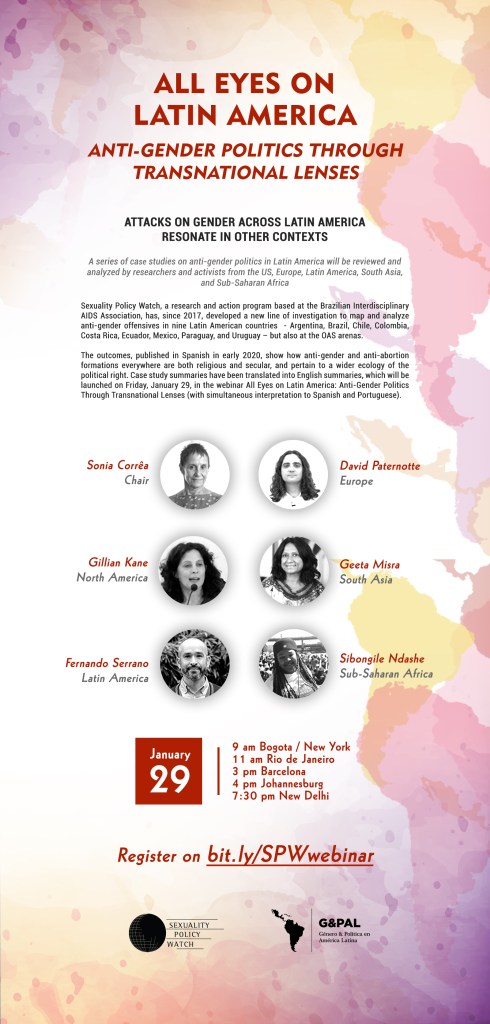

Webinar: All Eyes on Latin America: Anti-Gender Politics Through Transnational Lenses, on January 29, 2021 at 9 am EST
Iain Mackenzie, Critique in a World of Control
Paris Institute for Critical Thinking
Our tenth interview is with Iain Mackenzie, philosophy scholar (Canterbury, UK) by Evrim Emir-Sayers (Paris, France) Thursday, May 7, 2020
PICT Voices is an interview series conducted by PICT faculty with notable members of the broader PICT community. Our goal is to present our community with a variety of voices across the spectrum of the humanities and critical, creative thinking. To achieve this, we will interview a broad spectrum of thinkers ranging from scholars to journalists.
With thanks to David Selim Sayers for this link
Hull, Gordon, Infrastructure, Modulation, Portal: Thinking with Foucault about how Internet Architecture Shapes Subjects, SSRN (January 22, 2021).
Open access
Abstract
Following Foucault’s remarks on the importance of architecture to disciplinary power, this paper offers a typology of power relations expressed in different models of Internet governance. Infrastructure governance understands the Internet as a common pool or public resource, on the model of traditional infrastructures like roads and bridges. Modulation, which I study by way of Net Neutrality debates in the U.S., understands Internet governance as traffic shaping. Portal governance, which I study by way of data collection policies of dominant platform companies, understands the Internet as creating a user experience that facilitates data mining. The latter two are forms of architectural disciplinary power that undermine the first. I then argue that the rise of portal and modulation governance primarily serves to remake parts of civil society by fostering market norms of consumption and entrepreneurialism. In that sense, efforts to shape Internet architecture need to be understood as techniques of subjectification.
Keywords: infrastructure, platform, portal, net neutrality, disciplinary power
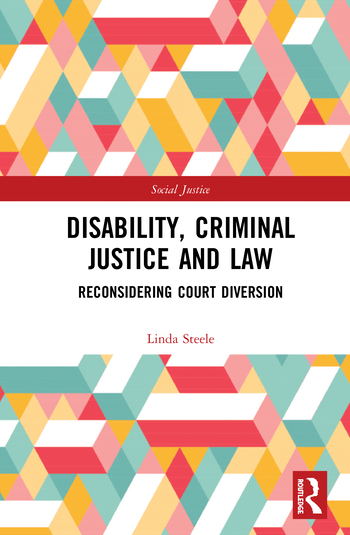 Linda Steele, Disability, criminal justice and law: Reconsidering court diversion. Routledge, 2020.
Book Description
Through theoretical and empirical examination of legal frameworks for court diversion, this book interrogates law’s complicity in the debilitation of disabled people.
In a post-deinstitutionalisation era, diverting disabled people from criminal justice systems and into mental health and disability services is considered therapeutic, humane and socially just. Yet, by drawing on Foucauldian theory of biopolitics, critical legal and political theory and critical disability theory, Steele argues that court diversion continues disability oppression. It can facilitate criminalisation, control and punishment of disabled people who are not sentenced and might not even be convicted of any criminal offences. On a broader level, court diversion contributes to the longstanding phenomenon of disability-specific coercive intervention, legitimates prison incarceration and shores up the boundaries of foundational legal concepts at the core of jurisdiction, legal personhood and sovereignty. Steele shows that the United Nations Convention on the Rights of Persons with Disabilities cannot respond to the complexities of court diversion, suggesting the CRPD is of limited use in contesting carceral control and legal and settler colonial violence. The book not only offers new ways to understand relationships between disability, criminal justice and law; it also proposes theoretical and practical strategies that contribute to the development of a wider re-imagining of a more progressive and just socio-legal order.
The book will be of interest to scholars and students of disability law, criminal law, medical law, socio-legal studies, disability studies, social work and criminology. It will also be of interest to disability, prisoner and social justice activists.
Table of Contents
Introduction: Reconsidering court diversion
Chapter One: Introducing Court Diversion
Chapter Two: Problematising Court Diversion
Chapter Three: Theorising Court Diversion: Disability
Chapter Four: Theorising Court Diversion: Carcerality and Legality
Chapter Five: The Finer Details of Debilitation Through Law: Introduction to an Australian Diversion Scheme
Chapter Six: Jurisdiction, Disability and Lawful Relations
Chapter Seven: Choosing Carceral Control
Chapter Eight: Disability, Criminal Justice and Law: Beyond Court Diversion
Linda Steele is based at the University of Technology Sydney.
Mathieu Arminjon & Régis Marion-Veyron, Coronavirus biopolitics: the paradox of France’s Foucauldian heritage (2021) History and Philosophy of the Life Sciences, 43 (1), art. no. 5.
https://doi.org/10.1007/s40656-020-00359-2
Open access
Abstract
In this short paper we analyse some paradoxical aspects of France’s Foucauldian heritage: (1) while several French scholars claim the COVID-19 pandemic is a perfect example of what Foucault called biopolitics, popular reaction instead suggests a biopolitical failure on the part of the government; (2) One of these failures concerns the government’s inability to produce reliable biostatistical data, especially regarding health inequalities in relation to COVID-19. We interrogate whether Foucaldianism contributed, in the past as well today, towards a certain myopia in France regarding biostatistics and its relation to social inequalities in health. One might ask whether this very data could provide an appropriate response to the Foucauldian question: What kind of governance of life is the pandemic revealing to us? © 2021, The Author(s).
Author Keywords
Biopolitics; COVID-19; Epidemiological surveillance; Foucault; France; Social inequalities in health
George Kokkinidis and Marco Checchi, Power matters: Posthuman entanglements in a social solidarity clinic (2021) Organization, Vol 30, Issue 2
https://doi.org/10.1177/1350508420973304
Abstract
This paper develops a materialist and performative conception of power, proposing a theoretical framework that bridges Barad’s intra-active agential ontology and Foucault’s microphysics of power. The article uses empirical data collected from a social clinic in Greece where the traditional apparatus of the clinic is contested and experimentally reconfigured. We focus on three overlapping themes and reflect on how power relations materialize themselves through everyday practices and multiple entanglements between human and non-human agents. We argue that these entanglements constitute the dynamic matter of power: their performative reiteration determines how power matters. By showing how power materially exceeds the manifest intentions of human agents, our case study aims to contribute to an idea of alternative organising that accounts for the materiality of mundane posthuman entanglements within an antagonistic understanding of power. © The Author(s) 2021.
Author Keywords
Alternative organizing; Barad; entanglements; Foucault; intra-action; performativity; power; social clinic; sociomateriality
Carol S. Walther, Stephanie D. Jones, Corrine M. Wickens, and Rodrigo Martinez, “The Numbers Are Eye Popping”: Statistical Consciousness as a Discursive Tool to Monitor Same-Sex Demography (2021) Social Currents, vol 9, Issue 1
https://doi.org/10.1177/2329496520983850
Abstract
In this article, we examine newspaper accounts of same-sex demography to examine how journalists use U.S. Census Bureau statistics to discuss changes in lesbian and gay households from 1990 to 2015. We utilized Foucault’s discussion of discourse and discussed what we call statistical consciousness, the use of statistics in everyday life. We support these findings with qualitative examples of each same-sex household increase to show how journalists present statistical data to exaggerate or misrepresent the number of same-sex households in the United States. We argue that the journalists report using U.S. Census Bureau statistics which the journalist then use dramatic and exaggerated reports of same-sex demography. The dramatic and exaggerated reports of same-sex demography influence how people think about Lesbian, Gay, Bisexual, Transgender, and Queer (LGBTQ+) people and the census. © The Southern Sociological Society 2021.
Author Keywords
Foucault; same-sex demography; statistical consciousness
H. Unnathi S. Samaraweera (2020). Is resilience a unique extension rather than a rejection of neoliberalism? A critical reading of David Chandler’s writings on resilience. International Journal of Disaster Resilience in the Built Environment.
https://doi.org/10.1108/IJDRBE-05-2020-0050
Abstract
Purpose: This paper aims to engage with the concept of resilience as theorized by David Chandler in his book Resilience: The Governance of Complexity by drawing from the theory of governmentality presented by Michel Foucault and Jonathan Joseph.
Design/methodology/approach: Evolving from classical liberalism to neoliberalism and from natural sciences to social sciences, the term “resilience” raises many questions about its sustainability in terms of its meaning and complexity. While most scholars tend to underscore the significance and practicality of the term, a few scholars argue that it is a failed dogma with neoliberal characteristics. As this is a theory-based study, its methodology involves close readings of academic texts produced mainly by David Chandler, Michel Foucault and Jonathan Joseph.
Findings: The central argument in this paper is though Chandler convincingly explains the paradigm shift of the term resilience from classical to neoliberal, his theorizing lacks the understanding that the type of power and governmentality involved in individual freedom, autonomy and complexity are actually parts of the neoliberal state. Hence, the buzzword resilience today is actually an extension of the same neoliberal thought.
Originality/value: First, the author attempts to critically engage with the term resilience from a sociological point of view using purposively selected academic literature. Second, the paper attempts to bring Chandler’s conceptualization on resilience into the disaster context and evaluates its practicality within the tenets of neoliberalism by drawing on Joseph’s and Foucault’s theorizations.
Author keywords
Complexity David Chandler Disaster Governance Neoliberalism Resilience
Giorgi Vachnadze, Displacing the Confessional: Resistance to Orthodox Christian Governmentality, Giorgi Vachnadze blog, 16 January 2021
The following text will provide a critical reflection on the social and political context of the Georgian Orthodox Christian Church as an extension of the state-apparatus. Looking briefly at the history, the global/local political climate and the role of the Church in Russia-Georgia relations, we will continue to discuss internal state politics and the problem of religious-nationalistic and xenophobic propaganda by bearing in mind the specific social practice of confession within the institution of the Church. In order to perform this short analysis, we will draw most prominently on the works of the French theorist Michel Foucault. The goal is to provide an institutional critique, a type of genealogy and offer possible horizons for resistance. The parresiastic practices of truth-telling, self-care and alternative lifestyles offered by the later works of Michel Foucault should prove especially conducive to suggesting a way of reversing the power-relationships inherent to confessional practices. The question in short, will consist in trying to understand what type of governmental technique (or governmentality) is presented by the discursive practice of confession within a very particular context of Georgian identity-formation and the vastly complex power-relationships that bind, construct and subjugate the Georgian identity to external institutional forces. How are Georgians made into religious Subjects and how are they subjected to themselves through the practice of confession and the internalization of pseudo-spiritual values by the Orthodox Christian Church?
Christian Möller, Discipline and Feed: Food Banks, Pastoral Power, and the Medicalisation of Poverty in the UK, Sociological Research Online, Published January 5, 2021
DOI: 10.1177/1360780420982625
Open access
Abstract
Food banks across the UK are offering basic food supplies and a range of support services to people who have been affected by years of welfare cuts and the ongoing COVID-19 health crisis. Despite a growing research interest in the drivers and experiences of food bank use, their own role in constructing and managing poverty as a social problem has been neglected. Adopting a Foucauldian approach, this study critically explored how power is exercised and subjects are formed inside three UK food banks. The localised care for the poor is shown to work through a pastoral power, which requires confessions of crises and obedience to an expert regime in the diagnosis and treatment of poverty as an individual condition. By making food aid conditional on active engagement with other support agencies, volunteers negotiate and translate neoliberal discourses of personal responsibility and active citizenship. Findings are linked to a wider critique of neoliberal government, which works through therapeutic discourses and retains disciplinary and paternalistic elements in managing poverty at a distance.
Keywords
charity, food banks, governmentality, neoliberalism, pastoral power, poverty
 Foucault News