Foucault News

News and resources on French thinker Michel Foucault (1926-1984)

Murray, C., Butler, P., Ó Gallchóir, C., & Salokangas, M. (2025). Tensions that stultify education: school principals reflecting on their professional relationships. Journal of Educational Administration and History, 1–19.
https://doi.org/10.1080/00220620.2025.2524799

ABSTRACT
This paper explores the relationships that principals identify as most significant to their leadership and how these shape their professional identities. Drawing on Foucault’s concept of the ‘made subject’ and Biesta’s ‘impulse society’, the study situates principalship within a web of power relations that render the principal both accountable and emotionally vulnerable. Interviews with sixteen principals identified five key relationships, with each relationship exerting distinct disciplinary pressures. Two intertwined tensions emerge for the principals: a fear of failing students’ education and a fear of being publicly exposed as a failure. The study contributes original insights into the emotional labour of leadership, the confessional nature of accountability and self-governance and the seeming absence of ethical resistance among principals. It offers a critical, relational and affective account of principalship, advancing theoretical understandings of subjectification and governmentality situated within the impulsive society while highlighting the ethical and emotional consequences of leading.

KEYWORDS:
School principal, leadership, power relations, Foucault, wellbeing, Biesta, impulse society

Shakib Zarbighalehhammami, Exploring the Comprehensive Surveillance Strategies of the Iranian Government to Control Women’s Attire Post the Women, Life, Freedom Movement, Sexuality, Gender & Policy, Volume 8, Issue 3 e70011, 2025
https://doi.org/10.1002/sgp2.70011

ABSTRACT
The comprehensive surveillance system, expanded today through technology, provides a more precise form of monitoring and control over citizens, enabling a unified and controlling approach for a totalitarian government. To counter the women’s freedom movement against mandatory hijab, the Iranian government has enacted and enforced restrictive laws that not only fully monitor women’s attire in various social units but also strip them of their social freedom. This study, through a comparative examination of deterrent laws such as the Chastity and Hijab Bill and the employment of hijab monitors in public places, closely investigates the government’s surveillance measures to control hijab based on Foucault’s panoptic theory. According to the findings of this research, the control of women opposing mandatory hijab across different societal units in Iran by the morality police or hijab enforcers leads to a feeling of constant individual surveillance, ultimately resulting in self-regulation. These disciplinary actions are part of a larger disciplinary project of an oppressive and unjust system that reproduces sexual subjugation.

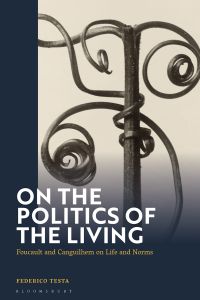
Federico Testa, On the Politics of the Living. Foucault and Canguilhem on Life and Norms, Bloomsbury, 2025

Description
Bringing the philosophies of Michel Foucault and Georges Canguilhem into dialogue, Federico Testa examines the notions of life and norms underlying our modern experience of politics.

Today’s global health crisis acts as a stark reminder that life is at the core of our political debates and dilemmas. We can no longer think of forms of political organization, citizenship and participation without considering the materiality and precarity of our own organic life. Ours is a politics of the living.

Within this context, this book examines Foucault’s work on the politicization of life and biopolitics through the lens of Canguilhem’s notion of norms. Testa extracts from Canguilhem’s philosophy the conceptual tools to re-interpret Foucault’s ideas on power, and reconceptualises normativity as a process of the creation of norms that provide tools for political and social analysis and for thinking resistance. In so doing, he uncovers new and important possibilities for biopolitical resistance.

Demonstrating not only Canguilhem’s underexplored social and political concerns but also the intellectual osmosis between the two thinkers, On the Politics of the Living is an urgent examination of the ever-increasing significance of the concepts of life, care and health in today’s political discourse.

Table of Contents

Part I: Reframing A Philosophical Encounter
Introduction: Foucault, Canguilhem, and the Power of Life
1. From Foucault to Canguilhem
2. Canguilhem and Foucault beyond Historical Epistemology

Part II: Life and Norms in Georges Canguilhem
3. Canguilhem, Philosopher
4. The Normal and the Pathological
5. Vital Normativity

Part III: Foucault and the Power of Norms
6. Vital and Social Norms
7. Foucault and the “Archaeology of Normalizing Power”
8. The Itinerary of the Norm

Part IV: Normativity and Critique
9. Normativity and the Arts of Life
10. The Political “Awe” of Genealogy: On Critique as an Art of Listening

Call for Abstracts: Intellect Handbook of Cinema and the Anthropocene

H-Announce link

We are pleased to announce a forthcoming edited volume, Intellect Handbook of Cinema and the Anthropocene. The volume will bring together original scholarship that examines the relationship between cinema and the Anthropocene from a variety of perspectives. It is intended as a resource for scholars interested in film, media, and environmental studies.

Chapter proposals are now invited for consideration. Please see the below call for full details on the themes of the collection, proposal guidelines, and submission deadlines. Please also consult Intellect’s guidelines for reference on the kind of contributions we are seeking, available here: https://www.intellectbooks.com/intellect-handbooks

Deadline for submission of abstracts is 15 November 2025. Invited contributors will submit full chapters by 30 June 2026.

Editors: Luca Barattoni (Clemson University), Massimiliano L. Delfino (Northwestern University)

In 2024, the International Union of Geological Sciences (IUGS) almost unanimously rejected the proposal to declare an Anthropocene epoch. Professor Jan Zalasiewicz of Leicester University lamented the ‘missed opportunity to recognize and endorse a clear and simple reality, that our planet left its natural functioning state, sharply and irrevocably, in the mid-20th century’. Nonetheless, the IUGS report acknowledged that the Anthropocene concept ‘will continue to be widely used…by social scientists, politicians and economists, as well as by the public at large. It will remain an invaluable descriptor’ of human–environment interactions. This controversy itself underscores a profound shift: the notion that the ‘physical world as previously conceived’ has ended challenges Darwinian uniformist assumptions and demands a rethinking of dualities such as nature/culture, alive/dead, human/animal, and organic/inorganic. In this new reality, the ‘natural’ and ‘artificial’ collapse into unsettling assemblages, as humans increasingly appear as hybrids of flesh and machine whose bodily extensions (from prosthetics to digital avatars) both liberate new expressive potentials and entangle us in the neoliberal ‘entrepreneurship of the self’. Cinema, as both archive and speculative laboratory, offers a privileged space to visualize these entanglements and to dramatize the promises and perils of machinic agency in a world where human intervention has folded the past into the future and altered the collective horizon of expectations.

Cinema engages the Anthropocene on multiple levels. As an industry, filmmaking itself demands enormous energy. At the same time, cinema can reveal environmental realities and imaginaries. Documentaries and sci-fi films routinely use cinematic tools (time-lapse photography, satellite footage, CGI montages) to represent climate transformation. For example, projects like Chasing Ice (2012) employ time-lapse sequences to render visible the slow melting of glaciers that would otherwise elude our perception. In these ways, film both helps to construct a ‘climate-change imaginary’ and exposes how our visual cultures are intertwined with global networks of energy and waste.

We invite proposals for an edited volume – The Intellect Handbook of Cinema and the Anthropocene – that examines the Anthropocene through the lens of film studies and media theory. Recent scholarship urges rethinking the human–planet relationship: Dipesh Chakrabarty, for example, argues that we must simultaneously adopt a human-centered ‘global’ perspective and a decentered ‘planetary’ perspective to frame the Anthropocene. In this spirit, we seek contributions grounded in the latest theoretical currents (posthumanism, ecocriticism, new materialism, deep time, Gaia theory, biopolitics, postcolonial climate critique, etc.) that illuminate how cinema engages with Earth’s changing environment.

In accordance with Intellect Handbook guidelines, requiring ‘comprehensive overviews and in-depth analyses of established theories, emerging debates, and contemporary developments across a wide range of academic disciplines’, we are especially interested in work that emphasizes conceptual and philosophical insights (e.g. Latour, Haraway, Barad, Chakrabarty, Bennett, Braidotti, Alaimo, Weik von Mossner, etc.) rather than film case studies alone. The volume will explore the different ways in which film can enact new ways of seeing and feeling our entanglement with nonhuman life. Drawing on recent ecocritical and affect-theoretical scholarship, which portrays cinema as a site for ‘arts of noticing’ nonhuman vulnerability and agency, this handbook aims to map key debates and open new directions at the nexus of film and the Anthropocene.

Core Themes
Contributions may address (but are not limited to) the following core themes:

-Posthuman/Multispecies Perspectives: Theorizing cinema beyond the human subject. Drawing on Haraway, Braidotti, Bennett, Kagan, and others, this theme interrogates how filmic texts depict humans as co-constituted with nonhuman agents (animals, plants, machines, atmospheres) and breaks down human/non-human binaries.

-Ecocritical and New Materialist Approaches: Engaging new materialism and ecocritique in film analysis. How do Barad’s agential realism, Coole & Frost’s materialisms, Alaimo’s trans-corporeality, etc. reconfigure cinematic narratives? We welcome analyses that treat matter (water, earth, technology, filmic images) as vibrant and agentive, challenging inert ‘nature’ models. Topics include affective ecologies, the role of nonhuman objects, experimental forms that collapse nature/culture divides as well as early film found footage reinterpreted as post-extinction testimonies.

– Intersectional and Feminist Perspectives: Feminist, queer, antiracist and decolonial approaches to cinema and the Anthropocene. For example, ecofeminist analyses might critique the gendered and colonial legacies of environmental exploitation. Contributors might examine how films encode masculinist visions of technoscience versus more relational modes of human. This section invites proposals that interrogate gendered dimensions of environmental crisis, including how race, class, disability, and nonhuman difference intersect in cinematic worlds.

-Temporalities and Deep Time: Examining cinematic representations of time in the Anthropocene. This includes ‘deep time’ and geological temporality as conceptualized by Chakrabarty and others. Contributions might consider how films use nonlinear or long-duration formats, montage of past/future, or other devices to evoke planetary history or futures. Scholarship on collapsed or multiple time scales (e.g.Tsing’s ‘arts of noticing’) can be applied to film.

– Gaia Theory and Earth Systems: Investigating cinema’s relation to Earth as a living system. Inspired by Lovelock/Margulis and Latour’s political turn on Gaia, how do films reflect or contest the idea of Earth’s self-regulating feedback loops? Lovelock famously described the Earth as ‘more like a living organism than an inanimate machine’. Chapters might analyze ecological visuals (the ‘planetary sublime’), earth-bound narratives, or critiques of technology vs. organism paradigms.

– Biopolitics, Geontopolitics, and Climate Justice: Addressing power, governance, and inequality in Anthropocene cinema. Inspired by Foucault and thinkers like Povinelli, we consider how biopolitical regimes and their counterparts (so-called ‘geontopolitics’ or ‘necropolitics’) appear on screen. For example, films may depict surveillance/regulation of life, catastrophe and rescue, climate refugees or sacrificial victims. We especially encourage contributions with postcolonial and climate-justice insights: Chakrabarty notes that climate change is ‘mediated by the global inequities we already have’, so colonial histories and uneven vulnerabilities are crucial. Discussions might draw on writers such as Chakrabarty, Yusoff, Spivak, Mbembe, or Povinelli.

– Cinematic Realism, Genre and Representation: Exploring shifts in film aesthetics and genre under the Anthropocene. How do documentary, science-fiction, disaster and speculative genres respond to ecological concerns? For instance, ‘cli-fi’ and eco-disaster films grapple with planetary crisis, while so-called ecocinema imagines more-than-human empathy. Chapters might examine how realism is unsettled (e.g. CGI nature, VR, multisensory aesthetics) or how narrative conventions (e.g. utopian/dystopian tropes) encode climate consciousness. Emphasis should remain on theoretical framing (ecocriticism, posthumanism, etc.), not mere film summaries.

-AI, Machinic Vision, and the Digital Anthropocene: Investigating artificial intelligence, computation, and machine perception as they intersect film and ecology. The ‘digital Anthropocene’ raises new environmental issues (data center energy use, e-waste) and aesthetic questions (algorithmic vision, CGI ecologies, virtual nature). Recent studies estimate that training one large AI model can emit tens of thousands of kilograms of CO

-We welcome essays on how AI and machine learning – from camera automation to deepfake environments – pose both ecological threats and opportunities for cinema. How do machine ‘ways of seeing’ challenge human-centric cinematography? How might cinema address the hidden materiality of digital media? This section bridges traditional Anthropocene concerns with emerging tech and its critique.

Submission Details
Please submit an abstract of ~500 words (not exceeding 600 words) outlining your proposed chapter and its key argument, along with a brief author bio (max. 150 words) to the editors.

Abstract Deadline: 15 November 2025. Selected authors will be invited to submit full chapters (~7.000–8.000 words) by 30 June 2026.

Style: Manuscripts should be in US English, Intellect Harvard style (see https://www.intellectbooks.com/asset/1748/house-style-guide-6th-ed.pdf), with consistent citations.

Contact: Send proposals or inquiries jointly to the volume editors: Luca Barattoni [lbaratt@clemson.edu] and Massimiliano Delfino [m.delfino@northwestern.edu]. Include ‘Intellect Handbook’ in the email subject.

Call for Presentations
Addressing Interior Violences International Conference.

The Department of Interior Architecture at HEAD – Genève explores the role of interior spaces in shaping contemporaneity. To that extent, it organizes a series of reflections and interventions that aim to learn, question and visibilize how interiors play a key role in the construction of violence for inhabiting bodies and subjectivities.

Format of presentations: Free format (lectures, papers, films, installations, performances, etc.)

Location: HEAD – Genève campus, Switzerland

Deadline for proposals: October 20, 2025

Proposal: one PDF containing an abstract (maximum 500 words), a short bio (maximum 300 words), and a visual reference image

Dates of the symposium: February 23 & 24, 2026

Travel/honorarium: At the expense of the selected contributors

Contact: Please send your proposal to Javier F. Contreras, Paule Perron and Valentina De Luigi via their institutional email addresses: javier.fernandez-contreras@hesge.ch; paule.perron@hesge.ch; valentina.deluigi@hesge.ch.

Theme:
To address spatial violence from within a school of interior architecture is to acknowledge interior spaces as more than politically neutral backgrounds. They should be understood not as mere decors for the everyday lives of predefined identities, but as materially situated conditions that actively participate in shaping social and political interactions. Addressing Interior Violences follows Michel Foucault’s reflections in Discipline and Punish (1975) by considering interior architecture as a set of biopolitical techniques of control over bodies and subjectivities – techniques that uphold the construction of the normal subject: that is, the considered-able, white, young, human, bourgeois, heterosexual, male subject. At the same time, it also questions its mirror image: the spatial production of the monstrous, excluded, dehumanized one. Building on the writings of Lennard J. Davis (2002), this open call seeks to interrogate the role of interior spaces in perpetuating power structures organized around the modern notion of normalcy. Divided into three categories, it welcomes proposals that have the following collective aims:

  • Learn the ways in which the discipline of interior architecture has historically participated in the exclusion of minoritized bodies – both human and non-human.
  • Question how contemporary interior material conditions can contribute to the perpetuation of power dynamics over certain bodies in specific contemporary contexts – and, conversely, how they might serve as tools of negotiation and resistance.
  • Visibilize practices and projects that have developed methodologies aimed at overcoming these violences

1. Learning Histories of Violence
This first perspective traces the contested histories of bodily and spatial norms. Drawing on the writings of Jos Boys (2017), it questions how normalcy, with its associated ideals of body and environment, is deeply tied to specific temporal, territorial and political contexts, and translated into standardized design practices. It also argues that minor narratives – emerging from non-dominant perspectives – are urgently needed to uncover the power structures embedded in interior spaces, as well as their impact on diverse bodies and territories. Within this section, HEAD – Genève welcomes proposals that adopt a critical stance toward dominant narratives of interior architecture and examine the inherent violence conveyed by the notion of normalcy.

2. Questioning Weaponized Interiors
This second perspective addresses interior architecture as a contemporary practice of boundary-making that can be understood as weaponized. Such boundaries – whether physical, atmospheric or visual – regulate the distribution of bodies in space, determining who and what can gain access to particular environments. As Elsa Dorlin (2017) argues, the capacity to resist order – in this case, to construct, negotiate with or dismantle these limits – is unevenly distributed. This perspective invites inquiry into how contemporary spatial conditions function as technologies of regulation that both produce and sustain power structures. It simultaneously addresses such partitioning as a necessary mechanism for sustaining social life and rituals within the built environment. HEAD – Genève therefore welcomes proposals that explore how these technologies can be disrupted, subverted or renegotiated.

3. Visibilizing Dissident Practices and Projects Involving Interiors
This perspective, which builds on the work of Starhawk (2021), invites proposals showcasing practices that have developed methods for translating critical thought into spatial interventions and collective organization. It suggests that questioning the normal boundaries of Western interiors through the collectivization of practices and spaces could open up possibilities for a caring environment. Under this section, HEAD – Genève welcomes completed, speculative or experimental projects that address power, boundaries and exclusion in interior architecture. Submissions may highlight emancipatory or subversive practices that challenge dominant norms and reconfigure spaces to support diverse bodies – human and non-human – as well as communities and alternatives modes of inhabiting.

Toward Emancipatory Futures
In light of today’s geopolitical context, marked by pervasive international violence against specific bodies and subjectivities, Addressing Interior Violences stresses the urgent responsibility of interior architecture to pursue the work of many to acknowledge and deconstruct its own complicities. Engaging with postcolonial, feminist, queer and ecological perspectives seems essential, not only to understand these histories, but also to reorient the discipline toward more just and emancipatory futures. We recognize that voices marginalized by structures of gender, sexuality, race, class or ability have historically been excluded from the discipline. This call therefore explicitly encourages submissions from those positions, which are considered central to the discussion.

Image Credits
Unknown. Prison inspired by Bentham’s Panopticon [photograph]. Getty Images.

Kira, A. (1960). Bathroom [photograph].

Millen, L. (unknown). Anne Thorne with son. From MATRIX (Collective) (1984). Making Space: Women and the Man-Made Environment [photograph]. London: Pluto Press. (Republished 2021, London: Verso).

Greenaway, P. (1985). Inside Rooms: 26 Bathrooms, London & Oxfordshire [screenshots from film]. United Kingdom: Channel 4.

Miguel, C. (2019). Everyday Maintenance series [photograph].

Schütte-Lihotzky, M. (1926). Frankfurter Küche [archive photograph]. Frankfurt am Main: Museum Angewandte Kunst.

Boulos, M. (2020). Nour [photograph]. For Time Magazine.

Weiken, O. (July 30, 2014). Gaza Strip [photograph].

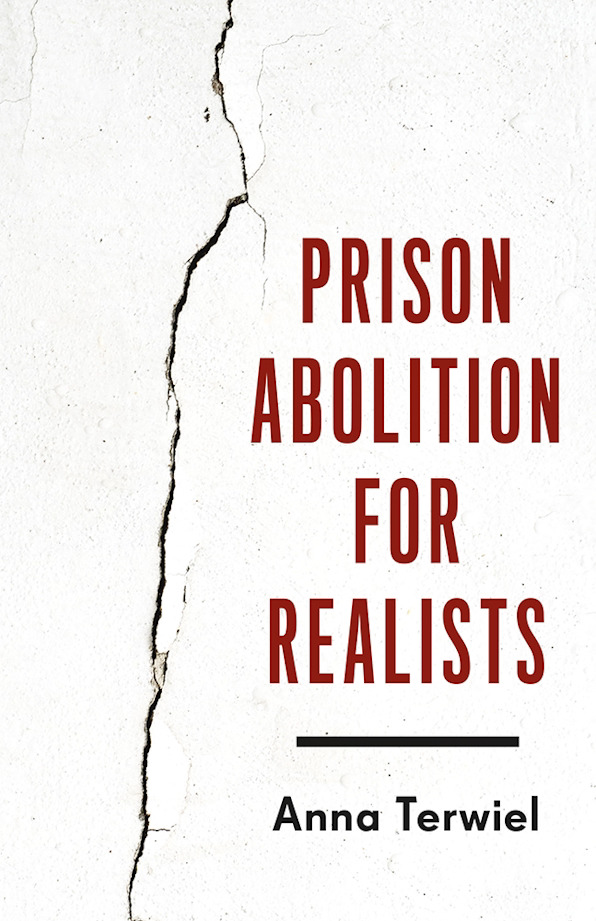
Anna Terwiel, Prison Abolition for Realists, University of Minnesota Press, December 2025 Forthcoming

Description
A lucid guide to the radical politics of prison abolitionists

There is growing recognition that mass incarceration is unjust and undemocratic, but prison abolition continues to be dismissed as naïve, idealistic, and out of touch with reality. Anna Terwiel challenges this view, carefully examining the work of abolitionist thinkers and activists since the 1960s to argue that prison abolition is a realist political project. Abolition, Terwiel shows, is oriented toward practical realities and offers concrete proposals for radical democratic change.

Based on insightful readings of renowned abolitionists such as Michel Foucault, Liat Ben-Moshe, and Angela Y. Davis, Prison Abolition for Realists illuminates the realist aspects of their approaches as well as the important differences between them. Distinguishing between paranoid, purist, and agonistic styles of abolitionism, Terwiel argues that an agonistic approach holds the most promise for democratic change to carceral systems. Embodied in the work of Davis, agonistic abolitionism combines radical critique with efforts to build new democratic institutions while accepting that all political achievements will be imperfect. Pursuing examples of what this looks like in practice, Terwiel explores grassroots transformative justice efforts, like those of Communities Against Rape and Abuse. She also proposes a “right to comfort” to support incarcerated people’s demands for air conditioners in extremely hot prisons, showing how state institutions, civil law, and rights claims can be potential resources for abolitionists.

Nuanced and illuminating, Prison Abolition for Realists affirms abolition’s viability during a time of multiple, ongoing crises. While many despair at the state of the world, Terwiel reveals how abolition offers an actionable politics of the possible. Far from being unrealistic, abolition is an indispensable part of a realist politics.

ABOUT THE AUTHOR
Anna Terwiel is assistant professor of political science at Trinity College in Hartford, Connecticut. She is codirector of Trinity’s Prison Education Project (TPEP), which offers credit-bearing classes to incarcerated people. Her research has been published in Political Theory; Polity; Theory & Event; and New Political Science.

Garruzzo, A. (2025). History and the Will to Power: Foucault and Nietzsche on Genealogy. European Journal of Philosophy,
https://doi.org/10.1111/ejop.70010

ABSTRACT
In recent years, there has been a revival of interest in genealogy among social and political philosophers. I argue, however, that this growing literature has tended to obscure what distinguishes genealogy as an approach to the interpretation of history. Any normative evaluation of something that appeals to an account of its origins has come to be called a “genealogy,” even if this account is explicitly hypothetical or unabashedly teleological. But a genealogy, according to Friedrich Nietzsche and Michel Foucault, is not merely an account of origins: it is an account of the contingent origins of the integration of an institution, practice, or concept within a regime of power and control. In other words, genealogy investigates an institution, practice, or concept through the lens of what Nietzsche calls “the will to power.” This paper aims to reconstruct the conception of the will to power Foucault inherits from Nietzsche in a way that explains why investigations into struggles for power from the past can provide insight into the strategies used for exercising and maintaining power in the present. The critical contribution of genealogy, I argue, is not normative insight but tactical knowledge: to oppose something successfully, first you must know your enemy.

Philippe Chevallier, Foucault: Genealogies for the Future, Rice University, April 19, (2024)
Panel moderated by Cymene Howe, Rice University

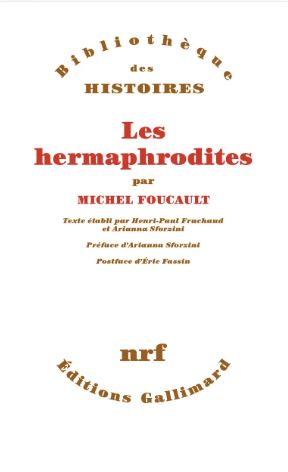
Michel Foucault, Les hermaphrodites
Édition d’Henri-Paul Fruchaud et Arianna Sforzini. Préface d’Arianna Sforzini, postface d’Éric Fassin
Collection Bibliothèque des Histoires. Gallimard 2025

En 1978, Michel Foucault annonce un volume de son Histoire de la sexualité « consacré aux hermaphrodites ». Avec la réorientation de son enquête vers l’Antiquité, il y a renoncé. Demeure dans ses archives ce manuscrit qui aurait pu en faire l’ouverture. À partir de procès échelonnés entre le xvie et le XVIIIᵉ siècle, il met en lumière le passage d’un régime juridique, attribuant un « sexe de décision », à un régime de véridiction, postulant que chaque individu a un seul et « vrai » sexe, qu’il revient à la science médicale de déterminer. C’est aussi le seul écrit dans lequel Foucault élabore la distinction cruciale, à la fois historique et théorique, entre sexe anatomique et sexualité.

La préface d’Arianna Sforzini présente cette histoire par une lecture attentive des concepts organisant le texte, tandis que la postface d’Éric Fassin en fait ressortir les enjeux les plus contemporains, en analysant les rapports entre sexualité, sexe et genre.

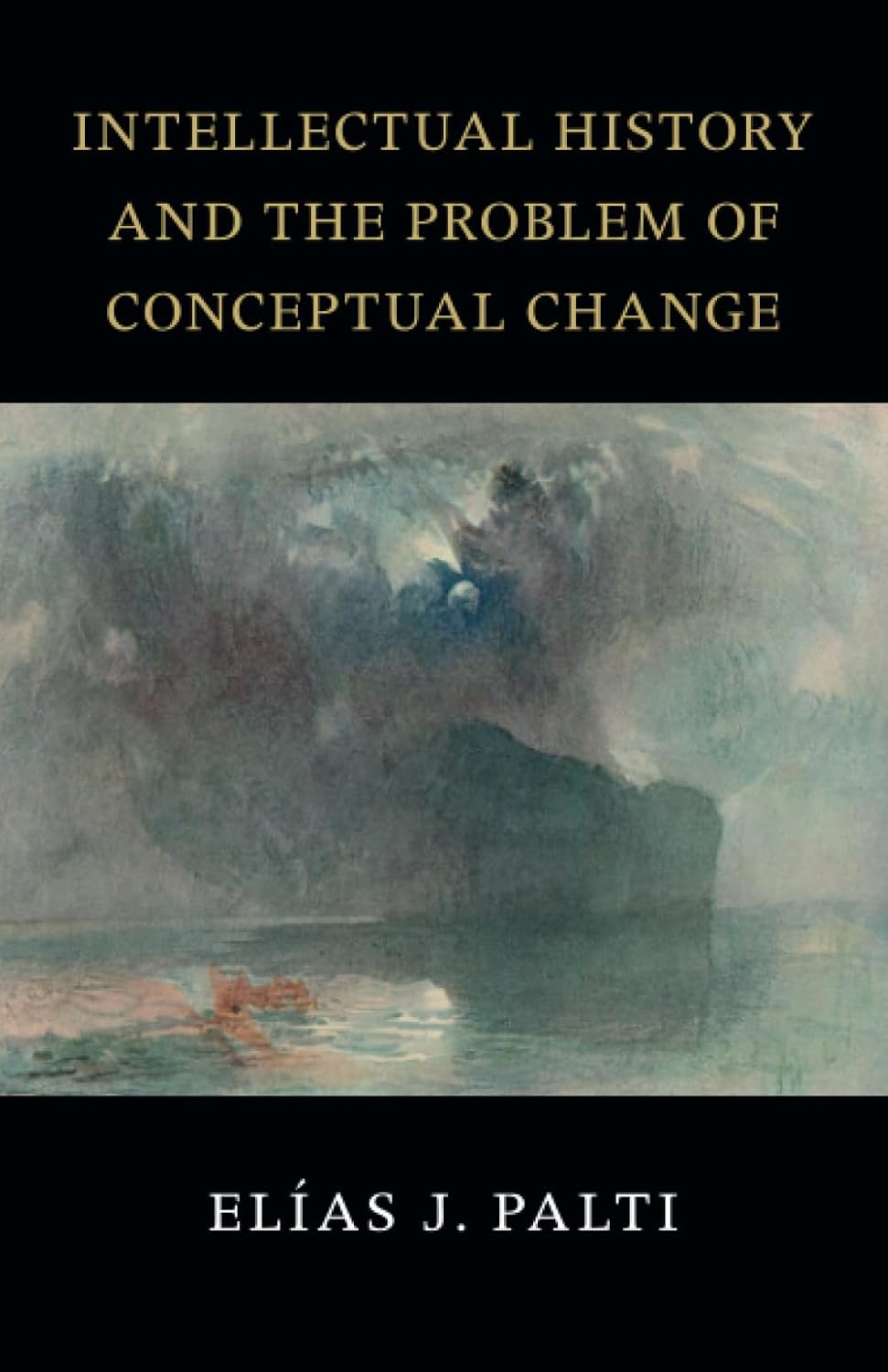
Palti Elias J. Intellectual History and the Problem of Conceptual Change. The Seeley Lectures. Cambridge University Press; 2024

How does long-term intellectual change occur? Can we develop a theoretical framework for understanding past systems of knowledge? In this ambitious study, Elías José Palti seeks to reassess the main concepts in the field of intellectual history. Evaluating modes of thought from the seventeenth century to the present, this book aims to prevent an anachronistic understanding of the texts of the past. Palti rejects the idea of conceptual change as a coherent process deriving from one single source. Instead, he offers a convincing explanation of converging developments emanating from three different sources: namely, the Cambridge school, the German school of conceptual history, or Begriffsgeschichte, and French politico-conceptual history. Intellectual History and the Problem of Conceptual Change also closely examines the temporality of concepts, questioning how and why political languages mutate.