Foucault News

News and resources on French thinker Michel Foucault (1926-1984)

Ladelle McWhorter, Unbecoming Persons. The Rise and Demise of the Modern Moral Self, University of Chicago Press, 2025

Interview with Ladelle McWhorter on the New Books Network, Oct 20, 2025.

A damning genealogy of modern personhood and a bold vision for a new ethics rooted in belonging rather than individuality.

In the face of ecological crisis, economic injustice, and political violence, the moral demands of being a good person are almost too much to bear. In Unbecoming Persons, Ladelle McWhorter argues that this strain is by design. Our ideas about personhood, she shows, emerged to sustain centuries of colonialism, slavery, and environmental destruction. We must look elsewhere to find our way out.

This history raises a hard question: Should we be persons at all, or might we live a good life without the constraints of individualism or the illusion of autonomy? In seeking an answer, McWhorter pushes back on the notion of our own personhood—our obsession with identity, self-improvement, and salvation—in search of a better way to live together in this world. Although she finds no easy answers, McWhorter ultimately proposes a new ethics that rejects both self-interest and self-sacrifice and embraces perpetual dependence, community, and the Earth

Mar 25, 2025 Theoretical Puppets: J is for Justice (Michel Foucault)

Sep 18, 2023, Theoretical Puppets: H is for Heterotopia (Michel Foucault)

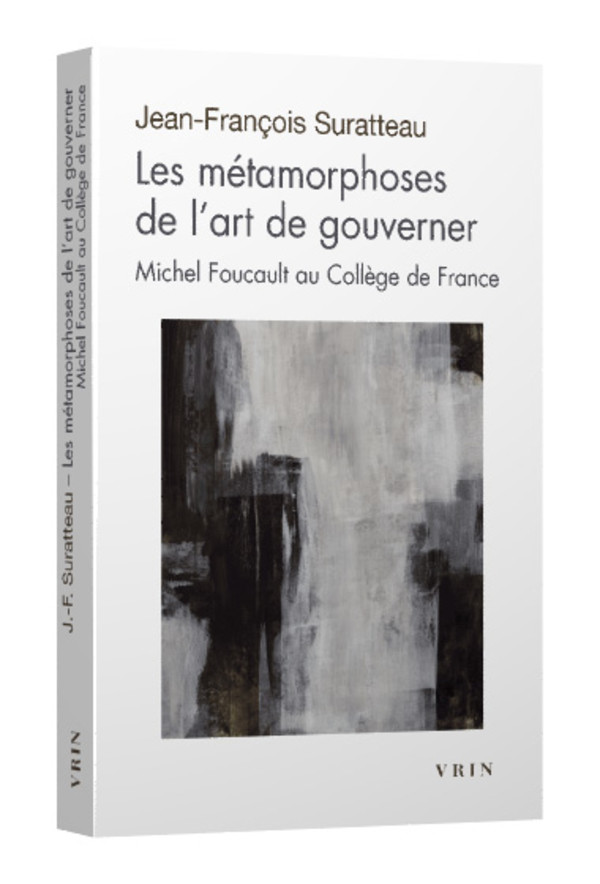
Jean-François Suratteau, Les métamorphoses de l’art de gouverner Michel Foucault au Collège de France, Vrin, 2025

Entretien avec Jean-François Suratteau

Présentation
Michel Foucault est un auteur polymorphe, qui a su toucher, par ses écrits et ses interventions, des publics très divers. On s’intéresse dans ce livre aux cours donnés au Collège de France, où Foucault enseigne de 1970 à 1984, et où s’élaborent des concepts qui ont fait sa renommée, comme ceux de biopouvoir, de gouvernementalité et de dire-vrai.

Les dix études qui composent cet essai ne visent pas à reconstituer un système ni à proposer un glossaire exhaustif : on y suit une pensée au travail, sans chercher à gommer les difficultés qu’elle affronte, ni les déplacements qu’elle opère. Au gré de ses transformations, on circule au sein de champs multiples – de la pratique punitive aux conduites d’aveu, de la psychiatrie aux stratégies libérales et néolibérales –, et d’époques différentes – de l’Antiquité gréco-romaine à l’avènement de l’État moderne, en passant par le christianisme des débuts et l’Aufklärung. On interroge un cheminement construit, aigu et inquiet, dont l’horizon est éthique et l’enjeu politique : donner forme à l’art de gouverner, c’est garder vive l’actualité de la résistance aux pouvoirs.

Trémon, A.-C.
Spatial governmentality and the rhetoric of scarce resources: ‘Scientific and reasonable’ points systems in Shenzhen (China) (2024) Environment and Planning A

DOI: 10.1177/0308518X241286335

Abstract
Since the early 2010s, all Chinese megacities have adopted points systems that allow ordinary people to apply for urban citizenship (hukou) in the city where they live. Although intended for applicants other than ‘talents’, points systems are highly selective. They are used to adjust urban population growth to economic development and to available resources. Based on research in Shenzhen, and combining Foucault and Gramsci, this article makes three arguments: first, points systems intensify the hukou system’s spatial governmentality, in that they set up a competition for scarce resources that shapes self-governing urban citizens; second, they are justified in ways that seek to produce consent, by giving them uncontestable grounding in science; and third, the gap between their proclaimed benefits and their actual, complex workings gives rise to critique, and even class-based critique. © The Author(s) 2024.

Author Keywords
carrying capacity; China; citizenship; critique; Foucault; governmentality; Gramsci; hegemony; points systems; population; public goods; resources; scarcity; urban economy

Leonard D’Cruz, What Demarcates Necropolitics from Biopolitics? A Foucauldian Critique of Mbembe, Theory, Culture & Society
https://doi.org/10.1177/02632764251379790

Abstract:
Achille Mbembe presents ‘necropolitics’ as a corrective to Foucault’s conception of biopolitics, which Mbembe argues is insufficient to account for the contemporary politics of death. However, it is not clear that Mbembe succeeds in (a) demonstrating the deficiencies of Foucault’s framework or (b) demarcating necropolitics from biopolitics. In this article, I argue that Mbembe misconstrues Foucault’s understanding of the relationship between biopower and sovereign power, and thus underestimates Foucault’s capacity to account for racialized violence. On this basis, I suggest that the essence of necropolitics is already captured by Foucault’s concepts of state racism and thanatopolitics, and that Mbembe is wrong to suggest that ‘necropower’ constitutes a modality of power in its own right. Nonetheless, I maintain that Mbembe’s work has value in bringing certain effects of power into focus, as evidenced by his insights into the creation of ‘death-worlds’ and the racialized category of ‘the living dead’.

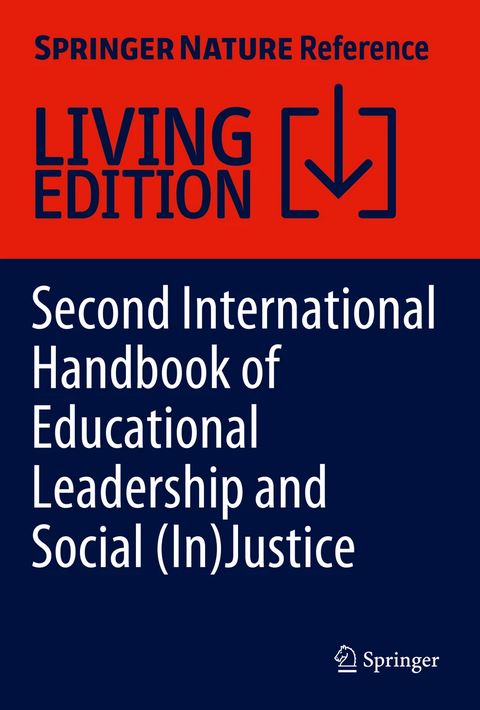
Denise Mifsud, Richard Niesche (2025). Exploring the Lived Experiences of Two Scholars Researching Social (In)Justice in Educational Leadership Across Maltese and Australian Contexts. In: Bogotch, I., Shields, C.M. (eds) Second International Handbook of Educational Leadership and Social (In)Justice. Springer International Handbooks of Education. Springer, Cham.
https://doi.org/10.1007/978-3-031-56275-4_121-1

Abstract
This chapter highlights aspects of researching educational leadership for social justice as it unfolds at the triage of theory, policy, and practice (Mifsud, Triaging research, policy and practice. Leadership Unwrapped Podcast, Episode 14, 13 March 2023). We explore the lived experiences of two scholars as they reflect upon their histories, education, and research within the Maltese and Australian education contexts. Through our diverse cultural and social experiences, we critically examine issues related to experiencing, practicing, and researching leadership for social (in)justice in education. Few studies reflect on the experiences of the researchers themselves in terms of what drives them to undertake social justice research from the perspective of their backgrounds, as well as personal and professional experiences.

Our lived experiences are explored through the different trajectories in both local education systems: from our student days in compulsory education through to university experience at under- and postgraduate levels, our teaching/school leadership careers, and the eventual move into academia as educational leadership scholars. Through incidents/accounts, we reflexively discuss how typical leadership practices inadvertently lead to social (in)justice, subverting the original policy intentions. This is presented via autoethnographic narratives, combining methodologies previously adopted by Wilkinson and Eacott (Int J Leadership Educ 16:191–204, 2013) and Mifsud and Orucu (Eur Educ Res J, 2025), that are interwoven with Foucault’s trident (Gillies D, Educational leadership and Michel Foucault. Routledge, London, 2013) of skepticism, critique, and problematization to demonstrate the dissonance between policy intentions and translations at school and classroom level.

Michel Foucault, Histoire de la vérité. Cours à l’Université d’État de New York à Buffalo, mars et avril 1972, Vrin 2025
Édition, introduction et apparat critique par Henri-Paul Fruchaud et Orazio Irrera.

Présentation
Comment s’est constituée, à travers le temps, la conception de la vérité qui est aujourd’hui celle de la civilisation occidentale? Tel est le thème de ce cours inédit prononcé par Foucault au printemps 1972 à l’Université d’État de New York à Buffalo. En prolongeant ses deux premiers cours au Collège de France, il étudie dans deux périodes, l’Antiquité grecque et le Moyen Âge occidental, l’histoire de la façon dont s’est opéré, à travers l’évolution des pratiques judiciaires et des relations de pouvoir qui les sous-tendent, le partage du vrai et du faux qui est à l’origine du discours scientifique occidental.

Ainsi, l’Histoire de la vérité est l’un des tout premiers travaux où Foucault met en oeuvre l’approche généalogique qui caractérise sa pensée à partir du début des années 1970.

Ce cours est aussi l’occasion, pour Foucault, de préciser sa propre démarche, dans laquelle la relation entre pouvoir et savoir occupe une place centrale, en la distinguant soigneusement de celle d’un certain marxisme, notamment par la critique des notions d’idéologie et de conception du monde.

Announcing the official launch of the

Inventory of the Library of Michel Foucault and Daniel Defert

La bibliothèque de Michel Foucault et de Daniel Defert du 285 rue de Vaugirard

Announcement in French and English

Description
Michel Foucault moved in with Daniel Defert at 285 rue de Vaugirard (Paris 15th arrondissement) at the beginning of 1971, and he remained there until his death in 1984.

The inventory of the library preserved in this apartment is the result of a collective effort carried out from May to July 2024, made possible through the kind hospitality of Antoine Jabre, Daniel Defert’s husband. Henri-Paul Fruchaud and Philippe Chevallier were assisted in their work by two interns from the Bibliothèque nationale de France, Cecilia Drago and Annabelle de Traversay, as well as by François Ewald, Laurence Le Bras, and Niki Kasumi Clements. The project received support from the Bibliothèque nationale de France and the Centre Michel Foucault.

The file produced in 2024 was then fully revised and edited as a Heurist database by Carolina Verlengia (Triangle – UMR 5206) in June and July 2025, with the support of the Centre Michel Foucault and the Centre d’archives en philosophie, histoire et édition des sciences (CAPHÉS, UAR 3610).

This inventory should not be regarded as complete. First, because approximately 1,430 books dedicated to Michel Foucault had already left 285 rue de Vaugirard in the 2010s to join the Beinecke Rare Book & Manuscript Library at Yale University. Second, because certain choices had to be made due to time constraints. Thus, the following were not included in the inventory:

  • works published after Michel Foucault’s death;
  • a few minor reference or ephemeral items (dictionaries, travel guides, advertising brochures, etc.);
  • the numerous offprints, except for those directly related to Michel Foucault’s work and circle of friends;
  • books kept outside the living room and the former study (fewer in number than those described here and mostly paperbacks).

Finally, even though the core of this collection is clearly Michel Foucault’s working and “scholarly sociability” library, as reflected in the range of disciplines and themes it covers, as well as in the many reading marks and inscriptions, it is impossible to separate Michel Foucault’s use of the library from Daniel Defert’s. This is partly due to their shared life together (the presence of duplicates, particularly of certain classics of ancient thought, reminds us that Daniel Defert followed an academic path that was relatively similar to Michel Foucault’s), but also because Daniel Defert continued to live in the apartment from 1984 until his death in 2023 and frequently made use of this working library (especially for his editorial projects, from Dits et Écrits to Leçons sur la volonté de savoir). We have therefore attributed certain volumes, with due caution, to an owner who can at most be regarded as their first.

La bibliothèque de Michel Foucault et de Daniel Defert du 285 rue de Vaugirard

Michel Foucault s’est installé avec Daniel Defert au 285 rue de Vaugirard (Paris 15e) début 1971 ; il y resta jusqu’à sa mort en 1984.

L’inventaire de la bibliothèque conservée dans cet appartement est le fruit d’un travail collectif réalisé de mai à juillet 2024 grâce à l’accueil bienveillant d’Antoine Jabre, mari de Daniel Defert. Henri-Paul Fruchaud et Philippe Chevallier ont été aidés dans leur tâche par deux stagiaires de la Bibliothèque nationale de France, Cecilia Drago et Annabelle de Traversay, ainsi que par François Ewald, Laurence Le Bras et Niki Kasumi Clements. L’opération a reçu le soutien de la Bibliothèque nationale de France et du Centre Michel Foucault.

Le fichier produit en 2024 a ensuite été intégralement corrigé et édité sous la forme d’une base de données Heurist par Carolina Verlengia (Triangle – UMR 5206), en juin et juillet 2025, avec le soutien du Centre Michel Foucault et du Centre d’archives en philosophie, histoire et édition des sciences (CAPHÉS, UAR 3610).

Cet inventaire ne saurait être considéré comme complet. Tout d’abord, parce qu’environ 1 430 ouvrages dédicacés à Michel Foucault avaient déjà quitté le 285 rue de Vaugirard dans les années 2010 pour rejoindre la Beinecke Rare Book & Manuscript Library de l’université de Yale. Ensuite, parce qu’il nous fallut faire des choix, en raison de contraintes de temps. Ainsi, n’ont pas été inventoriés :

  • les ouvrages publiés après le décès de Michel Foucault ;
  • quelques usuels ou éphémères peu significatifs (dictionnaires, guides touristiques, brochures publicitaires, etc.) ;
  • les très nombreux tirés à part, à l’exception de ceux directement reliés au travail et aux cercles d’amitié de Michel Foucault ;
  • les ouvrages conservés en dehors du salon et de l’ancien bureau (moins nombreux que l’ensemble ici décrit, dont une majorité de livres de poche)

Enfin, même si le cœur de cet ensemble est de toute évidence la bibliothèque de travail et de « sociabilité savante » de Michel Foucault, comme le montrent les disciplines et les thèmes couverts, mais aussi les nombreuses marques de lecture et d’envoi, il est désormais impossible d’isoler son usage de celui qu’en fit Daniel Defert : à la fois du fait de leur vie commune (la présence de doublons, en particulier pour certains classiques de la pensée antique, nous rappellent que Daniel Defert a suivi un parcours de formation relativement similaire à celui de Michel Foucault), mais aussi parce que Daniel Defert demeura dans l’appartement de 1984 à son décès en 2023 et eut fréquemment recours à cette bibliothèque de travail (en particulier pour ses travaux d’édition, des Dits et Écrits aux Leçons sur la volonté de savoir). C’est donc avec prudence que nous avons attribué certains ouvrages à un propriétaire qui n’est tout au plus que le premier.

Hegde, S. (2025). Testing the limits of statism: concluding reflections on migrations and Borderlands. Asian Ethnicity, 26(4), 800–816.
https://doi.org/10.1080/14631369.2025.2524539

ABSTRACT
My effort is to come to terms with the double logic implicating the dynamics of the phenomena of migrations and borderlands, both as framed by the ethnographies collected herein and the larger rubric of borderland studies. In addressing this logic as an interplay between ‘containment’ and ‘movement,’ the paper argues that it is necessary to articulate this ground by invoking a ‘statism’ within and beyond the state, in the process devolving on Foucault’s construct of ‘governmentality.’ It works towards a more complex fabric of state-society relations that must configure the study of migrations and borderlands. In focus, overall, is an approach to borderlands, as much as a site where strains of nationality and statehood have sought to uphold or query their foundations, as a theatre in which the very structure and edifice of statism can be staged as questions. Our argument remains largely conceptual and methodological, rather than demonstrably historical.

KEYWORDS:
Statism, sovereignty, governmentality, containment, movement, analytic of state-society relations