
Foucault News

News and resources on French thinker Michel Foucault (1926-1984)

Lee, H. The Empiricist Origin of Biopolitics: Freedom and Potentiality in John Locke
(2021) Philosophia (United States).

DOI: 10.1007/s11406-020-00306-2

Abstract
This article examines John Locke’s theory of subjectivity to challenge the recent critical tendency to associate biopolitics and empiricism. Michel Foucault, most notably among modern theorists of biopolitics, proposes that the Lockean man, or an interest-seeking animal, constitutes the paradigm of a person that remains subject to biopower. Such understanding of empiricism by biopolitical theorists is, however, reductive because Locke’s view of human subjectivity is fundamentally equivocal. As I demonstrate by analyzing his discussion of freedom, action, and desire in An Essay Concerning Human Understanding and other writings, Locke admits the possibility for a human being to think and to act freely, although in the process of restricting the capacity for free action. Hence, the theorists’ simplistic view of Locke rather reflects the limits of their own conception of subjectivity, especially their behavioristic premises. As they consider a person as a mere machine of survival without agency and initiative, they preclude the possibility of overcoming biopower at the fundamental level. In demonstrating contradictions and tensions within Locke’s empiricism, this article then proposes the ways in which Locke can show a way beyond the critical impasse in political theory in elucidating (albeit inconsistently) the power of acting against the chain of causality. © 2021, The Author(s), under exclusive licence to Springer Nature B.V. part of Springer Nature.

Author Keywords
Aristotle; Biopolitics; Freedom; Homo economicus; John Locke; Potentiality
Baker, B., & O’Farrell, C. (2021, February 23). Curriculum influences: William James and Michel Foucault. In Oxford Research Encyclopedia of Education. Oxford University Press.
DOI: 10.1093/acrefore/9780190264093.013.1093

Editor: I’m really pleased to see this out after a long wait! Email me if you would like a copy and can’t get through the paywall

Summary
William James (1841–1910), working primarily out of the United States, and Michel Foucault (1926–1984), working primarily out of France, are two very different figures who both made an impact on current theories of education. Even if the primary focus of their work is not education, their ideas challenge what it is that makes education recognizable as education and takes issue with its very identity as a discipline.

William James, who began publishing in the 1870s, is generally described as a philosopher and psychologist. He remains well-known for his work on pragmatism in the wake of Charles Sanders Peirce’s pragmaticism and for his work on religion, ethics, and mind theory, but he also devoted considerable time to the study of parapsychology and gave some attention to teacher education.

Foucault has been variously described as a philosopher, historian, historian of ideas, and a social and political theorist. His work addressed an impressive array of fields across the sciences, literature, art, ethics, and institutional, political, and social history, and spanned a wide range of historical periods mainly in European and French history from the 13th century to the 20th century with later excursions into the Ancient Greek and early Christian eras.

Foucault’s work has been widely, but selectively, deployed within education studies across the globe, with a strong focus on his notions of power, governmentality, surveillance, subjectivity, discourse, and ethics in their various iterations. James’s work has been relatively less deployed, with emphasis on the application of his version of pragmatism, theories of mind, and talks to teachers.

The work of the two thinkers may be considered to overlap in two important ways: first, in their respective approaches to the notion of practice, namely the idea of philosophy as strategic and located in day-to-day concrete experience rather than occupying the rarefied realms of abstraction; and second, their interest in the margins of knowledge – knowledge that has been excluded by mainstream science and accepted ways of thinking. In the case of James, this interest manifests in his long-term studies in the field of parapsychology and in the case of Foucault in his interest in the meandering byways and monstrosities of the history of ideas, of long-forgotten knowledge rejected by the scientific mainstream or formulated on the margins of society.

Keywords
Michel Foucault, William James, discourse, education, self, war. power, domination. philosophy

David Fryer, Charles Marley, Rose Stambe, The Reproduction of Compliant Labour Power Through (Re)Constitution of the Child and Adult Subject: Critical Knowledge-Work, Awry: Journal of Critical Psychology, Vol 1 No 1 (2020)
Open access

Abstract
As Althusser made clear: “the reproduction of labour power requires not only a reproduction of its skills, but also, at the same time, a reproduction of its submission to the rules of the established order” (Althusser, 1971. pp. 127-128). In this paper, we describe and discuss critical knowledge-work intended to illuminate governmentality which is accomplished through (re)constitution of the subject. In particular we point to societal interconnections responsible for the (re)constitution of the compliant productive neoliberal subject in the context of the needs of neoliberal capitalist employers and the State to reproduce the means of production. We focus, in particular, on reproduction of labour power in the form of children who have been subjectively reconstituted to be compliant with the ‘rules’ of ‘good behaviour’ which discipline ‘educational’ settings but which is preparation for compliant neoliberal labour market ‘participation’ and on unemployed adults who are subjectively reconstituted as compliant subjects required by the neoliberal labour market through ‘labour market activation’, the contemporary preoccupation of neoliberal governments around the world.

Keywords
compliance, critical knowledge work, neoliberal labour market. problematisation, reconstitution of the subject

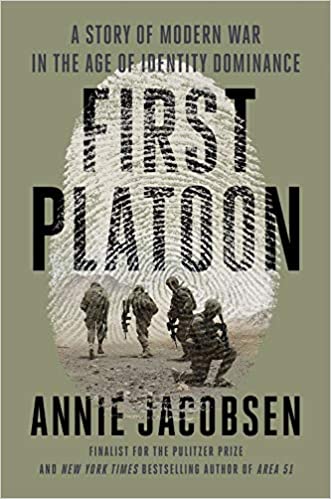
Annie Jacobsen, First Platoon: A Story of Modern War in the Age of Identity Dominance, Penguin Random House, 2021

Editor: The first chapter titled ‘The Panopticon’ includes a reflection on Foucault’s discussion of the plague in the Abnormal lectures and in Discipline and Punish.

ABOUT FIRST PLATOON
A powerful story of war in our time, of love of country, the experience of tragedy, and a Platoon at the center of it all

This is a story that starts off close and goes very big. The initial part of the story might sound familiar at first: It is about a platoon of mostly nineteen-year-old boys sent to Afghanistan, and an experience that ends abruptly in catastrophe. Their part of the story folds into the next: inexorably linked to those soldiers and never comprehensively reported before is the U.S. Department of Defense’s quest to build the world’s most powerful biometrics database, with the power to identify, monitor, catalogue, and police people all over the world.

First Platoon is an American saga that illuminates a transformation of society made possible by this new technology. Part war story, part legal drama, it is about identity in the age of identification. About humanity—physical bravery, trauma, PTSD, a yearning to do right and good—in the age of biometrics, which reduce people to iris scans, fingerprint scans, voice patterning, detection by odor, gait, and more. And about the power of point-of-view in a burgeoning surveillance state.

Based on hundreds of formerly classified documents, FOIA requests, and exclusive interviews, First Platoon is an investigative exposé by a master chronicler of government secrets. First Platoon reveals a post–9/11 Pentagon whose identification machines have grown more capable than the humans who must make sense of them. A Pentagon so powerful it can cover up its own internal mistakes in pursuit of endless wars. And a people at its mercy, in its last moments before a fundamental change so complete it might be impossible to take back.

Reviews
“Jacobsen brings empathy, compassion, compelling writing and some truly dogged reporting”—The Washington Post

“First Platoon tells two parallel stories that will keep those of us concerned about civil liberties up at night. Jacobsen dives into the troubling tale of 1st Lt. Clint Lorance, the disgraced former military leader who ordered the murder of Afghan civilians in one of the ugliest events for the U.S. military in the continuous wars since 9/11. She takes the story far beyond Lorance’s controversial pardon by President Donald Trump, though, detailing a largely unreported secretive program to catalog the personal and physical information of 80% of the Afghan population in a quest for ‘identity dominance.’”—The Seattle Times

“A thought-provoking tale…Bombshell finding.”—Military History Magazine

ABOUT ANNIE JACOBSEN
Annie Jacobsen is the author of the Pulitzer Prize–finalist in history The Pentagon’s Brain, the New York Times bestsellers Area 51 and Operation Paperclip, and other books. She was a contributing editor at the Los Angeles Times Magazine. A graduate of Princeton University, she lives in Los Angeles with her husband and two sons.

Paolo Vernaglione Berardi, La natura umana come dispositivo, Edizioni Efesto, Ristampa – 2021.

Questo è il testo che inaugura la nostra nuova collana “archeologia filosofica”. E’ una mappa delle più importanti problematiche filosofiche che l’idea di natura umana delimita. Questa idea infatti persiste al fondo delle trasformazioni storiche dell’occidente. Se si percorre questo territorio che confina con l’antichità greca e latina e si estende fino alle ultime sponde della modernità, si incontrano colline e depressioni, altopiani e suoli vulcanici che corrispondono agli strati della “civilizzazione” e ai “valori” che sono illusoriamente rienuti fondamentali. La posta in gioco nel risalire questa soglia è una ridefinizione della modernità che si lascia alle spalle l’ “umanità” intesa come l’essenza biologicamente o culturalmente presupposta dell’uomo Con una particolare attenzione alla scrittura, il libro incita a diventare archeologi-esploratori del sapere, a rimettere in discussione la propria soggettività e a indagare i luoghi e i momenti in cui i rapporti con i poteri divengono più intensi. Emergeranno dunque in superfice una volontà che anima i dispositivi di sapere-potere, un soggetto che si dissolve e una certa forma che assume il potere sovrano divenuto governo della vita, a cui sottrarsi facendo della vita “un’opera d’arte”.

English
The idea of human nature produces and accompanies different ways of thinking the essence of the human being as a power-knowledge dispositive. Along the ages of the Western civilization, this concept describes the curve of the modern time and generates the permanent ambigous and concept of “humanity”. Attempting a genealogical search of the typical “will of knowledge”, this book paints a large map of the relationships between philosophical archaeology after Foucault, Melandri and Agamben, and the dissolution of subjectitivy. In this case emerges the perspective of an aesthetic of the existence in wich coincides life and form of life.

Paolo Vernaglione Berardi
Insegnante di filosofia e storia, è autore di saggi e testi tra cui: Il sovrano l’altro, la storia (Roma, 2008), Dopo l’umanesimo. Sfera pubblica e natura umana (Macerata 2010), Filosofia del comune (Roma, 2014), Michel Foucault: genealogie del presente (a cura di, Roma 2015), Scritti su Walter Benjamin (a cura di, Roma 2016). Ha fondato il Laboratorio “archeologia filosofica

Glasdam, S., Loodin, H., Wrigstad, J. Articulations of antimicrobial resistance in trade union financed journals for nurses in Scandinavia – A Foucauldian perspective (2021) Nursing Inquiry.

DOI: 10.1111/nin.12396

Abstract
Antimicrobial resistance (AMR) in bacterial infections is a growing threat to humanity and a challenge to healthcare systems worldwide. Healthcare professionals have an important role in preventing AMR and the spreading of infections. This article focuses on trade union financed journals for nurses in Scandinavia studying how the journals articulate AMR to its readership. A systematic literature search over an eleven-year period was conducted, using web-based national trade union financed journals, searching for ‘bacteria’ and ‘resistance’. A thematic analysis, inspired by Foucault’s concepts of power and governmentality, was made of 131 texts to understand, which kind of practices, strategies and policies the journals frame regarding AMR. The time period studied resulted in the recognition of four separate themes: the horror scenario, the ‘dangerous’ other, healthcare professionals as a source of resistance development and AMR as a field of research and producer of research qualifications. The study concludes that the journals tend: to present AMR in apocalyptic terms with more research and pharmaceutical industries needed for avoidance; to point out problems in other countries, populations, and sometimes nurses’ working conditions, but primarily with other professionals’ behaviour; and lastly, to present the nurse as a good fairy and disciplinator of doctors. © 2020 The Authors. Nursing Inquiry published by John Wiley & Sons Ltd.

Author Keywords
antimicrobial resistance; articulations; foucault; nurses; trade union journals

Marios Emmanouilidis, The Parasitic Folding. Humans-as-Animals, States and Machines that Come from the Outside: Homologies between a Virus and Finance, Translated from the Greek by Barbara Santos, Transversal (European Institute for Progressive Cultural Policies, Vienna) , December 2020
Open access

The text approaches the Covid-19 epidemic from two points of view: (a) as a war machine that threatens State apparatuses. In the last ten years we have been assailed by two war machines, that of finance, and that of the Covid-19 virus. This text attempts a juxtaposition of a virus and finance (both considered as dispositifs), and accordingly, a diagonalization of the event that tyrannizes us, pushing us towards a quest for as much the homologous movements of a virus and finance, as for the homologous responses of State and society, in both crises. I consider the virus as exemplary of financial practices and ascribe to it the quality of a methodological protocol, of an enquiry into our times; and (b) as an event exemplary of the living process by which the human within is formed as a processing of the outside (a virus). This processing introduces turmoil to an intact repression, coerces the biological confession of our animal composition and triggers a crisis de novo in the historical formation of the “Human being”, that “human compound” as was structured in the 19th and 20th centuries.

The article also investigates the present parasitic and financial nomadology in the context of the lines of thought of Michel Serres, Deleuze-Guattari of Anti-Oedipus, Foucault’s dispositif, metis and the concept of apeiron-infinity of Vernant-Detienne, and of the neglected third volume of Marx’s Capital; and then, subsequently, to the folding of money and the parasite in subjects. The perspective of the text on financial capitalism might be considered somewhat ‘dissident’ to the prevailing forms of critiques that promote finance as parasitic.

Palma Carvajal, J.F. Advocacy NGOs and the neoliberal manufacture of the street voice (2021) Journal of Education Policy.

DOI: 10.1080/02680939.2021.1875266

Abstract
In the previous decades there has been an unprecedented proliferation of Non-Governmental Organisations (NGOs) working in different policy fields. In hand with this process of ‘NGOisation’, there has been a growing academic debate regarding the role of NGOs in terms of their influence promoting or resisting the expansion of neoliberalism. For some, NGOs are organisations that have become domesticated by neoliberalism, aiding the spread of its influence around the world; while for others, there are still some NGOs that remain critical and attempt to challenge neoliberalism. Engaging with this debate, this article critically explores the role of two advocacy NGOs involved in processes of education policymaking during the recent education reforms carried out in Chile. Drawing on Foucault’s theoretical work on governmentality, the research investigates the extent to which these NGOs contest Chilean neoliberalism or conversely, as subjects of governmentality, serve to protect and extend its hegemony. Finally, the article argues that NGOs can use their image as representatives of civil society to pacify demands for radical changes and allow the government to control the social sphere from a distance. © 2021 Informa UK Limited, trading as Taylor & Francis Group.

Author Keywords
civil society; governmentality; neoliberalism; NGOs; policymaking

Håkanson, L. The death of the Uppsala school: Towards a discourse-based paradigm? (2021) Journal of International Business Studies

DOI: 10.1057/s41267-020-00392-0

Abstract
The key elements of the Uppsala school paradigm of the internationalization process of the firm are the historical context to which it applies and the micro-foundations that shape firm internationalization. Technological, institutional, and political developments of recent decades have fundamentally changed both the context of international business activities and the managerial practices that guide firm behavior. Consequent revisions of the model shifted its focus from ‘internationalization’ to ‘evolution’ in firms more generally, thereby undermining its relevance and paradigmatic status. This calls for a new conceptual basis and a ‘paradigm shift’ in research on the internationalization process of the firm. To promote this endeavor, this Counterpoint advocates the explicit adoption of historical perspectives, such as that of the original Uppsala studies, and methodologies, especially ‘archeological’ discourse analysis, as originally developed by Michel Foucault. Its aim is to understand the process of knowledge creation in specific societal contexts. Combined with social constructivist approaches to the sociology of knowledge, it could fruitfully be applied to the analysis of the formation and content of beliefs and practices regarding the efficacy of different internationalization strategies, as they have evolved in business firms and other relevant epistemic communities, such as those of professional experts or industries. © 2021, Academy of International Business.

Author Keywords
discourse analysis; historical method; internationalization theories and foreign market entry theories; Uppsala model

Thomas Macho and Sascha Rashof, Alone with oneself: solitude as cultural technique (2021) Angelaki – Journal of the Theoretical Humanities, 26 (1), pp. 9-21.
https://doi.org/10.1080/0969725X.2021.1863587

Abstract
The essay examines solitude not as fate, sacrifice or passion, but as an experience that is actively initiated, that is perceived ambivalently, sometimes painfully, but also sensually, and that functions as context as well as occasion for the practice of cultural techniques–talking (to oneself), reading, writing, drawing or painting. Solitude techniques are analysed as “technologies of the self” (Michel Foucault) and “techniques of the body” (Marcel Mauss), as strategies for self-perception and “internal policy” (Paul Valéry). The history of these self-techniques as solitude techniques is unfolded using examples from Stoic philosophy and early Christian theology. An emphasis is placed on self-doubling or splitting techniques: those who are alone with themselves also see themselves as more or less resilient objects that can be strengthened against the influences of other voices and people. Among the techniques of solitude is, above all, the quest for suitable places that are often–desert, sea, mountain peak, etc.–characterised not only by being devoid of humans, but also by a kind of uniformity. In this way, they resemble writing or drawing surfaces on which meanings can be brought to light through sketches or graphic characters. © 2021 Informa UK Limited, trading as Taylor & Francis Group.

Author Keywords
cultural techniques; places of solitude; self-perception; Stoicism