Foucault News

News and resources on French thinker Michel Foucault (1926-1984)

Voogt, A.
Spirituality in Hegel’s Phenomenology of Spirit: An analysis in the wake of Foucault (2021) Metaphilosophy

DOI: 10.1111/meta.12523

Abstract
Ancient philosophy is often distinguished from modern philosophy regarding its affinity to spirituality. In antiquity, philosophy meant a way of life rather than a body of knowledge. Yet according to Michel Foucault, Hegel’s Phenomenology of Spirit constitutes an important exception to modern philosophy’s break with spirituality, as it integrates structures of spirituality into modern forms and ideals of philosophy. This article builds on Foucault’s analysis by revealing the structures of spirituality that are present within the Phenomenology of Spirit. It argues that in Hegel’s Phenomenology of Spirit the exercise of reason is itself understood as a spiritual exercise. The case of Hegel shows that modern philosophy is not as a whole opposed to the conception of philosophy as a way of life but contains strands that are in line with the ancient tradition.

Author Keywords
Foucault; Hegel; Phenomenology of Spirit; philosophy as a way of life; spiritual exercise; spirituality

Horton, S.
When the face becomes a carrier: Biopower, Levinas’s ethics, and contagion
(2021) Revista Portuguesa de Filosofia, 77 (2-3), pp. 715-732.

DOI: 10.17990/RPF/2021_77_2_0715

Abstract
In the midst of a pandemic, what does it mean to see the Other as Other and not as a carrier of the virus? I argue that in seeking a Levinasian response to the pandemic, we must be mindful of the implications of the mechanisms of surveillance and control that, presented as ways to protect the Other, operate by controlling the Other and rendering our relation to the Other increasingly impersonal. Subjected to these mechanisms, the Other becomes a dangerous entity that must be controlled, and the state that deploys them comes increasingly to mediate the relation between self and Other. The more we rely on such mechanisms for protection, the easier it becomes to regard the Other not as one who summons me to an infinite responsibility but as a vector of disease. Despite all the differences between Levinas’s and Foucault’s approaches, reading them in conversation shows that the control and surveillance of the population functions within a discourse that medicalizes and objectifies the Other in favor of the centralizing power that uses those technologies. In defiance of Levinas’s warning against imposing a narrative on the Other’s suffering, this discourse coopts that suffering as a justification for biopower.

Author Keywords
Biopower; Covid-19; Disease; Ethics; Foucault; Levinas; SARS-CoV-2; Surveillance

2nd Month of Historical Epistemology
November 3, 10, 17, 24 / 2021

17h-19h (Paris time GMT+1)

Link Zoom: unive.zoom.us/j/6569494316

Organizing Committee

Caroline Angleraux
Lucie Fabry
Ivan Moya Diez
Matteo Vagelli

Épistémologie Historique. Research Network
on the History and the Methods of Historical Epistemology

with the support of
IHPST (UMR 8590, Paris 1/CNRS)
République des Savoirs (USR 3608, ENS/ Collège de France/CNRS)
École doctorale Lettres, Arts, Sciences humaines et sociales (ED 540, ENS – EUR Translitteræ, PSL)
Centre Gilles Gaston Granger (UMR 7304)
Universidad Alberto Hurtado
Università Ca’ Foscari Venezia
European Commission  (This project has received funding from the European Union’s Horizon 2020 research and innovation programme under the Marie Skłodowska-Curie grant agreement No 101030646, « EPISTYLE »)

PROGRAM (PDF / abstracts here)

Wednesday, November 3, 17h-19h (GMT +1)

« Biology and Medecine », Chair Matteo Vagelli

Samuel Talcott, University of the Sciences (Philadelphia)
« Methods and Events: François Delaporte on the 1832 Parisian Cholera and its Role in the Birth of Biosocieties »

Silvia De Cesare, Université de Genève
« L’idée de progrès entre organismes et artefacts techniques »

Wednesday, November 10, 17h-19h (GMT +1)

« Economics », Chair Iván Moya-Diez

Emmanuel Picavet, Université Paris 1 Panthéon-Sorbonne
« Introduction »

Sina Badiei & Matteo Vagelli, Lausanne / Ca’Foscari
« Étudier la pensée économique par le prisme de l’épistémologie historique »

Clémence Thébaut, Université de Limoges
« L’évaluation économique en santé au prisme de la typologie des épistémès de Foucault »

Wednesday, November 17, 17h-19h (GMT+1)

« Social sciences and ecology », Chair Caroline Angleraux

Martín Bernales-Odino, Iván Moya-Diez, Mauricio Canals & Valentina Riberi, Universidad Alberto Hurtado
« The poor as a kind of people and epistemic objects. 1778-1854 »

Andrea Angelini, Centre Cavaillès
« Canguilhem dans le Capitalocène. L’épistémologie historique à l’épreuve de l’écologie »

Wednesday, November 24, 17h-19h (GMT+1)

« History of epistemology », Chair Lucie Fabry

Massimiliano Simons, Ghent University
« We Have Never Been Historical Epistemologists »

Gerardo Ienna, ERC EarlyModernCosmology
« Italian Science Wars: une controverse dans l’épistémologie historique italienne »

For further info:

website episthist.hypotheses.org
e-mail epistemologiehistorique@gmail.com
Facebook episthist
Twitter @episthist
Instagram epistemologiehistorique

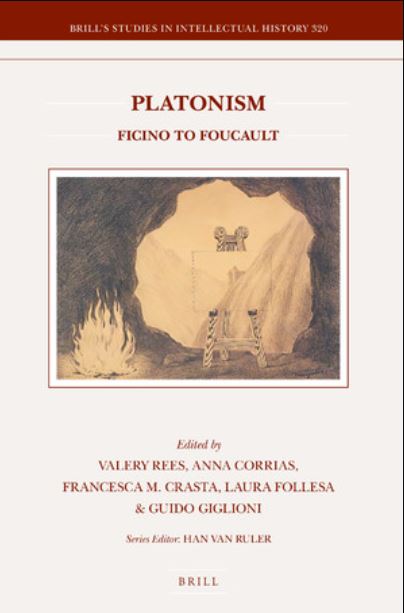
Platonism. Ficino to Foucault
Editors: Valery Rees, Anna Corrias, Francesca M. Crasta, Laura Follesa, and Guido Giglioni, Brill, 2021.

In particular
Candiotto, Laura. “Chapter 14 Care of the Self and Politics: Michel Foucault, Heir of a Forgotten Plato?”. In Platonism, (Leiden, The Netherlands: Brill, 2020) doi: https://doi.org/10.1163/9789004437425_016

The sixteen essays in this volume trace the development of Platonism in the history of Western thought, starting with the revival of the Platonic tradition in the early modern period that followed the rediscovery and translation of important Greek texts. Special attention is devoted to Marsilio Ficino’s translations and commentaries; to the relationship between Platonism and Christianity; to the influence of Platonic metaphysics on the mystical tradition – in particular on Jacob Böhme and Emanuel Swedenborg; to the impact of idealism on the hermeneutical criticism of traditional philosophical categories and to the ways in which the so-called ‘Critique of Modernity’ promoted a new reading of the Platonic dialogues. The emphasis throughout is on demonstrating the theoretical and historical continuity of Platonism over the centuries.

Contributors are: Laura Candiotto, Pierpaolo Ciccarelli, Anna Corrias, Francesca Maria Crasta, Eva del Soldato, Laura Follesa, Guido Giglioni, Nicholas Holland, Andrea Le Moli, Brunello Lotti, Cecilia Muratori, Arnold Oberhammer, Paula Oliveira e Silva, Valery Rees, Pasquale Terracciano, and Angelo Maria Vitale.

Beukes, Johann. “Michel Foucault on Methodius of Olympus (d.ca.311) in Les aveux de la chair: Patrick Vandermeersch’s analysis contextualised.” HTS Teologiese Studies / Theological Studies , 77.4 (2021): 12 pages. Web. 30 Oct. 2021

Open access

Abstract
This article presents a contextualisation of Belgian philosopher and historian of psychiatry and sexuality, Patrick Vandermeersch’s (1946–), unpublished analysis of French philosopher Michel Foucault’s (1926–1984) interpretation of Methodius of Olympus’ (d.ca.311) views on virginity and chastity, in Histoire de la sexualité 4 (Les aveux de la chair), published in February 2018 at Gallimard in Paris under the editorship of Frédéric Gros. The article contributes to the reception and the ongoing analyses of Les aveux de la chair by exploring Foucault’s reading while highlighting both the importance of Vandermeersch’s analysis and the sexological-historiographical significance of his broader oeuvre that spans over four decades. Vandermeersch shows that Foucault, as many other commentators of Methodius, did not substantially engage Methodius’ explicit indebtedness and persistent references to Plato (already evident in the title Symposium but especially regarding the Phaedrus). Platonic homoeroticism is, according to Vandermeersch, as a consequence often too hastily, and therefore problematically, transposed on contexts of female virginity. Likewise, Foucault, when indicating already at the end of Histoire de la sexualité 2 (L’usage des plaisirs 1984), the particular relevance of homoeroticism in the development of Western sexuality, seemed to adhere to this transposition. Could ‘beautiful boys’ truly be transposed onto ‘female virgins’ without severe sexual-discursive complications? And could Methodius’ encomium of virginity in any way be understood independent of his understanding of the ‘resurrection of the body’, with the integrity of its (virginised) sexual desire intact? These are among Vandermeersch’s valid and challenging questions to both Foucault and his contemporary readership.

Contribution: Foucault’s reading of the church- and desert fathers in Histoire de la sexualité 4 (Les aveux de la chair) impacts early Medieval philosophy, early Medieval history, church history, patristics, philosophy of religion, psychology of religion and sociology of religion. Since these proximate disciplines are drawn towards Foucault’s text, they may well note its ongoing examinations. Foucault’s direct impact on these disciplines is illustrated in Vandermeersch’s significant analysis of Foucault’s reading of Methodius in Les aveux de la chair. Vandermeersch’s broader oeuvre in philosophy, theology, psychiatry, psychology, psychology of religion and the history of sexuality is concurrently contextualised as of ongoing contemporary importance for these disciplines.

Keywords
Katharina Bracht (1967–); Michel Foucault (1926–1984); Simon Goldhill (1957–); Histoire de la sexualité 4; Les aveux de la chair; Methodius of Olympus (d.ca.311); Phaedrus; Symposium; Patrick Vandermeersch (1946–); Jos van Ussel (1918–1976)

stuartelden's avatarProgressive Geographies

While the start of term was as busy as ever, I have managed to keep a bit of time each week to work onthis project. So far at least this term seems more manageable than the equivalent last year, and teaching is mainly in-person, with only one seminar on Teams for those students unable to come to campus for medical or travel reasons.

With the writing, some of the initial work was picking up on a few things left over from Paris, where I’d made notes to check things when back home. Although these were generally small things, ticking each of them off helped with a sense of making little, incremental progress.

One task was stitching the different sections of the chapter onThe Order of Thingstogether. While I usually work on chapter drafts as a whole, with this one I felt fairly happy with some sections…

View original post 1,016 more words

McCall, Corey. “Oedipal Fragments: Reconsidering the Significance of Oedipus for James Bernauer and Michel Foucault.” Philosophy & Social Criticism 47, no. 8 (October 2021): 947–59. https://doi.org/10.1177/01914537211042610.

Abstract
This essay reconstructs James Bernauer’s reading of Foucault’s critique of psychoanalysis in his essay “Oedipus, Freud, Foucault” in order to assess the role that Foucault’s critique of psychoanalysis and his reading of Oedipus play in Bernauer’s account of Foucault’s ethics. Along the way, it traces a shift in Foucault’s reading of Oedipus in terms of power and knowledge in Lectures on the Will to Know to rituals of truth or alethurgy in On the Government of the Living. Finally, based on this reading it argues that this shift is relevant for understanding Foucault’s turn toward ethics and practices of the self in his final writings.

Keywords
James Bernauer, Michel Foucault, psychoanalysis, ethics, Oedipus, tragedy

stuartelden's avatarProgressive Geographies

Michel Foucault, Phénoménologie et Psychologie 1953-1954, edited by Philippe Sabot, Gallimard/Seuil/EHESS, November 2021

The next volume of the courses and manuscripts before the Collège de France is a really interesting one. I discuss this in The Early Foucault, but it will be interesting to see how the manuscript has been edited and contextualised. Philippe Sabot’s forthcoming paper in the Theory, Culture and Society special issue also discusses this manuscript.

En octobre 1954, Michel Foucault, alors assistant en psychologie à Lille, écrit à son ami Jean-Paul Aron au sujet d’un texte qu’il est en train de rédiger : « La thèse est passée en deux mois du néant à la 150e page. Je suis moi-même fort surpris de ce livre-champignon : non seulement de sa croissance, qui exige bien des retouches, mais aussi de sa tournure ; il a pris tout de suite l’allure d’une interrogation sur la…

View original post 185 more words

Marcelo Otero, Foucault sociologue. Critique de la raison impure, Presses de l’Université du Québec, 2021

PDF dépliant

Résumé
L’oeuvre de Michel Foucault est inclassable, car elle traverse des domaines très variés (philosophie, sociologie, histoire, anthropologie, criminologie, médecine, psychologie, linguistique, droit, etc.). Foucault n’est pas un sociologue au sens classique du terme, mais il existe une sociologie puissante et novatrice chez lui. Laquelle ? À quoi peut-elle servir aujourd’hui ? En quoi est-elle utile pour théoriser les problèmes sociaux ? Quels sont ses avantages, ses limites et ses inconvénients ? Quel style de « raisonnement sociologique » se dégage de son oeuvre vaste et complexe ? Voilà les interrogations qui guident l’analyse de l’ensemble des travaux de Foucault dans cet ouvrage. En suivant la chronologie historique de ses recherches ainsi que les retournements stimulants de sa pensée, Foucault sociologue s’adresse principalement à un lectorat universitaire et problématise la riche évolution théorique et méthodologique des thématiques foucaldiennes.

Casero, J.L.
The airport as a disciplinary device for mobility control [El aeropuerto como dispositivo disciplinar para el control de la movilidad]
(2021) Kepes, 18 (24), pp. 11-45.

In Spanish
Open access
DOI: 10.17151/kepes.2021.18.24.2

Abstract
Since the 9/11 attacks, airports have become control and surveillance devices only comparable to maximum security prisons. For this reason, most of the studies dedicated to airports have experienced a progressive affinity with the works of Michel Foucault and Paul Virilio in which architecture is characterized as a paradigmatic technique to organize space (compartmentalization) and time (distribution of sequences) in order to achieve the individualization, classification, ordering and normalization of the users. This article aims at identifying the main spatial strategies through which airports implement disciplinary control of passengers independently of their formal-compositional style, their sociophenomenological aesthetics and/or the introduction of electronic surveillance devices. To do this, a methodology based on the graphic analysis (ground plan and section) of five small airports projected in the same territorial area (State) and in a homogeneous time period was developed with the double objective of not having substantial changes in the legislation applicable or in the development of new building, control and surveillance technologies that may affect the basic design of their spatial organization. The results obtained show the constant presence of a linear and hierarchical spatial organization consisting of the succession “entrycheck- in-control of people-shopping-boarding” independently of any other possible aesthetic, phenomenological or social consideration of the designed space. This is opposed to those analyzes carried out in the last two decades that prioritize the rhizomatic, connective and non-hierarchical character of the airport space over its segmentation and disciplinary hierarchy. The article concludes by highlighting the totalitarian character that control of (air) mobility has acquired in the 21st century. © 2021 Universidad de Caldas. All rights reserved.

Author Keywords
Airport architecture; Control of people; Michel Foucault; Paul Virilio; Surveillance