Foucault News

News and resources on French thinker Michel Foucault (1926-1984)

Peter Triantafillou (2022) Biopower in the age of the pandemic: the politics of COVID-19 in Denmark, European Societies, DOI: 10.1080/14616696.2022.2061553

ABSTRACT
The exceptional forms of state power mobilized under COVID-19 have attracted scholarly attraction and created important insights on the pandemic politics. However, it seems that the current understanding tends to regard the states’ responses as a zero-sum game between two powers only, a game in which liberal rule in varying degrees is traded for raw sovereign power. Inspired by the notion of biopower, this article aims to provide a more nuanced account of the various powers invoked to handle the pandemic. Based on the case of Denmark, it is argued that three forms of power were mobilized: sovereignty, discipline and security mechanisms. Yet, indirect security mechanisms informed by epidemiological knowledge and modelling have played a far more comprehensive role than the two other power mechanisms. In a complex interaction with epidemiological expertize, liberal governmentalities limited the mobilization of sovereignty and discipline and, instead, tended to endorse indirect security mechanisms.

KEYWORDS:
Biopolitics, state power, pandemics, epidemiological regulations, Foucault

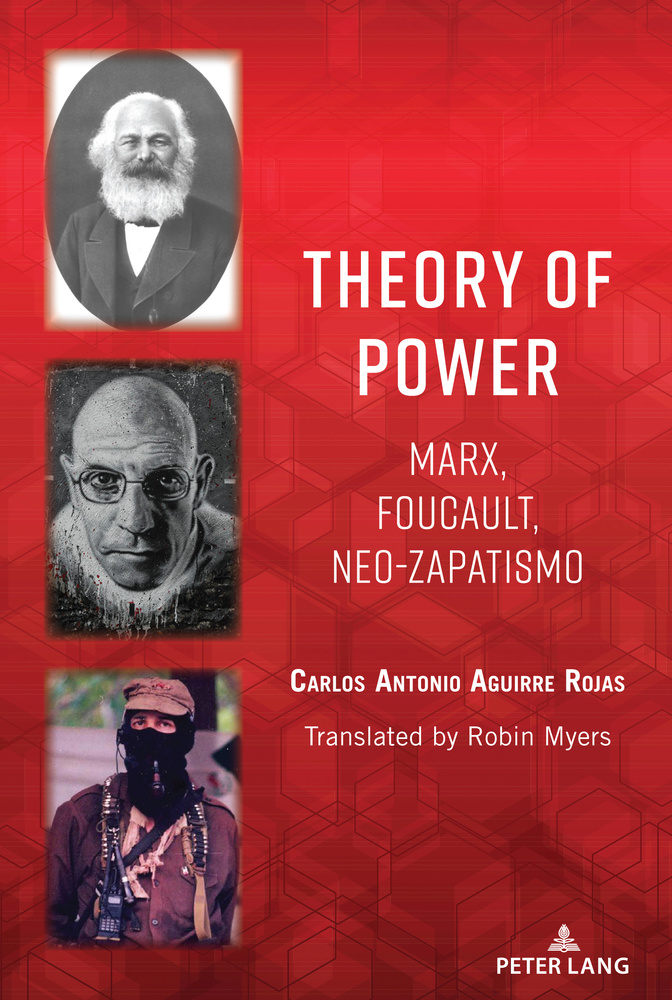
Carlos Antonio Aguirre Rojas, Theory of Power. Marx, Foucault, Neo-Zapatismo, Peter Lang, 2021

Summary
The subject of power (singular) and multiple social powers (plural) is unquestionably central to contemporary societies all over the globe. Growing stronger and expanding farther all the time, the world’s anti-systemic movements have been forced to address this issue—the nature of power and powers—as among their most pressing debates. In the process, these movements have also been forced to consider the best possible strategy for confronting them. Should they seize political power, even if they run the risk of simply reproducing it? Should they destroy it altogether? Is it enough to destroy political power while economic, ideological, military, and religious powers remain untouched? And what is the most effective anti-capitalist and anti-systemic way to confront, defeat, and overcome the many different powers found in all present-day societies on Earth? To answer such questions, among others, this book discusses the rich, complex contributions of Karl Marx, Michel Foucault, and neo-Zapatismo to a complicated and essential subject: the theory of power.

Ryan P. Deuel (2022) International education as an ethical practice: cultivating a care of the self, Discourse: Studies in the Cultural Politics of Education,
DOI: 10.1080/01596306.2022.2050677

ABSTRACT
Various critical approaches tend to view international student mobility within economic and political frameworks, while governmentality studies focuses on the governing practices that shape individual conduct and govern populations. Yet, these approaches often overlook another crucial element, the ethical relationship individuals have to themselves. Considering the relationship international students have to truth, power, and subjugating techniques of the self acknowledges both the coercive and the constitutive elements of international education and student mobility. It allows for new understandings of identity-making and self-formation during students’ international experiences. This conceptual paper proposes the development of an analytical framework based on Foucauldian ethics for (re)conceptualizing international students as active agents in the construction of their own identity rather than caught up in their own subjugation. This novel approach suggests a move toward ethical internationalization practices, which emphasize reflexive self-formation and the exercise of democratic practices over division, control, and competition.

KEYWORDS: Internationalization, international student mobility, ethics, identity-making

Deuel, R.P. Governing the Discourse of Internationalization in the USA: The Influence of Higher Education Professional Associations. Higher Education Policy (2021). https://doi.org/10.1057/s41307-021-00237-x

Abstract
Higher education professional associations (HEPAs) are well-established agents of knowledge production and have been influential in shaping higher education policies and practices. In the context of US international higher education, HEPAs have contributed to the rise of ‘internationalization’ as a discursive practice. Proposing an analytical framework that takes up Foucauldian analysis of discourse and studies in governmentality, this paper examines a corpus of ACE and NAFSA reports in order to trace the emergence of internationalization and its lines of transformation as both a regime of truth and a regime of practice in the context of US higher education over the last 30 or so years. The findings of this study illustrate that since its emergence in the 1980s, HEPAs have participated in the transformation of internationalization from a discourse of exchange to a discourse of competition.

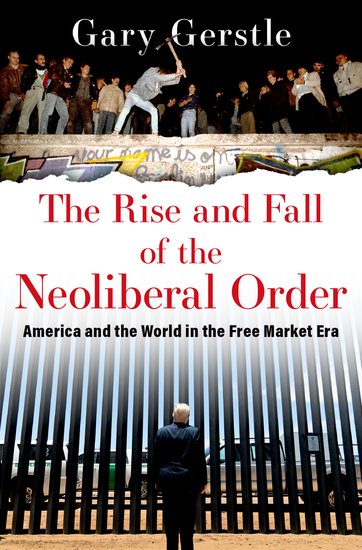
Gary Gerstle, The Rise and Fall of the Neoliberal Order, America and the World in the Free Market Era, Oxford University Press (2022)

Description
The most sweeping account of how neoliberalism came to dominate American politics for nearly a half century before crashing against the forces of Trumpism on the right and a new progressivism on the left.

The epochal shift toward neoliberalism-a web of related policies that, broadly speaking, reduced the footprint of government in society and reassigned economic power to private market forces-that began in the United States and Great Britain in the late 1970s fundamentally changed the world. Today, the word “neoliberal” is often used to condemn a broad swath of policies, from prizing free market principles over people to advancing privatization programs in developing nations around the world.

To be sure, neoliberalism has contributed to a number of alarming trends, not least of which has been a massive growth in income inequality. Yet as the eminent historian Gary Gerstle argues in The Rise and Fall of the Neoliberal Order, these indictments fail to reckon with the full contours of what neoliberalism was and why its worldview had such persuasive hold on both the right and the left for three decades. As he shows, the neoliberal order that emerged in America in the 1970s fused ideas of deregulation with personal freedoms, open borders with cosmopolitanism, and globalization with the promise of increased prosperity for all. Along with tracing how this worldview emerged in America and grew to dominate the world, Gerstle explores the previously unrecognized extent to which its triumph was facilitated by the collapse of the Soviet Union and its communist allies. He is also the first to chart the story of the neoliberal order’s fall, originating in the failed reconstruction of Iraq and Great Recession of the Bush years and culminating in the rise of Trump and a reinvigorated Bernie Sanders-led American left in the 2010s.

An indispensable and sweeping re-interpretation of the last fifty years, this book illuminates how the ideology of neoliberalism became so infused in the daily life of an era, while probing what remains of that ideology and its political programs as America enters an uncertain future.

Gary Gerstle is Paul Mellon Professor of American History Emeritus and Paul Mellon Director of Research at the University of Cambridge. He is the author and editor of more than ten books, including two prizewinners, American Crucible (2017) and Liberty and Coercion (2015). He is a Guardian columnist and has also written for the Atlantic Monthly, the New Statesman, Dissent, The Nation, and Die Zeit, among others. He frequently appears on BBC Radio 4, BBC World Service, ITV 4, Talking Politics, and NPR.

Has Neoliberalism Really Come to an End?
By Daniel Steinmetz-Jenkins. The Nation, 14 April 2022

A conversation with historian Gary Gerstle about understanding neoliberalism as a bipartisan worldview and how the political order it ushered in has crumbled.

The term “neoliberalism” is often used to condemn an array of economic policies associated with such ideas as deregulation, trickle-down economics, austerity, free markets, free trade, and free enterprise. As a political movement, neoliberalism is seen as experiencing its breakthrough 40 years ago with the election into office of Ronald Reagan and Margaret Thatcher. And since the 2007–08 financial crisis, an explosion of academic work and political activism has been devoted to explaining how neoliberalism is fundamentally to blame for the massive growth in inequality.

Yet Gary Gerstle—in his new book, The Rise and Fall of the Neoliberal Order: America and the World in the Free Market Era—argues that this understanding of neoliberalism struggles to explain why it has exerted such a profound influence on both the left and the right. Gerstle—a professor of American history at the University of Cambridge—thinks neoliberalism should be understood as a worldview that promises liberation by reconciling economic “deregulation with personal freedoms, open borders with cosmopolitanism, and globalization with the promise of increased prosperity for all.”
[…]

My book takes Foucault’s insight as inspiration: It argues that neoliberalism’s career has been marked as much by heterodoxy as orthodoxy, by its capacity to make individuals as different as tech hippies and Ronald Reagan, as dissimilar as Barry Goldwater and long-haired university students who wanted to bring down “the system,” feel as though they held the key to unlocking a future of untrammeled personal freedom.
[,,,]

Mitchell Dean, What does ‘Left’ mean?, Verso Blog, 13 April 2022

Mitchell Dean responds to the review of his book The Last Man Takes LSD: Foucault and the End of Revolution (co-written with Daniel Zamora) published in the journal Foucault Studies.

One is always grateful when a reader has taken the time to review a scholarly work in the humanities and social sciences. We have been particularly fortunate to have received quite a number of favourable reviews (for this and its earlier French version) in a number of countries. They have come mainly from the Left (Il Manifesto, Liberation, New Statesman, Los Angeles Times, Information) but also from conservative publications (The Spectator). Given that the book departs from Foucauldian orthodoxy in the contemporary Anglophone world, we would not expect acclaim in a journal devoted to him, Foucault Studies. In that sense, Jasper Friedrich’s review provides the reader with a relatively mild critical appraisal and raises interesting points about the nature of our project and the further investigation it opens.

read more

Paolo Vernaglione Berardi, Commenti alla Filosofia. Quaderni di archeologia filosofica. Volume secondo Edizioni Efesto (2022)

Abstract
Nel Medioevo il commento è la lettura di un testo che prelude ad una disputa o segue una presa di posizione dottrinale o metafisica. Questo secondo volume dei “Quaderni” rincorre quel senso aggiornandolo alla questione implicita del pensiero: – quale filosofia nel tempo delle rovine?
In queste pagine sembra condensarsi una pratica che si dice in molti modi ma ha oggi usi rari e dispersi. La forma è quella di chi abita un mondo che la pandemia ha reso evidente senza peraltro averne cambiato il corso. Per questo la mappa disegnata dai testi qui raccolti si riferisce ad un territorio di contestazione e di produzione.
Il luogo di questa archeologia è delimitato dalle parole di Michel Foucault: “preferisco non identificare me stesso”, che è la replica inattuale al bisogno spasmodico di definirsi storico, critico, filosofo, artista, per lo più al maschile.
L’elemento filosofico è invece la presa di parola che chiama Agamben, Bachelard, Benjamin, Canetti, Deleuze, Di Cori, Fontana, Illich, Jesi, Schürmann, Sebald, Tarì, Tiqqun, Comitato Invisibile, come coloro che pensano nel tempo della fine.

Paolo Vernaglione Berardi è insegnante di filosofia e storia e autore di saggi e testi tra cui: Il sovrano l’altro, la storia (2008); Dopo l’umanesimo. Sfera pubblica e natura umana (2009); Filosofia del comune (2012); Michel Foucault: genealogie del presente (2015, a cura di); Scritti su Walter Benjamin (2015, a cura di); La natura umana come dispositivo. Archeologia filosofica, dissolvenza del soggetto, estetica dell’esistenza (2018); Quaderni di archeologia filosofica. Volume primo (2019 con Alessandro Baccarin).
Con Alessandro Baccarin ha fondato nel 2017 il “Laboratorio Archeologia Filosofica” (https://www.archeologiafilosofica.it) e cura per le edizioni Efesto la collana “Archeologia filosofica”.

Keywords
archeologia filosofica, Gilles Deleuze, Elias Canetti, E.W. Sebald, Gaston Bachelard, Giorgio Agamben, Paola Di Cori, Alessandro Fontana, Reiner Schurmann, Ivan Illich, Marcello Tarì, Walter Benjamin, Tiqqun, Comitato Invisibile

Robinson, D., Ilinskaya, S.
Queering the popular utopia through translingual science fiction: Sense8 as cultural translation
(2022) Perspectives: Studies in Translation Theory and Practice

DOI: 10.1080/0907676X.2022.2043396

Abstract
The paper reads the queer utopia fleshed forth in the Wachowskis’ two-season series Sense8 as a heterotopia (Joanne Tompkins, developing an idea out of Foucault) that orients us toward a transformed future that is forever not yet here (José Esteban Muñoz in Cruising Utopia), based on a collectivized and shifting identity-assemblage that is neither sheer anarchistic disruption nor a stable identitarian intersectionality (Jasbir Puar, developing an idea that Brian Massumi develops out of Deleuze and Guattari). In support of this reading, the paper explores the Wachowskis’ queer activism in favor of an extremely broad tolerance for difference (in opposition to rigid identity categories), and reads the high-concept sf premise of instantaneous empath travel and interaction with and as clustermates through Hannah Arendt’s observation that ‘we have arrived in a situation where we do not know—at least not yet—how to move politically.’ Building on that observation, Judith Butler reflects on producing a space of appearance or ‘assembly’ as grounding politics in situated social interaction, as a transition to a reconfigured (restaged, respatialized) ‘reality’ that, as Muñoz says, is not yet here. © 2022 Informa UK Limited, trading as Taylor & Francis Group.

Author Keywords
assemblage; banality; cultural diversity; heterotopia; identity politics; Utopia

Sukhera, J., Poleksic, J., Zaheer, J., Pack, R.
Normalising disclosure or reinforcing heroism? An exploratory critical discourse analysis of mental health stigma in medical education
(2022) Medical Education

DOI: 10.1111/medu.14790

Abstract
Introduction: There has been a proliferation of initiatives targeted towards improving psychological wellbeing among medical learners. Yet many learners do not seek assistance due to stigma against help seeking. Understanding the prevailing discourses on the effects of mental health stigma in the context of medical education will improve insight on how to address stigma and improve wellbeing. In this study, the authors sought to explore discourses on stigma in medical education through a Foucauldian Critical Discourse Analysis.

Methods: The authors assembled several sets of texts related to stigma in medical education. The initial archive consisted of social media discourse and was expanded to include digital news media. Next, the authors conducted semi-structured qualitative interviews with medical students, residents and faculty. Using principles of Critical Discourse Analysis informed by the writings of Michel Foucault, the authors analysed the archive to identify truth statements, representative statements and discursive effects.

Results: Analysis revealed an emancipatory discourse of disclosure that normalised help-seeking, which conflicted with a discourse of performance. Results suggested that public disclosure remains challenging in private contexts due to a medical culture that rewards perfectionism and lauds heroism. Discourses on performance positioned disclosure as disruptive to the system’s need to maintain its own hegemony. Overall, stigma was perceived as rooted within the structural power of the medical education system and society at large. Conclusion: Discourses on stigma in medical education hold implications for the teaching, learning and overall wellbeing of medical learners. The tensions between discourses on disclosure and performance have the potential to perpetuate further distress for learners and worsen asymmetries in power. Interventions to address stigma would benefit from understanding and addressing the role of power and hierarchy in maintaining and dismantling stigma.