CFP:
Appels à contributions
La figure de l’auteur entre hier et aujourd’hui : Posture(s) et esthétique(s) (2022)
Le 30 Septembre 2022
Université de Sfax, Faculté des Lettres et Sciences Humaines
Tunisia
Laboratoire de Recherche Interdisciplinaire en Discours, Art, Musique et Économie
(LARIDIAME, LR18ES23)
Colloque international
Du 2 au 4 février 2023
Appel à communications
Les propositions de communication, d’environ une demi page (titre et résumé) accompagnées d’une courte notice biographique sont à envoyer uniquement par voie électronique avant le 30 septembre 2022 l’adresse suivante :
mutrabelsi@gmail.com
La « figure de l’auteur » : posture(s) et esthétique(s)
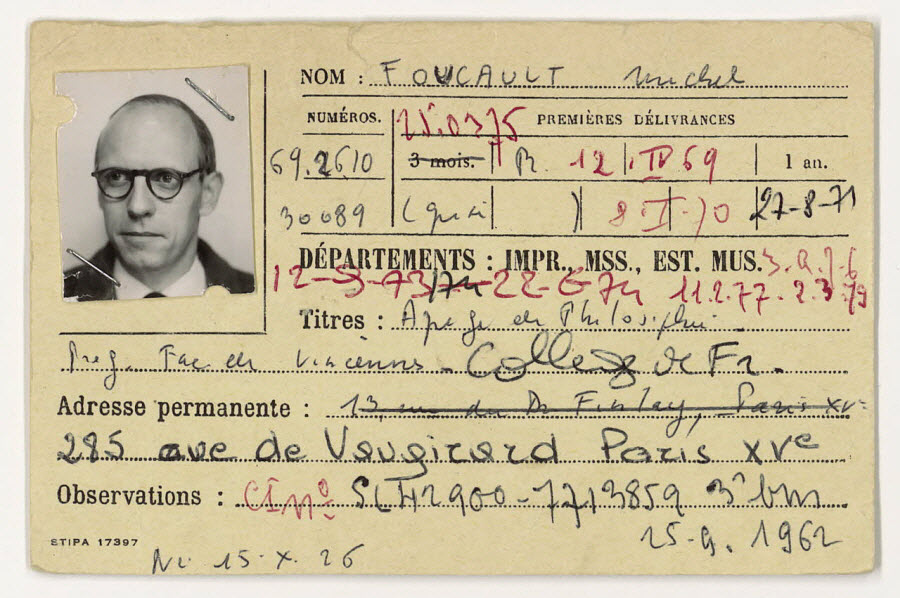
Dans un texte manifeste, Barthes écrit en 1968, en reformulant l’idée de « l’écriture neutre […] où vient se perdre toute identité, à commencer par celle-là même du corps qui écrit » de Mallarmé, que l’écriture commence lorsque « l’auteur entre dans sa propre mort ». L’auteur moderne, toujours selon Barthes, « naît en même temps que son texte ; il n’est d’aucune façon pourvu d’un être qui précéderait ou excéderait son écriture ». Michel Foucault (1969), pour sa part, ajoute dans « Qu’est-ce qu’un auteur ? », que l’auteur n’est qu’une fonction qui ne renvoie pas à un individu réel et qu’il « peut donner lieu simultanément à plusieurs ego, à plusieurs positions-sujets […] » Cette figure encombrante ne sert, comme l’affirme Paul Zumthor (1972), qu’à situer le texte sur un « plan de dialogue virtuel » avec son lecteur supposé. Mais peut-on occulter cette instance, si nécessaire au texte qu’elle informe (à laquelle elle donne forme) que le lecteur n’a pu que reconnaître son existence ?
Le sacrifice impossible de l’auteur laisse aujourd’hui place, selon Alain Brunn, à une présence renouvelée de celui-ci même dont on avait proclamé la mort. D’ailleurs, Barthes lui-même dans Le Plaisir du texte, soutient qu’on désire l’auteur dans le texte, qu’on « a besoin de sa figure (qui n’est ni sa représentation, ni sa projection) » comme il a besoin de la nôtre. Barthes repense « la figure auctoriale, une figure que nous constituons pour telle et qui en retour nous constitue en lecteur » (Alain Brunn, 2001). Ainsi si l’auteur est prétendu mort en tant qu’institution, personne civile et biographique, telle qu’il est présenté par l’histoire littéraire, il demeure cette instance irremplaçable de l’acte esthétique et de la consommation de l’œuvre, cette construction singulière d’un fantasme, d’une utopie par un texte qu’il s’agit d’interroger. Le texte littéraire n’est pas un objet signifiant désincarné, mais une « interface entre deux interlocuteurs séparés l’un et l’autre dans le temps et l’espace mais qui se désirent, se cherchent ou se fuient tout à la fois » (Maurice Couturier, 1995).
La postmodernité, réutilisant au besoin des notions antiques, réévalue cette instance scripturale à l’ère du numérique, du pouvoir des médias de masse et des nouvelles technologies, proposant de nouvelles stratégies auctoriales : ethos, postures, transfictionnalité et transmédialité… enrichissant et brouillant à la fois la représentation de la figure de l’auteur.
Cependant, quand nous abordons cette problématique, nous nous heurtons à plusieurs difficultés. Tout d’abord, certains narratologues structuralistes se montrent réticents à l’égard d’une telle analyse. S’il est facile, selon eux, de cerner la figure du narrateur à partir d’indices textuels précis, il est impossible, selon eux, d’accéder à celle de l’auteur. Qui écrit ? La figure de l’auteur se situe-t-elle dans l’intratextuel ou dans l’extratextuel ou à la frontière de l’intratextuel et de l’extratextuel ?
De plus, nous constatons une variation de l’image de l’écrivain dans ses œuvres ou même dans la même œuvre et certains auteurs offrent d’eux-mêmes de multiples images contradictoires, voire erronées. Leur but n’est pas de s’exhiber, mais de se dissimuler, de se cacher et de rendre impossible les tentatives de certains critiques d’accéder à leur moi intime. Que faire dans ce cas ? Est-ce qu’on devrait cerner l’image de l’auteur à partir de la personne réelle, celle qui signe l’œuvre ou à partir de la figure imaginaire qui se construit dans et par le texte ?
Il s’agit de tenter, dans le cadre de ce colloque, de définir « le noyau dur de l’énonciation littéraire » selon la terminologie de Cécile Haye et Michel Lisse [1] et d’esquisser une réflexion sur les approches à mettre en œuvre pour atteindre cet objectif. Une telle réflexion est d’autant plus nécessaire que le chercheur se trouve aujourd’hui devant diverses conceptions et représentations de l’auteur et devant l’émergence de plusieurs notions voisines comme celles de « l’ethos », de « l’ethos auctorial », de « la posture », de « la scénographie auctoriale », etc.
Certes, il ne semble pas facile de proposer une définition de « la figure de l’auteur » qui s’adapte à toutes les œuvres, à tous les courants littéraires et à tous les siècles. Cependant, l’intérêt du colloque est de surmonter les difficultés terminologiques et épistémologiques et d’apporter des éclairages variés à cette question si complexe en déstructurant les représentations traditionnelles de l’écrivain et en exploitant l’apport de la linguistique, de la stylistique, de la narratologie énonciative et des sciences humaines. Les éléments paratextuels comme la préface, l’épigraphe, la présentation de la biographie de l’auteur, le prière d’insérer, l’illustration, les notes de bas de page, etc., peuvent également aider les chercheurs à appréhender la figure de l’écrivain en leur fournissant de précieuses informations présentées en marge des textes.
En somme, la figure de l’écrivain n’est pas une entité figée, elle évolue, se métamorphose et change de forme, de sens, de fonction et de fonctionnement selon le contexte énonciatif, générique, philosophique, culturel, sociologique, historique où elle apparaît. On peut l’appréhender soit à partir de l’image que produit l’œuvre, soit à partir des zones paratextuelles périphériques et indécises. Dans les deux cas, il semblerait même s’agir, comme l’affirme Ruth Amossy [2] d’« une figure imaginaire », d’ « un être de mots », d’une « représentation imaginaire d’un écrivain en tant que tel ». Espérons qu’au terme de nos travaux et de nos débats, nous arriverons à montrer que « l’auteur » ne peut pas mourir et qu’il est toujours là, mais que sa survie nécessite un renouvellement constant des méthodes de lecture des œuvres littéraires.
Le Laboratoire de recherche Interdisciplinaire en Discours, Art, Musique et Économie (LR18ES23) de Sfax voudrait consacrer un colloque international à la question de l’auteur dans l’ensemble de ses représentations. Nous voulons nous interroger, dans le cadre de ce colloque, sur cette notion de l’auteur dans la littérature, le théâtre, les études postcoloniales, l’art, la traduction ou les cultural studies.
Les contributions attendues devraient permettre une ouverture sur des réflexions heuristiques. Cependant, il ne s’agit pas de se limiter à un simple débat théorique ni de proposer un bilan définitif.
Sans prétendre à l’exhaustivité, quelques axes de recherches peuvent être suggérés :
– Ethos et Posture
– Les représentations scripturales et visuelles de l’auteur
– L’auteur à l’heure du numérique
– Auteur et réseaux sociaux de masse
– Biographie, autobiographie et autofiction
– Image de l’auteur et paratexte.
Bibliographie :
AMOSSY Ruth, « La double nature de l’image d’auteur », Argumentation et analyse du discours, n° 3, 2009.
BARTHES Roland, « La Mort de l’auteur », Mantéia, n° 5, 1968.
BÉNICHOU Paul, Le Sacre de l’écrivain (1750-1830). Essai sur l’avènement d’un pouvoir spirituel laïque dans la France moderne, Paris, Corti, 1973.
BONNET Jean-Claude, « L’Écrivain comme fantasme », Poétique, « Le Biographique », n° 63, septembre 1985.
BRUNN Alain, L’auteur, Paris, Flammarion, « collection Corpus », 2001.
CHARAMAT Gabrielle et GOULET Alain (dir), L’auteur, Caen, Presses Universitaires de Caen, 1996.
COUTURIER Maurice, La Figure de l’Auteur, Paris, Le Seuil, 1995.
DUBOIS Jacques, L’Institution de la littérature, chap. V, « Statut de l’écrivain », Bruxelles, Labor, 1978.
FOUCAULT Michel, « Qu’est-ce qu’un auteur ? », Bulletin de la Société française de philosophie, t. LXIV, 1969, p. 73-104.
GENETTE Gérard, L’Œuvre de l’art. Immanence et transcendance, Paris, Le Seuil, 1994.
HAYEZ Cécile et LISSE Michel, Apparitions de l’auteur, études interdisciplinaires du concept d’auteur, Bern, Peter Lang, 2005.
JEANDILLOU Jean-François, Supercheries littéraires : la vie et l’œuvre des auteurs supposés, Paris, Usher, 1989.
JEANDILLOU Jean-François, Esthétique de la mystification : tactique et stratégie littéraires, Paris, Éditions de Minuit, coll. « Propositions », 1994.
KERBRAT-ORECCHIONI Catherine, L’Énonciation : de la subjectivité dans la langue, Paris, Armand Colin, 1980.
KILITO Abdelfattah, L’Auteur et ses doubles. Essai sur la culture arabe classique, Paris, Le Seuil, 1985.
LAUGAA Maurice, La Pensée du pseudonyme, Paris, PUF, 1986.
LECLERQ Gérard, Le Seau de l’œuvre, Paris, Seuil, 1998.
MEIZOZ Jérôme, « Ce qu’on fait dire au silence : posture, ethos, image d’auteur », Argumentation et analyse du discours, 3, 2009.
Proust Marcel, Contre Sainte-Beuve (texte de 1909), Paris, Gallimard, 1954.
Quai Voltaire, « Plagiats, supercheries et mystifications littéraires » (débat animé par M. Bydlowski), n° 1, hiver 1991, p. 83-92.
Revue des sciences humaines, « Le Biographique », n° 224, 1991-4.
RORTY Richard, « De l’idéalisme du XIXe siècle au textualisme du XXe siècle » (1981), Conséquences du pragmatisme, Paris, Le Seuil, 1993.
Textuel, n° 22, « Images d’écrivains », Université Paris VII, 1989.
VESSILHIER-RESSI Michèle, Le Métier d’auteur, Paris, Dunod, 1982.
VIALA Alain, Naissance de l’écrivain : sociologie de la littérature à l’âge classique, Paris, Éditions de Minuit, 1985.
ZILSEL Edgar, Le Génie : histoire d’une notion de l’Antiquité à la Renaissance, traduction de THEVENAZ Michel, Paris, Éditions de Minuit, 1993.
ZUMPTHOR Paul, Essai de poétique médiévale, Paris, Le Seuil, 1972.
Les propositions de communication, d’environ une demi page (titre et résumé) accompagnées d’une courte notice biographique sont à envoyer uniquement par voie électronique avant le 30 septembre 2022 l’adresse suivante :
mutrabelsi@gmail.com
Inscription :
Les frais de participation (sans hébergement) :
100 euros pour les non-Maghrébins
200 dinars pour les Tunisiens et les Maghrébins
Les frais d’inscription sans hébergement couvrent les pauses café, le déjeuner et le pack du colloque. Le déplacement et l’hébergement en demi-pension seront à la charge des communicants.
Comité scientifique :
· Abdellah Baida, Arselène Ben Farhat, Nizar Ben Saad, Radouane Briki, Sonia Fitouri, Kamel Gaha, Pierre Garrigues, Sanae Ghouati, Philippe Jousset, Monia Kallel, Alain Montandon, Chokri Rhibi, Khaled Rizk, Abdallah Romli, Abderrahman Tenkoul, Naima Tlili, Mustapha Trabelsi.
Comité d’organisation :
· Raoudha Allouche, Dorra Abida, Ola Boukadi, Laila Euchi, Samia Gadhoumi, Ines Hamed, Taieb Haj Sassi, Lassaad Héni, Mohamed Amin Kacem, Sanda Mastouri, Sonia Mziou, Hana Njima, Moez Rebai, Mouna Sassi, Olfa Zghal.
Calendrier
30 septembre 2022 : réception des propositions de communication
30 octobre 2022 : notification aux auteurs
2/3/4 février 2023 : Colloque international
Décembre 2023 : publication des actes du colloque
Responsable : Laboratoire de Recherche Interdisciplinaire en Discours, Art, Musique et Economie (LARIDIAME)
[1] Cécile Hayez et Michel Lisse, Apparitions de l’auteur, études interdisciplinaires du concept d’auteur, Bern, Peter Lang, 2005.
[2] Ruth Amossy, « La double nature de l’image d’auteur », Argumentation et analyse du discours, 3, Open Edition Journals, 2009.
RESPONSABLE : Laboratoire de Recherche Interdisciplinaire en Discours, Art, Musique et Economie (LARIDIAME)
URL DE RÉFÉRENCE https://www.facebook.com/people/Labo-de-Recherche-Interdisciplinaire-en-Discours-Art-Musique-et-Economie/100054232490822/
ADRESSEUniversité de Sfax, Faculté des Lettres et Sciences Humaines

 Lorenzo Petrachi, Rovine dell’amicizia. Il progetto incompiuto di Michel Foucault Orthotes Editrice, 2022.