
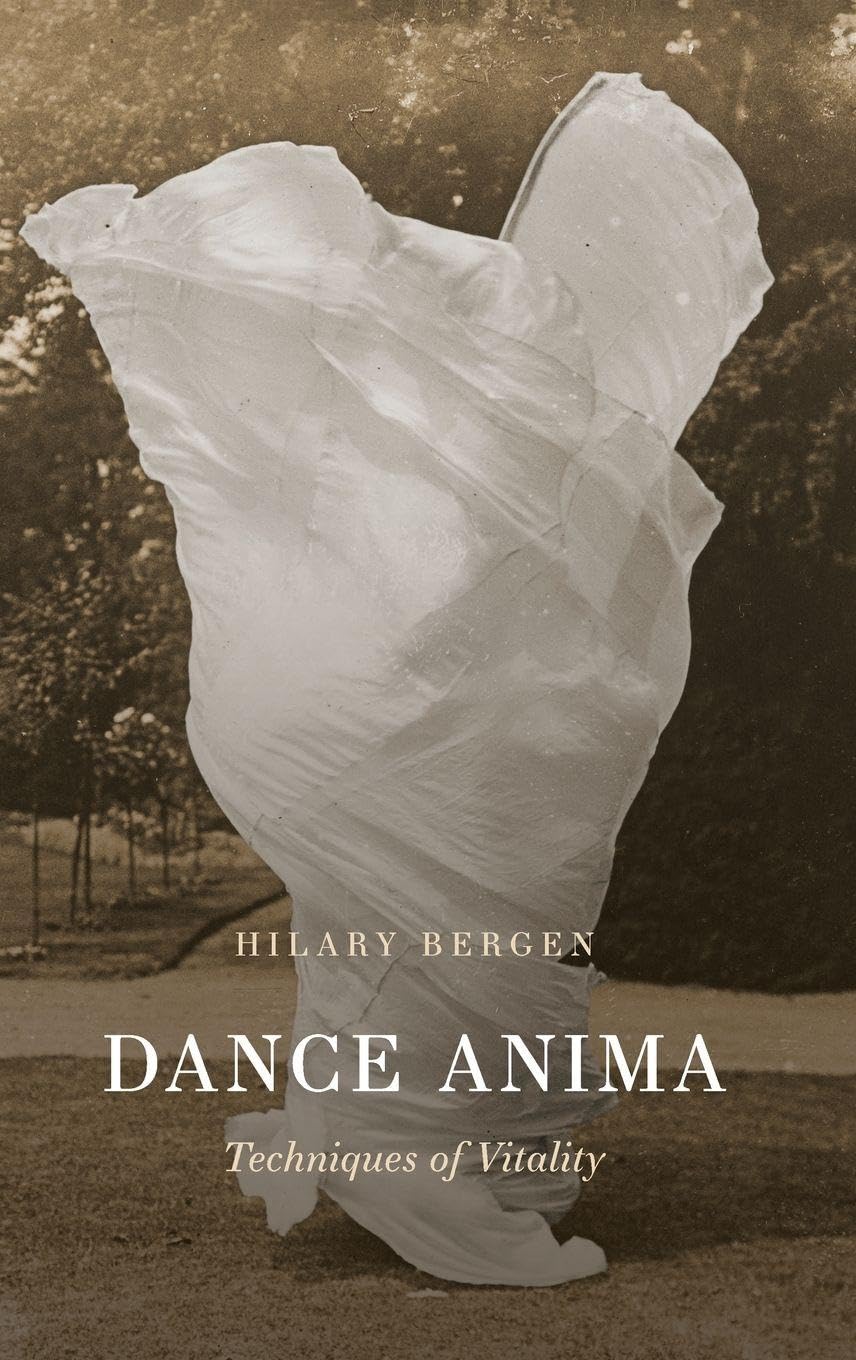
 Hilary Bergen, Dance Anima: Techniques of Vitality Oxford University Press, 2026
Description
This introduction explores the etymology of the word “anima” (Latin for soul or breath) and the contradictions inherent in thinking about dance: a force which cannot be fully controlled or contained but which is also an extractable energetic capital with humanist value. A media-historical approach reveals the various cultural techniques that stem from the practice of dance (notation systems, mocap data, screendance) and positions the idea of dance itself as a cultural technique (following Michel Foucault and Bernhard Siegert) and as a mechanically reproducible force (Walter Benjamin) used to ensoul non-organic figures, cartoons, and robots. Citing non-dance scholars such as Susanne Langer, Anne Anlin Cheng, and Sianne Ngai to foreground the biopolitics of dance as it relates to race and “vital gesture,” the introduction to this book suggests that dancing bodies have been instrumental in the development of photography, film, and digital choreographic tools and that dance therefore facilitates an exploration of two interrelated realms: emergent technologies and the ontology of the human.

