
Foucault News

News and resources on French thinker Michel Foucault (1926-1984)

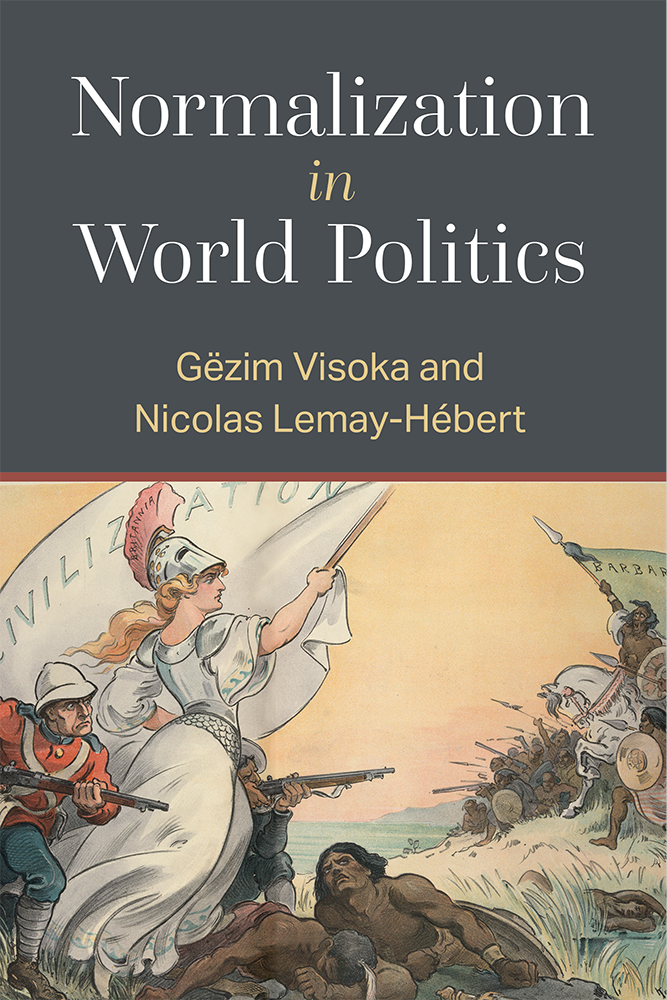
Gëzim Visoka and Nicolas Lemay-Hébert, Normalization in World Politics, University of Michigan Press, 2022
Open access

As we face new challenges from climate change and the rise of populism in Western politics and beyond, there is little doubt that we are entering a new configuration of world politics. Driven by nostalgia for past certainties or fear of what is coming next, references to normalcy have been creeping into political discourse, with people either vying for a return to a past normalcy or coping with the new normal.

This book traces main discourses and practices associated with normalcy in world politics. Visoka and Lemay-Hébert mostly focus on how dominant states and international organizations try to manage global affairs through imposing normalcy over fragile states, restoring normalcy over disaster-affected states, and accepting normalcy over suppressive states. They show how discourses and practices come together in constituting normalization interventions and how in turn they play in shaping the dynamics of continuity and change in world politics.

Repo, J., Richter, H.
An evental pandemic: thinking the COVID-19 ‘Event’ with Deleuze and Foucault
(2022) Distinktion

DOI: 10.1080/1600910X.2022.2086595

Abstract
As COVID-19 swept the world it also became the subject of a quickly growing body of theoretical scholarship aimed at understanding the social, political and economic implications of the ‘pandemic event’. Taking a step back, this paper draws on Deleuze and Foucault to interrogate whether, and in what way, the COVID-19 pandemic can and should in fact be understood as an event. We first offer a structured overview of existing ‘pandemic theory’ where we highlight that the productivity unfolded by the pandemic event is here either politically or ontologically fixed. Against this background, we show that, in distinct ways, Deleuze’s and Foucault’s concepts of the event caution against reifying a pandemic event. Any political force the pandemic can unfold is always made after the fact, and is contingent on what is (counter-)effectuated from the pandemic, or which discursive dispersions intersect with and unfold from it. We argue for considering the pandemic as evental rather than an event–it is made up of events, and holds the potential to produce events. For critical theory, the significance of the pandemic event is thus in the first place methodological: it gives insight to how (post-)pandemic societies are produced, and where openings for the actualization of alternatives might lie. © 2022 The Author(s). Published by Informa UK Limited, trading as Taylor & Francis Group.

Author Keywords
counter-effectuation; COVID-19; eventualisation; Gilles Deleuze; Michel Foucault

Roche, G., Leibold, J.
State Racism and Surveillance in Xinjiang (People’s Republic of China)
(2022) Political Quarterly

DOI: 10.1111/1467-923X.13149

Abstract
Racism, as a truly global phenomenon, requires a comparative approach that can account for its diverse forms and their commonalities. Despite the prevalence and relevance of racism throughout Asia, much scholarship on the topic remains parochially focussed on the north Atlantic world. This article aims to help address this issue in two ways. First, it discusses surveillance and racialisation practices in the Xinjiang Uyghur Autonomous Region in China, based on an examination of leaked police files from the city of Urumqi. It examines how racialisation processes are carried out through surveillance, who these impact, and how. Second, these empirical materials are put in a broader comparative framework, drawing on Michel Foucault’s concept of state racism, which sees racism as a technique of governance common to all contemporary states. The conclusions reflect on what it means to undertake anti-racist scholarship in a world of racist states. © 2022 The Authors. The Political Quarterly published by John Wiley & Sons Ltd on behalf of Political Quarterly Publishing Co (PQPC).

Author Keywords
anti-racism; China; state racism; surveillance; Xinjiang

Muniz da Conceição, L.H.
Social Media, Politics, and Law: The Role of Data in the Brazilian Constitutional Democracy
(2022) Journal of Iberian and Latin American Research

DOI: 10.1080/13260219.2022.2097296

Abstract
Contemporary manifestations of power that exceed the traditional nation-state paradigm undermine Western constitutional democracies’ foundational principles. The Cambridge Analytica scandal demonstrates how non-state actors can exercise control and bypass individual political autonomy by exploring personal data and through manipulative practices. In Brazil, similar electoral practices occurred during the 2018 election period, in which political propaganda transcended traditional media outlets through social media platforms, such as WhatsApp and Facebook. This arose as one of the consequences of the political reform established in through Legislative Act no. 13.488/2017. This article proposes an investigation into the intersection between knowledge and power in the mechanism of manipulation of political subjects, considering Michel Foucault’s critique of sovereignty, and conflating this under- standing with Bernard Harcourt’s consideration of “digital power.” The aim is to evaluate the intricacies between digital media, politics, and law, addressing the complexity of power structures in the material and cybernetic space. © 2022 Association of Iberian and Latin American Studies of Australasia (AILASA).

Author Keywords
Brazil; Constitutional Politics; Digital Power; Social Media

Fleming, P., Godfrey, R., Lilley, S.
Conceptualizing business logistics as an ‘apparatus of security’ and its implications for management and organizational inquiry
(2022) Human Relations

DOI: 10.1177/00187267221110458

Abstract
Global commodity capitalism necessitates the fast and efficient movement of all manner of entities across the globe. Importantly, this commercial flow needs to be secured against the undocumented and unregulated flow of illegitimate people, finance and information, counterfeits, drugs, terror and other undesirables. The organizational practices of business logistics are central for achieving this objective. Yet they have received little attention in management and organization studies to date. We suggest a fruitful avenue is via Foucault’s notion of ‘biopower’ – particularly his less discussed concept (in management studies, at least) of an apparatus of security. This is useful for understanding the emergent organizational/management practices of security in the border spaces in which business logistics operate. If ‘Society Must Be Defended’, as Foucault ironically notes in his famous lecture series that introduces biopower, then so too must contemporary organizations and their net-like activities within the global economy. © The Author(s) 2022.

Author Keywords
apparatus of security; biopower; business logistics; Foucault; supply chains

Abela, M.
“A new direction? The “mainstreaming” of sustainability reporting”
(2022) Sustainability Accounting, Management and Policy Journal

DOI: 10.1108/SAMPJ-06-2021-0201

Abstract
Purpose: The purpose of this paper is to analyse the current developments to “mainstream” and standardise sustainability reporting and the consequences of those changes. Those changes give rise to the colonisation of sustainability reporting through the adoption of financial reporting concepts.

Design/methodology/approach: This research draws on critical theory, particularly the work of Foucault, to understand the dynamics of accounting change. This approach provides an alternative to the current narrative that the concepts that underpin reporting are universal and timeless.

Findings: It is suggested that if the aim of mandatory sustainability reporting is to promote companies adopting sustainable business models, then it must properly reflect the context of the company. Both transactive and relationship information is critical to providing an account that can be used to judge the performance of the corporation beyond its production of short-term net positive cash flows.

Practical implications: The design of standard setting arrangements for sustainability reporting needs to recognise that it may be unhelpful to simply adopt financial reporting concepts for the purposes of directing corporate behaviour towards sustainable development.

Social implications: Continuing to adopt a view of the corporation as a nexus of contracts with no clear accountability to stakeholders is likely to stymie efforts to deal with the environmental and social crisis facing people and planet.

Originality/value: Whilst other works have considered the development of sustainability reporting, to the best of the author’s knowledge, this is the first study to consider the impacts of “mainstreaming” it within mandatory corporate reporting. © 2022, Emerald Publishing Limited.

Author Keywords
Accountability; Critical theory; Decision usefulness; Financial reporting; Objective of reporting; Sustainability reporting

Tim Christiaens (2022) Biomedical technocracy, the networked public sphere and the biopolitics of COVID-19: notes on the Agamben affair, Culture, Theory and Critique,
DOI: 10.1080/14735784.2022.2099919

ABSTRACT
Giorgio Agamben’s public interventions during the COVID-19 pandemic against emergency measures like lockdowns, obligatory vaccinations and the prescribed use of masks have been highly controversial. I argue that Agamben’s essays must be read as a modern prophecy of doom warning for the dangers of biomedical technocracy. Agamben marshals the sound of Old Testament prophets to shock his readers into critically rethinking their complacency with governmental norms. This warning is appropriate yet ill-phrased: Agamben presumes the dominant obstacle to genuine debate in the public sphere is a standardisation of discourse under the power of monopoly capital, whereas the opposite problem of too many divergent voices is more salient for today’s digitally networked public sphere. Furthermore, Agamben depicts a too strong contrast between scientifically informed technocratic government and democratic freedom, which leaves him blind for the democratic potential of the sciences themselves. I employ Ulrich Beck’s theory of the risk society and social movements to introduce more nuance into Agamben’s apocalyptic prophecy.

KEYWORDS: Agamben COVID-19 Illich risk society democratic biopolitics

Géraldine Mossière (2022). Religious Conversions and New Spiritual Economies. In: Mossière, G. (eds) New Spiritualties and the Cultures of Well-being. In Book Series: Religion, Spirituality and Health: A Social Scientific Approach, vol 6. Springer, Cham.
https://doi.org/10.1007/978-3-031-06263-6_4

Abstract
In this chapter, I transpose the concept of moral economies into the domain of contemporary spiritualities, building on Fassin and Rudnyckyj. My aim is to understand the production, distribution, circulation and use of existential quests and dynamics as they are embodied in the experiences, practices and operations, exerted by subjects upon themselves as paths of transcendence. Drawing on fieldwork conducted among new Muslims in France and the Canadian province of Quebec, I explore how this economy of the self draws on devices borrowed from popular psychology, thus leading to the psychologization of the religious realm (Altglas V: From Yoga to Kabbalah. Oxford University Press, 2014). I focus on the spiritual economies that contribute to the production of believing subjects, taking as a paradigmatic example the case of converts to Islam who commit themselves to the construction of their own Muslim subjectivity. Following Foucault, I study the “hermeneutics of the self” to which new Muslims commit themselves, and I examine the techniques and ethics underlying this relationship of the self to the self and to others, as well as the operations they carry out to reconfigure subjectivities. I thus introduce new dimensions to the notion of spiritual economy, and specifically to those aspects involving the self, and the organic assemblage and articulation of the subject’s components. I demonstrate how conversions to Islam are part of spiritual economies that revolve around two perspectives: the role of “emotional coaches” who support new Muslims and present themselves as virtuosos and spiritual specialists; and the techniques employed in making spirituality, including tools from popular psychology and personal development. © 2022, The Author(s), under exclusive license to Springer Nature Switzerland AG.

Author Keywords
Conversions; Islam; Moralities; Psychology; Self; Spiritual economies

Schwendtner, T.
The Genealogy of Nietzsche – From a Phenomenological Perspective
(2022) Philobiblon, 27 (1), pp. 145-174.

DOI: 10.26424/philobib.2022.27.1.07

Abstract
According to Foucault, the purpose of the Nietzschean genealogy is not to “restore an unbroken continuity”, on the contrary, it is to show dispersion, error, accident, “to follow the complex course of descent”. Contrary to this view, the present study emphasises that Nietzsche’s genealogy, cannot be seen as reconstructions of fragmented little stories, but a large-scale experiment that tells the transcendental history of European humanity, while employing a pluralistic diversity of approaches, primarily the naturalist-psychologist and the metaphysical-historico-philosophical perspective. Nietzsche gave a psychologist explanation of how man became a metaphysical being.

Author Keywords
Foucault; Genealogy; morality; Nietzsche; phenomenology; transcendental history

Szreter, S.
How Seriously Should we Take Universal Basic Income?
(2022) Political Quarterly

DOI: 10.1111/1467-923X.13169

Abstract
Is universal basic income (UBI) a policy idea whose time has come? Recent historical scholarship now enables us to comprehend the twentieth century evolution of this and similar ideas. UBI is intriguing in having vociferous backers drawn both from the libertarian right—such as, notably, Milton Friedman in the form of his negative income tax proposal—but also from the emancipation-embracing left—such as Michel Foucault and Phillipe Van Parijs. In this review, scepticism is expressed about whether UBI can seriously help to address issues of inequality, as opposed to preventing the poverty that liberal market economies tend insistently to generate.

Author Keywords
equality; Michel Foucault; Milton Friedman; poverty; UBI