Foucault News

News and resources on French thinker Michel Foucault (1926-1984)

Dimitri M’Bama and William Tilleczek (2026). The Asceticism of the Oppressed: Anticolonial Ethics and the Politics of Collective Self-Transformation. Political Theory.
https://doi.org/10.1177/00905917251398786

Abstract
Asceticism has a bad reputation in political and social theory—insofar as it has any reputation at all. If it is not ignored entirely, it tends to be aligned with either political elitism or political quietism. On the one hand, asceticism is often considered a special privilege of the aristocracy, which alone has the leisure to turn away from worldly affairs and cultivate the self as an aesthetic object, and thus to reproduce its dominant position in a social hierarchy that it has a strong interest in maintaining. On the other hand, theorists from Hegel to Arendt and beyond have dismissed asceticism and practices of self-transformation as a mere retreat from politics into the “inner citadel.” This article seeks to excavate and theorize a counter-tradition of political asceticism in order to demonstrate that practices of the self are not the property of the elite and indeed have been the conditions of possibility for anticolonial and anti-racist resistance struggles in highly diverse contexts. With comparative attention paid especially to MK Gandhi and Frederick Douglass, we argue that traditional dismissals of asceticism in political theory have missed (a) the extent to which the “inner citadel” is often the prime location for struggle left to the colonized; (b) how this inner citadel is weaponized in endeavors to train oneself into capacities of political agency; and (c) how this training-into-agency—which we call liberation asceticism—is not merely an individual but a truly collective practice.
Kurt Borg, (2026). Foucault and Business Ethics. In: Luetge, C., Thejls Ziegler, M. (eds) Handbook of the Philosophical Foundations of Business Ethics. Springer, Dordrecht.
https://doi.org/10.1007/978-94-007-6176-6_118-1

Abstract
This chapter presents an overview of a range of analyses within business ethics which have been informed by the work of Michel Foucault. It considers work in business ethics that adopted Foucault’s ideas on discourse and power, as well as his later ideas on ethics, subjectivity, and technologies of the self. Furthermore, this chapter presents more recent work whose scope is more diagnostic or even deconstructive in its aim to foreground notions in business ethics as governmental technologies. An important aspect considered in this chapter is how Foucault’s work informs debates in business ethics through his discussion of neoliberalism, as well as how his analytical perspectives were taken up in contemporary analyses of neoliberalism and its effects, including his portrayal of homo oeconomicus and the production of the entrepreneurial self. This opens up a consideration of extensions of Foucault’s conceptual tools beyond their original field of focus, which can be seen in studies of how developing business and social realities continually raise urgent questions pertaining to algorithmic governmentality, the ethics of quantification in the workplace, and artificial intelligence. Besides an overview of these debates, this chapter presents a close reading of a select number of studies that exemplify the main thematics of different strands of Foucault-informed research in business ethics and adjacent fields.

Eduan Breedt, Erin Tichenor & Tim Barlott (2025), Diagnosing the body in physiotherapy: the passage from discipline to control. Physiotherapy Theory and Practice, 1–25.
https://doi.org/10.1080/09593985.2025.2585138

ABSTRACT
The concept of the body as a biomechanical machine was central to legitimizing physiotherapy and defining its professional identity. As society transitioned from Michel Foucault’s disciplinary formation to Gilles Deleuze’s control societies, this paper examines how physiotherapy’s concept of the body has evolved. We argue that the transition to neoliberal-affective capitalism and control societies has prompted a shift from the reductionist “body-as-machine” to the holistic “body-as-modulation.” We use social theory in conversation with physiotherapy literature, interviews, social media, clinical observations, and clinical experiences, to theorise this shift within the context of musculoskeletal physiotherapy, with implications for the profession. More specifically, we use assemblage theory to diagnose the boundaries of the body-as-modulation, its implications, and entanglement in control societies and the current political economy. We then mobilize Jasbir Puar’s reading of Deleuze to theorize the concept’s built-in assumptions about personhood, longevity, and futurity, and its participation in the modulation of life, death, and debility in the current political moment. We contend that “holistic” movements in physiotherapy, despite their progressive appearance, serve control societies and perpetuate state and corporate power. This paper calls for a critical examination of physiotherapy’s concept of the body and its role in modulating life chances in the context of Euro-American empire.

KEYWORDS:
Body, physiotherapy, Deleuze, Puar, maiming

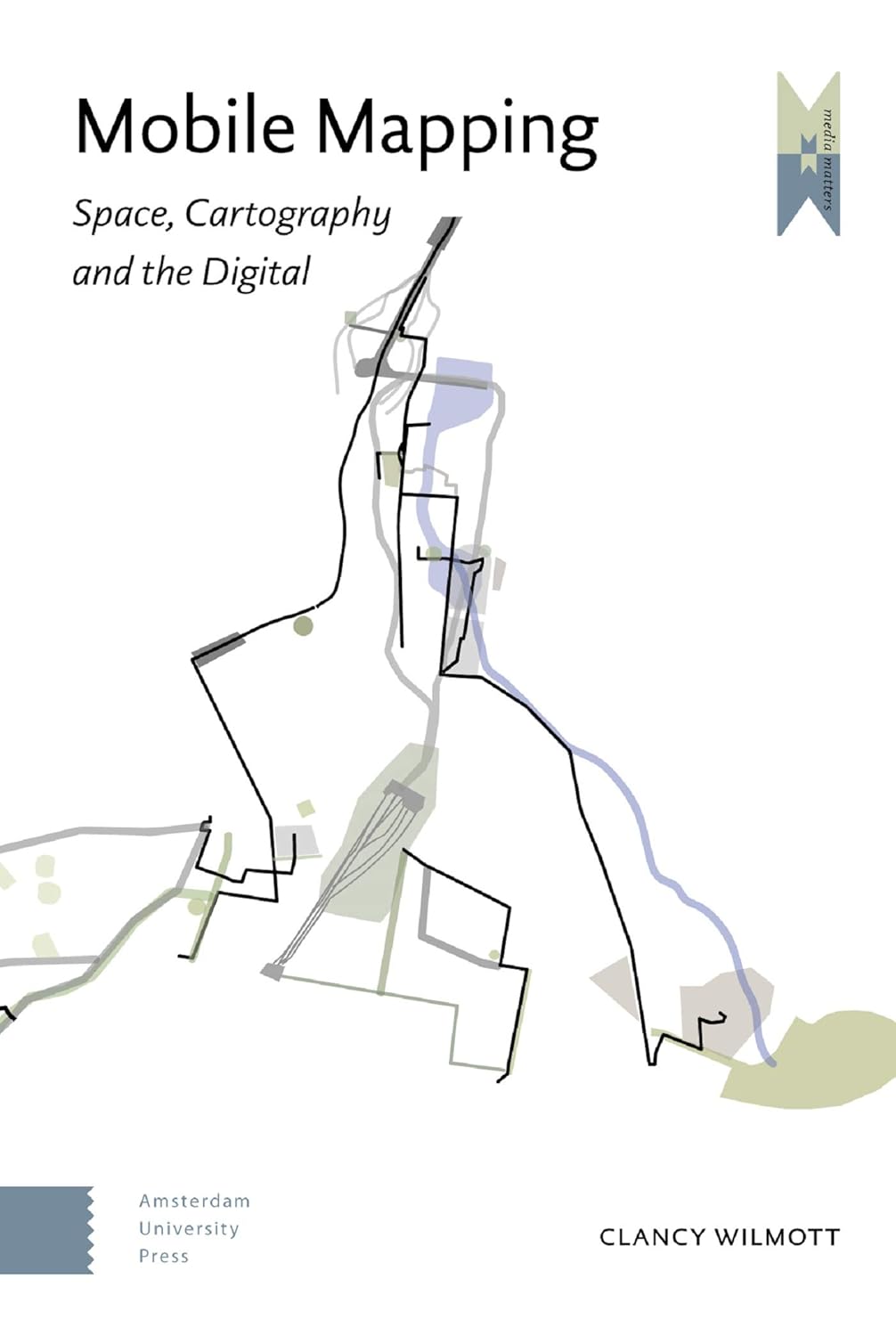
Clancy Wilmott, Mobile Mapping Space, Cartography and the Digital, Routledge, 2020

This book argues for a theory of mobile mapping, a situated and spatial approach towards researching how everyday digital mobile media practices are bound up in global systems of knowledge and power. Drawing from literature in media studies and geography — and the work of Michel Foucault and Doreen Massey — it examines how geographical and historical material, social, and cultural conditions are embedded in the way in which contemporary (digital) cartographies are read, deployed, and engaged. This is explored through seventeen walking interviews in Hong Kong and Sydney, as potent discourses like cartographic reason continue to transform and weave through the world in ways that haunt mobile mapping and bring old conflicts into new media. In doing so, Mobile Mapping offers an interdisciplinary rethinking about how multiple translations of spatial knowledges between rational digital epistemologies and tacit ways of understanding space and experience might be conceptualized and researched.

Clancy Wilmott is Assistant Professor in the Berkeley Centre for New Media and the Department of Geography at the University of California, Berkeley. She was previously Lecturer in Human Geography at the University of Manchester, Vice-Chancellors Postdoctoral Research Fellow at RMIT University, and a Postdoctoral Researcher on European Research Council project Charting the Digital based at the Centre for Interdisciplinary Methodologies of the University of Warwick. Her research focuses on the relationship between digital tech nologies and spatial representation across cartography and new media.

Diana Stypinska, On the Genealogy of Critique Or How We Have Become Decadently Indignant, Routledge, 2020

Description
On the Genealogy of Critique intervenes into both contemporary academic debates on critique, and today’s mainstream criticism, by reflecting upon the relationship between criticality and social change in the age of post-politics.

What does it mean to be critical? When we are told that civilisation is facing extinction, does the idea of critique still hold any value? Today, more than ever, we seem to be critical of everything. Yet, paradoxically, our criticism exerts very little political influence. Taking this problematique as its starting point, this book reclaims the transformative potential of critique, challenging the common assumptions about criticality. It presents a counter-history of criticism, demonstrating how the modern notion of critical subjectivity embodies an imperative to the securitisation of the status quo. In elaborating on a range of contemporary critical (dis)positions, the book advocates new ways of thinking about critique and social change. Through this, it equips the reader with analytical tools useful for thinking the way out of our post-political predicament.

This book is of relevance to anyone concerned with social change. Particularly, it will be of use to academics, postgraduates and advanced undergraduate students working in the areas of sociology, politics, philosophy and cultural studies.

Diana Stypinska is Lecturer in Social Theory in the School of Political Science and Sociology at University of Galway, Ireland. Her work traverses critical theory, continental philosophy and critical sociology. She is the author of On the Genealogy of Critique: Or How We Have Become Decadently Indignant (2020, Routledge), Social Media, Truth and the Care of the Self: On the Digital Technologies of the Subject (2022, Palgrave Macmillan) and Social Media Frenzies: Digitalized Agitation and Social Change (2025, Routledge).

Clare O’Farrell: I have added the following statement to the About page on Foucault News.

Statement about generative AI

I do not support the outsourcing of research and writing to generative AI. This is sometimes (often) very hard to detect. If you notice posts on work that falls into this category, please let me know. The use of grammar and translation software by non native speakers is not included in this category – as long as the original words were authored by a human writer/researcher.

References
Updated 11 May 2026.

Callum Cant, James Muldoon, Mark Graham, Feeding the Machine. The Hidden Human Labor Powering A.I., Bloomsbury, 2024.

Kate Crawford, The Atlas of AI: Power, Politics, and the Planetary Costs of Artificial Intelligence, Yale University Press, 2021

Kate Crawford, Generative AI’s environmental costs are soaring — and mostly secret, Nature 626, 693 (2024) https://doi.org/10.1038/d41586-024-00478-x

Sharon Kabel, A bibliography of genAI-fueled research fraud from 2025. Sharon Kabel’s blog, 23 December 2025.

Dmitry Kobak et al. Delving into LLM-assisted writing in biomedical publications through excess vocabulary, Science Advances, vol 7, Issue 27 (2025). DOI:10.1126/sciadv.adt3813

Steven Gonzalez Monserrate, The Cloud Is Material: On the Environmental Impacts of Computation and Data Storage, MIT Case Studies in Social and Ethical Responsibilities of Computing, Winter (January) 2022. https://doi.org/10.21428/2c646de5.031d4553

James Muldoon interviewed by Sabrina Provenzani, AI is an extraction machine. But resistance is possible, The Citizens, 17 September 2024.

Rainer Mühlhoff, The Ethics of AI. Power, Critique, Responsibility, Bristol University Press, 2025

Retraction Watch, Tracking retractions as a window into the scientific process.

Jan-Philipp Siebold, Annemarie Witschas, Rainer Mühlhoff, 2026. “ When the Future Feels Foreclosed: AI Resignation and the Power to Act.” Future Humanities 4: e70026. https://doi.org/10.1002/fhu2.70026.

Petra Stock, The environmental cost of datacentres is rising. Is it time to quit AI?, The Guardian, 14 March 2026.

John Warner and Ben Williamson, Frankencitations Ravage the Academic Countryside, Inside Higher Ed, 6 May 2026.

Édison Flávio Fernandes & Alice Casimiro Lopes (2025) When data speaks, what issues are silenced? Evidence, statistics, and curriculum. Education Policy Analysis Archives, 33(86).
https://doi.org/10.14507/epaa.33.9195

Abstract:
This paper presents a discussion that operates within the tension between deconstructionist philosophy—centered on the event as a rupture of stable meanings—and statistical practices in education, which seek to standardize data and suppress uncertainties. It argues that statistics, as a tool for curriculum design, reduce social complexities to homogeneous patterns, rendering alterity and adversity invisible, as well as neglecting contingency and the unpredictability of events in educational and curricular policies. We contend that the undecidability of the event displaces the notion of data neutrality in describing reality, exposing the erasure of uncertainty as an effect of power. Combining an interdisciplinary review (philosophy, statistics, curriculum studies) with an interpretation of evidence-based policies, this paper argues that deconstruction allows for a rethinking of educational assessments and their effects on the curriculum. This argument aligns with the defense of hybrid models for education policy that integrate quantitative rigor while recognizing uncertainty not as a flaw, but as an ontological condition of education and curriculum—thus contributing to a more critical and democratic debate in the field.

Keywords:
deconstruction; educational statistics; uncertainty; curriculum policy

Giorgi Vachnadze, Genealogies of Formal Systems. Substack (2025-)

Giorgi Vachnadze is a writer and researcher focused on Foucault and Wittgenstein, working at the intersection of philosophy, critical theory, and contemporary issues such as AI, education policy, and algorithmic governance.

Recent posts include:
Ἑαυτοῦ Ἡνίοχος: Piloting the Self
Liberating the Care of the Self from Plato and Christianity

Savoir: The Knowledge that Transforms the Subject
Ethopoiesis, Phusiologia, and Useful Knowledge

Two Conversions: The Oldest Technology of the Self
Between Platonic Epistrophē and the Christian Metanoia

Steven Maynard, Michel and Mathurin: Finding Foucault in the Archives, Archivaria 100 (Fall/Winter 2025): 44-73
https://archivaria.ca/index.php/archivaria/article/view/14061

Abstract
In this article, we follow Foucault into the archives. Foucault spent much of his working life reading and researching in libraries and archives, and yet he most often figures in the archival literature as the creator of the rarified concept of “the archive.” As a counterpoint, this article explores Foucault’s work in archives, his use of archives in his work, and the significance he attached to archival research. Ultimately, I contend that it is impossible to understand the abstract archive as concept without first grounding it in the experiential, epistemological, methodological, and political dimensions of finding Foucault in the archives.

RÉSUMÉ
Cet article nous invite à suivre Foucault dans les archives. Foucault a passé une bonne partie de sa vie professionnelle en tant que lecteur et chercheur dans les bibliothèques et les archives; toutefois, dans la littérature archivistique, il apparaît le plus souvent comme le créateur du concept ésotérique de “l’archive”. En contrepartie, cet article explore le travail de Foucault dans les archives, l’emploi qu’il fait des archives dans son oeuvre, et la signification qu’il attribue à la recherche dans les archives. Finalement, je propose qu’il soit impossible de comprendre l’archive abstraite en tant que concept sans l’ancrer d’abord dans les dimensions expérientielle, épistémologique, méthodologique et politique de la rencontre avec Foucault dans les archives.

Steven Maynard is an adjunct associate professor in the Department of History at Queen’s University, where he teaches the history of sexuality. His article “Queer Parrhesiast,” in “Devotion: Today’s Future Becomes Tomorrow’s Archive,” a special issue of PUBLIC: Art/Culture/Ideas 33, no. 65 (2022), is a study of the personal archives of gay-left thinker Alexander Wilson, who interviewed Foucault during his stay in Toronto in the spring of 1982. The article, which reproduces the manuscript of the interview with Foucault found in Wilson’s papers, is part of a book Steven is writing on Foucault’s visits to Canada/Québec and his impact on local activist-intellectuals. A previous article, “Police/Archives,” in Archivaria, no. 68 (Fall 2009), won the Association of Canadian Archivists’ W. Kaye Lamb Prize for the article that most advances archival thinking in Canada.

Paul Flaig, ‘From the Tramp to Trump: On Sovereignty and Screen Comedy’, in William V. Costanzo, and Peter C. Kunze (eds), The Oxford Handbook of Screen Comedy, Oxford Handbooks (2025; online edn, Oxford Academic, 21 Aug. 2025)
https://doi.org/10.1093/oxfordhb/9780197675502.013.0026

Abstract
In recent years, critics and scholars have anxiously observed that the subversive force of satire, jokes, and gags on-screen has become not only toothless but positively embraced by populist leaders and political demagogues. From Silvio Berlusconi to Donald Trump, Boris Johnson to Jair Bolsonaro, the figures of the sovereign and the court jester have merged into what Michel Foucault, in a prescient passing phrase, once called “grotesque sovereignty.” In this chapter, I build on Foucault’s concept to situate this recent entanglement of comic subversion and sovereign power within a wider genealogy of screen comedy. If sovereignty has, over the last century, become defined by a grotesque excess it has been, in large part, through the mediating power of screens, whether cinematic, televisual, or viral, which have produced, in turn, comic forms of satire and parody as inevitable blowback. Yet far from understanding sovereignty and comedy in opposed terms, I emphasize their shared status as states of exception in which sovereign and clown appear as inverted, reproducible images of one another.

Emphasizing this complicity of sovereignty and comedy, I begin by tracing the essential relationship between theories of sovereignty and theories of humor before turning to three case studies of grotesque sovereignty as it has been comically fictionalized on screen: Hollywood’s crazy dictator films of the early 1930s, the comedy of sovereignty’s media apparatus as portrayed in the works of Armando Ianucci, and the sovereign’s double as embodied by Charlie Chaplin in The Great Dictator.

Keywords: sovereignty, satire, Chaplin, Foucault, Ianucci