Foucault News

News and resources on French thinker Michel Foucault (1926-1984)

Harrahill, K., Macken-Walsh, Á., O’Neill, E.
Prospects for the bioeconomy in achieving a Just Transition: perspectives from Irish beef farmers on future pathways
(2023) Journal of Rural Studies, 100

DOI: 10.1016/j.jrurstud.2023.103020

Abstract
Many beef farm systems in Irish and some global contexts have economic and environmental traits that threaten their future sustainability. In this context, the concept of Just Transition for economically vulnerable agricultural sectors is of interest, and, in particular, the bioeconomy is identified as potentially providing new sustainable income streams for farmers. This paper presents an analysis of six case-study beef farmers in Ireland, undertaken using a biographic narrative method. It examines the subjective experiences of beef farmers and their perspectives towards the bioeconomy as an option for farm diversification and its potential to deliver a Just Transition. The narrative data were analysed using Michel Foucault’s framework of power, which was applied to be attentive to how existing normative knowledges, discourses, and subjectivities intersect with nascent concepts such as the bioeconomy and Just Transition. Through in-depth case-studies of beef farmers, we aim to understand how and whether they are likely to become involved in the bioeconomy. Our analysis shows that the case-study farmers are mainly concerned about power imbalances in beef value chains. Most participants were unfamiliar with the bioeconomy, which currently primarily involves a limited number of dairy farmers in Ireland. However, the bioeconomy was viewed by t case-study farmers as a development that could potentially generate new income streams for farmers. Several factors were identified as contextually relevant to achieving that potential. Collaborative bodies such as cooperatives or Producer Organisations were viewed as influential in enhancing the positioning of farmers within value chains and facilitating the inclusion of beef farmers in bioeconomy activities. Addressing the root causes of the economic vulnerability of beef farming was also identified by case-study farmers as necessary for advancing the bioeconomy; otherwise, it was perceived, existing power imbalances would be replicated. © 2023 Elsevier Ltd

Author Keywords
Beef producers; Bioeconomy; Foucault; Just transition; Power
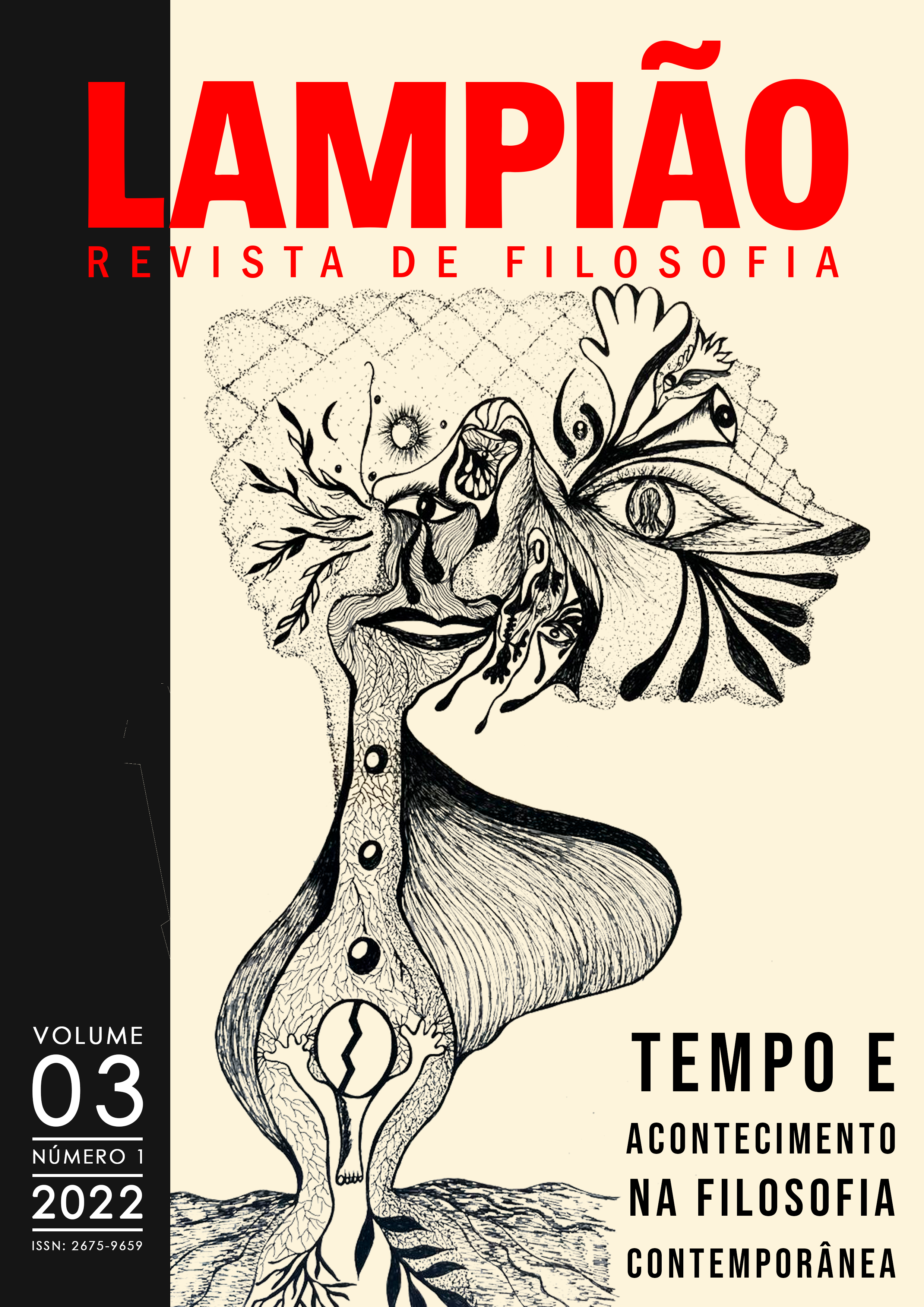
Giovana Carmo Temple, O acontecimento como uma saída à verdade da prática discursiva,
Lampião Revista de Filosofia, v.3, n.1, 2022, Publicado: 01/06/2023

Resumo
Neste artigo, desenvolvo uma reflexão da noção de acontecimento nos textos de Foucault, particularmente nos livros L’archéologie du savoir (1969) e L’ordre du discours (1971). O objetivo é mostrar como Foucault retoma a noção de acontecimento a partir do antigo estoicismo para analisar como esta noção é particularmente interessante às problematizações que Foucault faz de como as práticas discursivas produzem verdades que passam a constituir a subjetividade dos indivíduos. Uma leitura da história como acontecimento, como uma genealogia do acontecimento, parece ser, assim, uma saída ao discurso do saber que, por meio de estratégias de poder, produz incessantemente sujeitos adaptados e subordinados às categorias do normal e do anormal.

Marcio Luiz Miotto, Michel Foucault e “A questão antropológica” – precisões históricas e conceituais
Lampião Revista de Filosofia, v.3, n.1, 2022, Publicado: 01/06/2023

Resumo
O presente trabalho pretende estabelecer algumas precisões históricas e conceituas em torno da formação da história arqueológica de Michel Foucault, tendo como foco um livro póstumo e recém lançado, intitulado La Question Anthropologique (2022). Esse livro trata de um curso sobre “antropologia” ministrado por Foucault entre 1952 (ou 1951) e 1955, em Lille e na ENS. As precisões históricas e conceituais tratadas aqui são em torno dos seguintes contextos: primeiramente, analisa-se a escassa literatura de comentário anterior ao lançamento do livro em 2022; depois, parte-se ao horizonte de leituras de Foucault na época, especialmente ocorridos em torno da figura de Nietzsche. Essas leituras ocorrem em diversas frentes, tais como as figuras de Heidegger e Jaspers, a importância da história das ciências, a interlocução com Althusser e Jacques Martin em torno de Marx e a questão da loucura e da psicanálise.

Carol Bacchi, Why Study Problematizations? Making Politics Visible, Open Journal of Political Science, Vol.2, No.1, 2012 1-8

http://dx.doi.org/10.4236/ojps.2012.21001

Open access

Abstract
This paper introduces the theoretical concept, problematization, as it is developed in Foucauldian-inspired poststructural analysis. The objective is two-fold: first, to show how a study of problematizations politicizes taken-for-granted “truths”; and second, to illustrate how this analytic approach opens up novel ways of approaching the study of public policy, politics and comparative politics. The study of problematizations, it suggests, directs attention to the heterogenous strategic relations – the politics – that shape lives. It simultaneously alerts researchers to their unavoidable participation in these relations, opening up a much-needed conversation about the role of theory in politics.

Keywords
Problematization; Poststructuralism; Foucault; Public Policy; Comparative Politics; Ethics

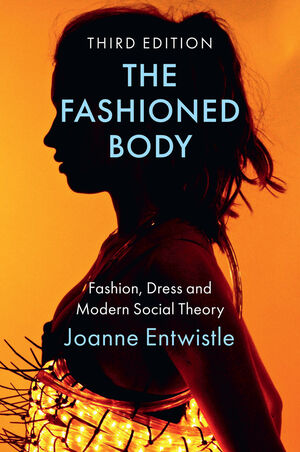
Joanne Entwistle, The Fashioned Body: Fashion, Dress and Modern Social Theory, 3rd Edition, Polity, 2023

The Fashioned Body provides a wide-ranging and original overview of fashion and dress from an historical and sociological perspective. Where once fashion was seen as marginal, it has now entered into core economic discourse focused around ideas about ‘cultural’ and ‘creative’ work as a major driver of developed economies.

This third edition of The Fashioned Body, the most comprehensive revision to date, revisits the classic works on fashion, dress and the body, and introduces contemporary issues and debates in the area. With new sections and revisions to all chapters, the major updates pick up on recent debates on fashion from the perspective of decolonising the curriculum, diversity, queer studies, sustainability, the environment, and digital fashion. A newly expanded bibliography of contemporary studies of fashion and dress is also included. The book continues to show how an understanding of fashion and dress requires analysing the meanings and practices of the dressed body in culture. Moreover, its central premise – that fashion is a ‘situated practice’ articulated through everyday dressed bodies – has become established orthodoxy within fashion studies since publication of the first edition in 2000.

Remaining a seminal text in the field, this book will be essential reading for anyone interested in the social role of fashion and dress in modern culture.

From the 1st edition description
In examining fashion in relation to the body, the book offers amuch needed synthesis between the literature on fashion and dress, which has tended to ignore the body, and the sociology of the body, which has tended to marginalize fashion and dress. Entwistle shows how an understanding of fashion and dress requires an understanding of the meanings acquired by the body in culture – since it is the body that fashion speaks to and which is dressed in almost all social situations and encounters. She argues that while fashion refers to a specific system of dress originating in the west, all cultures ′dress′ the body in the same way, making it a crucial feature of social order. Drawing on the work of Douglas, Foucault, Merleau–Ponty, Goffman and Bourdieu, the book offers insights into the connections that need to be made between the body, fashion and dress, arguing for an account of fashion and dress as ′situated bodily practice′.

Palgrave Handbook of Critical Posthumanism
Editors: Stefan Herbrechter, Ivan Callus, Manuela Rossini, Marija Grech, Megen de Bruin-Molé, Christopher John Müller, Lving Reference Work, Palgrave, 2020

About this book
Presents a comprehensive view of posthumanism, the posthuman and their genealogies. Critically discusses important strands and issues raised within the discourse of posthumanism. Highlights the ways in which posthumanism has affected the relationship between the humanities and the sciences.

Palgrave Handbook of Critical Posthumanism is a major reference work on the paradigm emerging from the challenges to humanism, humanity, and the human posed by the erosion of the traditional demarcations between the human and nonhuman. This handbook surveys and speculates on the ways in which the posthumanist paradigm emerged, transformed, and might further develop across the humanities. With its focus on the posthuman as a figure, on posthumanism as a social discourse, and on posthumanisation as an on-going historical and ontological process, the volume highlights the relationship between the humanities and sciences. The essays engage with posthumanism in connection with subfields like the environmental humanities, health humanities, animal studies, and disability studies. The book also traces the historical representations and understanding of posthumanism across time. Additionally, the contributions address genre and forms such as autobiography, games, art, film, museums, and topics such as climate change, speciesism, anthropocentrism, and biopolitics to name a few. This handbook considers posthumanism’s impact across disciplines and areas of study.

Moon, K., Cho, H.D. Biopolitics and a right to tourism
(2023) Current Issues in Tourism

DOI: 10.1080/13683500.2023.2203852

Abstract
Tourism as a right was officially stated in the Global Code of Ethics for Tourism (1999) and it would be granted normative status once the Framework Convention on Tourism Ethics (2020) is legally binding. As such, the importance of the rights discourse in tourism has been largely acknowledged and its status is increasingly being reinforced. The rights discourse of tourism is particularly important as the world is facing at the Fourth industrial revolution, which can lead to a societal transformation like previous industrial revolutions. However, the position of tourism as a right has still been confronted with an ambivalent conjuncture and it still requires the relevant etudes to provide diverse perspectives for its justification or its discursive construction within a philosophical approach. By applying a Foucauldian discourse analysis for a close reading of international statements and demonstrating the relevance and applicability of biopolitics to the rights discourse in tourism, this article argues that a fuller understanding of the discourses and arguments made regarding a right to tourism is possible through a deeper consideration of biopolitics and that its legitimation needs to take place within the realm of biopolitical production. © 2023 Informa UK Limited, trading as Taylor & Francis Group.

Author Keywords
Biopolitics; Michel Foucault; right to tourism; rights discourse; social tourism policy

Paolucci, C.
Pre‐Truth: Fake News, Semiological Guerrilla Warfare, and Some Other Media and Communication “Revolutions”
(2023) Media and Communication, 11 (2), pp. 101-108.

DOI: 10.17645/mac.v11i2.6628

Abstract
In this article, I will work on the idea of Pre‐Truth (as opposed to post‐truth) and Semiological Guerrilla (as opposed to fake news), claiming that these two concepts are better equipped to explain what is happening in our contemporary societies, especially if we take into account the world of media and communication. In the first part of the article, I will frame the problems of fake news and post‐truth within the dynamics characterizing the relationships between knowledge and power. Taking into account Foucault and Latour’s perspectives, I argue that the problem of fake news can be understood as a new kind of relationship between these two instances, previously stably coupled and in the hands of institutional power. Later, I will deal with three different meanings of “fake news,” that are usually blended and confused: (a) serendipity, (b) false belief, and (c) mendacity. Consequently, I will deal with the problem of “Semiological Guerrilla Warfare,” arguing that the new shape of the “knowledge‐power relationship” rendered alternative and non‐institutionally certified interpretations the norm. Eventually, I will identify the deep cause of this effect in the machinic production of documents provided by new technologies, causing a return of the medieval sense of “truth” as “trust,” independent from knowledge and strictly related to anecdotes and personal experiences. Finally, I will work on the concept of “truth” connected to technology, trying to reveal its genealogy with the aim of explaining some misleading contemporary beliefs on “post‐truth.”. © 2023 by the author(s); licensee Cogitatio Press (Lisbon, Portugal).

Author Keywords
experience and knowledge; fake news; post‐truth; semiological guerrilla warfare; semiotics

Critical global citizenship: Foucault as a complexity thinker, social justice and the challenges of higher education in the era of neo-liberal globalization – A conversation with Mark Olssen,
Authors: Emiliano Bosio, Mark Olssen
Citizenship Teaching & Learning, Volume 18, Issue Philosophical, Ethical and Pedagogical Visions of Global Citizenship Education: Critical Perspectives from International Educators, Jun 2023, p. 245 – 261
DOI: https://doi.org/10.1386/ctl_00123_1

Abstract
This article presents a remarkable conversation on critical global citizenship education (GCE) between Mark Olssen, emeritus professor of political theory and higher education policy in the Department of Politics at the University of Surrey, and Emiliano Bosio, guest-editor of Citizenship Teaching & Learning. In developing the concept for this dialogue, we thought it necessary to frame GCE within a critical perspective that examines the political, economic, ideological and cultural conditions of super-complex societies, particularly in relation to notions of neo-liberal globalization and global justice. Olssen’s copious work has complemented postmodern philosophy by drawing on the work of Nietzsche, Foucault, Deleuze, and it has brought him high regard in Europe, the United Kingdom and worldwide; his insights, perspectives, concerns and outlooks bring to the centre of international educational debates on critical GCE relevant thoughts through which we can better understand the complex roots and history of global citizenship and cosmopolitanism particularly in relation to notions of democracy, equity, ethics and social responsibility.

Keyword(s): democracy; ethics; global citizenship education; global social justice; higher education; neo-liberalism; philosophy; politics

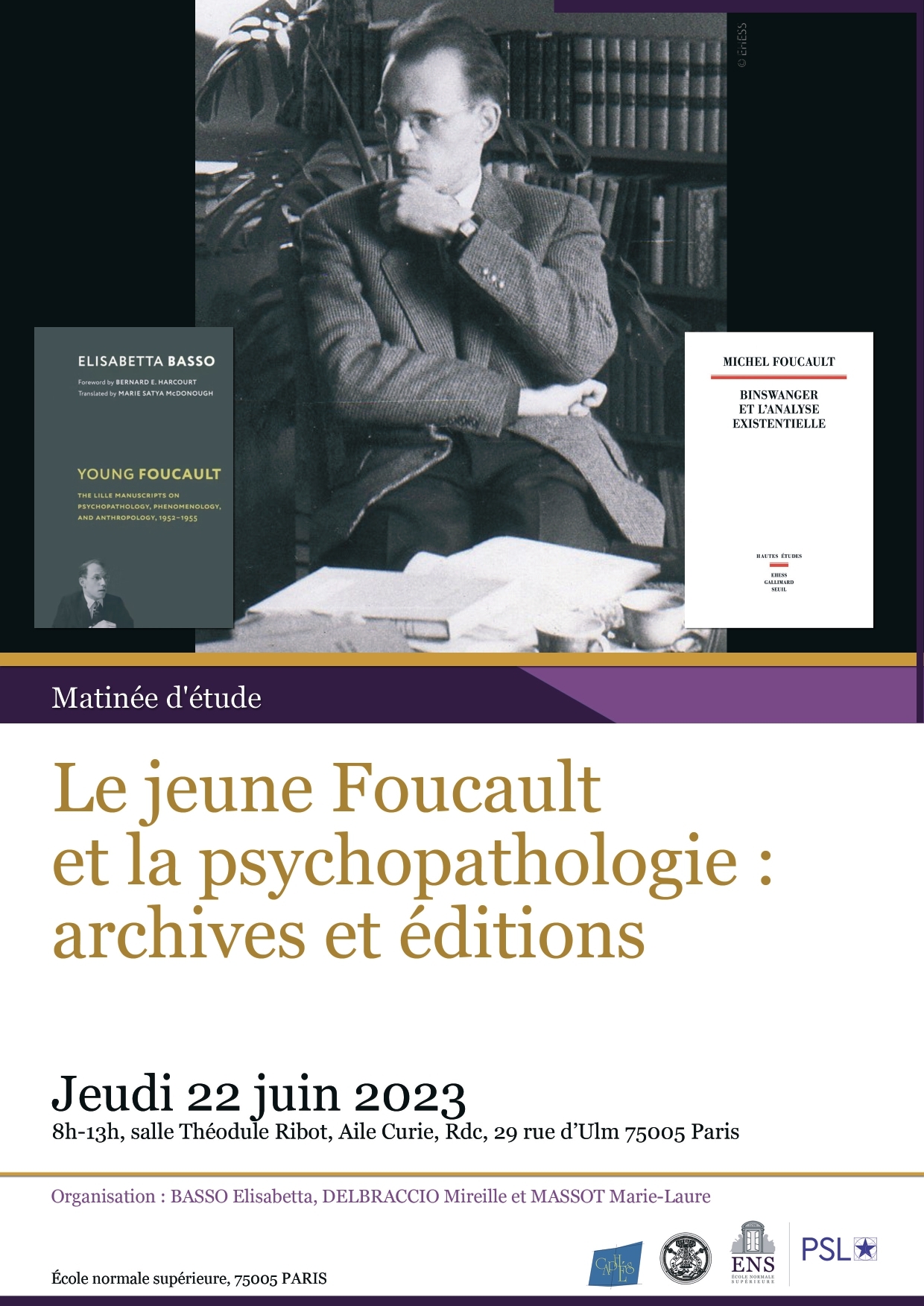
Le jeune Foucault et la psychopathologie: archives et éditions (2023)
22 juin 2023
ENS de Paris
Intervenants : Elisabetta Basso (Université de Pavie et Caphés), Claude Debru (Caphés), Mireille Delbraccio (Caphés), Henri-Paul Fruchaud, Marie-Laure Massot (Caphés), Vincent Ventresque (ENS Lyon).